


Six Quick Checks to Spot Fake Skincare Before You Buy
Use six quick checks to spot fake skincare: seller authorization, price, packaging, batch and expiry codes, smell and texture, and digital authentication. Run through them in this order before you trust any product, especially one bought from a marketplace instead of a brand’s own store.
- Confirm the seller. Is this an authorized retailer, or a random third-party account on a marketplace?
- Check the price. A steep, unexplained discount on a popular product is the single biggest red flag.
- Inspect the packaging. Blurry printing, wrong fonts, or misaligned logos suggest a counterfeit.
- Find the batch and expiry codes. No code, a sticker-only code, or an oddly formatted one means treat it as suspect.
- Smell and feel the product. Off odors, strange texture, or a pump that doesn’t work right are common counterfeit tells.
- Try the digital authentication. If the brand offers a QR code or NFC check and it fails or doesn’t exist where expected, stop.
If more than one of these fails, stop using the product, photograph the packaging and batch code, and report it to the seller’s platform.
Key Takeaways
Spotting fake skincare reliably requires checking the seller, the price, the packaging, the batch code, the product’s feel, and its digital authentication, in that order, before trusting any marketplace listing.
| Point | Details |
|---|---|
| Verify the seller first | Cross-check the seller name against the brand’s own authorized retailer list before anything else. |
| Treat deep discounts as risk | Prices significantly below typical retail on a popular product usually signal counterfeit or diverted stock. |
| Inspect packaging closely | Compare fonts, print sharpness, and batch code format against the brand’s official photos. |
| Know the limits of looking | High-fidelity fakes can pass visual checks, so lab testing and brand confirmation matter for unclear cases. |
| Buy direct when possible | Spyraverified sources through direct manufacturer partnerships and community testing to reduce marketplace risk. |
Table of Contents
- How to spot fake skincare through packaging and label details
- Is the seller you’re buying from actually trustworthy?
- Why deep discounts and shipping origin often signal counterfeits
- What do fake products feel, smell, or look like once opened?
- How do you verify a batch code or QR authentication?
- When visual checks aren’t enough to prove authenticity
- How Spyra Verified sources authentic Japanese and Asian skincare
- What habits actually reduce your counterfeit risk over time
- Buy Verified Japanese and Asian Skincare Without the Marketplace Gamble
- Sources
How to spot fake skincare through packaging and label details
Packaging is where most counterfeits fall apart under close inspection, because copying a box is cheaper than copying a formula. Pull up the brand’s official product photos on their real website and compare them side by side with what’s in your hand.
- Font and logo alignment. Counterfeiters often get the general shape right but the letter spacing, weight, or logo placement slightly off.
- Print sharpness and color. Genuine packaging uses consistent, saturated ink. Fakes often look slightly faded, streaky, or printed at a different resolution.
- Batch and expiry format. Authentic codes are usually printed directly on the box or tube during manufacturing, not slapped on as a separate sticker after the fact.
- Tamper seals and shrink-wrap. Missing seals, uneven shrink-wrap, or wrap that looks re-applied are common tampering signs.
- Regulatory text. Products imported from Japan or Korea should carry ingredient lists and origin information appropriate to that market. Missing or oddly translated text is a warning sign, which is one reason understanding certification standards for Asian skincare helps before you buy.
Industry checklists consistently flag ink inconsistencies and missing digital authentication features as the most reliable counterfeit indicators, and products without any batch number or expiry date should be treated as suspect on sight.
Pro Tip: Keep a screenshot of the product’s official packaging from the brand’s own site on your phone. Comparing side by side, in the same lighting, catches font and color differences your memory alone will miss.
Is the seller you’re buying from actually trustworthy?
The product often isn’t fake. The seller is. Most brands publish a list of authorized stockists on their own website, and it takes thirty seconds to check whether the name on your marketplace listing matches one of them.
- Cross-reference the seller name against the brand’s official retailer list, not just the marketplace’s “verified seller” badge, which only confirms an account, not authenticity.
- Read the seller’s history, not just their star rating. A seller with a thin return policy, no working contact info, or reviews that only ever discuss shipping speed (never the product itself) is a warning sign.
- Watch for inconsistent photos across a single listing, where some images show one packaging design and others show a slightly different one.
- Notice if one seller lists dozens of unrelated SKUs across multiple brands, which is typical of resellers moving diverted or counterfeit stock rather than an authorized boutique.
- Be wary of listings that redirect to an external checkout page outside the marketplace itself, a common tactic to dodge platform-level buyer protection.
Reading up on safer online shopping habits before you check out gives you a framework to apply to every new seller you encounter, not just this one purchase.
Why deep discounts and shipping origin often signal counterfeits
Price is the fastest filter you have, and it works because counterfeiters compete almost entirely on cost. When a listing prices a popular SKU at 50 to 70% below typical retail, treat it as high risk for counterfeit or diverted stock, not a lucky find.
- Compare against the brand’s own listed price, not against other marketplace sellers, since a cluster of similarly cheap listings can just mean multiple counterfeiters are competing with each other.
- Check “ships from” versus “sold by.” A mismatch, especially long shipping windows from unexpected countries, often points to diverted or grey-market stock rerouted through resellers.
- Be suspicious of sellers moving high volume at low prices on a single item, since legitimate authorized retailers rarely undercut brand pricing that aggressively at scale.
A genuine flash sale from an authorized retailer looks different: time-limited, clearly branded, and consistent with prices you’ve seen elsewhere from that same retailer.
What do fake products feel, smell, or look like once opened?
Sensory checks catch what packaging inspection sometimes misses, because formulating a convincing scent and texture is harder than printing a box. Consumer investigations repeatedly find packaging differences and sensory anomalies even in listings that looked convincing in photos.
- Smell first. A noticeably different scent, or no scent at all where the original has a distinct one, is a common tell.
- Check color and viscosity. Serums that are thinner or thicker than you remember, or creams with a different tint, often mean a different formula entirely.
- Test the dispenser. Pumps that stick, dispense unevenly, or leak around the seal often indicate cheap manufacturing or a bottle that’s been refilled.
- Look for separation or odd texture changes that don’t match how the product behaved when you last used the genuine version.
Our guide on testing new Asian skincare safely walks through a patch-test routine worth using on anything new, genuine or not.
Pro Tip: If a product causes stinging, redness, or a rash that doesn’t fade quickly, stop using it immediately, document it with photos, and check with a doctor if the reaction is severe or spreading.
How do you verify a batch code or QR authentication?
- Locate the batch or lot number, usually printed near the expiry date or on the crimped seam of a tube, in a small font that’s part of the original print run rather than added later.
- Check the format against what the brand’s own site or support team describes. Codes that are the wrong length, use unusual characters, or look hand-stamped are worth flagging.
- Scan the QR code or use the brand’s verification page or app, if it offers one. A legitimate response confirms the product line, manufacturing date, or authorized region.
- If the scan fails, returns an error, or the code simply doesn’t exist on packaging that should have one, that’s a concrete signal, not a coincidence.
- When the result is still unclear, contact brand support directly with photos of the packaging and batch code, since brand teams can often confirm authenticity faster than any consumer-side check. Tools that support product-code verification can also help narrow down whether a code matches known manufacturing patterns.
When visual checks aren’t enough to prove authenticity
High-fidelity counterfeits can pass every visual test on this list. Some counterfeit operations now replicate packaging closely enough that only laboratory analysis, checking formulation, pH, and contaminants, can confirm the difference.
- Investigative testing that included lab analysis found that many marketplace purchases were counterfeit or chemically different from the authentic version, even when packaging looked right.
- A separate investigation into cosmetics bought from third-party marketplace sellers found that a large portion were likely counterfeit after visual and product comparison, which shows how common the problem is even among products that look convincing on arrival.
- U.S. Customs and Border Protection’s seizure statistics show counterfeit goods continue arriving at U.S. borders in large volumes, which is exactly why marketplace vigilance stays necessary rather than optional.
If your visual checks are inconclusive, preserve the product and its packaging, contact the brand directly, and consider reporting the listing to the platform or an intellectual property enforcement body before using it further.
How Spyra Verified sources authentic Japanese and Asian skincare
Spyraverified built its sourcing model around the exact problem this article walks through: marketplace buyers can’t always tell fake from real, so the safest fix is removing that guesswork at the source.
- Every product comes through direct partnerships with manufacturers and brand owners, not resellers or unknown third-party accounts.
- The storefront is curated rather than open-listing, meaning products go through a review process before they’re available to buy.
- Community testing feedback helps flag issues early, adding a layer of real-world verification on top of manufacturer sourcing.
Buying directly from a brand or its authorized partners remains the single most reliable way to avoid counterfeit cosmetics, because it removes the diverted-stock and reseller risk that shows up repeatedly in marketplace investigations.
For specifics on how imported products should be dated and stored, Spyraverified’s guide on Japanese beauty product expiry covers labeling conventions that differ from what U.S. shoppers usually expect.
What habits actually reduce your counterfeit risk over time
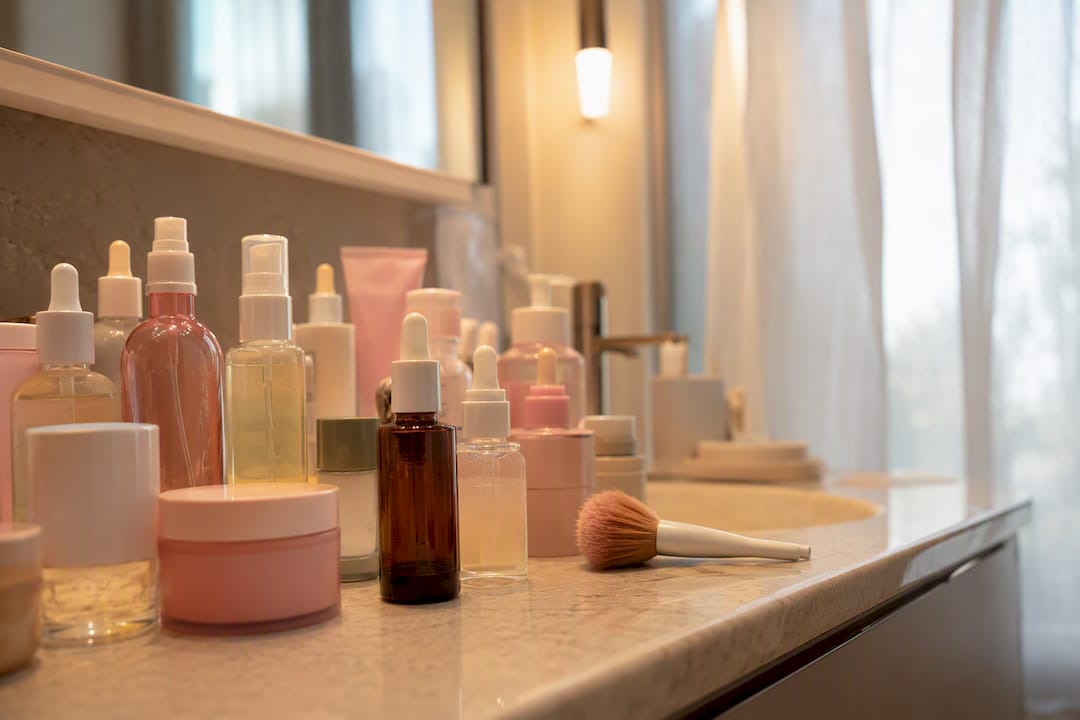
The real fix isn’t memorizing red flags. It’s building small habits: buy from authorized sellers by default, keep photos and receipts of anything you order, and read reviews that mention texture and performance, not just shipping speed.
Report fakes when you find them and tell other buyers where you found the real thing. Every report and every shared source makes the next counterfeit listing a little easier for someone else to catch.
— Anni
Buy Verified Japanese and Asian Skincare Without the Marketplace Gamble
Every check in this article exists because third-party marketplace listings put the burden of proof on you, the buyer. Spyraverified removes that burden by working directly with manufacturers and brand owners, so the product you order is the product that ships, no reseller in between guessing at authenticity for you.
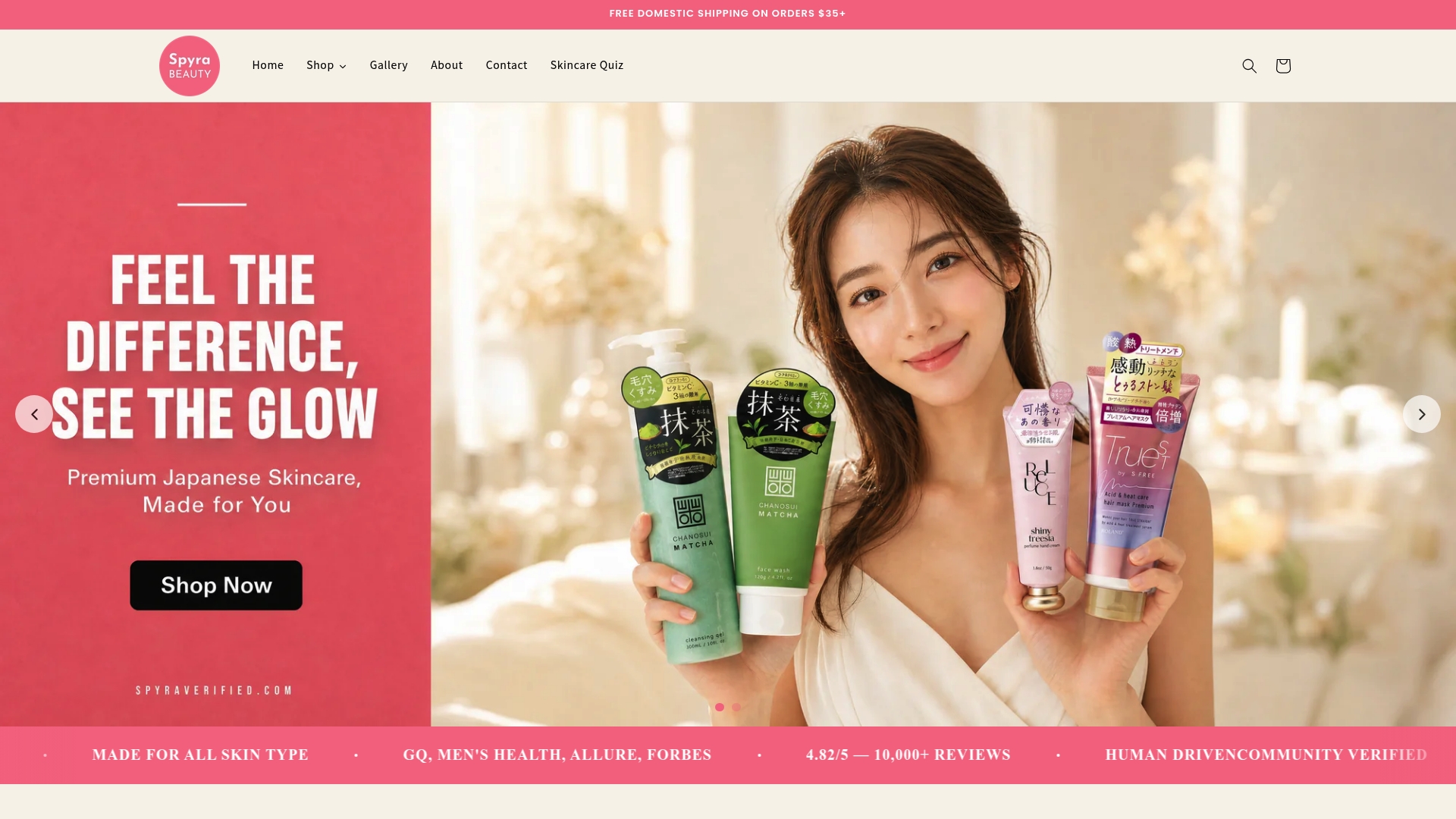
Every item in the collection comes from a direct brand partnership and goes through community testing feedback before it’s considered reliable, which means you skip the batch-code detective work this article just walked you through. If something doesn’t match expectations, you’re dealing with a retailer that sourced it directly, not a marketplace account that may not exist next month.
Browse Spyraverified’s skincare collection to see what authentic Japanese and Asian skincare looks like when the sourcing is transparent from the start.
Sources
- At least two thirds of cosmetics we bought from online marketplaces are likely counterfeits — Which?
- Intellectual Property Rights Seizure Statistics, Fiscal Year 2024 — U.S. Customs and Border Protection
- How to spot counterfeit beauty products on Amazon — WIRED
- Beware of counterfeit cosmetics: how to tell if the product is fake
