


Japanese Beauty Product Expiry: What U.S. Buyers Need to Know
Most Japanese beauty products don’t print an expiration date, and that’s not an oversight. Japan’s Ministry of Health, Labour and Welfare (MHLW) allows manufacturers to skip the date when an unopened product is proven stable for a sufficiently long period from manufacture. So the blank space where you’d expect an expiry isn’t a red flag — it’s a quality signal. To understand Japanese beauty product expiry, you need two timelines: unopened shelf life (how long the sealed product stays stable) and Period After Opening (PAO), which starts the moment you break the seal.
Quick answer: No printed date usually means the product passed Japan’s three-year stability threshold. Your job is to find the batch or manufacturing date, note when you opened it, and watch for sensory changes.
Before you go further, run this checklist:
- Look for a batch/lot code on the bottom of the bottle or outer carton
- Check the outer carton or brand website for PAO guidance (open-jar symbol or month count)
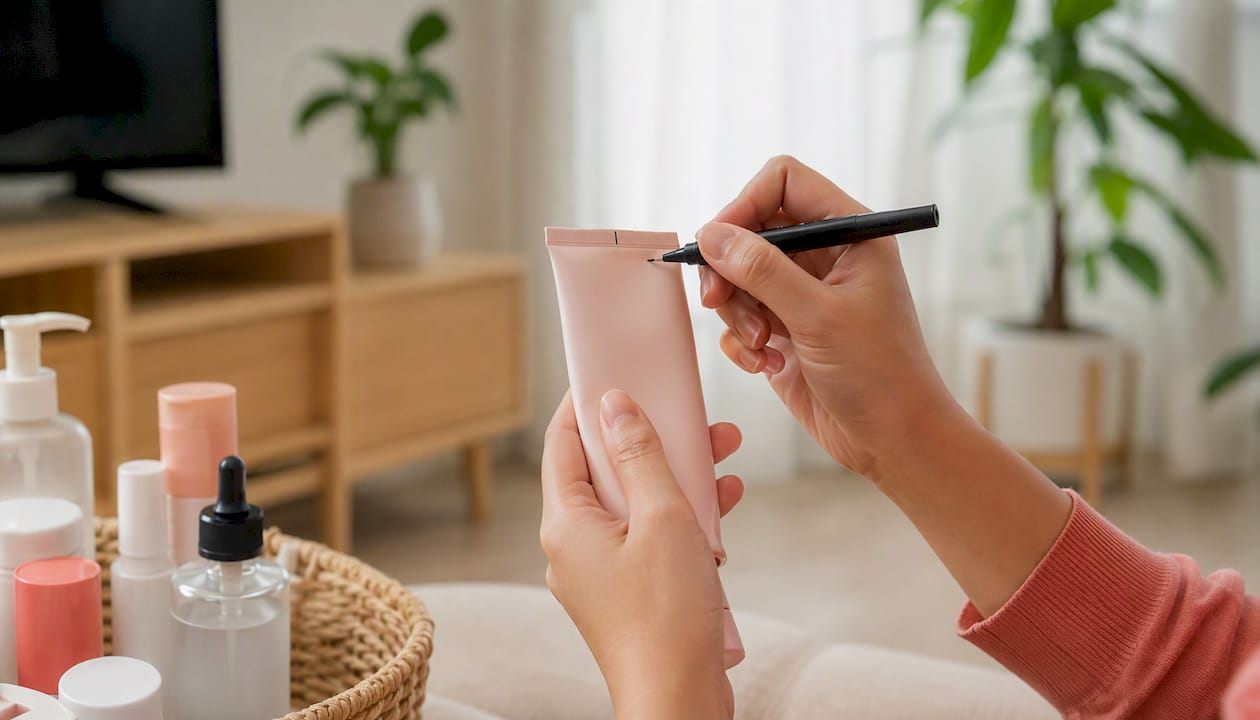
- Write the date you opened the product on the container with a permanent marker
- Inspect for off-smell, separation, color shift, or texture changes
- For eye products, sunscreens, and vitamin C serums, use the most conservative timeline
Table of Contents
- What do Japanese regulations actually require on labels?
- How to find and read dates and batch codes on Japanese packaging
- Shelf life vs. PAO: how long is your J-Beauty product actually good for?
- How storage conditions shorten Japanese skincare shelf life
- What to do when packaging is only in Japanese or shows no date
- How Spyraverified supports U.S. buyers with authenticity and label questions
- Key Takeaways
- The part most guides skip
- Authentic J-Beauty with label support, sourced directly
- Sources and further reading
What do Japanese regulations actually require on labels?
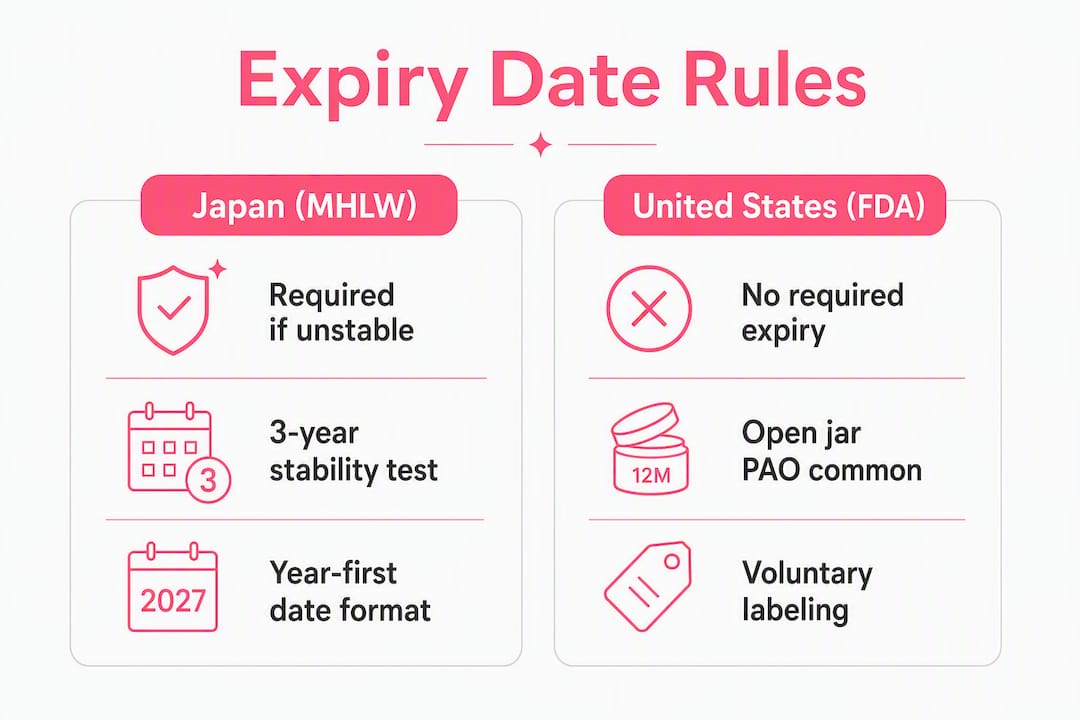
Japan’s MHLW 3-year rule is the reason your Japanese toner or essence often arrives with no expiry date. Under MHLW Notification No. 166 of 1980, a cosmetic is exempt from expiry labeling if it can be shown to remain stable and safe for an extended period under appropriate storage conditions after manufacture. That’s not a loophole — it’s a regulatory quality threshold that requires actual stability testing to satisfy.
Products that don’t clear that bar must display a date. The categories most likely to carry printed dates include preservative-free formulas, products containing ascorbic acid (vitamin C) or enzymes, and anything prone to quality change within a limited time frame after manufacture. FANCL is the textbook example: most of its products have a one-year unopened shelf life, so every item carries both a manufacture date and an expiry date.
The absence of a date is a compliance statement, not an omission. It means the manufacturer confirmed stability through testing — not that the product lasts forever.
The U.S. takes a different approach. The FDA does not require cosmetics to carry expiration dates or specific shelf lives. The exception is OTC drug products like sunscreen and acne treatments, which are regulated as drugs and generally have expiration dates. That means both Japanese and American cosmetics can legally land in your hands with no date printed — but for different regulatory reasons.
| Aspect | Japan (MHLW) | United States (FDA) |
|---|---|---|
| Expiry date required? | Only if product is unstable within 3 years | Not required for cosmetics |
| Sunscreen / OTC drugs | Follows MHLW drug rules | Expiry date required |
| PAO symbol required? | No | No |
| Stability testing required? | Yes, to qualify for date exemption | Manufacturer’s responsibility; not mandated |
How to find and read dates and batch codes on Japanese packaging
Japanese packaging rarely makes this easy, but the information is usually there if you know where to look.
Where to look first: Check the bottom of the bottle or tube, the crimp of a tube, and the outer carton. Manufacturing dates, when printed, appear as stamped or embossed numbers. Batch/lot codes are typically a string of letters and numbers, sometimes labeled 製造ロット番号 (seizou rotto bangou) on Japanese-language packaging.
Date format: Japan uses year-first formatting — YYYY.MM.DD or YYYYMMDD. Some brands use the Japanese era calendar, where 2023 is Reiwa 5 (令和5年). A U.S. buyer reading “23.06.15” might assume June 15 is the expiry month and day, when it actually means June 15, 2023 was the manufacture date. Getting that backward matters.
Decoding batch codes: Here’s the honest reality — batch codes vary by manufacturer and there is no universal decoder. Community-built tools like CheckFresh or similar batch-code lookup sites can give you an estimated manufacture date, but they rely on unofficial observations and should be treated as a starting point, not a verdict. Brand customer relations is the only fully authoritative source.
Step-by-step decode approach:
- Photograph the batch code and any date stamps on both the bottle and the outer carton
- Search the brand’s official FAQ or help center for batch-code guidance
- Run the code through a reputable batch-code lookup tool for an initial estimate
- If the product is older or the result is unclear, email or contact the brand’s customer relations with the photo and product version
- Apply the three-year rule: if the manufacture date is confirmed and the product is still sealed, it’s generally safe up to three years from that date under proper storage
Pro Tip: When a brand doesn’t publish a decoder, use the product’s release date as a proxy. Japanese brands reformulate or repackage frequently — often every two years — so a product with unchanged packaging was likely manufactured after its most recent launch date. Pair that with the three-year rule to estimate your safety window.
Shelf life vs. PAO: how long is your J-Beauty product actually good for?
Shelf life is the unopened clock. PAO is the opened one. Once you break the seal, shelf life becomes irrelevant — PAO takes over, and it’s almost always shorter.
Japanese skincare rarely uses the open-jar PAO symbol you’d see on European products. PAO guidance, when it exists, is usually on the outer carton or the brand’s website — which means once you toss the box, that information is gone. Mark your containers.
The table below reflects general manufacturer guidance used across Japanese-market brands. Treat these as maximums under good storage conditions, not guarantees.
| Product type | Recommended PAO | Notes |
|---|---|---|
| Eye products (mascara, liquid liner) | 2–3 months | High contamination risk; discard after eye infection |
| Preservative-free items | 2–3 months | Shorter by design; check brand guidance |
| Toners and serums | 3–6 months | Water-based formulas degrade faster |
| Sunscreens | 3–6 months | Actives lose potency; replace before expiry |
| Creams, moisturizers, and lip products | 6–12 months | Packaging type influences longevity; jar packaging shortens this significantly |
| Samples and sachets | Use immediately or within weeks | Simplified packaging, minimal preservation |
Vitamin C serums, retinoids, and chemical sunscreens deserve stricter timelines. These actives degrade with heat, light, and air exposure — a sunscreen past its PAO may no longer deliver the labeled SPF protection, and an oxidized vitamin C serum can actually cause discoloration rather than prevent it. If you’re using Japanese anti-aging actives, the PAO on the carton is a ceiling, not a suggestion.
Sensory checks override any date. Dermatologists consistently recommend trusting physical changes over printed timelines. Discard a product immediately if you notice any of these:
- Off or rancid smell (especially in oils and creams)
- Visible separation that doesn’t remix
- Color change (yellowing in vitamin C, darkening in clear serums)
- Gritty or slimy texture shift
- Stinging or irritation on skin that previously tolerated the product
How storage conditions shorten Japanese skincare shelf life
Heat, humidity, UV light, and repeated contamination are the four factors that accelerate product degradation faster than any timeline on the label accounts for. A serum stored in a steamy bathroom or left in a hot car for a week has effectively aged months in days.
Practical rules for U.S. home conditions:
- Store products in a cool, dry, dark place at stable moderate room temperatures.
- Avoid the bathroom shelf directly above the shower — the humidity and temperature swings are significant
- Keep lids and caps tightly closed after every use; air exposure degrades preservative systems
- Never dip fingers directly into jar products; use a clean spatula to reduce contamination
- Don’t refrigerate most products — temperature instability in a standard household fridge shortens stability rather than extending it (pure water-based vitamin C is a narrow exception)
Packaging design tells you something about expected longevity. Airless pumps, opaque bottles, and UV-blocking containers are deliberate engineering choices to extend formula stability. A product in an airless pump will typically outlast the same formula in a jar, because every use in a jar introduces air and potential contamination. That design advantage disappears if you store the pump bottle next to a sunny window.
Pro Tip: Write the open date on the bottom of the container with a fine permanent marker the day you first use it. Alternatively, snap a photo of the outer carton showing the PAO before you toss it. Both take ten seconds and save you from guessing three months later.
What to do when packaging is only in Japanese or shows no date
This situation is common for U.S. buyers purchasing through international sellers or gray-market channels. Here’s a practical sequence:
- Photograph everything. Capture the bottom of the bottle, the outer carton, any embossed codes, and any printed strings of numbers or characters.
- Translate the packaging. Google Lens and similar OCR-based translation tools handle Japanese characters well. Look for 製造年月日 (manufacture date), 使用期限 (expiry date), or ロット番号 (lot number).
- Check the brand’s official Japanese FAQ. Most major Japanese brands publish batch-code or date guidance on their Japanese-language site; machine translation makes this accessible.
- Run the batch code through a lookup tool for an initial estimate, keeping in mind these are unofficial.
- Contact the brand’s customer relations with your photo and product version for confirmation. This is the only fully reliable step.
- Evaluate the seller. Ask for the manufacture date before purchasing, request photos of the unopened seal, and prefer sellers with high inventory turnover or official distributor status.
When to walk away: no response from the seller or brand, packaging that shows sun-fading or discoloration, or a confirmed manufacture date that puts the product outside the three-year unopened window. A Japanese skincare routine only works if the products in it are still effective.
Japanese dates use year-first formatting (YYYY.MM.DD), so double-check before concluding a product is expired. A stamp reading “24.03.10” means March 10, 2024 — not October 3, 2024.
How Spyraverified supports U.S. buyers with authenticity and label questions
Spyraverified partners directly with Japanese and Asian manufacturers and brand owners, which means the products in its catalog come with verified sourcing and known production timelines. For U.S. buyers navigating Japanese-only labels or unfamiliar batch-code formats, that direct relationship matters: Spyraverified can provide batch and manufacture date information for products in its inventory when customers reach out with a photo of the code and the product version.
If you purchase through Spyraverified and have a question about a label, date, or authenticity, contact the support team with a clear photo of the batch code, the product name, and the packaging version. Spyraverified’s localized support is designed specifically for buyers who can’t easily read Japanese-language packaging or verify information directly with a Japanese-market brand.
Disclosure: Spyraverified is the retailer of the products featured on this site and provides label and batch verification support as part of its customer service.
Key Takeaways
Japanese beauty products without a printed expiry date have passed Japan’s MHLW three-year stability threshold — your safety decision depends on the manufacture date, PAO guidance, storage conditions, and sensory checks.
| Point | Details |
|---|---|
| MHLW 3-year rule | No printed date means the product passed stability testing for at least three years unopened. |
| PAO starts at opening | Mark your open date immediately; PAO guidance is often only on the outer carton or brand site. |
| Strictest timelines | Eye products and preservative-free items: 2–3 months; sunscreens and serums: 3–6 months after opening. |
| Sensory checks override dates | Discard immediately if you notice off-smell, separation, color change, or new irritation. |
| Spyraverified verification | Spyraverified’s direct manufacturer partnerships mean batch and label questions can be answered through its support team. |
The part most guides skip
Most expiry guides treat the absence of a date as a problem to solve. The more useful frame is to treat it as a system to understand. Japan’s MHLW rule isn’t a gap in consumer protection — it’s a higher bar than the U.S. FDA sets for cosmetics, because it requires manufacturers to prove stability before they can omit the date. A product with no date has cleared a threshold. A product with a date may have cleared a lower one, or may be in a category where instability is expected.
What actually gets U.S. buyers into trouble isn’t the missing date. It’s buying from sellers with slow inventory turnover, storing products in humid bathrooms, and ignoring the outer carton PAO before tossing it. The three-year rule only holds under proper storage — and “proper” means cool, dark, and stable, not the shelf above your shower. Sensory changes are your real safety net. A product that smells off is telling you something no batch code can.
The other underappreciated point: Japanese brands reformulate and repackage frequently, often every two years. That means an unchanged product on a third-party marketplace shelf could have been manufactured at any point after its last reformulation. For transitioning to Japanese skincare safely, buying from a source with direct manufacturer relationships isn’t just a convenience — it’s the most reliable way to know what you’re actually getting.
Authentic J-Beauty with label support, sourced directly
Knowing how to read a Japanese expiry label is only half the equation. The other half is buying from a source where the manufacture date isn’t a mystery.
Spyraverified sources its Japanese skincare collection and hair care products directly from manufacturers and verified brand partners, which means fresher stock, known production timelines, and a support team that can answer batch and label questions in English. Every product goes through authenticity verification before it reaches you.
If you’ve ever received a product with Japanese-only packaging and no idea when it was made, that’s exactly the gap Spyraverified is built to close. Browse the skincare collection and reach out to the support team with any label or batch question — responses include the product’s manufacture information when available. Returns and refunds are available for any product that arrives non-authentic or damaged.
Spyraverified is the retailer of all products on this site and provides localized label and batch support as part of its standard customer service.
Sources and further reading
The sources below are the primary references used in this guide. For any product-specific question, brand customer relations and Spyraverified’s support team are the most reliable final steps.
- Shelf Life and Expiration Dating of Cosmetics — FDA: The FDA’s official position on cosmetic shelf life and the absence of a U.S. expiry-date requirement for cosmetics.
- Is Expiry Labelling Mandatory in Japan? — Focus Lab Asia: Detailed breakdown of MHLW Notification No. 166 of 1980 and which product categories must carry dates.
- J-Beauty Expiration Dates Guide — Ratzilla Cosme: Practical PAO timelines by product type and storage guidance from a Japan-focused beauty resource.
- Do Japanese Skincare Products Expire? — Find Japan Beauty: PAO windows by product category and guidance on reading Japanese-market labels.
- Why Japanese Cosmetics Don’t Display Expiration Dates — J-Beauty Wholesale: Consumer-facing explanation of the MHLW three-year rule.
- Mandom Customer FAQ — Batch Codes and Stability: A Japanese manufacturer’s own explanation of why batch codes exist and how to get production date confirmation.
- How to Check Cosmetic Expiry Date from Batch Code — Lot Date: Practical guide to combining batch-code age, shelf life, and PAO for a safety judgment.
- Expiration and Best Before Dates in Japan — Kokoro Care: Explains Japan’s year-first date format and era calendar to help U.S. buyers read date stamps correctly.
- Beauty Product Expiration Dates Dermatologists Recommend — AOL: Dermatologist guidance on sunscreen and active-ingredient timelines.
This article is general consumer information, not professional medical or regulatory advice. Verify current rules with the relevant authority or a qualified professional for your specific situation.
