


The Role of Antioxidants in Skincare: Your 2026 Guide
Antioxidants protect your skin by neutralizing free radicals, the unstable molecules that trigger oxidative stress and accelerate aging. Without them, UV exposure, pollution, and even normal metabolism quietly degrade collagen, disrupt the skin barrier, and drive the wrinkles and uneven tone most people blame on “just getting older.” The good news: the right antioxidants, applied correctly, can slow that process at the cellular level. Here is what actually matters:
- Vitamin C brightens skin, fades hyperpigmentation, and supports collagen synthesis. It is the most abundant natural antioxidant found in healthy skin.
- Niacinamide controls oil, repairs the skin barrier, and calms inflammation. Research and expert consensus highlight a 5% concentration as most effective and well-tolerated for routine use.
- Polyphenols (green tea catechins, resveratrol) deliver anti-inflammatory protection and help neutralize UV-generated reactive oxygen species.
- Vitamin E works best alongside vitamin C, stabilizing it in formulations and reducing the risk of irritation.
- Antioxidants complement sunscreen rather than replace it. They neutralize the free radicals that SPF alone cannot block.
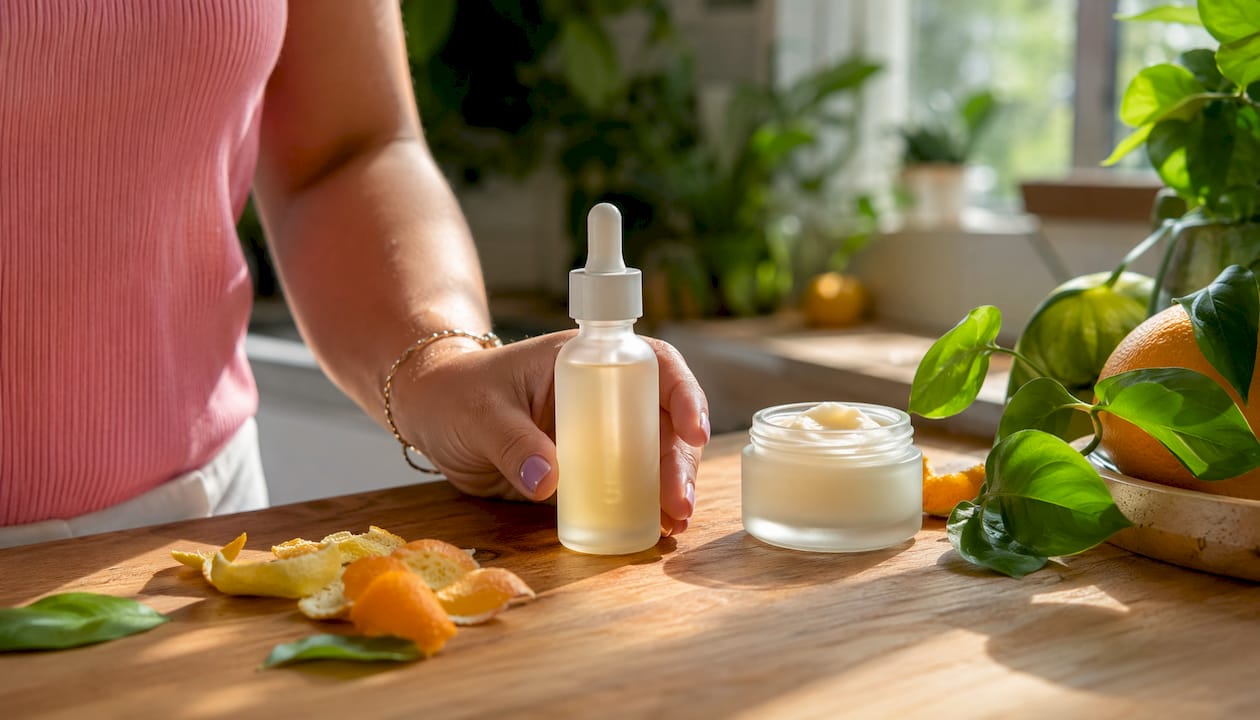
- Stable packaging matters as much as the formula itself. Airless pumps and opaque containers keep actives from degrading before they reach your skin.
How oxidative stress damages your skin at the cellular level
Reactive oxygen species, or ROS, are not inherently villains. At low levels, they serve as normal cell-signaling molecules and help the skin defend against bacteria. The problem starts when production outpaces the skin’s ability to neutralize them, a state called oxidative stress.
UV radiation is the biggest external trigger, but air pollution, cigarette smoke, and even blue light contribute. When ROS accumulate, they attack lipids in the cell membrane, oxidize proteins, and can directly damage DNA. Collagen and elastin fibers are particularly vulnerable, which is why chronic UV exposure produces the sagging and deep lines associated with photoaging rather than the finer lines of chronological aging.
The skin does maintain its own antioxidant defense system: enzymes like superoxide dismutase (SOD), glutathione peroxidase, and catalase, plus small molecules such as uric acid, ascorbate, and tocopherols. But UV exposure depletes these reserves faster than the skin can replenish them. Topical antioxidants step in to reinforce that depleted defense, giving cells the molecular backup they need to stay functional under stress.
One often-overlooked factor is labile iron. UVA radiation does not just generate ROS; it also accelerates oxidative damage by releasing redox-active iron inside skin cells, which then amplifies the oxidative cascade. This is why newer antioxidant research focuses on compounds that can both neutralize ROS and chelate excess iron simultaneously.
What antioxidants actually do for aging and common skin concerns
Photoaging and chronological aging share some mechanisms but differ in scale and speed. Chronological aging is driven largely by internal metabolic processes, while photoaging compounds the damage through repeated UV insults. Antioxidants address both, though their impact on photoaging is more pronounced and better documented in clinical research.
Wrinkle depth, skin laxity, and uneven pigmentation all have oxidative stress as a contributing factor. By neutralizing ROS before they can degrade collagen fibers or trigger melanin overproduction, antioxidants slow the visible progression of these changes. Vitamin C is particularly effective here: it both scavenges free radicals and directly participates in collagen synthesis, giving it a dual mechanism most antioxidants lack.
Inflammatory skin conditions like acne and eczema also have an oxidative component. Chronic low-grade inflammation generates ROS, which then worsen barrier dysfunction and trigger more inflammation. Antioxidants with strong anti-inflammatory properties, particularly polyphenols and niacinamide, can interrupt that cycle. For acne-prone skin specifically, niacinamide reduces sebum production while calming the redness that often accompanies breakouts. You can read more about antioxidant-friendly routines for acne-prone skin to see how these ingredients fit into a full regimen.
- Antioxidants slow collagen degradation by neutralizing the ROS that activate collagen-destroying enzymes (matrix metalloproteinases).
- They reduce hyperpigmentation by limiting the oxidative signals that overstimulate melanin production.
- They support the skin barrier by protecting lipids in the stratum corneum from peroxidation.
- They lower chronic inflammation, which benefits conditions from rosacea to post-acne redness.
- Used consistently with broad-spectrum SPF, they provide a second line of defense against UV-generated oxidative damage.
Top antioxidant ingredients and what each one does best
Not all antioxidants work the same way, and knowing which ingredient targets which concern saves you from buying products that do not match your actual skin goals.
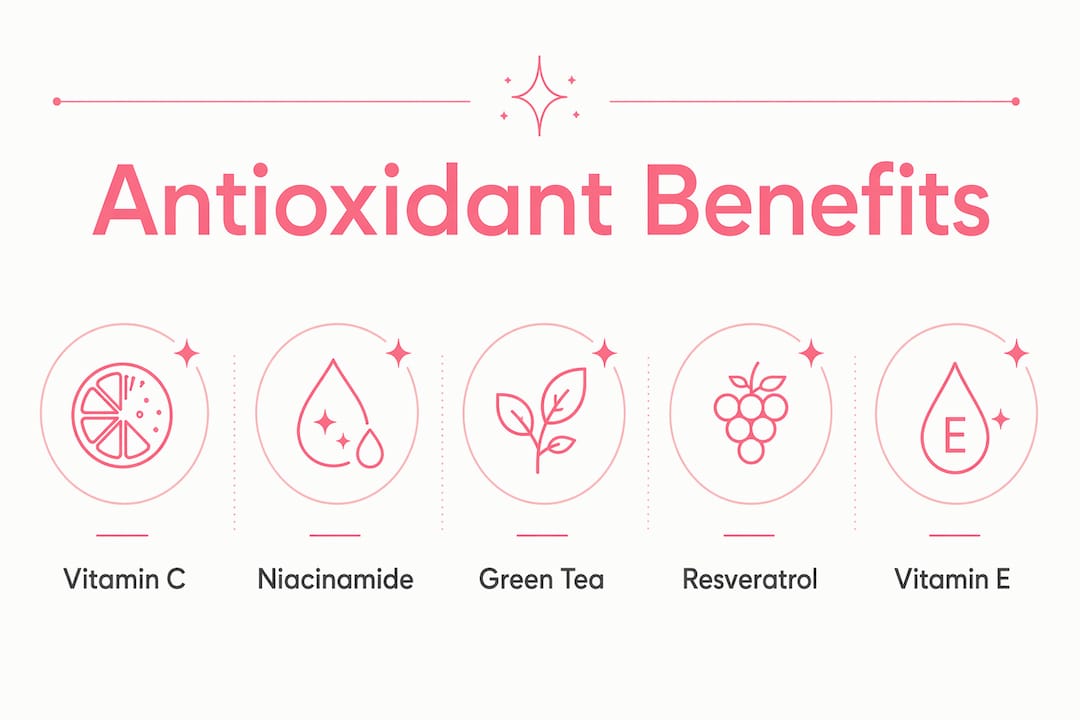
Vitamin C (L-ascorbic acid)
Vitamin C is the gold standard for brightening and collagen support. As the skin’s most abundant natural antioxidant, it scavenges ROS, inhibits tyrosinase (the enzyme behind dark spots), and directly fuels collagen synthesis. Effective concentrations in serums typically run between 10% and 20% L-ascorbic acid, though stabilized derivatives like ascorbyl glucoside work at lower percentages with less irritation risk. For a deeper look at how to use it, Spyraverified’s guide on vitamin C serum benefits covers concentration choices and layering strategies.
Niacinamide (vitamin B3)
Niacinamide earns its place in nearly every skin type’s routine. At concentrations between 2% and 10%, with 5% often cited as the sweet spot, it visibly reduces pore appearance, controls excess sebum, reinforces the ceramide-based skin barrier, and calms inflammatory signals. Unlike vitamin C, it is stable across a wide pH range, which makes it easier to formulate and less prone to degradation in standard packaging.
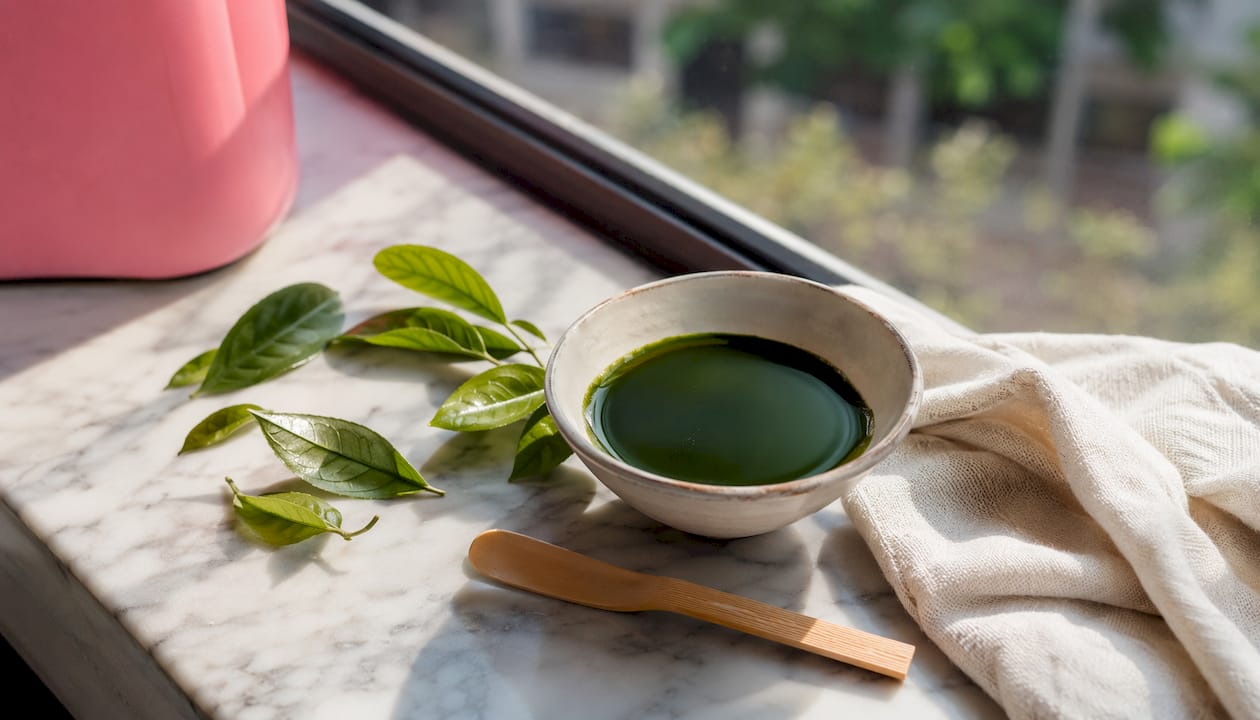
Green tea polyphenols (EGCG)
Epigallocatechin gallate (EGCG), the primary active in green tea extract, is one of the most studied plant-derived antioxidants in dermatology. It neutralizes multiple ROS types, suppresses UV-induced inflammation, and shows promise in reducing UV-triggered DNA damage. Green tea also contains flavonoids, which research now recognizes for a dual role: ROS scavenging and iron chelation, the combination that emerging formulations are increasingly designed around.
Resveratrol
Found naturally in grape skin and certain berries, resveratrol activates the Nrf2 transcription pathway, which essentially switches on the skin’s own antioxidant enzyme production. This makes it unusual: rather than just donating electrons to neutralize ROS, it amplifies the skin’s internal defense system. It pairs well with vitamin E and ferulic acid in formulations targeting photoaging.
Vitamin E (tocopherol)
Vitamin E works best as a team player. On its own, it is a solid lipid-soluble antioxidant that protects cell membranes. Combined with vitamin C, the synergistic effect is well-documented: vitamin E stabilizes vitamin C in the formula, reduces the irritation that high-dose ascorbic acid can cause, and the two together provide stronger photoprotection than either delivers alone.
Comparison: key antioxidants at a glance
| Antioxidant | Primary benefit | Best skin concern | Stability |
|---|---|---|---|
| Vitamin C (L-ascorbic acid) | Brightening, collagen support | Hyperpigmentation, dullness | Low (needs careful packaging) |
| Niacinamide (5%) | Barrier repair, oil control | Enlarged pores, redness, acne | High |
| Green tea (EGCG) | Anti-inflammatory, UV protection | Photoaging, sensitive skin | Moderate |
| Resveratrol | Activates internal antioxidant enzymes | Photoaging, fine lines | Moderate |
| Vitamin E (tocopherol) | Membrane protection, synergy with C | Dryness, general photoprotection | High (in oil-based formulas) |
Pro Tip: Pair vitamin C with vitamin E and ferulic acid. This trio is one of the most clinically validated combinations in antioxidant skincare, and ferulic acid further stabilizes both vitamins while adding its own photoprotective activity.
How to build antioxidants into your daily routine
The order you apply products matters more than most people realize. Antioxidants, especially water-based serums, absorb best on clean skin before heavier moisturizers or oils create a barrier.
- Cleanse first. Remove surface debris and sunscreen residue so antioxidants can actually penetrate. A gentle, pH-balanced cleanser works well here; Spyraverified’s picks for sensitive skin face washes are a good starting point if your skin reacts easily.
- Apply your antioxidant serum on damp skin. Slightly damp skin absorbs water-soluble actives like vitamin C and niacinamide more readily than completely dry skin.
- Layer from thinnest to thickest. Antioxidant serum goes before moisturizer, which goes before SPF in the morning. At night, the serum goes on before any facial oil or richer treatment.
- Always follow with SPF in the morning. Antioxidants and sunscreen are not interchangeable. SPF blocks UV photons; antioxidants neutralize the ROS those photons generate. You need both.
- Introduce one new antioxidant at a time. If you are adding a high-dose vitamin C or a new polyphenol complex, give your skin two to three weeks before layering in another active. This makes it much easier to identify what is causing any reaction.
- Patch test every new product. Apply a small amount to the inner forearm or behind the ear for 24–48 hours before full-face use. Spyraverified has a detailed breakdown of why patch testing matters that is worth reading before you start.
Pro Tip: Vitamin C serums oxidize quickly once opened. If your serum has turned orange or brown, it has already degraded and will not deliver the brightening benefits you paid for. Buy smaller bottles and use them within three months of opening.
Risks, drawbacks, and what can go wrong with antioxidant use
Antioxidants are not universally gentle, and the category’s reputation for being “good for everyone” leads people to skip precautions they should not skip.
- Instability is the biggest practical problem. Vitamin C, retinoids, and several polyphenols degrade rapidly when exposed to light, air, or heat. A product in a clear glass jar left on a sunny bathroom shelf loses potency fast. Airless pumps and opaque containers are the standard the American Academy of Dermatology points to for preserving antioxidant efficacy.
- High-dose vitamin C can irritate. Concentrations above 15% L-ascorbic acid cause stinging, redness, and peeling in people with sensitive or dry skin. Stabilized derivatives are a better entry point for reactive skin types.
- Retinoids, while technically antioxidant-adjacent, carry their own risk profile. Retinoids can be particularly irritating for dry and sensitive skin, especially when introduced too quickly or layered with other actives. If you want the anti-aging benefits without the irritation risk, Spyraverified’s guide to Japanese retinol alternatives covers gentler options.
- Stacking multiple potent antioxidants without acclimation backfires. Combining several strong actives at once raises the risk of irritation, particularly for redness-prone skin. Polyphenol-based products tend to be better tolerated as a starting point.
- Natural does not automatically mean safer or more effective. Natural antioxidants from botanical sources can contain allergens, and their concentration in a finished product is often lower than synthetic equivalents. Synthetic vitamin C (L-ascorbic acid) is chemically identical to the natural form and equally effective.
The ingredient list position matters. Antioxidants listed in the first third of a formula are present at meaningful concentrations. An ingredient buried near the preservatives is likely there in trace amounts that will not produce visible results.
Expert perspective: choosing antioxidants that actually match your skin
Dermatological research frames antioxidants as a preventative strategy, not a corrective one. They slow the accumulation of oxidative damage over time, but they do not reverse deep structural changes that have already occurred. Starting earlier produces better long-term outcomes than starting after significant photoaging has set in.
The practical implication: if you spend significant time outdoors or live in a high-pollution urban area, a formula that includes flavonoids or polyphenols alongside vitamin C gives you broader coverage than vitamin C alone. The iron-chelating angle is not marketing language; it addresses a real gap in how most antioxidant products are designed.
Matching antioxidants to your skin type also matters. Oily and acne-prone skin responds well to niacinamide-forward formulas and lightweight vitamin C serums. Dry or mature skin benefits from vitamin E-rich formulations that protect cell membranes while delivering moisture. Sensitive skin does best starting with green tea or resveratrol-based products before introducing higher-dose vitamin C. For a broader look at how antioxidants fit alongside other actives, the luxury grooming ingredients guide from Ironwood Grooming offers a useful cross-reference for understanding how these compounds interact with other skin actives.
Pro Tip: When reading an ingredient label, look for “ascorbic acid,” “sodium ascorbyl phosphate,” or “ascorbyl glucoside” for vitamin C; “niacinamide” or “nicotinamide” for B3; and “epigallocatechin gallate” or “Camellia sinensis leaf extract” for green tea. These are the names that tell you the active is actually present.
Spyraverified curates antioxidant-rich formulas from Japanese and Asian beauty brands that often lead in formulation sophistication, particularly in polyphenol and fermented ingredient technology. Explore the full antioxidant skincare collection to find products built around stable, well-dosed actives rather than marketing claims.
Key Takeaways
Antioxidants protect skin by neutralizing free radicals at the cellular level, and their effectiveness depends on the right ingredient, the right concentration, and stable packaging that keeps actives from degrading before use.
| Point | Details |
|---|---|
| Vitamin C leads for brightening | It is the skin’s most abundant natural antioxidant and directly supports collagen synthesis. |
| Niacinamide (5%) is the versatile pick | It repairs the barrier, controls oil, and calms inflammation with minimal irritation risk. |
| Pair antioxidants with SPF, not instead of it | Antioxidants neutralize ROS that sunscreen cannot block; both are needed for full protection. |
| Packaging determines shelf life | Airless pumps and opaque containers prevent degradation; clear jars accelerate it. |
| Topical beats oral for skin delivery | Only a fraction of ingested antioxidants reaches the skin; topical application is more direct and effective. |
