


The Role of Vitamin C Serum in Healthy Skin
Vitamin C serum is defined as a topical antioxidant formulation that neutralizes free radicals, supports collagen production, and inhibits melanin synthesis to improve skin health. The role of vitamin C serum goes far beyond simple brightening. Clinically, the active form, L-ascorbic acid, works across multiple biological pathways simultaneously: it protects skin from UV-induced oxidative stress, stabilizes newly formed collagen, and fades hyperpigmentation through tyrosinase inhibition. Formulations at 10–20% concentration deliver the strongest anti-aging results without triggering excessive irritation. Few other single ingredients address aging, pigmentation, and environmental damage at the same time.
What does the role of vitamin C serum mean for your skin?
Vitamin C serum acts as a first-line defense against environmental damage by neutralizing reactive oxygen species (ROS) generated by UV radiation and airborne pollutants. Free radicals are unstable molecules that break down collagen fibers and damage cellular DNA. Left unchecked, they accelerate visible signs of photoaging, including fine lines, uneven tone, and loss of firmness.
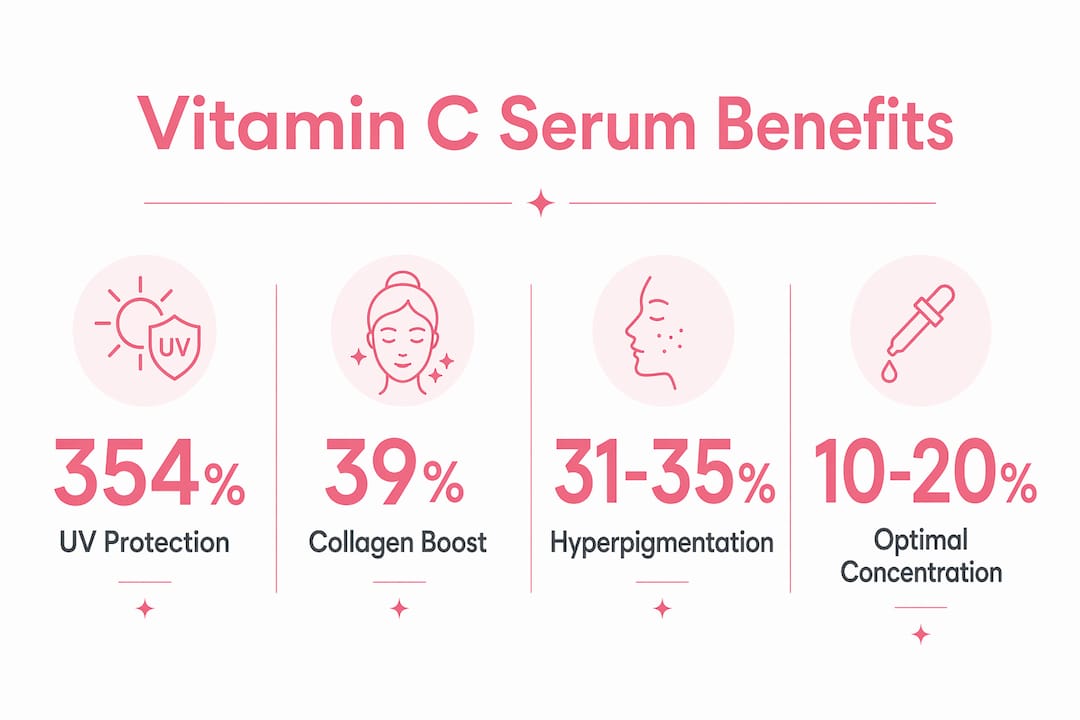
Clinical research confirms that advanced antioxidant formulations reduce UV-induced erythema by up to 354%, and THD-Ascorbate derivatives decrease reactive oxygen species by 88% within 30 minutes of application. That level of protection means your skin recovers faster from sun exposure and accumulates less cumulative damage over time.
Vitamin C serum complements sunscreen but does not replace it. Sunscreen blocks UV photons from reaching the skin. Vitamin C neutralizes the oxidative byproducts that sunscreen misses, creating a two-layer defense against photoaging. Together, they outperform either ingredient used alone.
The antioxidant action also protects collagen directly. Free radicals activate enzymes called matrix metalloproteinases (MMPs), which break down existing collagen. By scavenging ROS before they trigger MMP activity, vitamin C serum preserves the structural integrity of the skin over time.
- Neutralizes UV and pollution-generated free radicals before they damage collagen
- Reduces UV-induced redness and oxidative stress measurably within minutes of application
- Provides supplemental photoprotection that works alongside sunscreen
- Protects cellular DNA from oxidative degradation linked to premature aging
Pro Tip: Apply your vitamin C serum before sunscreen every morning. The antioxidant layer underneath your SPF catches the oxidative stress that UV filters alone cannot block.
What role does vitamin C serum play in collagen synthesis?
Vitamin C is a required cofactor for two enzymes, prolyl hydroxylase and lysyl hydroxylase, that stabilize the collagen triple helix structure. Without adequate vitamin C, collagen synthesized by skin cells is structurally weak and degrades rapidly. That degradation shows up as fine lines, sagging, and reduced skin firmness.
Vitamin C also enhances collagen gene expression and suppresses MMPs, the enzymes responsible for breaking down existing collagen. The result is a dual effect: more collagen produced, less collagen destroyed. This is why consistent use produces measurable changes in skin texture and firmness rather than just surface-level glow.
Clinical data backs this up. A 15% L-ascorbic acid serum combined with vitamin E and ferulic acid produces a 39% reduction in fine lines over 12 weeks of daily use. That figure reflects real structural improvement in the dermis, not just hydration or light-reflecting effects.
Concentration matters significantly. The table below shows how concentration affects both efficacy and tolerability.
| Concentration | Efficacy | Tolerability |
|---|---|---|
| Below 8% | Limited anti-aging effect | Well tolerated by most skin types |
| 10–15% | Strong antioxidant and collagen support | Suitable for most adults |
| 16–20% | Maximum anti-aging efficacy | May cause mild tingling or redness |
| Above 20% | No added benefit; absorption plateaus | Higher irritation risk |
Vitamin C absorption plateaus at 20% concentration. Going higher increases irritation without increasing results. For most people, a 10–20% formulation at a pH below 3.5 hits the sweet spot between penetration and comfort.
Pro Tip: If you are new to vitamin C serum, start at 10% and use it every other day for two weeks before moving to daily application. Your skin builds tolerance faster than you expect.
To understand how vitamin C fits into a broader collagen-focused routine, the types of collagen skincare products guide covers complementary ingredients worth knowing.
How does vitamin C serum affect hyperpigmentation and skin tone?
Vitamin C inhibits tyrosinase, the key enzyme in melanin synthesis, by altering the copper ions the enzyme needs to function. Without active tyrosinase, melanin production slows. Less melanin means existing dark spots fade gradually and new ones form more slowly.
Clinical evidence shows a 31–35% improvement in hyperpigmentation after 12 weeks of consistent use at 10–15% serum concentration. That timeline matters. Many people abandon vitamin C serum after a few weeks expecting dramatic results. The mechanism is gradual by design, working with the skin’s natural cell turnover cycle.
Vitamin C is also a safer alternative to harsh bleaching agents. It does not strip melanocytes from the skin. It simply slows overproduction, making it appropriate for long-term use on conditions like melasma, post-inflammatory hyperpigmentation, and sun spots.
- Inhibits tyrosinase enzyme to slow melanin production at the source
- Fades existing dark spots through gradual reduction in pigment concentration
- Reduces post-inflammatory hyperpigmentation from acne or sun damage
- Carries anti-inflammatory properties that reduce redness alongside pigmentation
- Works synergistically with retinol and AHAs for faster, more complete results
For readers who want to understand the difference between brightening and whitening approaches, the brightening vs whitening skincare guide explains the distinction clearly.
What are best practices for using vitamin C serum effectively?
Apply vitamin C serum in the morning, after cleansing on dry skin, and before sunscreen. This sequence maximizes photoprotection throughout the day by placing the antioxidant layer directly against the skin before UV exposure begins. Applying it on damp skin dilutes the active concentration and reduces absorption.
Formulation choice determines how much of the active ingredient your skin actually receives. L-ascorbic acid is the most potent form but oxidizes quickly when exposed to air and light. An oxidized serum turns yellow or brown and loses its efficacy. Worse, it can generate free radicals instead of neutralizing them. Pairing L-ascorbic acid with vitamin E and ferulic acid stabilizes the formula and boosts antioxidant capacity significantly.
Storage is not optional. Keep your serum in an airtight, opaque bottle away from direct light and heat. Bathroom shelves near showers are poor storage locations because of humidity and temperature swings. A cool, dark cabinet or a dedicated skincare drawer works far better.
- Cleanse your face and pat it dry before applying serum
- Apply 3–4 drops of vitamin C serum to your fingertips and press gently into skin
- Wait 60–90 seconds for the serum to absorb before layering other products
- Follow with a moisturizer, then apply SPF 30 or higher as the final step
- For sensitive skin, start with every-other-day use and increase to daily as tolerance builds
Layering mistakes are the most common reason people report irritation or poor results. Applying vitamin C serum directly over retinol or strong AHAs in the same routine raises the risk of redness and barrier disruption. The common skincare layering mistakes guide covers the most frequent errors and how to fix them without rebuilding your entire routine.
Pro Tip: If your serum has turned orange or brown, replace it. An oxidized vitamin C serum does more harm than good, and no amount of careful application will recover its lost potency.
Key Takeaways
Vitamin C serum is one of the most clinically supported topical ingredients available, addressing oxidative damage, collagen loss, and hyperpigmentation through distinct and well-documented biological mechanisms.
| Point | Details |
|---|---|
| Antioxidant protection | Vitamin C neutralizes UV and pollution-generated free radicals before they degrade collagen or DNA. |
| Collagen support | Acts as a required cofactor for collagen-stabilizing enzymes; clinical use at 10–20% shows a 39% reduction in fine lines. |
| Hyperpigmentation fading | Inhibits tyrosinase enzyme; consistent use at 10–15% produces 31–35% improvement in dark spots over 12 weeks. |
| Formulation stability | Pair L-ascorbic acid with vitamin E and ferulic acid; store in airtight, dark bottles to prevent oxidation. |
| Application sequence | Apply after cleansing on dry skin, before sunscreen, every morning for maximum photoprotective benefit. |
What I’ve learned from years of watching people use vitamin C serum wrong
Most people who tell me vitamin C serum “didn’t work” for them made one of two mistakes. They either used an oxidized product without realizing it, or they expected results in two weeks from a process that takes three months. Neither failure is about the ingredient. Both are about expectation and product management.
What I find genuinely underappreciated is how much the formulation matrix matters. A 15% L-ascorbic acid serum in a poorly stabilized base delivers a fraction of the benefit of a 10% serum with vitamin E and ferulic acid. The supporting ingredients are not marketing additions. They are functional chemistry that determines whether the active survives long enough to reach your skin cells.
The other thing I keep coming back to is the sunscreen pairing. Vitamin C serum is not a standalone photoprotection strategy. It is a force multiplier for SPF. People who use both consistently age differently from people who use either one alone. That combination is the closest thing to a proven anti-aging protocol that dermatology has produced.
My honest recommendation: treat vitamin C serum as a foundational morning step, not a treatment you cycle in and out. The benefits compound over months and years. The people who see the most dramatic improvements are the ones who are still using it consistently two years later.
— Anni
Vitamin C skincare worth adding to your morning routine
Spyraverified curates vitamin C skincare from Japanese and Asian beauty brands that are difficult to find outside their home markets. The collection includes antioxidant serums, brightening cleansers, and complementary products formulated with the concentration ranges and ingredient pairings discussed throughout this article.
The Spyraverified skincare collection covers every step of a vitamin C-focused morning routine, from cleansing with the Vitamin C Citrus Foam Face Wash to layering with targeted serums. Every product is sourced directly from verified manufacturers, so you get authentic formulations at the concentrations that clinical evidence actually supports.
FAQ
What does vitamin C serum actually do for skin?
Vitamin C serum neutralizes free radicals, supports collagen production, and inhibits melanin synthesis. These three functions address oxidative aging, skin firmness, and hyperpigmentation simultaneously.
How long does it take to see results from vitamin C serum?
Visible improvement in fine lines and hyperpigmentation typically appears within 8–12 weeks of daily use. Consistent application is required because the effects build gradually through skin cell turnover.
Is vitamin C serum effective for dark spots?
Clinical studies show a 31–35% improvement in hyperpigmentation after 12 weeks at 10–15% concentration. The mechanism is tyrosinase inhibition, which slows melanin production at the source rather than bleaching existing pigment.
What concentration of vitamin C serum should I use?
The 10–20% range delivers the best balance of efficacy and tolerability. Concentrations below 8% show limited anti-aging effect, while concentrations above 20% increase irritation risk without improving results.
Can I use vitamin C serum with retinol?
Vitamin C and retinol work synergistically for hyperpigmentation, but applying both in the same routine session raises irritation risk. Use vitamin C serum in the morning and retinol at night to get the benefits of both without barrier disruption.
