


Types of Collagen Skincare Products: 2026 Guide
Collagen is the structural protein that gives skin its firmness, elasticity, and ability to bounce back. Types of collagen skincare products range from oral supplements and serums to sheet masks and hydrogel treatments, each delivering collagen benefits through a different mechanism. Type I and Type III are the two forms that matter most for skin, and knowing the difference between them changes how you shop. This guide breaks down every major product format, collagen source, and selection strategy so you can build a routine that actually works.
1. What are the main types of collagen used in skincare?
Skin-focused collagen products primarily feature Type I and Type III collagen, with Type I making up over 90% of the body’s total collagen supply. That dominance explains why most skincare formulas center on Type I. Type III works alongside it, contributing to skin suppleness and the soft, elastic quality that fades with age.
- Type I collagen: The dominant structural protein in skin, bone, and tendons. Marine collagen sources deliver 85–95% Type I, making them the go-to for skin-focused products.
- Type III collagen: Found alongside Type I in skin and blood vessels. Bovine collagen sources supply a natural mix of Types I and III, which makes them useful for both skin and connective tissue support.
- Type IV collagen: Forms a thin layer beneath the skin’s surface. It appears in some advanced formulas but is not a primary ingredient in mainstream skincare.
- Type V collagen: Supports cell surfaces and hair. Rarely featured as a standalone ingredient in consumer skincare.
Hydrolyzed collagen peptides have a molecular weight of 2,000–5,000 Da, which is small enough for the body to absorb efficiently. Larger, non-hydrolyzed collagen molecules cannot cross the skin barrier or the gut lining at meaningful levels. This is why “hydrolyzed” on a product label is not a marketing term. It is a functional requirement.
2. Oral collagen supplements: the systemic approach
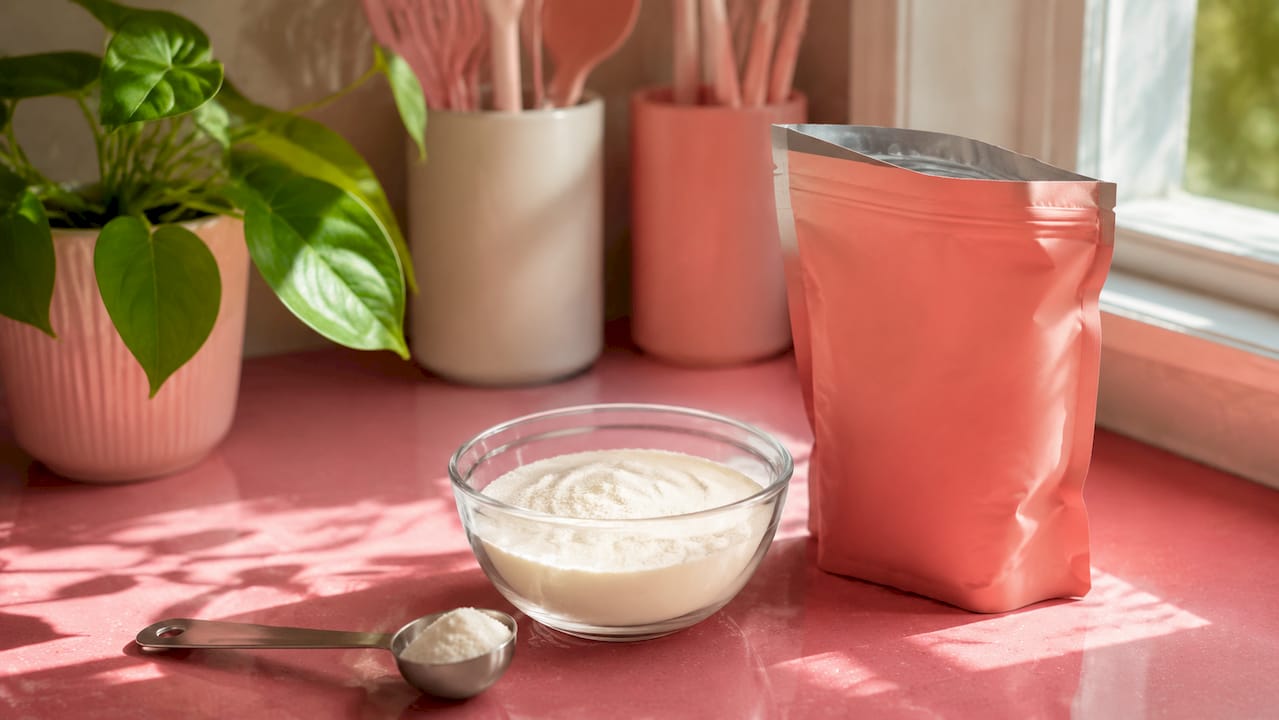
Oral collagen supplements are the most research-backed format for improving skin from within. Daily supplementation with 10 g of bioactive collagen peptides for 12 weeks significantly improves wrinkle count, wrinkle length, skin elasticity, and hydration in middle-aged women. The statistical significance of that result (p < 0.0002 for wrinkle count) is hard to dismiss.
Oral peptides work by reaching the bloodstream and stimulating fibroblasts, the cells responsible for producing new collagen in the dermis. Bioactive collagen peptides direct fibroblast activity and extracellular matrix synthesis, which is why peptide size and bioavailability matter so much for efficacy. Newer research also suggests that oral collagen peptides may regulate mitochondria and lysosome functions in skin cells, extending their benefit beyond simple structural support.
Supplements come in powders, capsules, and ready-to-drink formats. Powders tend to offer higher doses per serving and mix easily into coffee or smoothies.
3. Topical collagen creams and moisturizers
Topical collagen products work differently from oral supplements, and the distinction matters. Topical collagen acts mainly as a humectant, providing temporary surface hydration rather than rebuilding the skin’s structural fibers. The collagen molecule in a cream is too large to penetrate the dermis, so it sits on the skin’s surface and draws moisture to it.
That surface-level action is still genuinely useful. Well-formulated collagen creams reduce the appearance of fine lines by plumping the outer skin layer with hydration. They work best as part of a broader routine that includes peptide-based serums or oral supplementation for deeper results.
When comparing collagen creams, look for products that combine collagen with hyaluronic acid or niacinamide. These ingredients amplify the hydration effect and support the skin barrier. Pairing a collagen cream with a Vitamin C Cream Mist Spray also makes sense, since vitamin C is a required cofactor for collagen synthesis in the skin.
4. Collagen serums: concentrated and fast-absorbing
Collagen serums sit between creams and supplements in terms of delivery. They are water-based, lightweight, and formulated with smaller peptide fragments that can interact with the skin’s upper layers more effectively than a thick cream. The best collagen serums combine hydrolyzed collagen with peptides like Matrixyl or Argireline, which signal the skin to produce more of its own collagen.
Serums are applied after cleansing and before moisturizer. This placement matters because serums need direct contact with clean skin to work. Applying them over a moisturizer blocks absorption. For a deeper look at how layering order affects results, the guide on skincare layering mistakes covers the most common errors people make.
Pro Tip: Apply your collagen serum to slightly damp skin. The residual moisture helps the peptides spread evenly and absorb faster.
5. Collagen face masks: sheet, hydrogel, and peel-off
Collagen face masks deliver a concentrated dose of hydration and peptides in a single session. Standard application time is 10–20 minutes, with a recommended frequency of 1–3 times weekly to maintain hydrating and smoothing effects. Using a mask more often than that does not increase benefits and can irritate sensitive skin.
The three main mask formats each have a distinct advantage:
- Sheet masks: The most accessible format. Fabric or fiber sheets soaked in collagen-rich essence. Easy to use, widely available, and good for a quick hydration boost.
- Hydrogel masks: Hydrogel masks offer superior adherence and hydration locking compared to fabric sheet masks. The gel material prevents the essence from evaporating, which delivers a stronger temporary plumping effect.
- Peel-off masks: Collagen is suspended in a film-forming base that you peel away after drying. These provide a mild exfoliating effect alongside hydration, making them useful for dull or congested skin.
Hydrogel is the format to choose when you want maximum immediate impact before an event or photo. Sheet masks are the better everyday option for consistent weekly use.
6. Comparison of marine, bovine, and vegan collagen sources
The source of collagen determines its type, molecular weight, and how well your body absorbs it. Here is a direct comparison:
| Source | Collagen types | Absorption | Best for |
|---|---|---|---|
| Marine (fish, shellfish) | Primarily Type I (85–95%) | High (smaller particle size) | Skin elasticity and hydration |
| Bovine (cow hide, bones) | Types I and III | Moderate | Skin and connective tissue |
| Porcine (pig skin) | Types I and III | Moderate | Similar profile to bovine |
| Vegan “collagen” | None (amino acid blends) | N/A | Supporting natural synthesis |
Marine collagen is prized for its smaller particle size and high Type I content, which enhances absorption compared to bovine collagen. That faster absorption makes marine collagen the preferred choice for skin-specific goals. Bovine collagen’s combination of Types I and III makes it more versatile for people who also want joint or connective tissue support.
Vegan collagen products do not contain actual collagen. They consist of amino acid blends, botanical extracts, and precursors designed to support the skin’s own collagen synthesis pathways. They can be effective for people who avoid animal products, but they work through a completely different mechanism. Calling them “collagen” is technically inaccurate.
Pro Tip: If you follow a pescatarian diet, marine collagen supplements give you the highest Type I concentration with the best absorption profile. If you are fully plant-based, look for formulas with glycine, proline, and vitamin C, the three key building blocks your skin uses to make collagen.
7. How to choose the best collagen skincare products for your skin
Choosing the right collagen product starts with identifying your primary skin concern. The options below map directly to the most common goals:
- For wrinkles and loss of firmness: Prioritize oral hydrolyzed collagen peptides at 5–10 g per day. Pair with a collagen serum containing Matrixyl or copper peptides for surface-level support.
- For dehydration and dullness: A hydrogel collagen mask used 2–3 times weekly delivers fast, visible results. Follow with a collagen cream to lock in moisture.
- For overall skin health and prevention: Combine a daily oral supplement with a topical collagen moisturizer. This two-track approach addresses both internal production and surface hydration.
- For sensitive skin: Choose marine collagen over bovine. Marine collagen’s smaller peptide size is gentler and less likely to cause reactions.
- For vegan routines: Select products with amino acid precursors (glycine, proline, hydroxyproline) and vitamin C. These support collagen synthesis without animal-derived ingredients.
Always check the label for the word “hydrolyzed.” Hydrolyzed collagen is critical for absorption, turning large molecules into smaller peptides that the body can actually use. Non-hydrolyzed collagen in a supplement or serum is largely wasted. Realistic expectations also matter. Consistent use is necessary for visible skin benefits, with results typically appearing after several weeks of regular use rather than immediately.
For a broader look at how collagen fits into a complete anti-aging routine, the Spyraverified guide on Japanese anti-aging ingredients covers complementary actives that work well alongside collagen.
Key takeaways
The most effective collagen skincare routine combines hydrolyzed oral peptides for internal production with topical formats like serums and masks for surface hydration and short-term plumping.
| Point | Details |
|---|---|
| Hydrolyzed collagen is non-negotiable | Only hydrolyzed peptides (2,000–5,000 Da) absorb well enough to stimulate skin repair. |
| Oral supplements outperform topical creams | 10 g of bioactive peptides daily for 12 weeks shows measurable wrinkle and elasticity improvement. |
| Marine collagen absorbs fastest | Its smaller particle size and high Type I content make it the top choice for skin-specific goals. |
| Topical collagen hydrates, not rebuilds | Creams and masks work at the surface level; they do not replace lost collagen fibers in the dermis. |
| Mask format changes the result | Hydrogel masks lock in more hydration than sheet masks and deliver a stronger immediate plumping effect. |
What I actually think about collagen skincare
The biggest misconception I see is people applying a collagen cream and expecting it to rebuild their skin from the inside out. That is not how it works, and no amount of marketing language changes the biology. Topical collagen does not replace skin fibers. It hydrates the surface. That is genuinely useful, but it is a different job.
What I have found actually works is treating collagen as a two-layer strategy. You take the oral peptides to drive internal production, and you use topical formats to manage how your skin looks and feels day to day. Neither approach alone is as effective as both together. The people who get frustrated with collagen products are almost always relying on just one layer.
The other thing I would push back on is the obsession with exotic sources. Marine collagen is excellent, but a well-formulated bovine supplement with Types I and III is not a lesser product. It depends entirely on your goals. If you are also dealing with joint discomfort or want a more versatile supplement, bovine is the smarter pick. Skin-only goal? Go marine.
Patience is the part nobody wants to hear. Collagen routines reward consistency over weeks, not days. Build the habit before you judge the results.
— Anni
Discover collagen skincare at Spyraverified
Spyraverified curates collagen-enhancing skincare from Japanese and Asian brands that are rarely available outside their home markets. Every product in the collection is sourced directly from manufacturers, so ingredient transparency is built in rather than bolted on.

Whether you are starting with a hydrogel mask, a collagen serum, or a daily peptide supplement, the Spyraverified skincare collection brings together formats and formulas that match the science covered here. Not sure where to start? The Spyraverified skin quiz matches your skin concerns to the right product types in under two minutes.
FAQ
What is the most effective type of collagen for skin?
Type I collagen is the most effective for skin, making up over 90% of the skin’s collagen supply. Marine collagen delivers the highest concentration of Type I with the best absorption due to its smaller particle size.
Can topical collagen creams rebuild lost collagen?
No. Topical collagen molecules are too large to penetrate the dermis. They work as humectants, hydrating the skin’s surface and temporarily reducing the appearance of fine lines.
How long does it take to see results from collagen supplements?
Clinical research shows measurable improvements in wrinkle count, elasticity, and hydration after 12 weeks of daily supplementation with 10 g of bioactive collagen peptides. Most people notice initial changes after 4–6 weeks.
What is the difference between marine and bovine collagen?
Marine collagen is primarily Type I and absorbs faster due to its smaller molecular weight. Bovine collagen contains both Type I and Type III, making it useful for skin and connective tissue support.
Are vegan collagen products real collagen?
No. Vegan collagen products contain amino acid blends and botanical precursors that support the body’s own collagen production. They do not contain collagen from any source.
