

Scalp Care Routine: Simple Steps for a Healthier Scalp
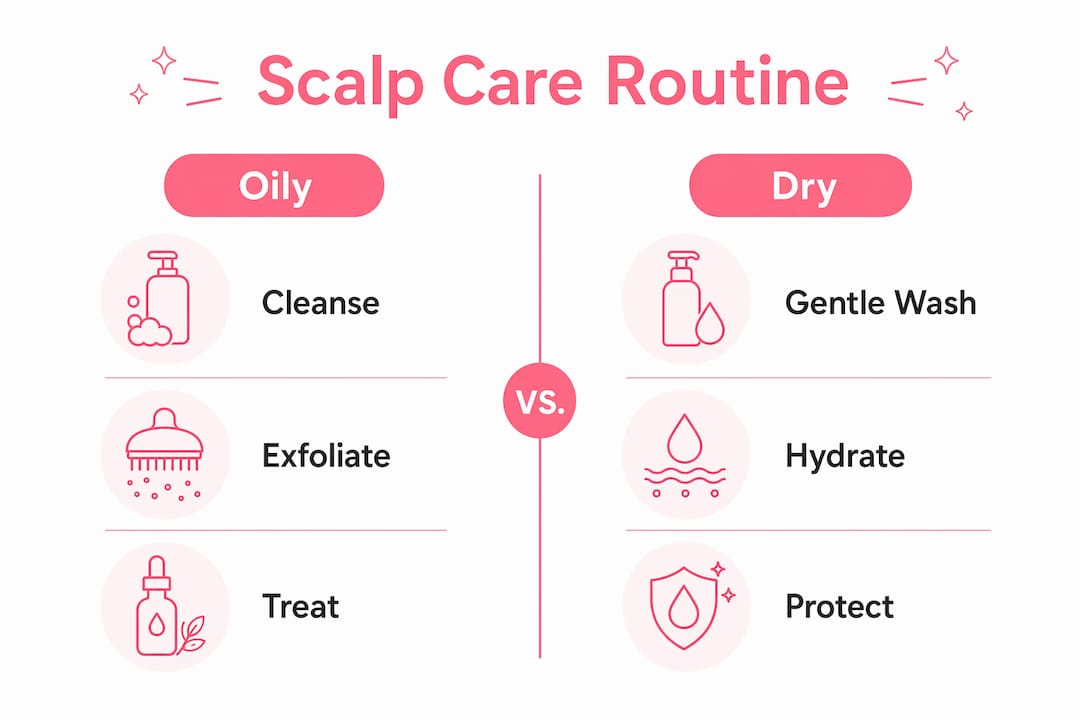
A scalp care routine is a skin-first sequence of five stages: cleanse, exfoliate, treat, hydrate, and protect. Think of it as a facial skincare routine, just moved three inches north. Board-certified dermatologists and CDC hygiene guidance both frame the scalp as living skin that produces sebum, sheds dead cells, and hosts a microbiome — not just a platform for hair. When those five stages are done consistently, most people notice reduced flaking, less itch, and stronger hair within a few weeks.
- Cleanse: Removes sebum, sweat, and product buildup that block follicles.
- Exfoliate: Breaks up compacted dead skin cells before they cause flaking or congestion.
- Treat: Delivers targeted actives (anti-dandruff, growth-stimulating, soothing) directly to the scalp skin.
- Hydrate: Restores moisture to the skin barrier without weighing hair down.
- Protect: Guards against UV damage, pollution, and physical abrasion.
Table of Contents
- What is a scalp care routine, and how do you build one in five steps?
- How to choose the right products and ingredients for your scalp type
- How to perform each step correctly
- Red flags, hygiene rules, and when to see a dermatologist
- How long until you see real improvement?
- What you eat and drink shows up on your scalp
- How stress, sleep, and environment affect your scalp
- Why your scalp needs sun protection too
- Common scalp care myths worth dropping
- Key Takeaways
- The case for treating your scalp like your face
- Start your scalp routine with the right products
- Authoritative sources and further reading
What is a scalp care routine, and how do you build one in five steps?
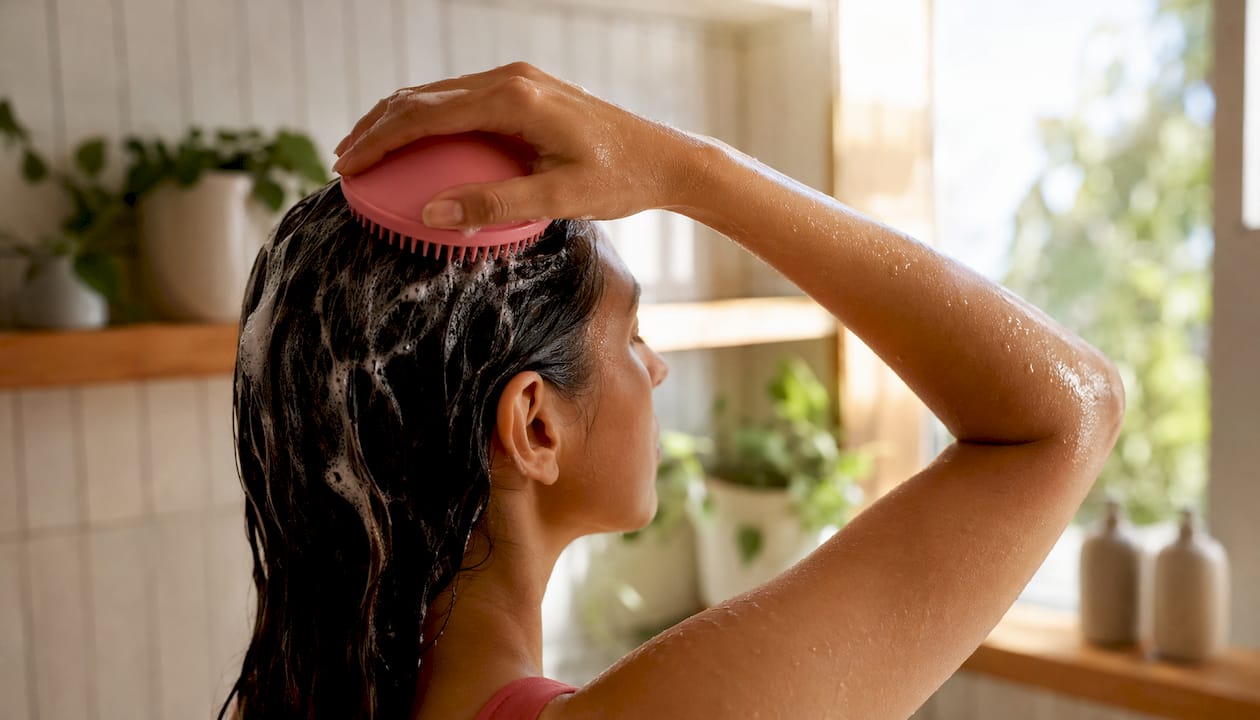
Board-certified dermatologists recommend applying shampoo directly to the scalp, not just the hair lengths, and massaging gently for about 60 seconds. That single adjustment does more for most people than switching to an expensive product.
Step-by-step for a single wash session:
- Brush hair before stepping into the shower to loosen debris and product residue.
- Wet the scalp thoroughly with warm (not hot) water.
- Apply a pea-to-quarter-sized amount of shampoo directly to the scalp and massage with fingertips for 60 seconds.
- Rinse completely; leftover shampoo is a common irritation trigger.
- Follow with conditioner on the lengths only, not the scalp, unless your scalp is very dry.
On deep-care days, add exfoliation before shampooing and a leave-in scalp serum or hydrator after.
Frequency by scalp type:
| Scalp Type | Cleanse | Exfoliate | Treat |
|---|---|---|---|
| Oily | Frequent cleansing | Regular exfoliation | Several times per week |
| Dry | Infrequent cleansing | Occasional exfoliation | Weekly treatments |
| Combination | Moderate cleansing | Intermittent exfoliation | Twice weekly treatments |
| Sensitive | Gentle cleansing | Rare exfoliation | As tolerated |
| Dandruff-prone | Frequent cleansing | Regular exfoliation | Several times per week with medicated treatments |
As the AAD notes, dry or textured hair types may need to shampoo as infrequently as every 2–3 weeks, while oily scalps often benefit from more frequent washing. The table above is a starting point, not a prescription.
Pro Tip: If you only have time for two changes, make them the 60-second scalp massage during shampooing and a weekly exfoliation session. Those two steps deliver the fastest visible feedback.
How to choose the right products and ingredients for your scalp type
Ingredient selection is where most people either get real results or spin their wheels. The scalp responds to actives the same way facial skin does, so matching the ingredient to the condition matters.
By scalp type:
- Oily: Salicylic acid (dissolves sebum in follicles), tea tree oil (antimicrobial), lightweight surfactants. Avoid heavy silicones.
- Dry: Glycerin, hyaluronic acid derivatives, ceramides. Look for sulfate-free or low-sulfate formulas.
- Sensitive: Fragrance-free, minimal actives, no alcohol high on the ingredient list. Patch-testing new actives before full application prevents flare-ups.
- Dandruff-prone: Zinc pyrithione, ketoconazole, selenium sulfide, and coal tar are the evidence-backed actives. Medicated shampoos work best used 2–3 times weekly until symptoms improve, then tapered.
Product types to know:
- Clarifying shampoos cut through heavy buildup but strip the barrier if used daily. Reserve them for once a week at most.
- Gentle sulfate-free shampoos suit most scalp types for regular use.
- Pre-shampoo exfoliants (physical or chemical) go on before cleansing. Chemical exfoliants like salicylic, glycolic, and lactic acids dissolve dead-cell bonds; physical scrubs with sugar or jojoba beads work mechanically.
- Leave-in scalp serums or hydrators absorb post-wash and don’t need rinsing.
- Medicated shampoos are treatment tools, not daily cleansers.
Pro Tip: A label that says “nourishing” or “moisturizing” tells you almost nothing. Flip to the ingredient list and look for the actives above within the first five to seven ingredients.
Many people mistake product buildup for dry skin. A thorough cleanse and exfoliation check should come before reaching for heavier moisturizers.
How to perform each step correctly
Technique is what separates a routine that works from one that causes more problems.
Step-by-step technique:
- Pre-shower brush: Use a wide-tooth comb or soft-bristle brush to loosen surface debris before water touches your hair.
- Exfoliate (on deep-care days): Apply the exfoliant to a wet scalp before shampoo. Work it in with fingertip pads, not nails, in small circular motions. Leave on for the time the product specifies, then rinse.
- Cleanse: Apply shampoo to the scalp, not the lengths. Massage with fingertip pads for 60 seconds. Rinse until water runs clear.
- Treat: Pat the scalp lightly dry, then apply any serum or treatment directly to the scalp skin. Part the hair in sections to reach the skin.
- Hydrate and protect: Apply a lightweight leave-in hydrator to the scalp if dry. On exposed parts (part line, hairline), apply an SPF product before heading outside.
Common mistakes:
- Scrubbing with fingernails instead of fingertip pads — this causes micro-abrasions.
- Applying shampoo only to the hair lengths and missing the scalp entirely.
- Using water that is too hot, which strips the skin barrier.
- Over-exfoliating: more than once a week for most scalp types causes irritation, not faster results.
- Skipping the rinse — leftover product residue is a leading cause of buildup and itch.
Pro Tip: A scalp massager tool amplifies the 60-second massage without the fatigue of doing it manually. Use it for cleansing; skip it for exfoliation days when the scalp is already being worked.
Red flags, hygiene rules, and when to see a dermatologist
Some scalp symptoms need a clinician, not a new shampoo.
See a dermatologist if you notice:
- Sudden, significant hair shedding beyond normal daily loss.
- Persistent painful inflammation, tenderness, or swelling.
- Open sores, bleeding, or crusting that doesn’t resolve in a week.
- Flaking and itch that don’t improve after 4–6 weeks of consistent anti-dandruff treatment.
- Any rapidly spreading rash or lesion on the scalp.
Hygiene rules (CDC-backed): The CDC recommends not sharing combs, brushes, or towels, since lice and ringworm spread through direct contact with contaminated personal items. Clean your tools weekly. Replace brushes every few months, or sooner if bristles are bent or damaged.
Medicated shampoos containing ketoconazole or selenium sulfide are effective but not meant for indefinite daily use. Follow the label cadence (typically 2–3 times weekly), and if symptoms worsen or new ones appear, stop and consult a dermatologist rather than increasing frequency.
How long until you see real improvement?
Most people begin noticing a difference in scalp comfort and hair texture after several weeks of consistent practice. Flaking tends to reduce first, followed by less itch, and then improved hair feel. Hair growth changes take longer, usually months, because the growth cycle itself is slow.
What to track:
- Oiliness level by day two or three after washing.
- Flake frequency and severity (a dark shirt test works).
- Itch level on a simple 1–10 scale, noted weekly.
- Hair breakage when combing.
- Photos of the part line every two weeks for visual comparison.
Starting with just cleanse and exfoliate, then adding treatments one at a time, gives you clean feedback on what is actually working. Layering five new products at once makes it impossible to know which one helped or which one caused a reaction.
What you eat and drink shows up on your scalp
The scalp is skin, and skin reflects what is happening internally. Omega-3 fatty acids (found in salmon, walnuts, and flaxseed) support sebum quality and reduce inflammation. Zinc deficiency is linked to increased shedding and dandruff-like flaking. B vitamins, particularly biotin and B12, support the hair follicle cycle.
Hydration matters too. A dehydrated scalp produces less effective sebum, which can leave the skin barrier compromised and more prone to irritation. Aim for consistent daily water intake rather than trying to compensate with heavy topical moisturizers.
How stress, sleep, and environment affect your scalp
Cortisol, the stress hormone, disrupts the hair growth cycle and can trigger or worsen seborrheic dermatitis and psoriasis flares. Poor sleep compounds this by reducing the skin’s overnight repair activity. Neither problem has a topical fix.
Environmental factors add another layer. Hard water leaves mineral deposits on the scalp that interfere with product performance. Dry indoor air (common in winter with central heating) pulls moisture from the scalp skin. A shower filter for hard water and a humidifier for dry indoor air are practical, low-effort adjustments that make topical products work better.
Why your scalp needs sun protection too
The part line and hairline are among the most commonly sunburned and skin-cancer-prone areas on the body, yet most people never apply SPF there. For exposed scalp areas, a powder SPF or a lightweight scalp-specific sunscreen spray works without leaving a greasy residue. Wearing a hat with UPF 50+ is the simplest option for full coverage.
UV damage on the scalp degrades the follicle environment over time, contributing to thinning and dryness. The microbiome and skin-barrier framing that dermatologists apply to facial skin applies here too: protect the barrier, and the follicles beneath it stay healthier longer.
Common scalp care myths worth dropping
Myth: Washing your hair every day is bad for everyone. It depends on your scalp. Some oily scalps genuinely need daily cleansing. The problem is using harsh sulfate-heavy formulas daily, not the frequency itself.
Myth: Dandruff means your scalp is dry. Most dandruff is caused by an overgrowth of a yeast called Malassezia, not dryness. Adding heavy oils can actually feed the yeast and worsen flaking.
Myth: Scratching the scalp stimulates growth. Aggressive scratching causes micro-abrasions, increases infection risk, and can damage follicles. A gentle massage is the evidence-backed alternative.
Myth: More product means better results. Consistency outperforms complexity every time. A simple routine done regularly beats an elaborate one done sporadically.
Myth: You can tell your scalp type by how your hair looks. Hair texture and scalp condition are separate. Someone with dry, coarse hair can have an oily scalp. Assess the scalp skin directly, not the hair shaft.
Key Takeaways
A consistent five-step scalp routine — cleanse, exfoliate, treat, hydrate, protect — done regularly by scalp type delivers better results than any single product switch.
| Point | Details |
|---|---|
| Match frequency to scalp type | Oily scalps may cleanse daily; dry or textured scalps often need only every 2–3 weeks or less. |
| Exfoliate before shampooing | Apply exfoliant to a wet scalp before cleanser to break up buildup without barrier damage. |
| Technique beats product price | A 60-second fingertip massage during shampooing improves cleansing more than upgrading your shampoo. |
| See a dermatologist at 4–6 weeks | If dandruff or dermatitis symptoms don’t improve after 4–6 weeks of consistent treatment, get clinical guidance. |
| Spyraverified for curated actives | Spyraverified’s hair care collection offers authenticated Asian beauty scalp products matched to the routine stages above. |
The case for treating your scalp like your face
The most underrated shift in scalp care is not a product — it is a framing change. The moment you stop thinking of the scalp as “hair roots” and start treating it as skin with a microbiome, a barrier, and a sebum cycle, the routine decisions become obvious. You would not scrub your face with your fingernails or skip SPF on it for years. The scalp deserves the same logic.
What most guides miss is the sequencing problem. People add a scalp serum or a growth oil before they have established a clean, unblocked scalp. Treatments cannot penetrate through layers of buildup and dead skin. The cleanse and exfoliate steps are not prep work — they are the work. Everything else is amplification.
The other thing worth saying plainly: patience is not optional. The hair growth cycle runs on its own timeline, and no routine accelerates it dramatically in two weeks. What a good routine does is remove the obstacles — buildup, inflammation, barrier damage — so the follicle can do what it was already trying to do.
Start your scalp routine with the right products
The fastest way to build a scalp routine that actually holds is to start with products you can trust. Spyraverified curates authenticated Japanese and Asian beauty scalp and hair care products that are genuinely difficult to find in the US market — gentle scalp cleansers, pre-shampoo exfoliants, lightweight leave-in hydrators, and targeted anti-dandruff treatments formulated with the actives discussed above.

Before adding any new active to your scalp routine, patch-test it on a small area first. Spyraverified’s product pages include ingredient transparency so you can verify what you are buying before it touches your scalp. Browse the full hair care collection to find products matched to your scalp type, or explore the skincare range for barrier-support actives that work equally well on the scalp.
Authoritative sources and further reading
- CDC: Healthy Habits — Hair and Scalp Hygiene — Primary public-health guidance on scalp hygiene, sebum, and infection prevention; backs the hygiene rules and tool-sharing warnings in this article.
- CDC: Lice and Hygiene — Supports the recommendation not to share combs, brushes, or towels.
- American Academy of Dermatology: Everyday Scalp Care — Board-certified dermatologist guidance on scalp conditions, medication application, and dandruff treatment.
- AAD: Tips for Healthy Hair — Backs washing frequency guidance, sulfate-free recommendations, and the scalp-as-skin framing.
- Healthline: Healthy Scalp — Covers physical vs. chemical exfoliation options and washing frequency individualization.
