


9 Hard-to-Find Asian Beauty Products (And Where to Buy Them Safely)
The hardest Japanese and Korean beauty products to find in the U.S. include lightweight Anessa and Biore-style sunscreens with Tinosorb S or Mexoryl filters, refill-pouch cleansing oils, medicated brightening lotions like Hada Labo’s prescription-strength lines, Shiseido’s region-only serums, cult scalp masks such as Kobo’s treatments, and local-release sheet masks tied to seasonal collections. Every one of these earns its scarcity honestly:
- Sunscreens get reformulated or blocked outright because the FDA still hasn’t approved the UV filters Japan has used for two decades.
- Refill pouches exist because Japanese retail assumes you already own the bottle. That format rarely survives export.
- Medicated lotions often count as quasi-drugs in Japan, a regulatory category the U.S. doesn’t recognize the same way.
Treat any sunscreen you can’t verify as regulated stock, not a bargain. The FDA classifies sunscreen as an over-the-counter drug, which means gray-market versions carry real safety and authenticity stakes, not just a shipping inconvenience.
Key Takeaways
Hard-to-find Asian beauty products stay scarce because of FDA drug regulations, single-retailer distribution, and short-run domestic launches, which makes verified sourcing the deciding factor in getting the real thing.
| Point | Details |
|---|---|
| Sunscreen carries the highest stakes | The FDA treats sunscreen as an OTC drug, so unapproved filters like Tinosorb S trigger reformulation or import blocks. |
| Distribution is fragile | Fewer than 5% of Japanese beauty products are carried by five or more retailers, so stockouts are common. |
| Watch for gray-market red flags | Unusually low prices and seller accounts with no history signal counterfeit or gray-market risk. |
| Refill markings confirm authenticity | Look for tsumekae pouch labeling and matching lot codes before buying. |
| Spyra Verified sources direct from manufacturers | Its brand partnerships and verification process reduce the counterfeit risk common on open marketplaces. |
Table of Contents
- Examples of Hard-to-Find Asian Products and Why They Vanish From Shelves
- Where to Look: Categories of Rare Asian Beauty Products
- The Safest Places to Buy Rare Japanese and Korean Beauty Products
- How to Verify Authenticity and Spot Gray-Market Fakes
- When a U.S. Alternative Makes More Sense
- Why I Keep a Backup of My Favorites
- Get Verified Access to Hard-to-Find Asian Beauty Brands
- Frequently Asked Questions
- Sources
Examples of Hard-to-Find Asian Products and Why They Vanish From Shelves
Scarcity here isn’t random. It’s a byproduct of how these markets sell products domestically, and how the U.S. drug and cosmetics regulatory system treats certain formulas.
The FDA’s OTC drug rules block modern UV filters like Tinosorb S and Mexoryl SX from most U.S. shelves, so brands either skip the American market entirely or ship a reformulated version that feels nothing like the original. Distribution compounds the problem. A data analysis of 1,000 Japanese beauty products found that only a very small share are carried by five or more retailers, which means most items lean on a single importer relationship that can collapse overnight.
Add in limited domestic launches and Japan’s refill-pouch culture, built for repeat buyers rather than exporters, and you get a market where popular items disappear from Western retailers even though they’re still sitting on shelves in Tokyo.
- Single-retailer dependency means a stockout often reflects one importer’s supply chain, not a discontinuation.
- Quasi-drug and OTC classifications limit which formulas legally enter the U.S. at all.
- Short-run, seasonal, or region-exclusive releases never get a second production cycle.
Pro Tip: Bookmark two or three specialty retailers you trust and check them monthly. Waiting until you’re out is how backups turn into six-month hunts.
Where to Look: Categories of Rare Asian Beauty Products
Sunscreen
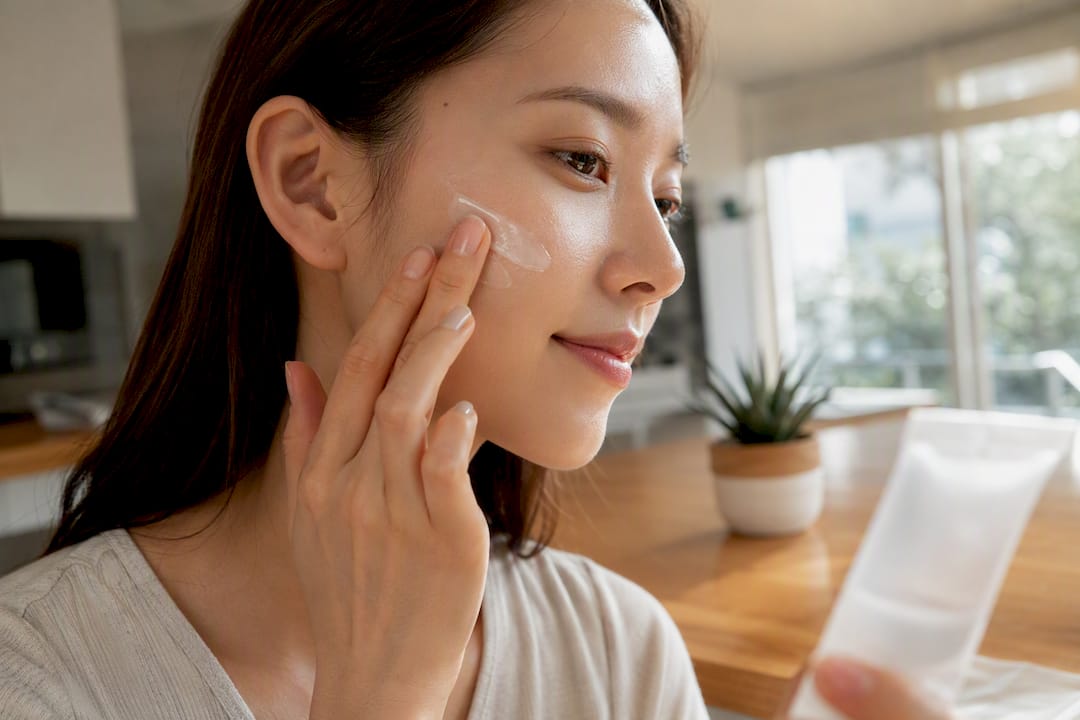
Japanese sunscreens like the Anessa line use filter combinations and water-first gel bases that give a nearly invisible finish, something Tinosorb and Mexoryl technology makes possible but American formulas can’t replicate under current FDA rules. Expect a moderate price for a tube, and check our guide on picking Japanese sunscreen for your skin type before you buy, since PA ratings work differently than SPF alone.
Toners, lotions, and refill pouches
Many Japanese toners and emulsions ship in a bottle-plus-refill system, where the pouch (marked tsumekae in Japanese) is the cheaper restock format. A pouch without matching bottle branding, or missing the tsumekae label entirely, is worth double-checking.
Cleansing oils and double-cleanse staples
Oil cleansers built for Japan’s double-cleanse ritual tend to run $18 to $30 and emphasize a specific melt-then-rinse texture that American “cleansing oil” products often skip.
Medicated brightening treatments
Quasi-drug spot treatments and brightening lotions, the kind that carry active ingredients regulated more like medicine than cosmetics in Japan, rarely clear U.S. import in their original form. When you find one, expect a $20 to $40 price range and ingredient panels worth comparing line by line against the brand’s official site.
Hair masks and scalp treatments
Intensive scalp balancers and treatment masks, similar to the Kobo scalp balance mask, rarely get wide U.S. distribution because haircare imports move through even fewer channels than skincare.
Limited-edition sheet masks
Seasonal or region-exclusive sheet mask drops sell out fast domestically and almost never get restocked for export, which is exactly why they show up marked up on resale sites.
Look for Japanese-language ingredient panels, a printed lot code, and consistent font and color matching against the brand’s own product photos. Sloppy print quality or a missing lot number is the first sign something’s off.
The Safest Places to Buy Rare Japanese and Korean Beauty Products
Buying direct from a brand’s global store or a specialty importer with a track record beats rolling the dice on a random marketplace listing every time. Look for sellers who maintain manufacturer relationships, keep consistent stock rather than one-off “found a batch” listings, and offer a clear return policy for items that arrive damaged or wrong.
A few channels consistently perform better than open marketplaces:
- Official brand global storefronts, when the brand runs one.
- Specialty importers with years of reviews and a stable catalog, not a rotating grab bag.
- Asian supermarkets and specialty beauty shops in person, which often stock region-specific packaged goods and refill formats that big-box retailers skip entirely.
Spyra Verified partners directly with manufacturers and brand owners rather than reselling whatever shows up through a third-party pipeline, which is the same verification standard that keeps reputable specialty retailers ahead of open marketplaces.
A listing that can’t tell you where the product came from can’t tell you what’s actually in the bottle.
Pro Tip: If a listing’s price sits well below every other seller’s, cross-check the seller’s shipping origin against their claimed sourcing. A mismatch is the fastest tell.
How to Verify Authenticity and Spot Gray-Market Fakes
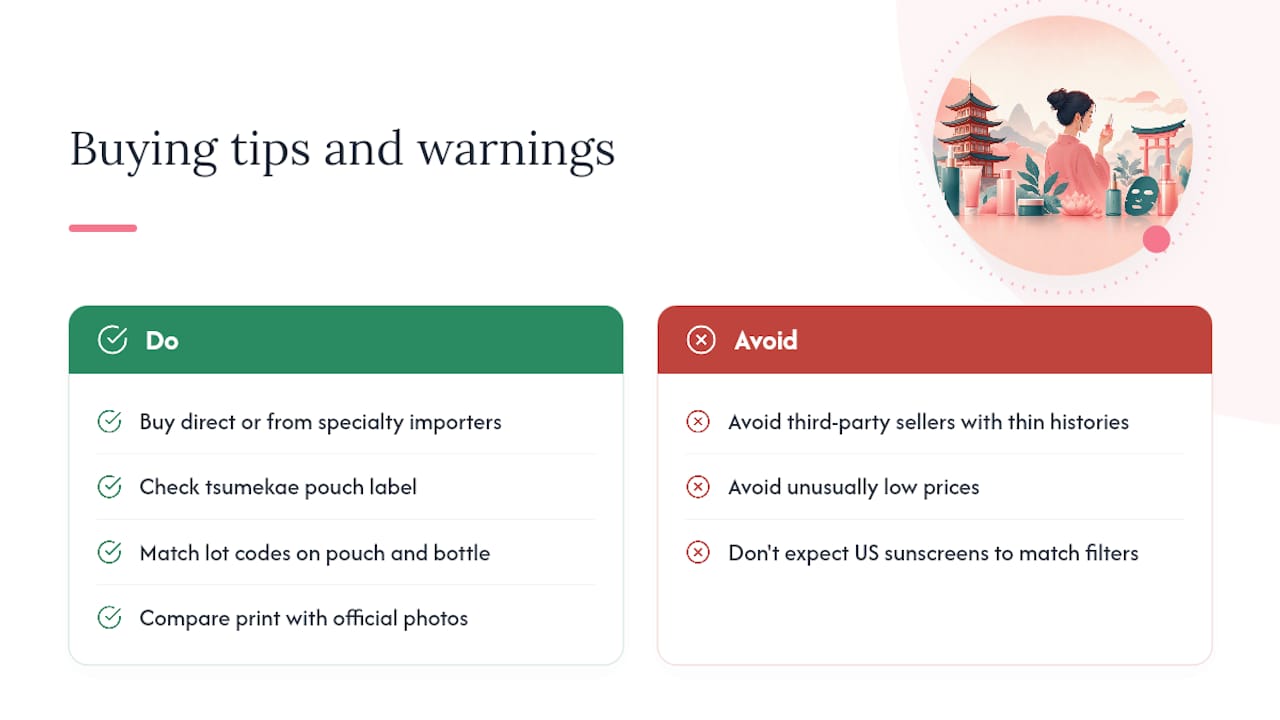
- Check the packaging details. Font, color, and print quality should match the brand’s official product photos exactly.
- Look for a lot or production code. Legitimate stock always has one, and it should be legible, not smudged or missing.
- Verify the seller’s history. A new account with no reviews selling a hard-to-find item is a warning sign, not a lucky find.
- Compare ingredient lists against the brand’s own site, since marketplace listings carry real counterfeit risk when third-party sellers substitute or dilute formulas.
- Inspect seals and refill pouch markings for consistency with known authentic units.
An unusually low price on a hard-to-find sunscreen isn’t a deal. It’s the single biggest red flag in gray-market resale, especially given that sunscreen is an FDA-regulated drug category, not a standard cosmetic.
Pro Tip: Ask the seller directly for a photo of the lot code before buying. A reputable seller will send one without hesitation; a gray-market reseller usually stalls.
When a U.S. Alternative Makes More Sense
Sometimes chasing the original isn’t worth it. If texture and finish are your priority, look for American sunscreens marketed as “water-based,” “gel,” or “serum,” since those describe a similar formulation approach even without the same filter stack. If the appeal is a specific UV filter you can’t get domestically, personal-use import or stocking up while traveling is the more realistic path than hoping a U.S. brand catches up.
- Works well as a swap: hair masks, cleansing oils, refillable lotions, where the format matters more than a single patented ingredient.
- Doesn’t translate well: medicated spot treatments and sunscreens built around filters the FDA hasn’t approved.
Deciding between a Japanese or Korean product often comes down to which regulatory system’s actives you’re chasing in the first place.
Why I Keep a Backup of My Favorites
I learned this the hard way after a cleansing oil I loved vanished for four months because its only U.S. importer ran out of stock. It wasn’t discontinued. It was just one retailer’s problem, and I had no backup. Now I keep a running list of two sellers per favorite and check both monthly. Do the same before you’re down to your last few ounces.
Get Verified Access to Hard-to-Find Asian Beauty Brands
Spyra Verified partners directly with manufacturers instead of relying on unverified resellers, so the sunscreen, lotion, or hair mask you order is the same formula sold in its home market, not a diluted or reformulated stand-in.
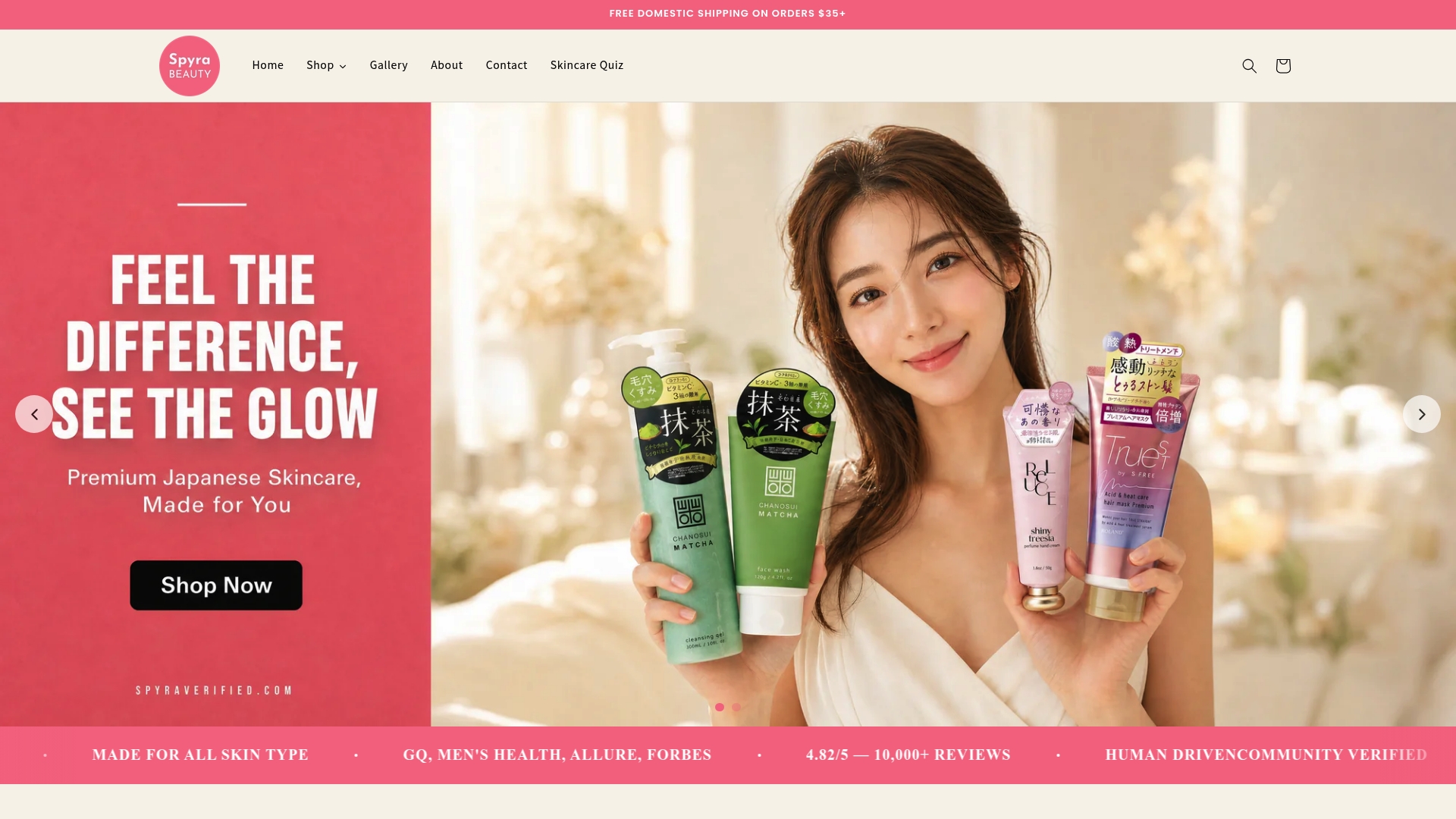
That direct-sourcing relationship is what lets us stand behind lot codes, packaging, and return support on items most U.S. retailers won’t touch. Browse the skincare collection or the hair care collection to see what’s currently in stock, and reach out to support if you need help confirming authenticity on anything you’re eyeing.
Frequently Asked Questions
What are some examples of hard-to-find Asian products in beauty specifically? Lightweight Japanese sunscreens with Tinosorb S or Mexoryl filters, refill-pouch toners and lotions, cult cleansing oils, medicated brightening treatments, niche hair masks, and region-exclusive sheet masks top the list most U.S. shoppers search for.
Why can’t I just buy Japanese sunscreen at my regular drugstore? Because sunscreen is an FDA-regulated OTC drug, and many Japanese formulas use UV filters the agency hasn’t approved. Retail versions sold in the U.S. are usually reformulated and feel different from the domestic Japanese product.
Is it safe to buy these products on general marketplaces like Amazon? It carries more risk than buying direct or through a specialty importer. Third-party sellers vary widely in sourcing quality, and unusually low prices or thin seller histories are common signs of counterfeit stock.
How do I know if a refill pouch product is authentic? Check for the tsumekae pouch label, matching lot codes between the pouch and original bottle, and consistent print quality against the brand’s official photos.
When should I just buy a U.S. alternative instead of hunting for the original? If texture and finish matter most, a U.S. “water-based” or “gel” sunscreen alternative can work. If you specifically want an unapproved UV filter or a quasi-drug active ingredient, an alternative won’t replicate that, and importing for personal use is the more realistic option.
This article is general information, not a substitute for advice from a qualified doctor. Consult a qualified healthcare professional about your own circumstances before acting on anything here.
Sources
- Why you should care about first new FDA-approved sunscreen ingredient in 20 years
- We Analyzed 1,000 Japanese Beauty Products: Here’s What We Found
- How to Buy Japanese Skincare and Cosmetics Online Worldwide - Japan Handbook
- Why Japanese sunscreen still beats American sunscreen: the UV filter regulatory gap | ChokChok
