

Fragrance Allergy Triggers in Skincare: What to Know
Fragrance allergy in skincare is defined as an immune-mediated reaction to specific chemical compounds present in cosmetic and personal care products. The most common fragrance allergy triggers in skincare include linalool, limonene, citronellol, geraniol, citral, coumarin, eugenol, and cinnamal. These compounds cause allergic contact dermatitis, affecting 1–3% of the general population and up to 16% of people with eczema. Fragrance appears in an estimated 50–70% of personal care products, making exposure nearly unavoidable without deliberate effort. Regulatory bodies like the EU have responded with mandatory allergen labeling, but gaps remain. Knowing exactly which chemicals to watch for gives you real power over your skin’s health.
1. What are the most common fragrance allergy triggers in skincare?
The eight most clinically significant fragrance allergens in skincare are linalool, limonene, citronellol, geraniol, citral, coumarin, eugenol, and cinnamal. Each one appears in both synthetic fragrances and natural essential oils, which means “natural” or “clean” labeled products carry the same risk. Patch test positivity rates for these compounds range from 2% to 8% in tested populations. That range sounds small, but across millions of people using fragranced products daily, the real-world impact is substantial.
Linalool is found in lavender, rose, and bergamot oils. It is one of the most widely used fragrance chemicals in personal care. Limonene comes from citrus peel and appears in everything from face wash to body lotion. Citronellol and geraniol both derive from rose and geranium oils and show up frequently in floral-scented products. Citral is present in lemon myrtle and lemongrass. Coumarin appears in tonka bean and some grass extracts. Eugenol is the primary compound in clove oil. Cinnamal gives cinnamon its characteristic scent and is one of the more potent sensitizers on the list.
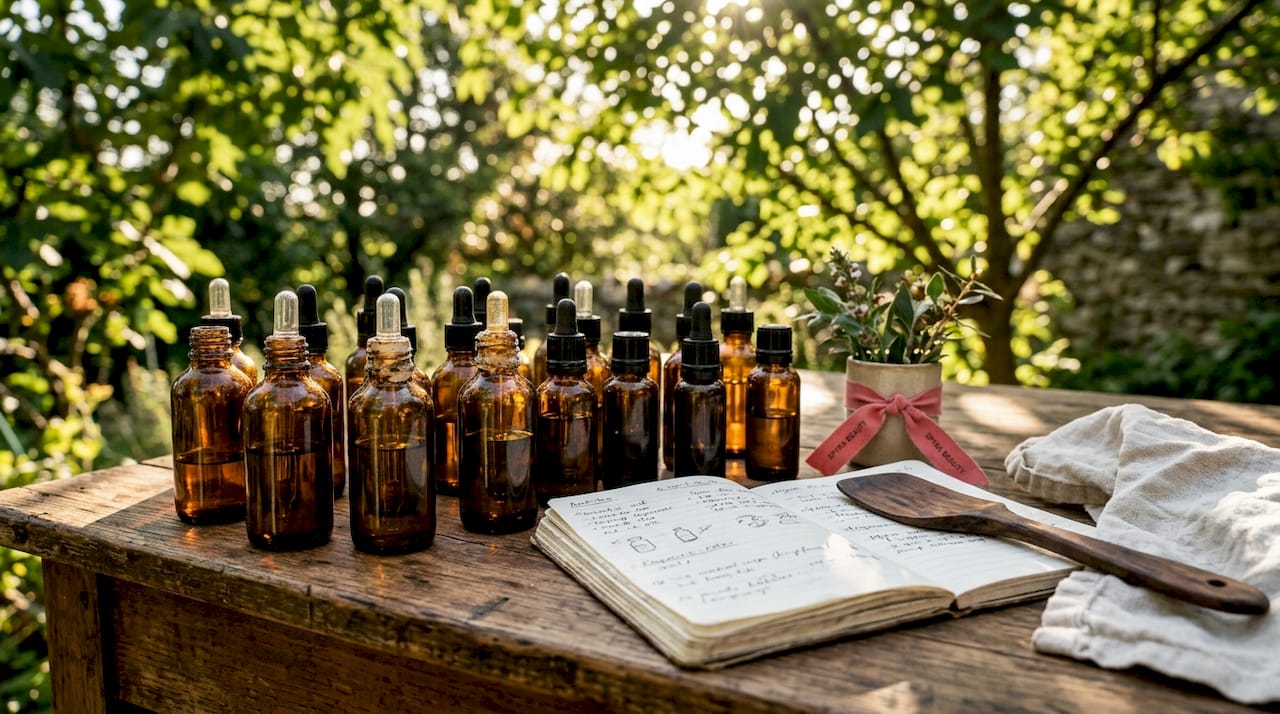
A critical and often overlooked factor is oxidation. Oxidized forms of linalool and limonene create hydroperoxides that are significantly stronger allergens than the original molecules. A product that caused no reaction when new can trigger a reaction months later if stored improperly. Heat, light, and air exposure all accelerate this process.
Pro Tip: Store opened skincare products away from direct sunlight and heat. Oxidized fragrance components in older products can trigger reactions even if the same product was previously well tolerated.
2. How fragrance allergens hide in your skincare products
Fragrance allergens appear under several different names on ingredient labels, which makes them easy to miss. The terms “fragrance,” “parfum,” and “aroma” all serve as umbrella terms that can conceal dozens of individual chemical compounds. Manufacturers are not required to disclose every component within a fragrance blend in the United States, though EU regulations are stricter.
The EU mandates that any of 26+ fragrance allergens exceeding 0.001% in leave-on products or 0.01% in rinse-off products must be listed individually on the label. This threshold rule gives European consumers significantly more transparency than their American counterparts currently receive. The EU has also proposed expanding this list to over 80 allergens in updated cosmetic regulations.
The distinction between “fragrance-free” and “unscented” matters enormously. “Unscented” products may still contain fragrance chemicals added to mask the natural odor of other ingredients. “Fragrance-free” means no fragrance was intentionally added, but even these products can contain botanical extracts that carry allergenic fragrance compounds. Lavender extract, rose water, and citrus oils all contain the same sensitizing chemicals as synthetic fragrances.
Hidden exposure sources extend well beyond your face moisturizer:
- Shampoos and conditioners that rinse through the face and neck area
- Laundry detergents and fabric softeners that leave residue on pillowcases
- Lip balms and lip glosses, which are frequently licked and ingested in small amounts
- Sunscreens, which are applied to large body surface areas
- Wet wipes and makeup remover cloths
Pro Tip: When dermatitis persists despite switching your skincare products, extend your fragrance-free routine to hair care and laundry products. Pillowcase residue from fragranced detergents is a frequently missed exposure source.
3. What fragrance allergy symptoms look like on skin
Fragrance allergy symptoms are the clinical signs of allergic contact dermatitis, a delayed hypersensitivity reaction. The immune system does not react immediately. Symptoms typically appear 24–72 hours after contact with the allergen, which makes it genuinely difficult to connect a reaction to its cause.
Common symptoms include:
- Redness and visible inflammation at the site of contact
- Intense itching, often described as burning or stinging
- Swelling, particularly around the eyes and lips where skin is thinnest
- Eczema-like rashes with dry, flaking, or weeping patches
- Hives in some cases, especially with repeated exposure
The face, neck, and eyelids are the most commonly affected areas because they receive the highest concentration of leave-on products like moisturizers, serums, and eye creams. Eyelid dermatitis is a particularly telling sign because eyelid skin is extremely thin and reactive.
Fragrance allergy is not the same as general skin sensitivity or irritant contact dermatitis. Irritant reactions occur immediately and feel like a burn. Allergic reactions develop over days and involve the immune system. A dermatologist can distinguish between the two through patch testing, which is the only reliable way to confirm a specific fragrance allergen.
Sensitization can develop after years of using the same product without any problem. Allergic contact dermatitis to fragrance is lifelong once it develops. The immune system does not forget a sensitizing compound, which is why avoidance rather than tolerance-building is the standard management approach.
4. How to manage and avoid fragrance allergy reactions
Effective fragrance allergy management starts with confirming your specific allergens through patch testing, the gold standard diagnostic method. A dermatologist applies small amounts of known allergens to your back under adhesive patches for 48 hours, then reads the results at 48 and 96 hours. This process identifies whether you need to avoid all fragrance or only specific chemical subgroups, which directly affects how restrictive your product choices need to be.
Once you know your allergens, practical avoidance follows these principles:
- Read every ingredient label, not just the front-of-pack claims. Look for “fragrance,” “parfum,” “aroma,” and individual allergen names like linalool, limonene, and geraniol.
- Choose products labeled “fragrance-free” over “unscented.” Verify by checking the full ingredient list.
- Reduce the total number of products in your routine. Cumulative fragrance exposure from multiple products increases sensitization risk even when each product individually complies with safe concentration limits.
- Replace fragranced household products including laundry detergent, fabric softener, and dryer sheets.
- Check product layering habits to avoid stacking multiple fragranced steps.
Certain ingredients are generally safe for fragrance-allergic individuals. Aloe vera, coconut oil, and shea butter show low clinical cross-reactivity with fragrance allergens and are well tolerated by most people with fragrance sensitivities. These make reliable base ingredients to look for when selecting moisturizers and cleansers.
For sensitive skin cleansers, prioritize products with short ingredient lists and no botanical extracts beyond the verified-safe options above. Shorter formulas mean fewer opportunities for hidden allergens.
Pro Tip: When testing new skincare products safely, apply a small amount to the inner forearm for three consecutive days before using it on your face. This mimics the patch test principle and catches delayed reactions before they affect more visible or sensitive skin.
Natural and “clean” beauty labels do not guarantee safety. Essential oils contain the same allergen compounds as synthetic fragrances. Rose hip oil contains geraniol. Lavender oil contains linalool. A product marketed as “100% natural” can trigger the same reaction as a conventional fragranced product.
Key Takeaways
The most effective approach to fragrance allergy management is identifying your specific allergens through patch testing and eliminating cumulative exposure across all product categories, not just skincare.
| Point | Details |
|---|---|
| Know the key allergens | Linalool, limonene, citronellol, geraniol, and citral are the most common fragrance triggers in skincare. |
| Oxidation increases risk | Stored products degrade over time, creating stronger allergens from the same original compounds. |
| “Unscented” is not safe | Only “fragrance-free” products guarantee no intentionally added fragrance chemicals. |
| Patch testing is essential | A dermatologist-administered patch test identifies your specific allergens and guides avoidance. |
| Cumulative exposure matters | Fragrance from laundry, hair care, and household products adds to your total allergen load. |
Why “natural” fragrance is not the safe swap you think it is
The assumption I see most often among people with fragrance sensitivities is that switching to natural or botanical products solves the problem. It does not. Lavender oil, rose oil, and citrus extracts contain the exact same sensitizing compounds as synthetic fragrances. Linalool is linalool whether it comes from a lavender field or a laboratory.
What I find genuinely underappreciated is the oxidation issue. A product you have used for two years without any problem can suddenly cause a reaction. The formula did not change. The storage conditions did. Heat and light degrade fragrance molecules into hydroperoxides, which are far more allergenic than the original compounds. If your skin starts reacting to a product you have trusted for a long time, check when you opened it and where you store it before assuming your skin has changed.
The other pattern worth naming is the cumulative load problem. People focus intensely on their face moisturizer and ignore their shampoo, their laundry detergent, and their scented candles. Your immune system does not separate these exposures. It responds to total allergen load. Simplifying your entire environment, not just your skincare shelf, is what actually moves the needle for persistent dermatitis.
Regulatory progress is real but slow. EU allergen disclosure rules are meaningfully better than US requirements, and expanded allergen lists are in development. Until labeling catches up globally, reading ingredient lists yourself remains the most reliable protection you have.
— Anni
Spyraverified skincare for fragrance-sensitive skin
Fragrance-sensitive skin deserves products with transparent ingredient lists and no hidden allergens.
Spyraverified curates fragrance-free skincare from Japanese and Asian beauty brands, sourced directly from manufacturers with full ingredient transparency. These formulas are selected with sensitive skin in mind, prioritizing short ingredient lists and clinically well-tolerated actives. For those managing fragrance allergies across their full routine, Spyraverified also carries fragrance-free hair care options that complement a simplified, allergen-aware regimen. Every product ships authentically, so you know exactly what you are applying to your skin.
FAQ
What are the most common fragrance allergens in skincare?
The most common fragrance allergens in skincare are linalool, limonene, citronellol, geraniol, citral, coumarin, eugenol, and cinnamal. Patch test positivity rates for these compounds range from 2% to 8% in tested populations.
What is the difference between fragrance-free and unscented?
“Fragrance-free” means no fragrance was intentionally added to the formula. “Unscented” products may still contain fragrance chemicals used to mask the natural odor of other ingredients, making them unsafe for fragrance-allergic individuals.
How long after exposure do fragrance allergy symptoms appear?
Fragrance allergy symptoms typically appear 24–72 hours after contact because the reaction involves delayed hypersensitivity. This delay makes it difficult to identify the triggering product without patch testing.
Can natural or essential oil-based products cause fragrance allergies?
Yes. Essential oils contain the same allergenic compounds as synthetic fragrances. Lavender oil contains linalool, rose oil contains geraniol, and citrus oils contain limonene, all of which are confirmed fragrance allergens.
How is a fragrance allergy diagnosed?
Patch testing is the gold standard for diagnosing fragrance allergies. A dermatologist applies standardized allergen panels to the skin for 48 hours and reads results at 48 and 96 hours to identify specific reactive compounds.
