

What Is Gel Cream Moisturizer: Your Skin Type Guide
A gel cream moisturizer is defined as a hybrid skincare formulation that combines the fast-absorbing, water-based texture of a gel with the nourishing richness of a cream. The result is a semi-translucent, bouncy product that sits between a lightweight gel and a traditional cream in both feel and function. Gel creams deliver balanced hydration without the heavy, greasy finish that thicker creams leave behind. They work best for normal, combination, and slightly oily skin types, and they have become a staple in both Western and Asian skincare routines.
What is a gel cream moisturizer and how is it made?
A gel cream moisturizer is a balanced advanced emulsion that blends water and oil phases to create a product with more substance than a gel but less weight than a cream. Formulators achieve this by combining humectants, which draw water into the skin, with emollients, which soften and smooth the skin surface. The ratio of water to oil is carefully controlled to produce that signature bouncy, semi-translucent texture. The industry term for this category is “gel-cream emulsion,” and you will see it referenced across dermatological and cosmetic chemistry literature.
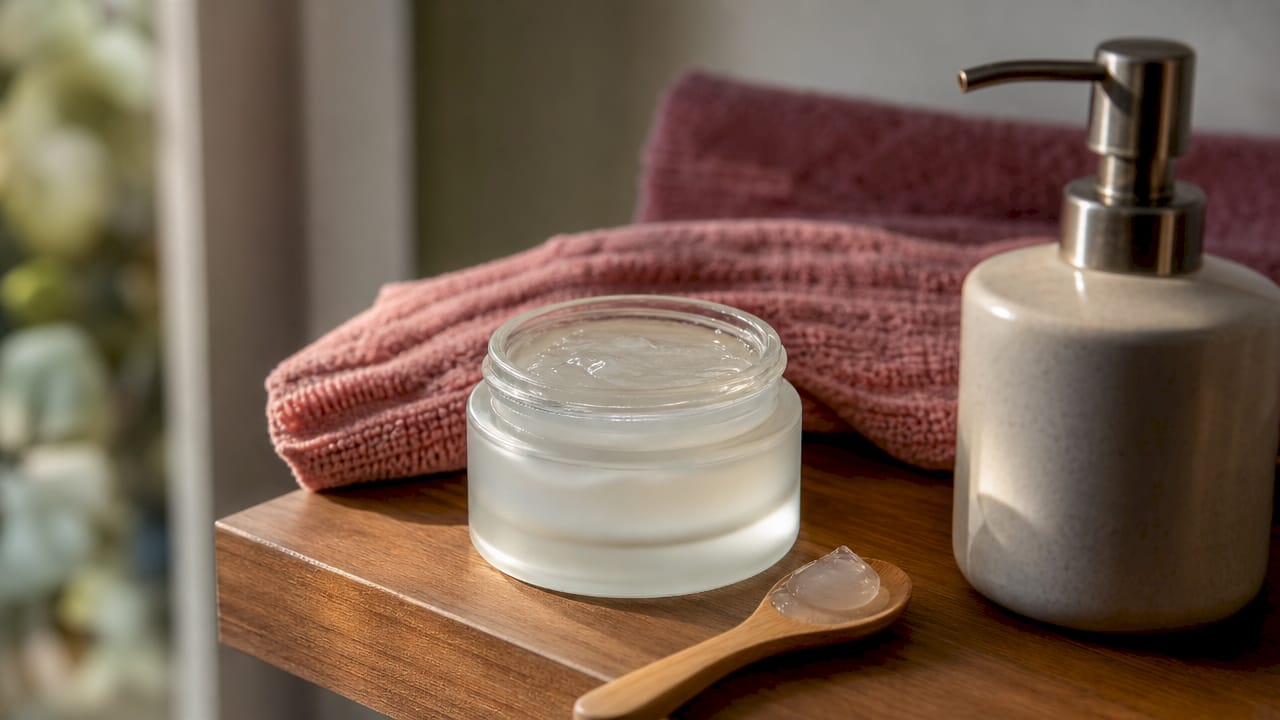
The formulation differs meaningfully from both of its parent categories. A pure gel relies almost entirely on humectants like hyaluronic acid and contains little to no oil. A traditional cream is an oil-in-water emulsion with a higher lipid content that creates a richer, more occlusive layer. A gel cream sits in the middle, using both humectants and emollients to give skin hydration and a degree of softness without the heaviness of a full cream. This balance is what makes the format so practical for everyday use.
How do gel cream moisturizers differ from gels and creams?
The clearest way to understand the difference is to look at three things: texture, absorption speed, and hydration mechanism.
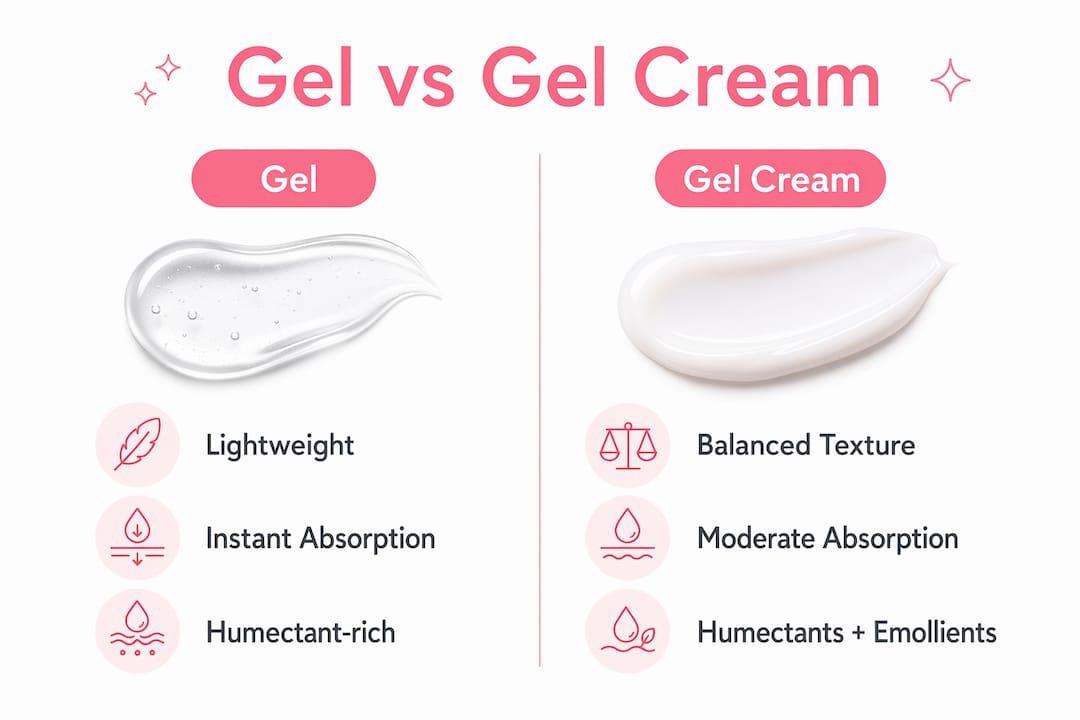
| Attribute | Gel | Gel Cream | Cream |
|---|---|---|---|
| Texture | Watery, clear | Semi-translucent, bouncy | Thick, opaque |
| Absorption | Very fast | Fast | Moderate to slow |
| Primary ingredients | Humectants only | Humectants + emollients | Emollients + occlusives |
| Occlusiveness | Low | Moderate | High |
| Best skin type | Oily, acne-prone | Normal, combination, slightly oily | Dry, mature |
A pure gel absorbs almost instantly and leaves no residue, but it does not provide lasting moisture for skin that needs more than surface-level hydration. A traditional cream absorbs slowly and creates a protective film that locks in moisture for hours, which is ideal for dry or mature skin. A gel cream balances humectants and emollients to deliver more substantial hydration than a basic gel while staying far lighter than a heavy cream.
The absorption speed difference matters in practice. Gel creams sink into skin within 30–60 seconds for most people, which means you can apply makeup or sunscreen immediately after. Traditional creams often need several minutes to absorb fully before layering other products on top.
What are the benefits of gel cream moisturizers?
Gel creams offer a specific set of advantages that make them the right choice for a large portion of people.
- Balanced hydration. Gel creams hydrate without pore-clogging residue, making them practical for daily use on combination or slightly oily skin.
- Non-greasy finish. Their low-oil, water-based content keeps skin comfortable without shine, which is a key concern for oily and acne-prone skin.
- Active ingredient delivery. Most gel creams contain hyaluronic acid and ceramides to hydrate deeply and support the skin barrier at the same time.
- Climate suitability. Gel creams perform especially well in hot, humid climates where heavier creams feel suffocating.
- Makeup compatibility. Gel creams absorb fast and create a smooth base, which improves makeup longevity compared to richer formulas that cause slipping or pilling.
The non-comedogenic potential of gel creams is worth noting separately. Because they contain less oil than traditional creams, they are less likely to block pores. This makes them a practical choice for people who break out easily when using heavier moisturizers. For a deeper look at which products suit your skin type, Spyraverified’s guide on skincare for all skin types covers the topic in detail.
Pro Tip: Layer your gel cream over a hydrating toner or essence while your skin is still slightly damp. The extra moisture gives the humectants in the gel cream more water to pull into the skin, which noticeably improves how long the hydration lasts.
Are there drawbacks to using a gel cream moisturizer?
Gel creams are not the right choice for every person or every season. Understanding their limits helps you avoid frustration.
The biggest limitation is occlusiveness. Gel creams are humectant-focused formulas that attract water to the skin but do not seal it in as effectively as heavier creams or balms. In dry, cold climates or during winter months, this means moisture can evaporate from the skin surface faster than a richer product would allow. People with very dry or barrier-compromised skin often find that a gel cream alone does not provide enough protection overnight.
A second concern is ingredient sensitivity. Some gel formulas contain volatile alcohols, which can sting or irritate compromised or sensitive skin. Gel creams are generally better formulated than pure gels in this regard, but it is still worth checking the ingredient list if your skin reacts easily. Look for gel creams that are alcohol-free and fragrance-free if sensitivity is a concern.
- Very dry skin: A gel cream alone will likely not provide enough barrier support. Layer a facial oil or balm on top.
- Cold or low-humidity environments: Add an occlusive layer over your gel cream to reduce transepidermal water loss.
- Sensitive or reactive skin: Choose gel creams without volatile alcohols, synthetic fragrance, or known irritants.
- Nighttime repair: Gel creams work well at night for normal skin, but dry skin benefits more from a richer cream or overnight mask.
Pro Tip: If you live somewhere with cold winters, keep two moisturizers on hand. Use your gel cream in the morning for a light, fast-absorbing base, and switch to a richer cream at night to rebuild the barrier while you sleep.
How to use a gel moisturizer in your daily routine
Application order and technique directly affect how well a gel cream performs. Getting both right takes less than a minute but makes a real difference in results.
- Cleanse your face with a gentle cleanser suited to your skin type. Pat skin dry, leaving it slightly damp.
- Apply toner or essence if your routine includes one. These water-based steps prime the skin and give humectants more to work with.
- Apply any serums targeting specific concerns, such as a vitamin C serum in the morning or a retinol serum at night. Serums go on before moisturizer.
- Apply your gel cream using clean fingertips. Warm a small amount between your palms, then press it gently into the skin rather than rubbing. This technique reduces friction and improves absorption.
- Apply sunscreen in the morning as the final step. Because gel creams absorb quickly, you can apply SPF within 60 seconds without the sunscreen balling up.
- Apply makeup directly over the gel cream if desired. The fast absorption and low slip make gel creams one of the best bases for makeup compared to heavier formulas.
For nighttime routines, the same order applies. If your skin needs extra support, add a facial oil or sleeping mask as the final step after your gel cream. Skincare efficacy improves when routines adapt to the time of day and season, so using a gel cream in the morning and a richer cream at night is a practical strategy for most skin types.
The most common layering mistake is applying a gel cream over a thick oil or balm. Oil creates a barrier that prevents water-based products from absorbing properly. Always apply gel creams before oils, not after. For a full breakdown of what goes wrong and how to fix it, the Spyraverified guide on skincare layering mistakes is worth reading before you rearrange your routine.
Pro Tip: In summer, your gel cream alone may be enough moisture. In winter, press a few drops of a facial oil over the top while the gel cream is still slightly tacky. The oil seals the hydration in without you needing to switch products entirely.
Key Takeaways
A gel cream moisturizer is the most practical daily moisturizer for normal, combination, and slightly oily skin because it delivers real hydration without the weight or pore-clogging risk of traditional creams.
| Point | Details |
|---|---|
| Hybrid formulation | Gel creams combine humectants and emollients for balanced hydration and a lightweight feel. |
| Best skin types | Normal, combination, and slightly oily skin benefit most; very dry skin needs additional occlusive support. |
| Key active ingredients | Hyaluronic acid and ceramides are the most effective ingredients to look for in a gel cream formula. |
| Application order | Apply gel cream after toner and serum, before sunscreen or makeup, on slightly damp skin. |
| Seasonal adaptation | Use gel cream in the morning or summer; add a richer cream or oil at night or in cold climates. |
Why I think most people choose the wrong moisturizer texture
Most people pick a moisturizer based on how it feels in the first five seconds after application. That is the wrong metric. The right question is how your skin looks and feels two hours later, and again the next morning.
I have seen people with combination skin reach for thick creams because they feel “more nourishing,” then wonder why their T-zone is congested. I have also seen people with normal skin avoid gel creams because they assume lighter means less effective. Neither assumption holds up. A gel cream with ceramides and hyaluronic acid can outperform a heavy cream for barrier support on normal skin, simply because it absorbs fully instead of sitting on the surface.
The other thing most articles skip over is the environment factor. A gel cream that works perfectly in Miami in july will feel inadequate in Chicago in january. Your moisturizer is not failing. Your routine needs to adapt. Switching between a gel cream in warm months and a richer cream in cold months is not high maintenance. It is just paying attention.
My honest recommendation: start with a gel cream if you are unsure where to begin. It is the most forgiving format across skin types and climates. If your skin feels tight by midday, add an oil on top at night. If your skin feels congested, drop the oil and stick with the gel cream alone. The answer is almost always in the layering, not the product itself.
— Anni
Spyraverified’s skincare collection for every skin type
Spyraverified curates Japanese and Asian beauty brands known for their advanced gel cream formulations, many of which are difficult to find outside their home markets.
The Spyraverified skincare collection includes gel cream moisturizers suited for normal, combination, and slightly oily skin, alongside complementary products like hydrating toners, essences, and barrier serums. Each product is sourced directly from manufacturers to guarantee authenticity. Whether you are building a routine from scratch or adding a gel cream to an existing regimen, the collection covers the full range of skin needs and climates.
FAQ
What is a gel cream moisturizer?
A gel cream moisturizer is a hybrid formula that combines a water-based gel texture with cream-level emollience. It delivers balanced hydration with a lightweight, non-greasy finish suited to normal, combination, and slightly oily skin.
Is a gel cream moisturizer effective for oily skin?
Yes. Gel creams absorb quickly and contain low oil levels, which means they hydrate without adding shine or clogging pores. They are one of the most recommended moisturizer formats for oily and acne-prone skin.
What is the difference between a gel and a gel cream?
A pure gel relies almost entirely on humectants and contains little to no oil, making it very lightweight but limited in barrier support. A gel cream adds emollients to the formula, giving it more nourishing properties while keeping the texture light.
Can I use a gel cream moisturizer under makeup?
Yes. Gel creams absorb within 60 seconds and leave a smooth, low-slip surface that improves makeup adhesion and longevity compared to richer creams.
Do I need a different moisturizer in winter?
Gel creams may not provide enough barrier protection in cold, dry climates on their own. Layering a facial oil or richer cream over your gel cream at night is the most practical solution without replacing your routine entirely.
