

Decode Labels and Start Japanese Drugstore Skincare for U.S. Beginners
The Japanese drugstore skincare approach means gentle double cleansing, layering hydration in thin steps rather than one heavy cream, and treating sunscreen as a non-negotiable daily habit rather than a summer-only extra. To start tonight, buy five things: a cleansing oil, a gentle water cleanser, a hydrating lotion (Japan’s version of a toner), a light emulsion or moisturizer, and a sunscreen rated for daily wear. Try the two-step PM cleanse before you do anything else.
TL;DR:
- Japanese skincare emphasizes gentle double cleansing, lightweight layering of hydration, and daily sunscreen use regardless of season or weather.
- The routine involves a two-step cleansing process, multiple thin layers of lotion, and adjusting product textures seasonally to protect the skin barrier.
- Core products include cleansing oil, hydrating lotion, sunscreen with high UVA protection, and sheet masks, which should be purchased from verified sources to ensure authenticity.
- Adjustments based on skin type involve different layering frequencies and product textures, with sensitive skin requiring fragrance-free, barrier-first formulations.
- Consistency with a few effective products is more beneficial than chasing numerous steps or rapid results, especially for barrier health and long-term skin stability.
Table of Contents
- What Is the Japanese Drugstore Skincare Approach?
- How Do You Follow a Japanese Skincare Routine Step by Step?
- How Do You Shop Japanese Drugstore Skincare and Read the Labels?
- Which Ingredients Matter and How Should You Adjust for Your Skin Type?
- Publisher’s Guide to Authentic Japanese Drugstore Products
- How Should Your Routine Change With the Seasons?
- What Should You Budget for a Japanese Drugstore Routine?
- Why the Slow Approach Beats the Ten-Step Hype
- Get Verified Japanese Drugstore Skincare Without the Guesswork
- Sources
What Is the Japanese Drugstore Skincare Approach?
Japanese skincare culture treats the face less like a problem to correct and more like a barrier to protect. That framing shows up everywhere in drugstore aisles across Tokyo and Osaka: shelves full of gentle cleansing oils, multi-step hydrating lotions, and sunscreens formulated to feel weightless enough for daily reapplication. The philosophy leans on prevention and consistency instead of aggressive actives, which is why dermatologists and estheticians describe J-Beauty as barrier-first rather than correction-obsessed.
That matters if you’re used to American skincare marketing, which often pushes potent serums and fast results. Japanese drugstore products play a longer game. A cleansing oil melts sunscreen and makeup without stripping the skin. A hydrating lotion, sometimes called keshosui, preps the skin so every product applied after it absorbs better. Sunscreen isn’t a summer product. It’s step one of every morning, all year.
The category everyone underestimates is lotion. In American vocabulary, “lotion” usually means a moisturizer. In Japanese skincare, a lotion is closer to a liquid essence or toner, applied in multiple thin layers to build hydration gradually. Products like Hada Labo’s Gokujyun lotion, a widely used drugstore example of multi-weight hyaluronic acid hydration, show how this works in practice: several passes of a light, watery formula instead of one thick application.
How Do You Follow a Japanese Skincare Routine Step by Step?
A full Japanese drugstore skincare routine has three rhythms: a PM routine that removes the day, an AM routine that protects the day ahead, and a slower weekly rhythm that resets the skin without overworking it. None of these steps require expensive tools or ten-step shopping lists. They require order and patience.
PM routine (evening):
- Oil cleanse first. Massage a cleansing oil into dry skin for 60 seconds to dissolve sunscreen, makeup, and sebum before you touch water.
- Follow with a gentle water-based cleanser to remove any oily residue and sweat.
- Pat in your hydrating lotion in two to three thin layers, waiting a few seconds between each.
- Apply an essence or lightweight serum if you’re targeting a specific concern like dullness or fine lines.
- Seal with a moisturizer or emulsion. Choose a lighter emulsion in warm months and a richer cream in winter.
- Optional: two to three nights a week, finish with a sleeping mask for extra overnight hydration.
AM routine (morning):
- Splash with water or use a very mild cleanser. Skip a full oil cleanse in the morning unless your skin is unusually oily.
- Pat in lotion again, the same way you did at night.
- Add a lightweight serum if your skin needs it, but keep morning layers thinner than evening ones.
- Apply a light moisturizer or emulsion.
- Finish with sunscreen. Every single day, regardless of weather.
Weekly rhythm: gentle exfoliation two to three times a week is the standard most dermatologists recommend for keeping the skin barrier intact while still clearing dead skin. Sheet masks or sleeping packs fit in one to three times a week depending on how dehydrated your skin feels that season.
The most common mistake beginners make with the oil cleanse is rushing it. Oil needs friction and time to bind with sebum and sunscreen. Massage for a full minute, then emulsify by adding a small splash of water before rinsing. That turns the oil milky and signals it’s ready to wash away cleanly instead of leaving a greasy film.
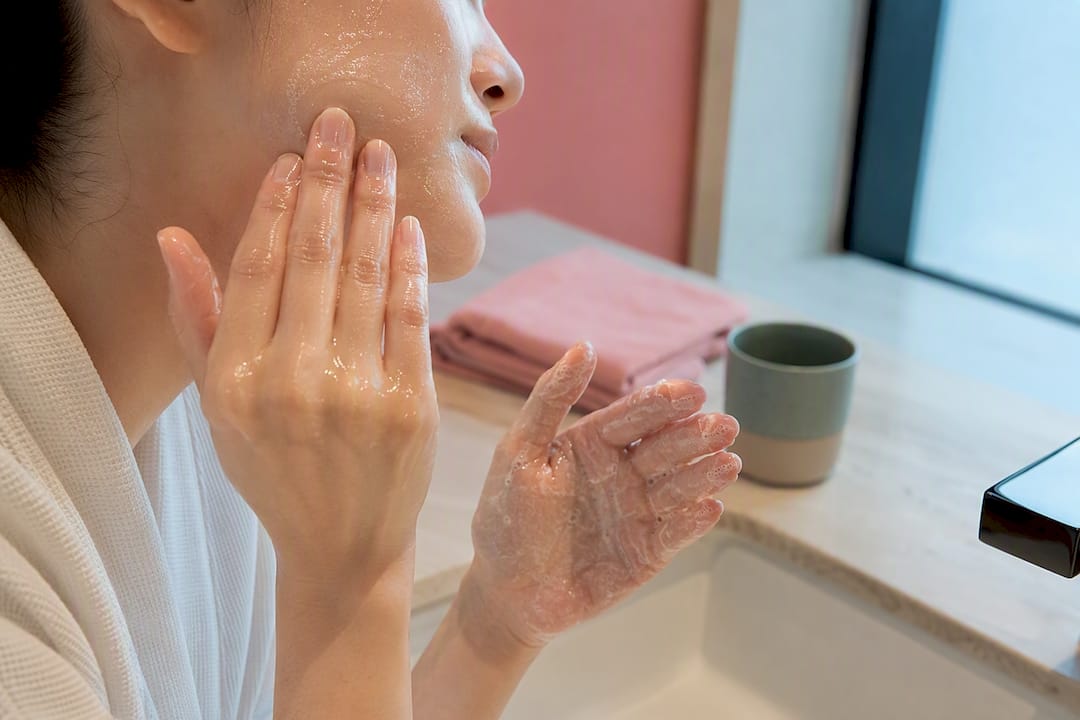
Layering lotion is a technique in itself. Applying lotion in thin, patted layers rather than one thick coat improves how well your skin absorbs everything that follows. Rubbing instead of patting can drag at delicate skin and cause pilling once you add a serum on top.
Pro Tip: If your lotion or serum starts to ball up and roll off your skin instead of sinking in, you’re layering too fast. Wait a full 30 seconds between each pass and use slightly less product per layer. Pilling is almost always a timing problem, not a product problem.
How Do You Shop Japanese Drugstore Skincare and Read the Labels?
Shopping Japanese drugstore skincare from the United States means learning a handful of label terms, because most of the useful information on a Japanese product box isn’t translated. Once you know what to look for, decoding a label takes seconds.
- Yakuyou marks a product as a quasi-drug, meaning it contains an active ingredient regulated for a specific function like brightening or acne care.
- Bihaku signals a brightening or whitening focus, usually built around ingredients like arbutin or vitamin C derivatives.
- Houshitsu means moisturizing, a common claim on lotions and emulsions aimed at dry or dehydrated skin.
- Keshosui is the Japanese word for lotion, which, again, functions more like a hydrating toner than an astringent.
- PA+ to PA++++ measures UVA protection strength, separate from the SPF number that measures UVB protection. Japanese sunscreens frequently list both because PA ratings are treated as essential information, not an afterthought the way UVA protection often is on American labels.
If you’re buying at a physical Japanese drugstore chain like Matsumoto Kiyoshi or Don Quijote, look for the ranking corners and “teishigeki” or low-irritant callouts near the register, which flag products formulated for sensitive skin. Shopping online from the United States, apply the same logic: buy from sellers who list full ingredient decks, avoid prices that sit noticeably below market rate, and check that the packaging matches official product photos before you order.
Four categories deserve priority on any first order: a cleansing oil, a hydrating lotion, a sunscreen with a high PA rating, and an affordable sheet mask for weekly hydration boosts. These four cover the core drugstore categories that do the most work for the least money.
Before adding anything new to your routine, patch test on the inside of your forearm for 48 hours. Sensitive or reactive skin needs this step even when a product is marketed as gentle.
Sunscreen habits back this up: consistent daily SPF use is one of the most repeated recommendations across J-Beauty guidance, precisely because lightweight, cosmetically elegant sunscreen formulas are designed to remove the excuse of skipping it.
Which Ingredients Matter and How Should You Adjust for Your Skin Type?
Japanese drugstore formulas lean on a short list of dependable ingredients rather than chasing trend actives, and each one solves a specific problem.
- Hyaluronic acid at multiple molecular weights hydrates at different skin depths, which is why one lotion can feel both immediately plumping and lastingly moisturizing.
- Ceramides rebuild the lipid barrier that keeps moisture in and irritants out, making them a staple in emulsions and creams.
- Rice ferments are a fermentation byproduct prized for softening texture and supporting an even tone.
- Camellia (tsubaki) oil shows up in cleansing oils and treatment oils for its light texture and conditioning effect on both skin and hair.
- Green tea (EGCG) appears in toners and serums for its calming, antioxidant properties.
Texture and tolerability drive most J-Beauty formulation choices, which is why concentrations of actives like AHAs or vitamin C tend to run lower than American equivalents. Results build more slowly, but the tradeoff is fewer flare-ups and a routine you can actually stick to daily.
Adjusting by skin type doesn’t require different products so much as different frequency and weight. Oily skin can double cleanse nightly and choose a gel-based emulsion over a cream. Dry skin benefits from an extra lotion layer and a richer nighttime moisturizer. Acne-prone skin should favor a lighter, oil-free emulsion and stick to two exfoliation sessions a week instead of three. Sensitive skin needs to skip fragranced lotions and high-alcohol toners entirely, since barrier-first product design only works when the base formula isn’t irritating in the first place. Readers managing eczema-prone or reactive skin may also find useful guidance in gentle care approaches for sensitive skin.
Pro Tip: If your skin reacts easily, introduce one new product every two weeks instead of building a full routine at once. That way, if irritation shows up, you know exactly which product caused it.
Publisher’s Guide to Authentic Japanese Drugstore Products
Spyraverified partners directly with Japanese manufacturers rather than sourcing through resellers, which means every cleansing oil, lotion, and sunscreen listed goes through an authenticity check before it reaches a shopper in the United States. That matters more than most buyers realize, since counterfeit and gray-market J-Beauty products are common enough online that price alone can’t tell you what’s real.
Spyraverified also builds the beginner-facing resources this guide references throughout, including deeper breakdowns of:
- Choosing a cleanser suited to oily skin
- A full step-by-step J-Beauty routine
- The lotion layering method explained
- How PA ratings compare to SPF
- What to know about product expiry dates
For someone just starting out, that combination of verified sourcing and plain-language guidance closes the gap between reading about a routine and actually building one.
How Should Your Routine Change With the Seasons?
Japanese drugstore skincare isn’t static across the year, and the biggest mistake beginners make is running the same routine in January that they ran in July.
Winter calls for heavier emulsions and creams, an extra lotion layer to fight dryness, and a sleeping mask two to three nights a week if your skin feels tight by morning. Cold air and indoor heating both pull moisture out of the skin faster than most people expect, so cutting back on exfoliation to twice a week helps protect an already-stressed barrier.
Summer flips the priority toward lightweight textures and sun protection. Swap a rich cream for a gel emulsion, keep sunscreen reapplication in mind if you’re outdoors for long stretches, and consider a cooling sheet mask after sun exposure instead of a heavy overnight treatment.
Spring and fall are transition seasons where humidity swings the most, which is exactly when a layered lotion approach pays off. Instead of switching your whole routine, add or remove a single lotion layer depending on how your skin feels that week. That flexibility is part of why the Japanese layering method works better across climates than a one-size moisturizer approach. If you travel between humid and dry climates, keep both a light and a richer emulsion on hand and alternate based on where you are, not the calendar date.
What Should You Budget for a Japanese Drugstore Routine?
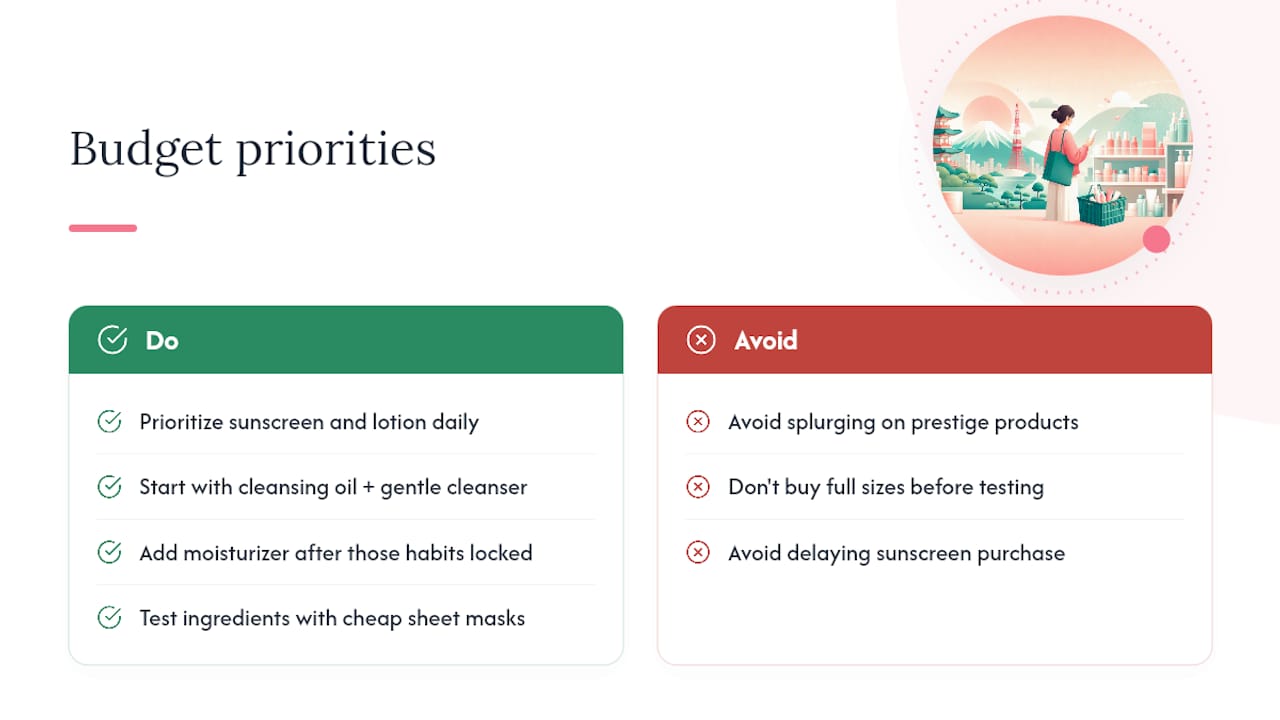
One of the biggest draws of Japanese drugstore skincare is that an effective routine rarely requires a luxury budget. Most core products, cleansing oils, lotions, sunscreens, and sheet masks, sit in an affordable range compared to prestige skincare, which is part of why the category built such a loyal following in the first place.
A realistic starter budget looks like this: a cleansing oil and gentle water cleanser together, a hydrating lotion, a daily sunscreen, and a light moisturizer. Sheet masks are the cheapest add-on in the entire routine and make a good low-risk way to test new ingredients like rice ferment or green tea extract before committing to a full-size product.
If you’re building a routine gradually, prioritize spending on sunscreen and lotion first. Those two products get used daily and deliver the most consistent benefit, according to the ingredient and product guidance most J-Beauty coverage centers on. A cleansing oil and basic emulsion can be added once those two habits are locked in.
Buying multiples of the same lotion or sunscreen once you find one that works also tends to save money over time, since Japanese drugstore brands rarely discontinue their bestsellers the way some Western brands rotate formulas every season.
Why the Slow Approach Beats the Ten-Step Hype
Most coverage of Japanese skincare oversells the step count and undersells the discipline behind it. The real lesson isn’t that you need ten products. It’s that consistency with five well-chosen ones beats sporadic use of fifteen. Beginners who treat this like a shopping list instead of a habit usually quit within a month.
The conventional advice that annoys me most is the obsession with “glass skin” results as the goal. That framing sets people up to judge a barrier-first routine by the standards of an active-heavy one, then abandon it when results take six weeks instead of six days. J-Beauty was never built for speed.
If you’re starting from zero, skip the essence and the sleeping mask for now. Get the double cleanse and daily sunscreen right first. Everything else is an upgrade, not a requirement.
— Anni
Get Verified Japanese Drugstore Skincare Without the Guesswork
Building this routine only works if the products in it are the real thing, and that’s the part most guides can’t help you with. Spyraverified partners directly with Japanese manufacturers and checks every product for authenticity before it ships, so the cleansing oil or lotion you’re layering is exactly what the label says it is.
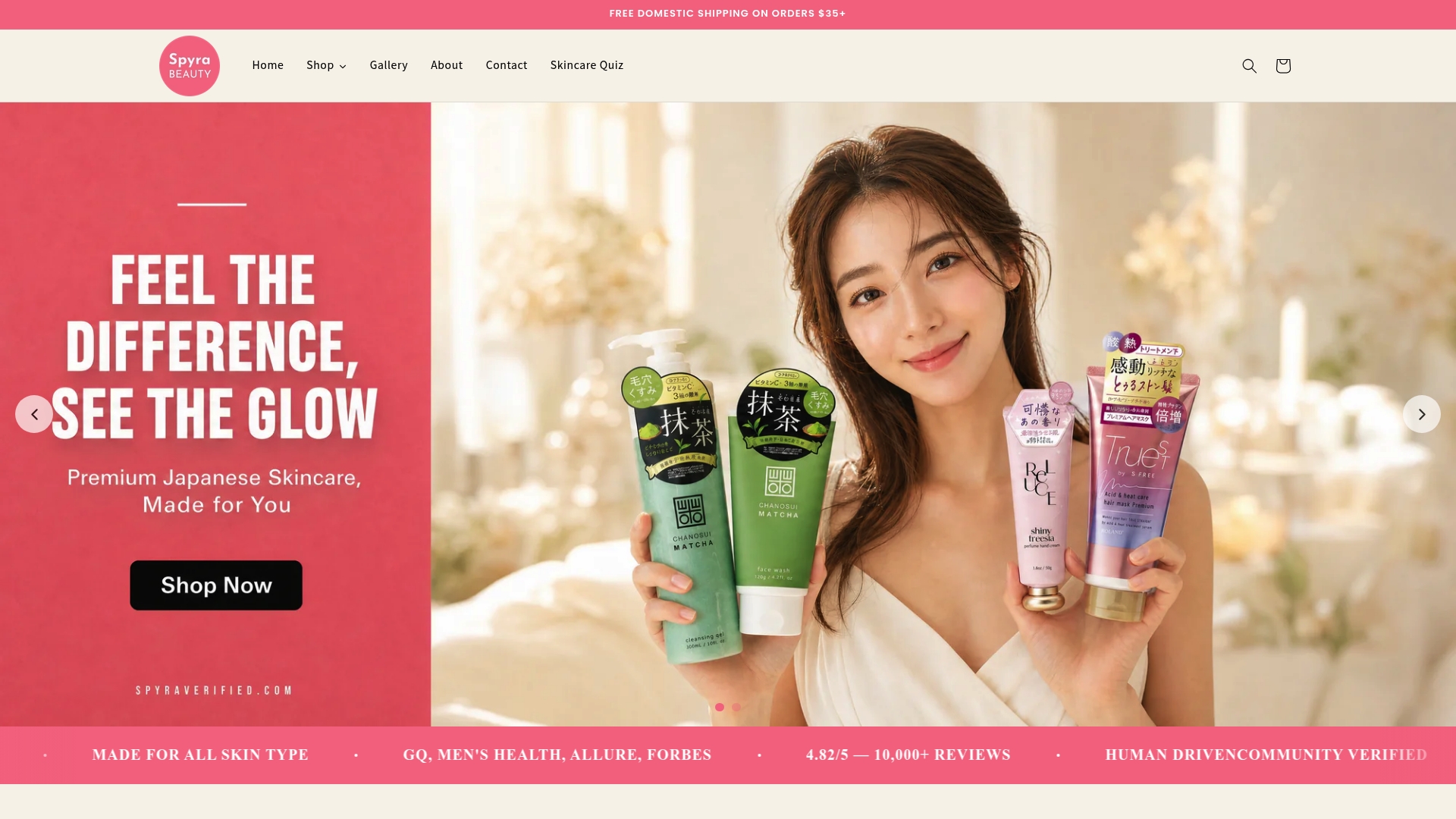
That matters most for the products you’ll use every single day: sunscreen, lotion, and your cleanser. Spyraverified’s curated selection makes it easier to start with the right categories instead of guessing your way through unfamiliar packaging and reseller listings of uncertain origin. Browse the skincare collection to find a starter set built around the exact steps covered in this guide, from cleansing oils to lightweight sunscreens, and build your routine from a source that verifies what it sells.
Sources
- A Beginner’s Guide to the Japanese Skin‑Care Routine
- 11 Best Japanese skin‑care products for glowy, healthy skin
