

Buy Asian Beauty Online Safely with a 5 Step Verification Routine
The safest place to start is brand-direct or a verified specialty retailer, since both carry the strongest authenticity guarantees. Curated marketplaces and regional resellers come next, best used once you know how to check authorization and batch codes. When you’re unsure about a listing, cross-check it against community threads like r/AsianBeauty and a publisher that shows its sourcing, like Spyraverified.
TL;DR:
- Always verify authorized seller badges, ingredient list consistency, and packaging photos before purchasing Asian skincare products online.
- Use credit cards or PayPal for safer international payments, avoiding wire transfers, gift cards, or prepaid codes that carry higher fraud risk.
- Start shopping from brand-direct stores or trusted specialty retailers to ensure the highest authenticity, especially for expensive or routine-use products.
- Cross-check seller reviews, community discussions, and product details for rare finds or cross-border orders to avoid counterfeit or inaccurate items.
- Screenshot and record product information at checkout, including batch codes and return policies, to facilitate disputes if a product turns out fake or defective.
Table of Contents
- Where Should You Shop for Asian Skincare and Makeup?
- How Do You Know an Online Store Is Trustworthy Before You Buy?
- What’s the Best First Move When You’re Ready to Buy?
- A Practitioner’s Verification Routine From Spyra Verified
- Which Payment Methods Are Actually Safe for International Orders?
- What’s Trending in Asian Beauty Right Now?
- How Spyraverified Fits Into Your Shopping Routine
- What Do Buyers Get Wrong Most Often?
- Sources
Where Should You Shop for Asian Skincare and Makeup?
Four channels dominate this market, and each one trades authenticity, price, and speed differently. Knowing which one you’re buying from before you check out matters more than any single review score.
Brand-direct stores are the retailer’s own website, whether that’s a Korean skincare brand’s global shop or a Japanese cosmetics house selling straight to American buyers. Authenticity risk is close to zero here because there’s no middleman. The tradeoff is selection: brands sell their own catalog, not a curated mix, and shipping from overseas can run slower and pricier than you’d like.
Specialty retailers sit one layer removed from the brand. These are online stores that partner directly with manufacturers to import, translate, and localize products for a specific market. This is where authenticity verification, English-language ingredient lists, and region-specific customer support usually live. You give up some of the brand’s full catalog in exchange for curation and a support team that actually understands what you bought.
Large multi-brand marketplaces stock thousands of SKUs across categories and price points, and many now offer dedicated mobile apps for browsing and checkout, as seen with retailers like YesStyle’s app store listing. The upside is volume and price competition. The downside is inconsistent quality control across third-party sellers on the same platform, which means authenticity varies listing to listing even within one storefront. Some of these marketplaces also operate as public companies with formal investor relations structures, which usually means more standardized return policies than a small boutique, but it doesn’t guarantee every seller on the platform is vetted the same way.
Regional resellers are smaller operations, sometimes based in the US, sometimes overseas, that buy inventory in bulk and resell it. They can be a source for hard-to-find or discontinued products, but they’re also where counterfeit risk climbs highest, since there’s no direct brand relationship to verify against.
Here’s how to think about the tradeoff:
- Brand-direct: highest authenticity, lowest selection, often the slowest and priciest shipping.
- Specialty retailers: strong authenticity, curated selection, better cross-border support.
- Large marketplaces: wide selection, competitive pricing, uneven quality control seller to seller.
- Regional resellers: useful for rare finds, but the highest counterfeit exposure of the four.
If you’re buying a new serum you’ll put on your face for months, prioritize authenticity over price. If you’re restocking a sheet mask you’ve used for years from a brand you trust, price and speed matter more.
How Do You Know an Online Store Is Trustworthy Before You Buy?
Run through this five-step check before you add anything to your cart, especially the first time you order from a store you haven’t used before.
- Look for an authorization badge or statement. Legitimate specialty retailers usually state somewhere on the site (often in an About or FAQ page) that they’re an authorized reseller or work directly with the brand. If you can’t find that language anywhere, treat it as a yellow flag.
- Check the ingredient list against the brand’s own page. Pull up the product on the brand’s official site or app and compare the ingredient order. A mismatch, even a small one, is one of the clearest signs you’re looking at a counterfeit or an old reformulated batch.
- Look at the actual product photos, not just the stock image. Real sellers show the batch code stamped on the box or tube. If every photo is a polished studio shot with no packaging close-up, ask before you buy.
- Read the shipping and customs terms on the product page itself. Cross-border orders can trigger duties or customs delays depending on your state and the product category, and a trustworthy seller will spell out who’s responsible for those fees before you check out.
- Confirm the return window and who pays return shipping. International orders complicate returns fast. A seller with a clear, short return policy written in plain language is worth more than one with vague “contact us” language buried in fine print.
Reputation checks matter just as much as the product page itself. A five-star rating with only a handful of reviews, all posted within the same week, is a pattern worth questioning. Genuine community references, like the ongoing seller discussions on r/AsianBeauty, tend to surface real shipping timelines and authenticity complaints that a store’s own review section will never show you.
Pro Tip: Screenshot the ingredient list and batch code photo at checkout. If a product turns out to be a dud or a fake, you’ll want that record for a dispute, and sellers sometimes edit listings after a complaint goes public.
What’s the Best First Move When You’re Ready to Buy?
Start where the authenticity risk is lowest, then branch out once you’ve built a mental map of trustworthy sellers.
- Go to the brand’s own product page first, even if you end up buying somewhere else. It gives you the real ingredient list, the real packaging, and often the real price, which becomes your baseline for spotting a fake or an inflated markup elsewhere.
- Use a specialty retailer when you want translation, curated sets, or someone to actually answer a support email. This is also where you’re most likely to find region-specific packaging explained accurately, which matters for products like Japanese sunscreens that use different filter formulations than what’s sold in the US.
- On a large marketplace, filter for sellers with verified or authorized badges, and skip listings that don’t include a close-up photo of the batch code or box label. If a seller has hundreds of reviews but zero packaging photos across their whole catalog, that’s worth noticing.
- Search for the product name plus the word “fake” or “authentic” on a community forum before you buy anything unfamiliar. Threads like the ongoing seller list on r/AsianBeauty often surface which sellers shoppers keep returning to and which ones triggered refund fights.
This sequence takes maybe ten extra minutes compared to just clicking “buy now” on the first result. Given how often counterfeit skincare shows up in secondhand marketplace listings, those ten minutes are the cheapest insurance you’ll find.
A Practitioner’s Verification Routine From Spyra Verified
Some distributors partner directly with brand owners rather than buying through middlemen, which is the same reason the checklist above works: it mirrors how a distributor actually confirms a product is real before it ever reaches a shelf.
The routine breaks into three steps you can run on almost any listing:
- Confirm authorization. Check the retailer’s site or the product packaging for a statement or badge showing the brand approved that seller.
- Match the ingredient list and batch-code format against what the brand publishes on its own site.
- Inspect packaging photos closely, including any seller-provided close-ups, for label mismatches, wrong fonts, or missing safety seals.
The most common red flags in low-quality listings: no batch code visible anywhere, ingredient lists that don’t match the brand’s official order, and prices that sit suspiciously far below every other seller for the same exact item. Spyraverified’s own guide to buying Korean beauty without the guesswork walks through this same routine in more depth, and the hard-to-find products guide covers specific cases where rarity gets confused with authenticity risk.
Pro Tip: If a seller can’t or won’t answer a direct question about the batch code on a specific unit, that’s your answer. A legitimate retailer will always know where their inventory came from.
Which Payment Methods Are Actually Safe for International Orders?
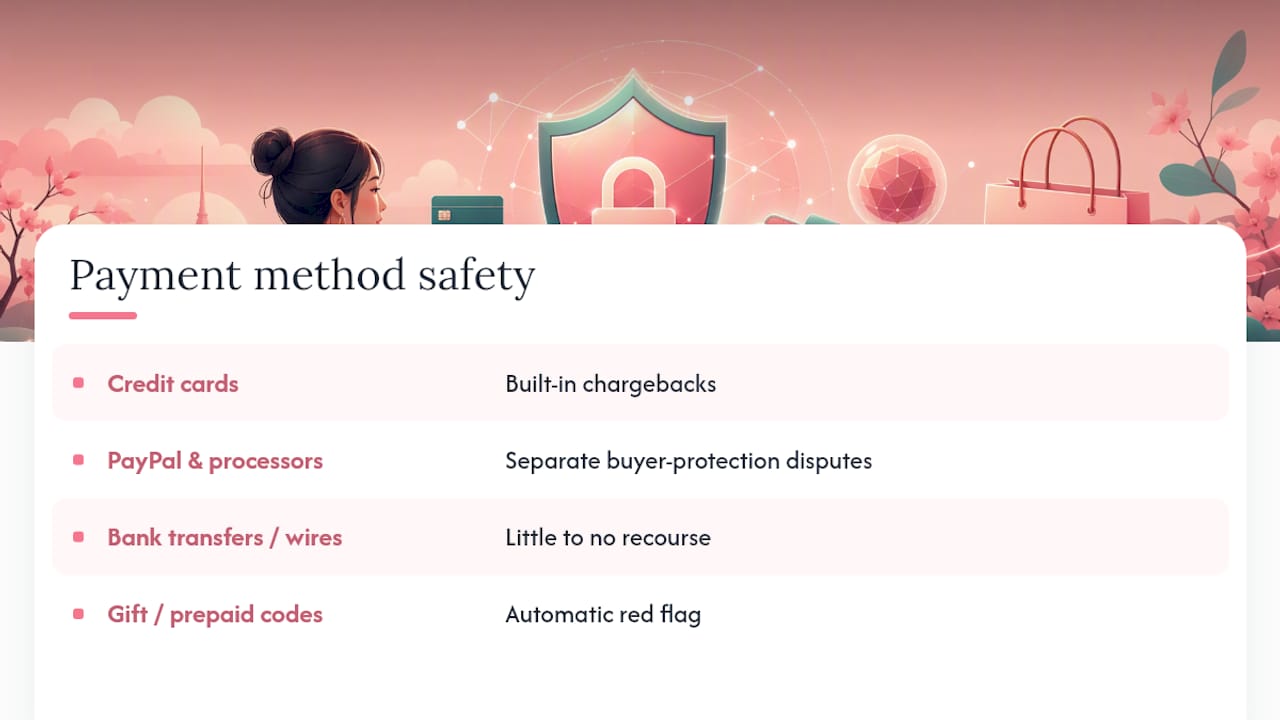
Credit cards remain the strongest default for cross-border beauty purchases because of built-in chargeback protections most card issuers offer when an item never arrives or turns out counterfeit. PayPal and similar third-party processors add another layer, since they typically run their own buyer-protection dispute process separate from your bank.
Be more careful with direct bank transfers or wire payments, which several regional resellers request to avoid processing fees. These payment methods offer little to no recourse if a shipment goes missing or the product turns out fake. Gift cards or prepaid codes as payment for beauty products should be an automatic red flag. No legitimate retailer, brand-direct or specialty, needs you to pay that way.
Look for the padlock icon and “https” in the address bar before entering any payment information, and check that the checkout page itself is hosted on the retailer’s own domain rather than redirecting somewhere unfamiliar. If a site asks for your card number over email or a messaging app instead of a secure checkout form, stop the transaction. Two-factor authentication on your payment app and using a single dedicated card for online beauty purchases (so it’s easy to spot unauthorized charges) are small habits that pay off the first time something goes wrong.
What’s Trending in Asian Beauty Right Now?
Skin barrier repair remains the dominant conversation in Korean and Japanese skincare, with ceramide-heavy moisturizers and fermented ingredients like rice water and galactomyces filtrate showing up across new product launches. Multi-step routines have simplified somewhat, with more brands releasing all-in-one serums that combine hydration and brightening instead of asking shoppers to layer five separate products.
Sunscreen innovation out of Japan and Korea continues to outpace what’s available in the US, particularly formulas using newer UV filters not yet approved domestically, which is part of why so many shoppers seek these products through international retailers in the first place. Skin-tint bases with lighter, more breathable coverage than traditional foundation have also grown fast, reflecting a broader shift toward “skincare that acts as makeup” rather than heavy coverage products.
Evaluating whether a new brand’s claims hold up against its actual ingredient list is its own skill, and editorial coverage like Beauvex’s roundup of new skincare brands is useful for separating genuine formulation innovation from repackaged marketing. The same publication’s breakdown of pH-balanced cleansers is a good primer if you’re trying to judge whether a trending “gentle cleanser” claim is backed by anything real.
How Spyraverified Fits Into Your Shopping Routine
Spyraverified sources directly from brand partners across skincare, hair care, and body care, which cuts out the layers where authenticity usually breaks down on marketplaces and resellers. Instead of guessing whether a listing’s batch code checks out, you’re buying from a storefront built around that verification from the start.
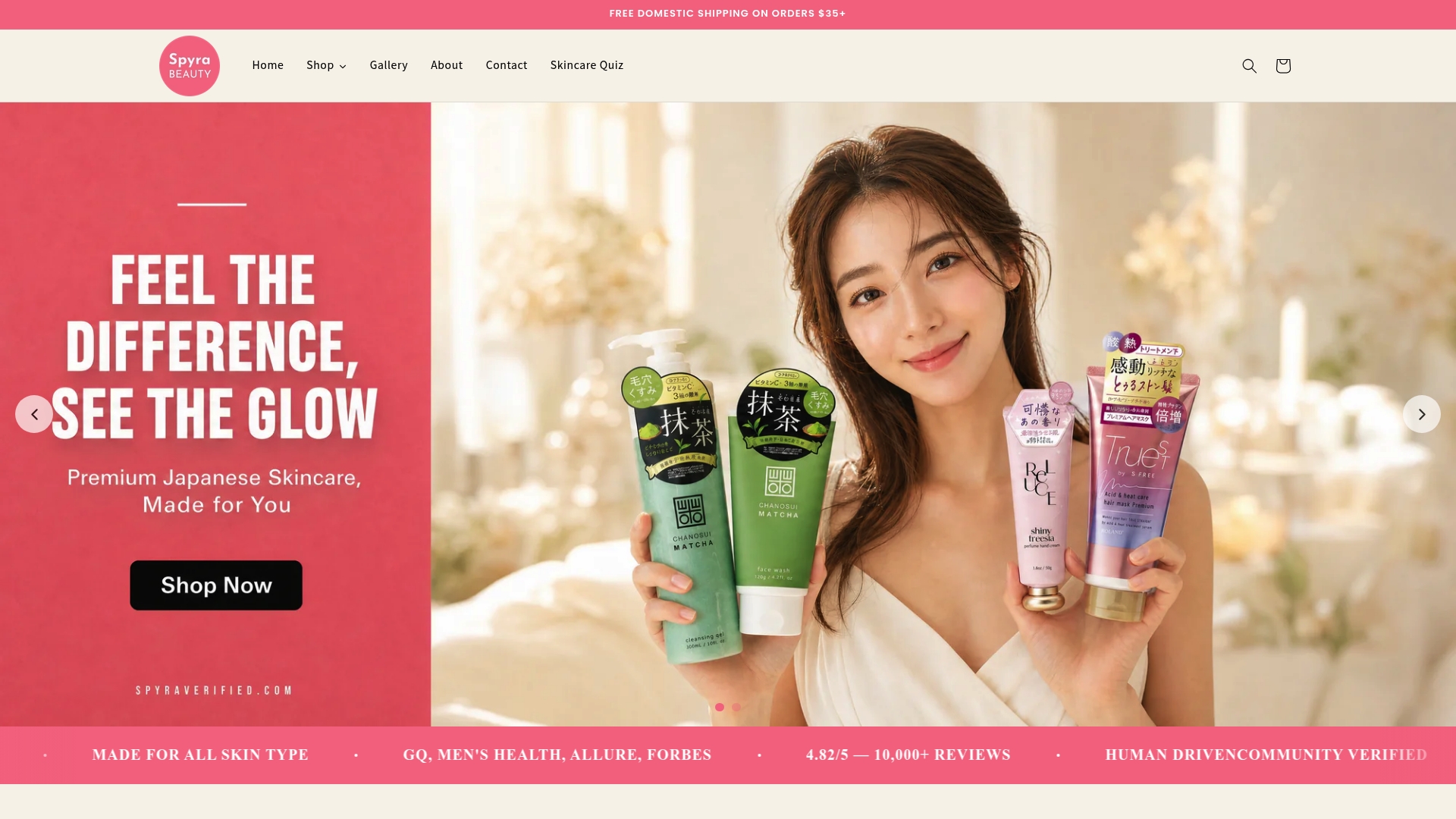
Shopping the site works in three steps: browse a category like skincare or hair care, open a product page to review its full ingredient list and sourcing details, and check the shipping option at checkout before you commit. That’s it. No sorting through third-party sellers on the same listing wondering which one is legitimate.
That said, brand-direct sites and trusted specialty retailers still make sense for products outside what any single storefront carries, and availability naturally shifts as new items launch and others sell through. If you don’t see what you’re after right now, it’s worth checking back or browsing Spyraverified’s hard-to-find products guide for sourcing leads on rarer items. Start with the skincare collection and see what’s currently in stock.
What Do Buyers Get Wrong Most Often?
Most buying mistakes happen at the moment of excitement, right when a viral product shows up in a cart, not from a lack of caution in general. Three small habits fix most of it: save a screenshot of the product photos and batch code before checkout, copy the ingredient list into a notes app so you can compare it later if something feels off, and write down the seller’s return window the day you order, not the day something goes wrong.
None of this requires expertise. It requires treating a $30 serum with the same five minutes of scrutiny you’d give a $300 flight booking.
— Anni
Sources
- What sites do you shop at for Asian skincare : r/AsianBeauty
- Best New Skincare Brands to Watch in 2026
