


The Role of Retinol in Skincare: Your 2026 Guide
Retinol is defined as a vitamin A derivative that remodels skin by stimulating collagen production and accelerating epidermal cell turnover. These two actions sit at the center of the role of retinol in skincare, making it the most clinically studied over-the-counter anti-aging ingredient available today. Consistent use reduces fine lines, fades pigmentation, and thickens the dermis over time. This guide explains the science, the real benefits, and exactly how to use retinol without wrecking your skin barrier.
How does retinol work in the skin on a cellular level?
Retinol does not act on skin in its original form. The skin converts it through a two-step enzymatic process: retinol becomes retinaldehyde, then retinaldehyde becomes retinoic acid. Retinoic acid is the biologically active molecule that actually changes how skin cells behave.
Once retinoic acid forms, it binds to nuclear receptors called RAR (retinoic acid receptors) and RXR (retinoid X receptors). These receptors sit inside the cell nucleus and control gene expression. When activated, they alter gene expression in two critical cell types: keratinocytes in the epidermis and fibroblasts in the dermis. This is where the visible results come from.
Keratinocytes are the cells that form your outer skin layers. Retinol speeds up their turnover, pushing fresher, more evenly pigmented cells to the surface faster. Fibroblasts produce collagen and elastin. Retinol signals fibroblasts to increase output of both proteins while simultaneously inhibiting matrix metalloproteinases, the enzymes that break collagen down. The result is a net gain in structural skin proteins.

The cellular impact is measurable. A study applying 0.4% topical retinol over just 7 days found a 2 to 5 fold increase in factor XIIIa-positive dendrocytes and significant increases in type I collagen, fibronectin, and elastin. That is meaningful dermal remodeling from a relatively low concentration applied for less than two weeks.
Pro Tip: Retinol oxidizes rapidly when exposed to air and light. Choose products in opaque, airtight packaging or single-dose capsules to preserve potency and get the results the concentration on the label promises.
What are the main benefits of retinol for aging skin?
Retinol delivers results across multiple aging concerns simultaneously. That breadth is what separates it from most other over-the-counter actives, which typically target one issue at a time.
Wrinkle and fine line reduction
Retinoids increase epidermal thickness and promote collagen production, directly improving skin structure against photoaging. Thicker epidermis means fewer visible fine lines at the surface. Increased dermal collagen fills in deeper wrinkles from below. The combination produces results that are visible to the naked eye after consistent use.
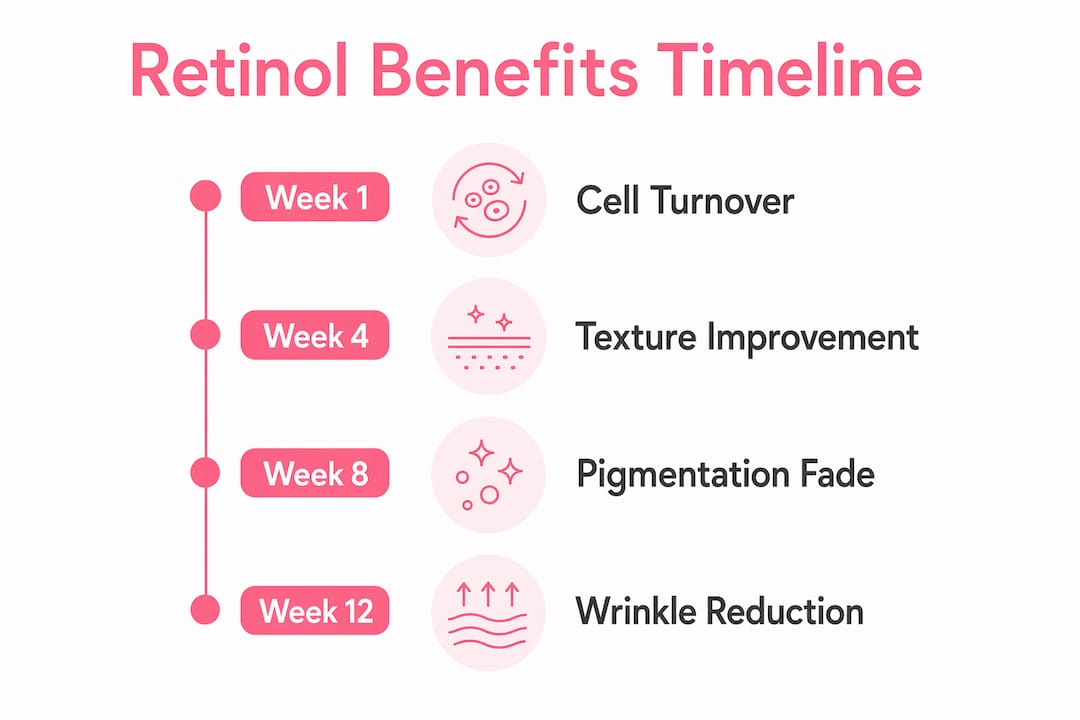
Timeline for visible results
Initial improvements in fine lines and skin texture appear around 4 weeks of consistent use. Substantial results on pigmentation and deeper lines take closer to 12 weeks. That timeline matters because most people quit before the 12-week mark, which is exactly when the most significant changes begin.
Pigmentation and skin tone
Retinol accelerates keratinocyte turnover, which pushes hyperpigmented cells off the skin surface faster. Over 12 weeks, this produces a measurable improvement in uneven tone and dark spots. The mechanism is different from brightening acids like L-ascorbic acid (vitamin C), which work by inhibiting melanin production at the source.
Hydration and barrier effects
Hydration improvements occur with retinol use, though the degree depends on formulation, dose, and individual tolerance. Well-formulated products at appropriate concentrations tend to support the barrier over time, even if early use temporarily disrupts it. This is why formulation quality matters as much as the percentage on the label.
The key benefits at a glance:
- Fine lines and wrinkles: visible improvement from 4 weeks, significant at 12 weeks
- Pigmentation and uneven tone: fades with consistent use through accelerated cell turnover
- Epidermal thickness: increases with regular retinoid use, improving overall skin structure
- Collagen and elastin: fibroblast stimulation boosts production and slows degradation
- Acne: dual-action mechanism treats both acne and aging-related skin changes simultaneously
- Skin texture: smoother surface from faster keratinocyte renewal
How to use retinol effectively and minimize side effects
The most common reason people fail with retinol is not the ingredient itself. It is the approach. Starting too fast, using too much, or applying it incorrectly causes irritation that leads to quitting.
Follow these steps to build tolerance and get results:
-
Start with one to two nights per week. Starting retinol slowly and building up is clinically recommended to balance efficacy and minimize irritation. Begin at the lowest available concentration, typically 0.025% to 0.1%.
-
Apply only to fully dry skin. Applying retinol to damp skin increases absorption but also dramatically increases irritation risk. Wait at least 20 minutes after cleansing before applying.
-
Use a pea-sized amount for the entire face. More product does not mean faster results. Excess product increases irritation without proportional benefit.
-
Follow with a moisturizer. Applying a fragrance-free moisturizer after retinol supports the skin barrier and reduces dryness. Some people prefer the “sandwich method,” applying moisturizer before and after retinol to buffer absorption.
-
Use sunscreen every morning without exception. Retinol accelerates cell turnover, which makes fresh skin cells more vulnerable to UV damage. Daily SPF 30 or higher is non-negotiable during retinol use.
-
Increase frequency gradually. After 4 weeks at one to two nights per week with no significant irritation, move to three nights. Build toward nightly use over 3 to 6 months.
-
Expect a purge phase and do not panic. The initial irritation or purge phase is a temporary reaction to accelerated cell turnover, not a sign the product is wrong for you. Gradual introduction reduces its severity and supports long-term adherence.
Pro Tip: If irritation becomes significant, skip a few nights rather than stopping entirely. Returning to a lower frequency is far better than quitting and restarting from scratch. For readers with sensitive skin, the Japanese retinol alternatives guide offers gentler options worth considering.
A note on formulation: a well-formulated retinol can deliver benefits comparable to prescription tretinoin with better tolerability, especially when stabilized against oxidation. Packaging matters. Opaque tubes and single-dose capsules preserve potency far better than open jars.
How does retinol compare to other retinoids and skincare actives?
Retinol sits in the middle of the retinoid potency spectrum. Understanding where it falls helps you choose the right tool for your skin goals.
Retinol vs. prescription retinoids
Retinol is approximately 20 times less potent than prescription tretinoin because it requires two conversion steps before becoming retinoic acid. Each conversion step reduces the amount of active molecule that reaches skin cells. Tretinoin delivers retinoic acid directly, which is why it works faster but also causes more irritation.
Retinaldehyde sits between retinol and tretinoin in potency. It requires only one conversion step and is available in some over-the-counter formulations. It is stronger than retinol but gentler than tretinoin, making it a useful middle option for people who have built tolerance to retinol but are not ready for a prescription.
Retinol vs. vitamin C
Retinol and vitamin C (L-ascorbic acid) target different problems through different mechanisms. Retinol remodels the dermis and speeds epidermal renewal. Vitamin C inhibits melanin synthesis and provides antioxidant protection against UV-induced oxidative damage. They complement each other rather than compete. Many dermatologists recommend using vitamin C in the morning and retinol at night for this reason.
Why retinol leads for anti-aging
No over-the-counter ingredient has more clinical evidence behind it for anti-aging than retinol. Peptides, growth factors, and niacinamide all offer benefits, but none match retinol’s documented ability to stimulate collagen synthesis and remodel the dermis. For long-term skin maintenance, consistency with a lower concentration delivers superior results compared to high-strength formulations that cause irritation and lead to quitting.
Key Takeaways
Retinol works through a two-step enzymatic conversion to retinoic acid, which activates nuclear receptors in skin cells to stimulate collagen, accelerate cell turnover, and reduce visible signs of aging.
| Point | Details |
|---|---|
| Mechanism is conversion-based | Retinol converts to retinoic acid in two steps, activating RAR and RXR receptors that remodel skin. |
| Results require patience | Fine lines improve around 4 weeks; pigmentation and deeper wrinkles take closer to 12 weeks of consistent use. |
| Start low and build slowly | Begin at 1 to 2 nights per week at a low concentration to minimize irritation and support long-term adherence. |
| Formulation affects efficacy | Stable, well-packaged retinol (opaque or single-dose) preserves potency and delivers results closer to prescription strength. |
| Retinol is 20x less potent than tretinoin | That lower potency means better tolerability and suitability for long-term maintenance over intensive therapy. |
What I have learned from years of watching people use retinol
The single biggest mistake I see is people chasing concentration. They read that 1% retinol is stronger than 0.3% and assume stronger means better. In practice, the person using 0.3% consistently every night for six months will have better skin than the person who tried 1%, got red and flaky, and quit after three weeks.
Patience is genuinely the active ingredient here. Retinol works through cumulative dermal remodeling. That process cannot be rushed by doubling the dose. What it can be derailed by is irritation that breaks your routine.
The purge phase is the other major adherence killer. Skin looks worse before it looks better, and most people interpret that as failure. It is not. It is the skin cycling faster, clearing congestion, and rebuilding. The people who push through that phase with a gentle routine, a good moisturizer, and daily sunscreen are the ones who send before-and-after photos that look genuinely dramatic.
My practical advice: pick a stable formulation, start at the lowest frequency your patience allows, and do not touch your routine for 12 weeks. The double cleanse step is worth getting right too. A clean, well-prepped skin surface makes retinol absorption more consistent, which is why I always point people toward a solid double cleanse routine before they start any active ingredient.
— Anni
Spyraverified’s skincare collection for retinol-focused routines
Spyraverified curates skincare products from Japanese and Asian beauty brands that are difficult to find outside their home markets, including formulations built around retinol and complementary actives.
The Spyraverified skincare collection includes products selected for formulation quality, ingredient stability, and real-world tolerability. Whether you are starting your first retinol routine or looking to add supporting products like barrier-repair moisturizers and vitamin C serums, the collection covers the full range of what your skin needs. Each product is sourced directly from brand partners to guarantee authenticity.
FAQ
What is the role of retinol in skincare?
Retinol is a vitamin A derivative that stimulates collagen production, accelerates skin cell turnover, and inhibits collagen-degrading enzymes. These actions reduce fine lines, fade pigmentation, and improve overall skin texture with consistent use.
How long does retinol take to show results?
Initial improvements in fine lines and texture appear around 4 weeks. Significant changes to pigmentation and deeper wrinkles typically require 12 weeks of consistent use.
What are the most common retinol side effects?
Dryness, redness, and a temporary purge phase are the most common reactions. These are caused by accelerated cell turnover and typically resolve within 4 to 6 weeks when retinol is introduced gradually.
Can you use retinol and vitamin C together?
Yes. Retinol and vitamin C target different mechanisms and complement each other well. The standard approach is vitamin C in the morning for antioxidant protection and retinol at night for collagen stimulation and cell renewal.
Is retinol or tretinoin better for anti-aging?
Tretinoin is approximately 20 times more potent than retinol but causes significantly more irritation. Retinol is the preferred choice for long-term maintenance because it is better tolerated and lowers the risk of skin barrier disruption.
