

Serum With AHA: How to Pick and Use It for Glowing Skin
An AHA serum chemically exfoliates the top layer of your skin by dissolving the bonds holding dead cells together, which accelerates cell turnover and reveals fresher, brighter skin underneath. The single most useful thing you can do right now: pick a formula with glycolic or lactic acid in a moderate concentration range, use it at night, and apply broad-spectrum SPF every morning without fail.
Before you dive in, three things to do first:
- Patch test on your inner arm for 24 hours before applying to your face
- Start at 1–2 times per week and build up gradually as your skin adjusts
- Never skip morning sunscreen — AHAs increase UV sensitivity, full stop
Table of Contents
- What does a serum with AHA actually do to your skin?
- Which AHA is right for your skin type?
- What benefits can you realistically expect?
- How to use an AHA serum safely
- What should you look for when choosing an AHA serum?
- Which ingredients work with AHAs and which ones cause problems?
- Side effects to watch for and when to stop
- Why pH and molecular size matter more than concentration alone
- How does an AHA serum compare to peels and creams?
- How to store your AHA serum so it stays effective
- Key Takeaways
- The case for picking the right formula over the strongest one
- Spyraverified’s AHA-friendly skincare collection
- Useful sources
What does a serum with AHA actually do to your skin?
AHAs, or alpha-hydroxy acids, are water-soluble acids that work at the skin’s surface. They dissolve the “glue” between dead skin cells, allowing them to shed more efficiently than they would on their own. The result is faster cell turnover without any physical abrasion.
That distinction from physical scrubs matters. Scrubs work mechanically, and the friction can cause micro-tears, especially on sensitive or inflamed skin. Enzymatic exfoliants (think papain from papaya) digest surface proteins but tend to work more slowly and shallowly. AHAs sit in the middle: faster and more consistent than enzymes, gentler and more controllable than scrubs.
“AHAs have some amazing benefits, but the main function is to gently ‘unglue’ dead skin cells on the surface, helping them shed more effectively. Products with AHAs improve skin texture and brightness, reduce the appearance of fine lines, and promote collagen production over time.” — Dr. Ife Rodney, board-certified dermatologist
The practical effects you can expect from regular use:
- Smoother texture as rough, uneven patches shed away
- Brighter tone from fresher cells reaching the surface
- Reduced fine lines over time with consistent use
- Faded dark spots and post-acne marks
- Refined pores that appear smaller when congestion clears
Which AHA is right for your skin type?
Not all AHAs behave the same way. Molecular size determines how deeply each acid penetrates, and penetration depth directly affects both potency and irritation risk. Glycolic acid has the smallest molecule, lactic acid sits in the middle, and mandelic acid is the largest of the commonly used AHAs.
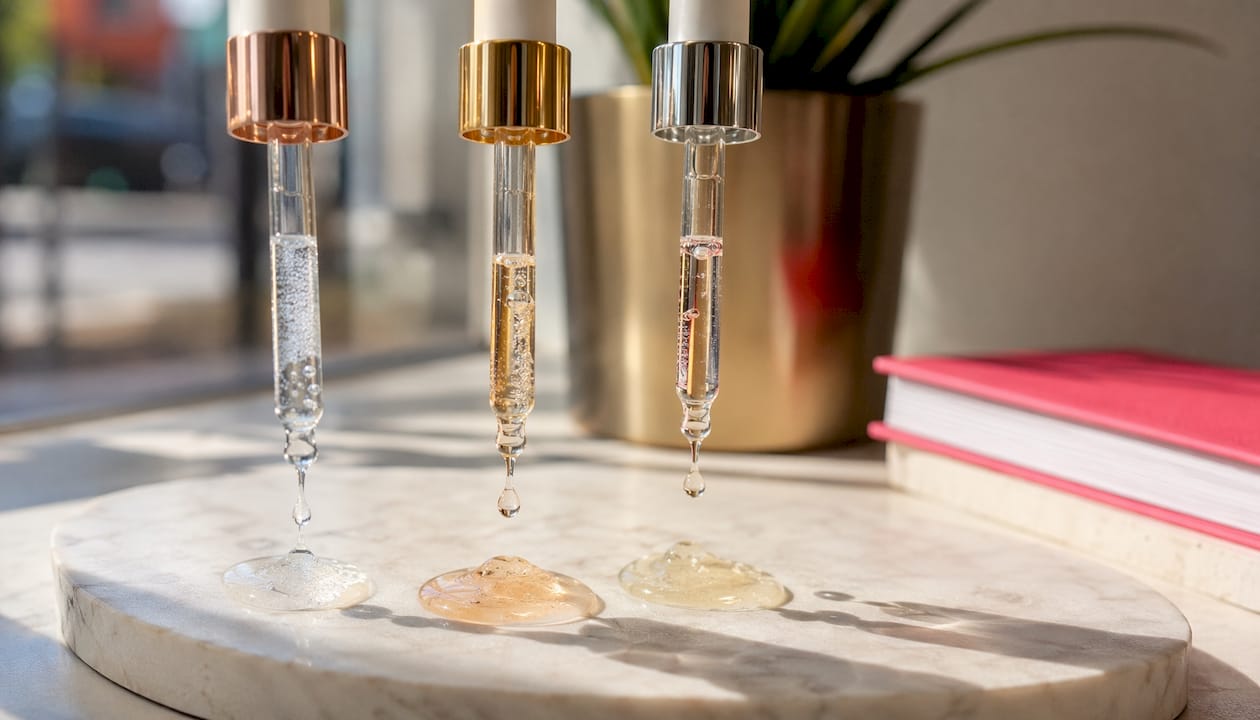
Glycolic acid penetrates deepest and delivers the most dramatic results fastest, but that also means the highest irritation potential. It suits oily or resilient skin types and those targeting visible signs of aging.
Lactic acid is gentler and carries a bonus: it acts as a humectant, drawing moisture into the skin while it exfoliates. Dry or sensitive skin types often tolerate it better than glycolic, and it’s a strong choice for fading hyperpigmentation without as much sting.
Mandelic acid is the gentlest of the three. Its larger molecule means slower, more superficial penetration, which makes it well-suited for sensitive skin, rosacea-adjacent concerns, and deeper skin tones where post-inflammatory hyperpigmentation is a real risk.
Citric and malic acids rarely appear as the primary exfoliant. They show up in blends to add antioxidant activity and a mild brightening effect, and they help adjust a formula’s pH.
- For beginners or sensitive skin: start with lower concentrations of lactic or mandelic acid. For oily or experienced users: glycolic acid options deliver faster visible results. For a gentler entry into glycolic, look for encapsulated glycolic acid formulas, which release the acid gradually and reduce immediate irritation
What benefits can you realistically expect?
The most consistent outcomes from regular AHA serum use are smoother texture, more even tone, and a visible reduction in dullness. Fine lines and dark spots take longer but do respond with sustained use.
Timeline matters here. Most people notice texture improvement within a few weeks of consistent use. Hyperpigmentation and fine lines typically require sustained use over several weeks to months before meaningful change is visible. Concentration, frequency, and skin type all affect the pace.
Key benefits backed by clinical and formulation evidence:
- Texture: Surface roughness decreases as dead cell buildup clears
- Radiance: Fresher cells at the surface reflect light more evenly
- Dark spots: Accelerated turnover pushes pigmented cells to the surface faster, fading marks over time
- Fine lines: Collagen stimulation from consistent exfoliation contributes to plumper skin over months
- Hydration: Lactic acid specifically improves moisture retention; low-pH exfoliating treatments can increase skin hydration compared with natural turnover alone
- Acne: Clearing dead cell buildup reduces the congestion that feeds breakouts — see skincare for acne-prone skin for a fuller picture
Pairing an AHA with humectants like hyaluronic acid or sodium hyaluronate amplifies the hydration benefit. Products like the AlumierMD AHA Renewal Serum use 8% lactic acid with sodium hyaluronate and panthenol specifically to balance exfoliation with moisture retention.
Stat to know: Clinical evidence shows low-pH exfoliating treatments accelerate exfoliation beyond natural skin turnover rates and can measurably increase skin hydration — a dual benefit that makes well-formulated AHA serums more than just surface-level exfoliants.
How to use an AHA serum safely
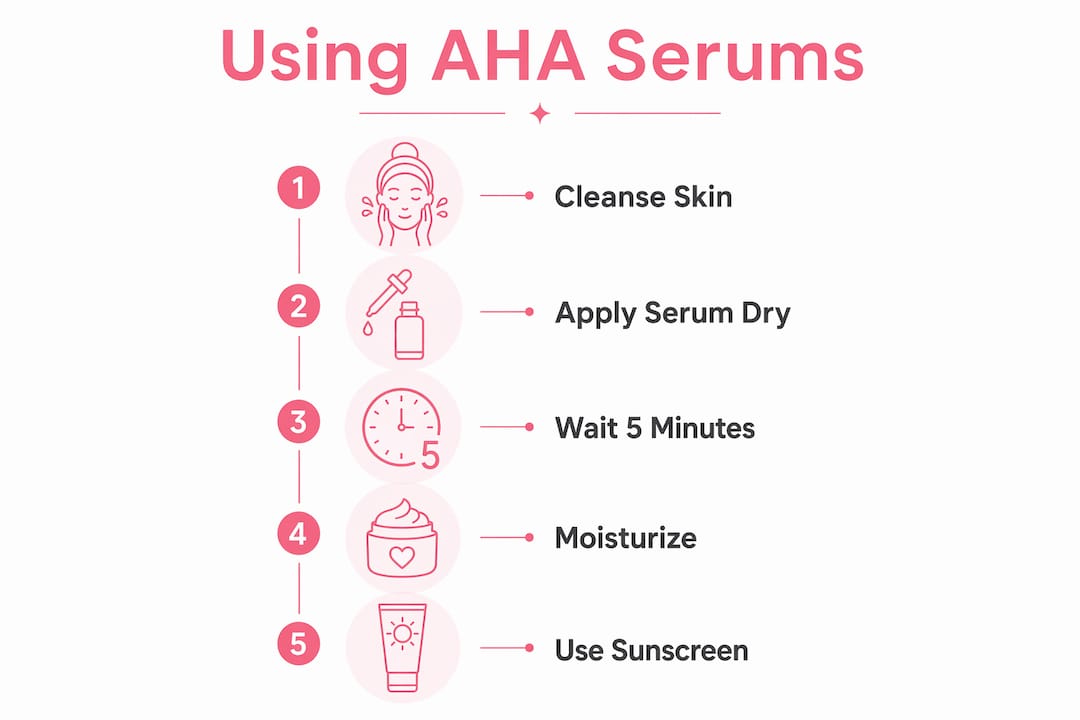
Follow these steps in order, especially if you’re new to chemical exfoliants.
- Patch test first. Apply a small amount to your inner arm or behind your ear. Wait 24 hours. Redness, itching, or swelling means the formula is too strong for your skin right now.
- Start at 1–2 times per week. Build tolerance gradually before increasing frequency. Jumping straight to nightly use is the most common mistake beginners make.
- Apply at night. AHAs increase photosensitivity. Evening application gives your skin time to process the exfoliation before sun exposure.
- Apply to dry skin. Damp skin increases penetration and can amplify irritation. Wait a few minutes after cleansing before applying. A thorough double cleansing routine beforehand removes the surface oils that can interfere with even absorption.
- Follow with moisturizer. Lock in hydration immediately after the serum absorbs. Ceramides and hyaluronic acid are ideal companions.
- Apply broad-spectrum SPF 30+ every morning. No exceptions. AHAs thin the stratum corneum temporarily, leaving skin more vulnerable to UV damage.
- Increase frequency as tolerated. Most people can work up to 3–4 times per week. Sensitive skin may stay at 1–2 times and still see results.
Layering rules:
- AHAs pair well with hydrating serums (hyaluronic acid, glycerin) applied after
- Peptide serums work well in the same routine, applied after the AHA
- Do NOT layer strong retinoids and AHAs on the same night — the combination pushes irritation risk high fast
- Do NOT use high-strength vitamin C (L-ascorbic acid) the same night as an AHA; the low-pH overlap can destabilize both formulas and stress the barrier
- BHAs (salicylic acid) can be combined in the same formula but layering separate high-strength products the same night is risky for most skin types
“On days you use an AHA, avoid combining it with other potent actives, like retinol or vitamin C, to minimize irritation.” — Dr. Ife Rodney, board-certified dermatologist
Pro Tip: Apply your AHA serum to completely dry skin, not damp. Moisture on the skin surface lowers the effective pH at the point of contact, which increases acid activity and irritation risk — especially with glycolic acid. Wait two to three minutes after cleansing before applying.

What should you look for when choosing an AHA serum?
Concentration:
- Beginners: 5–8% glycolic or lactic acid
- Experienced users: 8–15% glycolic, 10–12% lactic
- Sensitive skin: 5–8% lactic or mandelic, or an encapsulated glycolic formula
pH:
AHA activity depends heavily on pH. Effective exfoliating serums typically sit in the ~3.0–4.0 pH range. A higher pH (above 4.5) reduces activity significantly. Many brands don’t publish pH on the label, but you can test at home with pH strips or look for third-party reviews that measure it.
Supporting ingredients to look for:
- Hyaluronic acid or sodium hyaluronate (hydration, barrier support)
- Ceramides (barrier repair — CeraVe’s nightly treatment pairs 5% glycolic and lactic with ceramides for exactly this reason)
- Niacinamide (reduces redness, supports barrier)
- Panthenol or allantoin (soothing, reduces post-exfoliation sensitivity)
- Antioxidants like vitamin E or green tea extract
Packaging:
AHAs degrade with light and air exposure. Opaque or dark bottles with pumps or airless dispensers preserve potency far better than open jars or clear glass droppers. If a formula comes in a clear jar, expect faster degradation once opened.
Formulation type:
Water-based and gel formulas are most common and absorb cleanly before moisturizer. Oil-based AHA formulas exist but are less common; they tend to suit very dry skin but can feel heavy.
| Factor | Beginner | Experienced User |
|---|---|---|
| Concentration | 5–8% | 8–15% |
| AHA type | Lactic or mandelic | Glycolic or blend |
| pH | ~3.0–4.0 | ~3.0–4.0 |
| Supporting ingredients | Ceramides, HA, panthenol | Peptides, antioxidants, niacinamide |
| Frequency | 1–2x/week | 3–4x/week |
Which ingredients work with AHAs and which ones cause problems?
Safe pairings:
- Hyaluronic acid, glycerin, and other humectants applied after the AHA serum
- Peptides in a separate step (after the AHA, or on alternating nights)
- Niacinamide to calm post-exfoliation redness
- Ceramide-rich moisturizers to seal and protect the barrier
- Soothing botanicals like centella asiatica, aloe vera, and green tea
Do not mix on the same night:
- Strong retinoids (tretinoin, retinol at high concentrations) — combining these risks over-exfoliation and barrier compromise
- High-strength vitamin C (L-ascorbic acid) — pH conflicts and compounded irritation
- Physical exfoliants (scrubs, cleansing brushes) — redundant and abrasive on freshly acid-treated skin
- Multiple high-strength acids in the same application (e.g., stacking a glycolic serum with a salicylic toner)
For guidance on avoiding the most common layering errors, the skincare layering mistakes guide covers the full picture.
Skin cycling — a practical schedule:
A simple four-night rotation works well for most people new to actives:
- Night 1: AHA serum + moisturizer
- Night 2: Retinoid + moisturizer
- Night 3: Recovery (moisturizer only, no actives)
- Night 4: Recovery
- Repeat
This approach keeps exfoliation and retinoid use separated, gives the barrier two full recovery nights, and is easy to maintain consistently. Consistency matters more than frequency.
Pro Tip: If you want to use both a retinoid and an AHA in your routine, consider Japanese retinol alternatives on your non-AHA nights. Many are gentler than Western retinol and easier to rotate without barrier stress.
Side effects to watch for and when to stop
Mild, temporary redness and slight flaking in the first week or two are normal. Your skin is adjusting to a faster turnover rate. These usually resolve as you build tolerance.
Signs of over-exfoliation — stop and give your skin a break:
- Persistent burning or stinging that doesn’t fade within a few minutes of application
- Tight, shiny, or “raw” skin texture
- Increased breakouts or sudden sensitivity to products that never bothered you before
- Visible peeling beyond light flaking
Seek professional guidance if you notice:
- Open sores, blistering, or severe swelling
- Rash that spreads beyond the application area
- Symptoms that persist more than 48 hours after stopping use
If you need to stop, switch to a gentle, fragrance-free moisturizer and skip all actives until the skin barrier recovers. Bring the product label and a timeline of symptoms to your appointment — a dermatologist can determine whether the reaction was concentration-related, pH-related, or triggered by a specific ingredient.
“If you have highly sensitive skin, you may experience irritation, redness, or stinging from AHAs, so it’s best to avoid or use in moderation. People with severe active acne or rosacea may find that AHAs exacerbate their condition.” — Dr. Ife Rodney, board-certified dermatologist
People with broken skin, active sunburn, or a rosacea flare should avoid AHAs entirely until the skin has healed.
Why pH and molecular size matter more than concentration alone
Two serums can both say “10% glycolic acid” on the label and perform completely differently. The reason is pH.
Lower pH makes AHAs more active by keeping more of the acid in its free, unbound form. A serum at pH 3.0 with 10% glycolic delivers meaningfully more exfoliation than the same concentration at pH 4.5. The trade-off is that lower pH also increases irritation risk, which is why well-formulated products include buffering ingredients and recommend limited layering.
Molecular size adds another layer. Glycolic acid’s small molecule penetrates quickly and deeply, which is why it produces fast results but also the most sensitivity. Lactic acid’s larger molecule moves more slowly through the skin, giving it a gentler profile. Mandelic acid, the largest of the three, penetrates most slowly and is the least likely to cause irritation — useful for sensitive skin or for anyone new to chemical exfoliation.
| AHA | Relative Molecule Size | Penetration Speed | Irritation Risk |
|---|---|---|---|
| Glycolic | Smallest | Fastest | Highest |
| Lactic | Medium | Moderate | Moderate |
| Mandelic | Largest | Slowest | Lowest |
Delivery systems also shift the equation. Encapsulated or microdosed glycolic acid releases the active gradually, which allows sensitive skin to benefit from glycolic’s efficacy without the immediate irritation spike of a standard low-pH formula. This is the approach used in some newer gentle-resurfacing serums designed for reactive skin types.
The practical takeaway: when comparing products, check both concentration AND pH. A 5% glycolic serum at pH 3.2 will outperform a 12% formula at pH 5.0, and it may also irritate more. Neither number alone tells the full story.
How does an AHA serum compare to peels and creams?
The format you choose changes how much control you have over exfoliation intensity and how easily you can fit it into a daily routine.
Serums are the most versatile option. Concentrations typically run from 5–15%, they absorb quickly, and they layer cleanly under moisturizer. You control frequency and can adjust easily. Most people find serums the easiest format to use consistently.
At-home peels (pads, masks, or leave-on treatments at higher concentrations) deliver a more intense single-session exfoliation. High-performance AHA peels are typically used once or twice a week as a treatment rather than a daily product. They’re better suited to experienced users who already know how their skin responds to AHAs. The Institut Esthederm Intensive AHA Peel Concentrated Serum, for example, uses a potent AHA and BHA blend for a more concentrated resurfacing effect.
Creams and lotions with AHAs tend to sit at lower concentrations (2–8%) and higher pH, which makes them gentler but also less potent. They’re a good entry point for very sensitive skin or for body use, where the skin is thicker and less reactive. The trade-off is slower visible results.
The short version: serums offer the best balance of efficacy and control for most people. Peels are for targeted, occasional use. Creams are for gentle maintenance or body application.
How to store your AHA serum so it stays effective
AHAs are pH-sensitive and degrade with heat, light, and air exposure. How you store a serum directly affects how long it stays active.
- Keep it away from direct sunlight. A bathroom shelf in front of a window is one of the worst spots. A cabinet or drawer is better.
- Avoid heat. Temperatures above 77°F (25°C) accelerate degradation. Don’t leave serums in a hot car or near a radiator.
- Close the cap tightly after every use. Air exposure oxidizes the formula, especially for serums in dropper bottles.
- Prefer opaque or airless packaging. If your serum came in a clear glass dropper, store it in a dark cabinet and use it within the period after opening (PAO) printed on the label.
- Refrigeration is optional but helpful. A skincare fridge or the door of a regular refrigerator keeps AHA serums stable longer and can reduce post-application redness slightly.
- Check the PAO symbol. Most serums are stable for 6–12 months after opening. If the texture, color, or smell changes noticeably, the formula has likely degraded.
One practical note: if you buy in bulk or stock up on sale, keep unopened bottles in a cool, dark place and only open one at a time.
Key Takeaways
A well-chosen AHA serum at an appropriate concentration and pH, used consistently with morning SPF, is one of the most reliable tools for improving skin texture, tone, and radiance over time.
| Point | Details |
|---|---|
| Start low and slow | Begin with lower concentrations of lactic or mandelic acid, 1–2 times per week, and increase only as your skin tolerates it. |
| pH matters as much as concentration | Effective AHA serums typically work in an active pH range; a higher pH reduces activity significantly. |
| SPF is non-negotiable | AHAs increase UV sensitivity — broad-spectrum SPF every morning is required, not optional. |
| Don’t mix with retinoids or strong vitamin C at night | Combining these actives the same night raises over-exfoliation and barrier-compromise risk. |
| Spyraverified for vetted options | Spyraverified curates authentic Japanese and Asian AHA-friendly formulas, including gentle lactic blends and hydrating pairings, with global shipping. |
The case for picking the right formula over the strongest one
The most common mistake people make with AHA serums is treating concentration as the only variable that matters. A 15% glycolic serum at the wrong pH, without barrier-supporting ingredients, used five nights a week will do more damage than good for most skin types. The research is clear: consistency and skin-barrier integrity produce better long-term results than chasing the highest percentage on the label.
What actually moves the needle is finding a formula your skin can tolerate regularly. That usually means a moderate concentration with ceramides, hyaluronic acid, or niacinamide built in, at a pH that’s active but not aggressive. The Asian beauty approach to exfoliation tends to reflect this — lower concentrations used more consistently, paired with hydrating layers that protect the barrier rather than strip it. That philosophy shows up in many of the formulas Spyraverified sources, and it’s worth considering if you’ve had bad experiences with Western high-strength peels in the past.
The other underrated factor is delivery system. Encapsulated glycolic acid, for example, gives sensitive skin access to glycolic’s efficacy without the immediate irritation spike of a standard low-pH formula. If you’ve written off glycolic because it stings, it may be the delivery, not the acid, that’s the problem.
Spyraverified’s AHA-friendly skincare collection
Readers who’ve made it through this guide know exactly what to look for: a moderate AHA concentration, a pH in the active range, barrier-supporting ingredients, and stable packaging. Spyraverified’s skincare collection is built around precisely that kind of formulation, sourced directly from Japanese and Asian brands that have spent decades refining gentle-but-effective exfoliation approaches.
The collection includes gentle lactic acid blends suited to sensitive and dry skin, hydrating pairings that combine AHAs with ceramides and humectants, and options for more experienced users looking for stronger resurfacing. Every product is authenticated through direct manufacturer partnerships, so you’re not guessing about what’s actually in the bottle. Global shipping is available, and the curation process means you’re choosing from formulas that have already been vetted for quality and tolerability. Browse the skincare collection to find the AHA formula that fits your skin type and routine.
Useful sources
The following sources informed this article and are worth bookmarking for further reading.
- PMC — Journal article on skin acid treatments: Peer-reviewed research on how pH affects AHA activity and irritation risk. Go here for the clinical detail behind the pH guidance in this article.
- Live That Glow — Skincare Acid Guide: Accessible breakdown of AHA types, molecular sizes, and usage frequency. Good starting reference for beginners.
- Elle — The 7 Best AHA Serums of 2024, According to Experts: Expert-backed product roundup with dermatologist commentary from Dr. Ife Rodney. Useful for product examples and skin-type guidance.
- CeraVe — Skin Renewing Nightly Exfoliating Treatment: Product page showing how a 5% glycolic and lactic blend pairs with ceramides and hyaluronic acid. A practical example of barrier-conscious AHA formulation.
- AlumierMD — AHA Renewal Serum: Details on an 8% lactic acid formula with sodium hyaluronate and panthenol. Demonstrates how professional-grade serums balance efficacy and tolerability.
- BABOR — AHA Peeling Serum 101: Brand guidance on high-performance AHA peels, including pH and frequency recommendations. Useful for understanding the peel-versus-serum distinction.
- Murad — Heartleaf Gentle Resurfacing Serum: Example of encapsulated glycolic acid technology for sensitive skin. Helpful for understanding slow-release delivery systems.
- Skin Inspired — AHA BHA PHA Serum Benefits: Consumer-facing overview of ingredient conflicts and layering warnings. Good reference for the do-not-mix guidance.
