

Select Asian SPF for Melanin-Rich Skin: What to Look For
If you have melanin-rich Asian skin, the SPF to grab is a tinted or clear-drying broad-spectrum sunscreen, SPF 30+ for daily wear (SPF 50+ if you’re outside for hours), with high UVA protection labeled PA+++ or PA++++ and iron oxides or clear-dry chemical filters to skip the white cast entirely.
That’s the whole answer. Here’s how to act on it fast:
- Flip the bottle and check for both an SPF number and a PA rating. No PA rating usually means weaker UVA coverage.
- If you deal with dark spots or melasma, prioritize tinted formulas with iron oxides over plain mineral sunscreen.
- Look for niacinamide or centella asiatica in the ingredient list. They calm skin while the SPF does its job.
Pro Tip: Before you commit to a full-size bottle, do the flash-photo swatch test described later in this guide. It takes 30 seconds and saves you from a drawer full of ghost-faced regrets.
Key Takeaways
Melanin-rich Asian skin needs tinted or clear-drying, broad-spectrum SPF 30+ with strong UVA protection to prevent hyperpigmentation that sunburn risk alone won’t reveal.
| Point | Details |
|---|---|
| Check PA before SPF | Look for PA+++ or PA++++ on the label since UVA and visible light drive most pigment damage. |
| Tint solves cast | Iron-oxide tinted or clear-dry chemical formulas avoid the white cast that plain mineral sunscreen leaves. |
| Test before buying | Swatch a patch, wait 10 minutes, and take a flash photo to catch cast the mirror misses. |
| Reapply every two hours | Foundation with SPF isn’t enough on its own; touch up with a powder or spray formula outdoors. |
| Shop verified sources | Spyraverified sources Asian SPFs directly from manufacturers with authenticity checks, cutting counterfeit risk. |
Table of Contents
- Why Melanin-Rich Asian Skin Still Needs Daily SPF
- Your SPF Shopping Checklist for Melanin-Rich Skin
- Mineral, Chemical, or Hybrid: Which Filter Actually Works for You?
- How Do You Test for White Cast Before You Buy?
- Getting the Amount and Timing Right
- Choosing SPF When You Have Sensitive or Acne-Prone Skin
- How Spyra Verified Curates SPFs for Melanin-Rich Skin
- An Editorial Take on Buying SPF for Melanin-Rich Skin
- Where to Find Verified Asian SPF Formulas
- Frequently Asked Questions
- Sources
Why Melanin-Rich Asian Skin Still Needs Daily SPF
Melanin absorbs some UV rays, but it doesn’t block them, and it does nothing to stop UVA or visible light from triggering new dark spots. Melasma, post-inflammatory hyperpigmentation, and uneven tone in deeper skin tones are driven largely by these two wavelength ranges, not just sunburn risk. That’s why “I don’t burn” has never been a valid reason to skip sunscreen.
Dermatological guidance calls for broad-spectrum SPF 30 or higher every day, with SPF 50+ reserved for extended outdoor exposure. For Asian skin specifically, regional dermatology guidance goes further, pushing UVA and visible-light protection as the real priority, not just the SPF number on the front label.
Skin that doesn’t visibly burn is still absorbing UVA radiation deep enough to break down collagen and stimulate the pigment cells responsible for dark spots. The damage is silent until it isn’t.
Your SPF Shopping Checklist for Melanin-Rich Skin
Before you buy, run any candidate sunscreen through this list.
- SPF and spectrum: Broad-spectrum, SPF 30+ for daily indoor/outdoor mix, SPF 50+ if you’re outside for more than an hour or two.
- UVA rating: PA+++ or PA++++ on the label, or a stated PPD value if you’re buying from a market that lists it directly.
- Finish: Tinted with iron oxides, or a clear-drying chemical or hybrid filter. Either solves the white cast problem; plain untinted mineral sunscreen usually doesn’t.
- Calming ingredients: Niacinamide, centella asiatica, hyaluronic acid, or antioxidants like vitamin C or E to lower irritation risk.
- Fragrance-free and noncomedogenic if you’re prone to breakouts or post-inflammatory marks.
- Authenticity: Buy from a verified retailer, check the expiration date, and be wary of prices that seem too low for an imported Asian formula.
Skip any product missing more than one of these, and you’ll cut your return rate dramatically.
Mineral, Chemical, or Hybrid: Which Filter Actually Works for You?
There’s no single best category here. The right filter type depends on your white-cast tolerance, sensitivity, and daily routine, so it’s worth understanding what each one actually does.
Mineral sunscreens (zinc oxide, titanium dioxide) sit on top of skin and reflect UV rays. They’re gentle and well-suited to reactive or acne-prone skin, but traditional mineral formulas leave a chalky or grayish cast on deeper tones. The fix isn’t avoiding mineral filters altogether. It’s choosing tinted mineral sunscreens, since iron oxides both eliminate the cast and add measurable protection against visible light, which is a known trigger for melasma.
Chemical filters absorb UV rays and convert them to heat. Many modern Asian formulas use next-generation filters that dry clear and layer beautifully under makeup, which is a big reason Korean sunscreens have such loyal followings among people with deeper skin tones. Hybrid formulas combine both approaches, often giving you clear-dry wear with some of mineral’s calming benefit.
- Oily or combination skin in a humid climate: lightweight chemical or hybrid formula.
- Acne-prone or highly reactive skin: tinted mineral with zinc oxide.
- Dry skin: hybrid or chemical with added hyaluronic acid or ceramides.
For a deeper look at how filters differ by country of origin, Japanese sunscreen formulation tends to favor ultra-light textures, while Korean brands often lean into skincare-forward ingredient blends.
How Do You Test for White Cast Before You Buy?
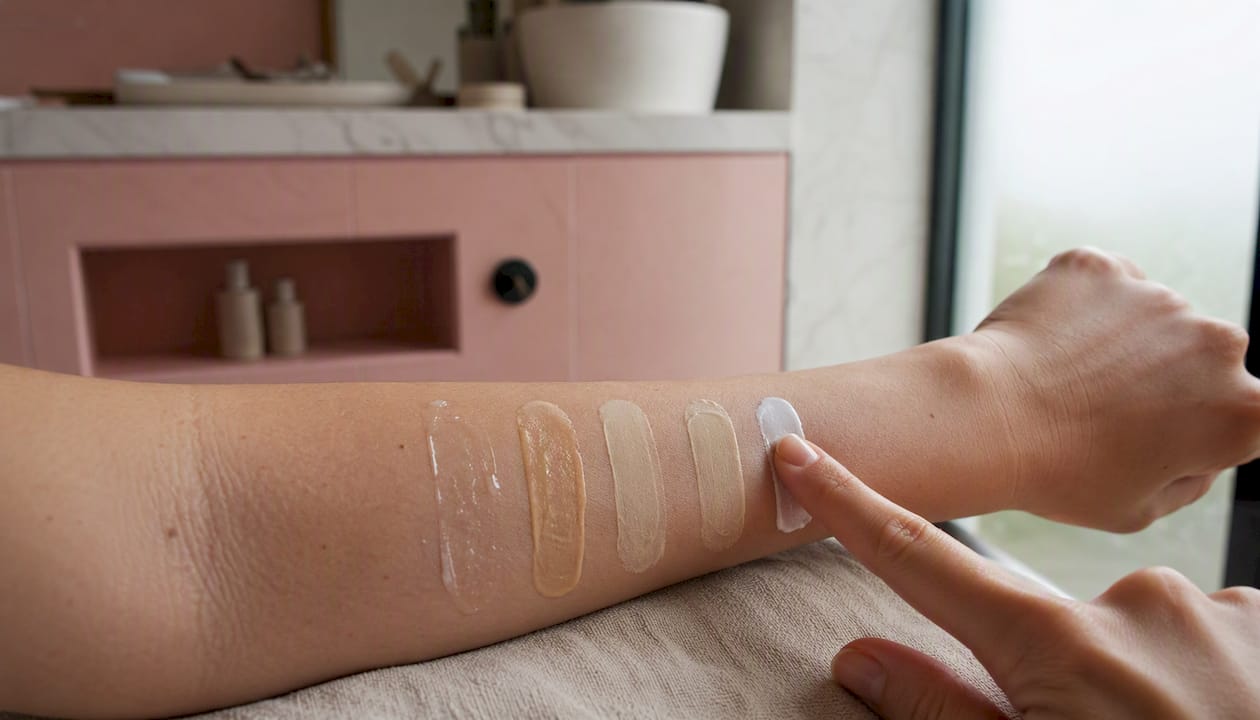
The fastest way to know if a sunscreen will ghost your skin is a swatch plus a flash photo, done before you commit to the bottle.
- Squeeze a fingertip-sized amount onto the back of your hand or your jawline.
- Rub it in fully, the way you would apply it to your whole face.
- Wait 5 to 10 minutes and check the area in natural daylight.
- Take a photo with your phone’s flash on. Flash exposes gray or bluish undertones that your bathroom mirror hides.
- If you wear foundation daily, layer a small amount over the sunscreen to see how it behaves together.
Pro Tip: Test against a neutral background, not a patterned sleeve or countertop. Busy backgrounds trick your eye into missing a subtle cast that the camera will still catch.
If a sunscreen passes the swatch test but feels heavy or greasy after a few hours, consider a half-day wear test before buying a full size. Texture problems show up slower than color problems.
Getting the Amount and Timing Right
Apply enough sunscreen every morning and reapply every two hours during real sun exposure. Foundation with SPF built in does not count as your primary protection; most people apply far less foundation than the amount needed to hit the labeled SPF.
- Use roughly a nickel-sized amount for your full face and neck, or follow the two-finger rule (two full finger-lengths of product).
- Blend from the center of your face outward, paying attention to the hairline and ears, where cast is most visible and coverage is often skipped.
- For tinted formulas, pat rather than rub in the final layer to avoid streaking.
For reapplication:
- Set a phone reminder for every two hours if you’re outdoors.
- Use a setting powder with SPF or a facial mist-sunscreen hybrid over makeup instead of removing your look.
- If you’re indoors most of the day near a window, one solid morning application plus a midday touch-up is usually enough.
Choose lightweight, quick-absorbing textures if you’re layering under makeup. Thick creams tend to pill and shift foundation throughout the day.
Choosing SPF When You Have Sensitive or Acne-Prone Skin
Prioritize noncomedogenic, fragrance-free sunscreens with soothing actives and iron oxides for visible-light defense. This combination lowers your irritation risk while still targeting the pigment concerns most common in melanin-rich skin.
- Niacinamide calms inflammation and helps even tone over time.
- Tranexamic acid is increasingly used in Asian formulas specifically to address stubborn hyperpigmentation.
- Antioxidants like vitamin C and E help offset environmental oxidative stress that worsens dark spots.
- Centella asiatica soothes reactive or barrier-compromised skin.
- Iron oxides block visible light, which tinted mineral formulas use specifically because a plain white cast is one of the biggest reasons people skip sunscreen altogether.
Tinted mineral sunscreen isn’t a cosmetic afterthought for deeper skin tones. It’s functional protection against the exact wavelength of light most responsible for stubborn pigmentation.
Before applying anything new to your full face, patch-test on your inner arm or jawline for 48 hours. This catches reactions before they show up as new dark marks, which somewhat defeats the purpose of buying the sunscreen in the first place.
How Spyra Verified Curates SPFs for Melanin-Rich Skin
Spyraverified highlights Asian-formulated SPFs that combine strong UVA protection, a cosmetic finish that actually works on deeper tones, and skin-soothing ingredients, rather than just importing whatever is popular overseas.
Every product is sourced directly from partnered manufacturers and verified for authenticity before it reaches the storefront, which matters given how much counterfeit Asian skincare circulates through unofficial resellers. That direct sourcing also means formulas match what’s sold in their home markets, PA ratings and all.
- Filter by tint level if white cast is your main concern.
- Check listed PA ratings for UVA strength before adding to cart.
- Look for sensitive-skin or fragrance-free tags if you’re acne-prone or reactive.
Browsing the Korean sunscreen roundup or comparing Korean versus Japanese formulations is a good starting point if you’re not sure which regional texture suits you yet. A high-SPF option like the Uji Matcha Sunscreen Cream SPF 50+ is worth a look if you need waterproof, extended-wear coverage.
An Editorial Take on Buying SPF for Melanin-Rich Skin
Most sunscreen advice for melanin-rich skin still gets stuck arguing about mineral versus chemical filters, as if the filter chemistry alone decides whether a product works. It doesn’t. The real dividing line is whether a formula protects against visible light and dries in a way you’ll actually tolerate every single day. A technically excellent SPF that sits gray on your skin gets used twice and then abandoned in a drawer.
What gets underrated is PA rating literacy. Shoppers obsess over SPF numbers while ignoring the UVA side of the label entirely, which is backwards for anyone dealing with melasma or PIH, since visible light and UVA do most of the pigment damage that SPF alone doesn’t touch. If you take one thing from this guide, let it be this: read the PA rating before the SPF number. Buy the tinted or clear-dry formula you’ll actually reapply, and treat the ingredient list, not just the filter category, as the real decision point.
Where to Find Verified Asian SPF Formulas
You’ve got the checklist, the label knowledge, and the testing method. What you probably don’t have is easy access to the specific PA-rated, tinted Asian formulas that actually meet all of it, since most of them never make it to mainstream drugstore shelves in the United States.
That’s the gap Spyraverified fills. Rather than gambling on marketplace listings of uncertain origin, you shop a catalog sourced directly from the manufacturers themselves, with authenticity checks built into every listing. If you’ve been burned by a resold “Korean” sunscreen that turned out to be reformulated or expired, direct sourcing solves that problem at the source instead of after the fact. Browse the skincare collection and filter by tint, SPF, and PA rating to find a formula that matches everything in this guide, then add it to cart with confidence that what arrives matches what’s on the label.
Frequently Asked Questions
What SPF should I use if I have melanin-rich Asian skin? Use broad-spectrum SPF 30+ daily, and step up to SPF 50+ if you’re outdoors for extended periods. Pair it with a PA+++ or PA++++ rating for adequate UVA coverage.
Does melanin protect me enough that I can skip sunscreen? No. Melanin reduces some UV absorption but doesn’t stop UVA or visible light, both of which drive hyperpigmentation and melasma regardless of how rarely you burn.
How do I avoid white cast with Asian sunscreens? Choose tinted formulas with iron oxides, or clear-drying chemical and hybrid filters. Test with a swatch and flash photo before buying a full-size bottle.
What ingredients help with dark spots in a sunscreen? Niacinamide, tranexamic acid, antioxidants like vitamin C, and centella asiatica all support pigment control while calming irritation.
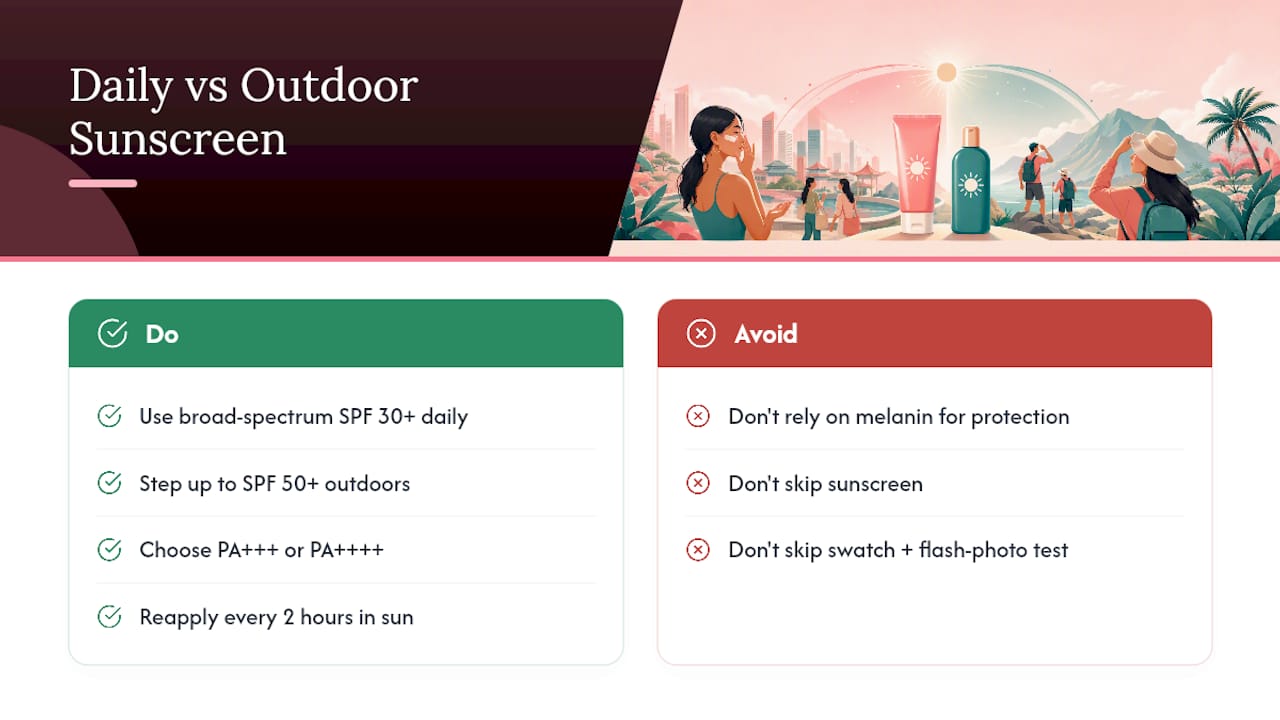
How often should I reapply sunscreen during the day? Every two hours during direct sun exposure. Use a powder or spray SPF over makeup instead of removing your full look each time.
Sources
- Cleveland Clinic — Sunscreen for darker skin tones
- PMC — Visible light and pigmentation: role of iron oxides
- Allure — Best Korean sunscreens and why they work
