


What Is Glass Skin? Your 2026 Glow Guide
Glass skin is defined as a complexion so clear, hydrated, and smooth that it reflects light the way glass does, signaling optimal skin health rather than a surface-level shine. The term comes from K-Beauty culture, popularized by esthetician Alicia Yoon and Korean beauty standards that treat luminosity as a sign of a healthy moisture barrier. Understanding what is glass skin means recognizing it as a health goal, not a cosmetic trick. The right ingredients, a consistent layered routine, and realistic expectations are what separate glass skin from a temporary glow.
What are the key characteristics and benefits of glass skin?
Glass skin is defined by four visible qualities: even skin tone, translucency, smooth texture, and deep, lasting hydration. These qualities work together to create a luminous finish that catches light naturally. The result looks polished without appearing greasy or artificially shiny.

The most common mistake people make is confusing glass skin with oily or dewy skin. True glass skin features refined, pore-less texture and translucency that is distinct from dehydrated oily skin with surface-level shine. Oily skin reflects light unevenly and often feels slick. Glass skin reflects light evenly because the surface is genuinely smooth and well-hydrated.
The benefits go beyond appearance:
- Healthy moisture barrier. A well-hydrated barrier blocks environmental irritants, pollution, and bacteria more effectively.
- Reduced sensitivity. Skin with a strong barrier reacts less to temperature changes, harsh products, and stress.
- Youthful appearance. Plump, hydrated skin shows fine lines less clearly than dry or dehydrated skin.
- Improved product absorption. A smooth, hydrated surface lets serums and treatments penetrate more evenly.
- Natural glow without makeup. Glass skin reduces the need for heavy foundation or highlighter to achieve a lit-from-within look.
Pro Tip: Take a photo of your skin in natural light after your morning routine. If it looks greasy in patches but dull elsewhere, you are dealing with dehydration, not glass skin. Consistent hydration fixes both.
Lifestyle factors including adequate sleep, balanced diet, and stress management also significantly impact the skin’s natural luminosity alongside topical skincare. Skin health is not solely dependent on what you apply. What you eat, how you sleep, and how you manage stress all show up on your face.
Which skincare ingredients are essential for glass skin?
The right ingredients do the heavy lifting in any glass skin routine. Key skincare ingredients for glass skin in 2026 include Vitamin C, niacinamide, gentle exfoliants like lactic acid, and year-round use of hydrating, non-matte sunscreen. Each ingredient targets a specific barrier or tone concern.
| Ingredient | Primary Function | Best For |
|---|---|---|
| Hyaluronic acid | Deep hydration, plumping | All skin types |
| Niacinamide | Texture smoothing, pore refinement | Oily, combination, acne-prone |
| Vitamin C | Brightening, even tone | Dull, uneven, aging skin |
| Lactic acid | Gentle surface exfoliation | Dry, sensitive skin |
| PHAs (polyhydroxy acids) | Mild exfoliation, barrier support | Sensitive, reactive skin |
| Ceramides | Barrier repair, moisture retention | Dry, damaged, compromised skin |
Hyaluronic acid pulls water into the skin from the environment and deeper skin layers. It works best when applied to damp skin so it has moisture to draw in. Niacinamide reduces the appearance of pores and calms redness, making it one of the most versatile ingredients in any glass skin routine.
Gentle chemical exfoliants like PHAs and lactic acid are preferred over physical scrubs to maintain the skin barrier and achieve a refined, smooth texture. Physical scrubs with gritty particles create micro-tears in the skin surface. Chemical exfoliants dissolve dead cells without friction, leaving the surface smooth and ready to absorb hydrating products.
Pro Tip: Layer your hydrating products from thinnest to thickest consistency. Apply hyaluronic acid serum first, then niacinamide, then moisturizer. This order maximizes absorption and prevents pilling.
Daily use of hydrating, non-matte sunscreen is non-negotiable for protecting glass skin results. UV damage causes uneven tone and premature aging, which directly undermine the clarity and translucency that define glass skin. A sunscreen with a dewy or satin finish preserves the glow rather than flattening it.
How to build a glass skin routine for your skin type
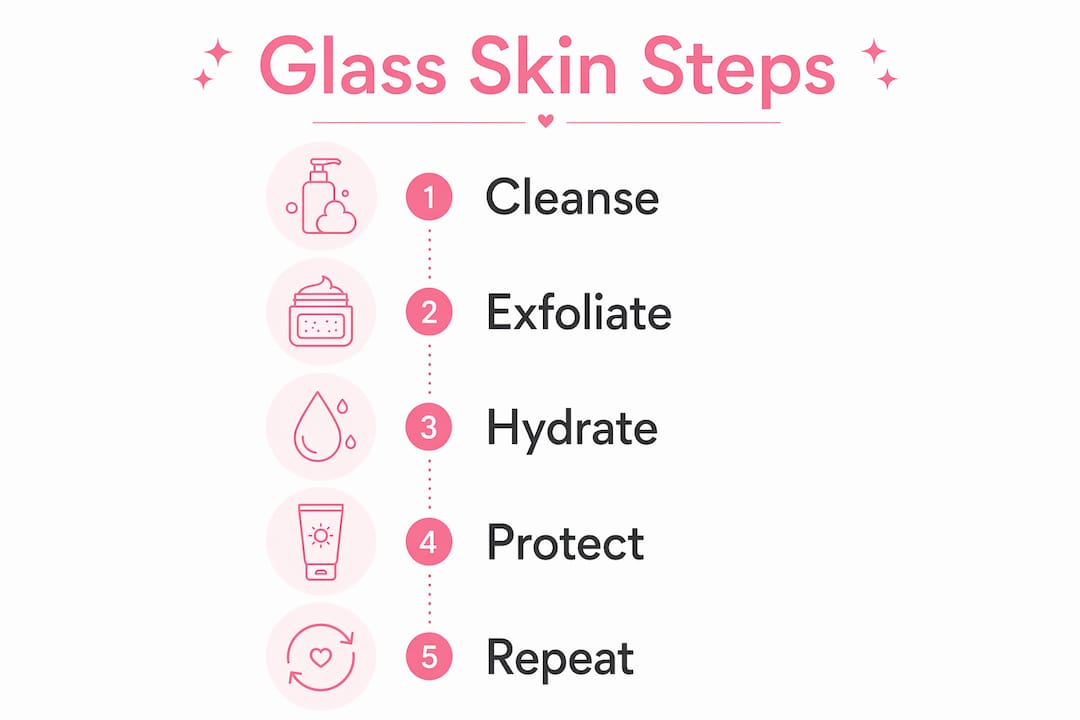
A glass skin routine is built on four foundational steps: cleansing, exfoliating, hydrating, and protecting. The order matters, and the products you choose within each step should match your skin type. You can learn more about the benefits of double cleansing as the starting point for any effective glass skin regimen.
Achieving glass skin relies on consistent routines focusing on double cleansing, gentle exfoliation, and layering lightweight hydrating products to support the skin barrier. Double cleansing uses an oil-based cleanser first to dissolve sunscreen and makeup, followed by a water-based cleanser to remove sweat and residue. This two-step process leaves the skin clean without stripping its natural oils.
Here is how to adapt the routine by skin type:
- Dry skin. Use a cream-based oil cleanser and a gentle, hydrating water-based cleanser. Add a hyaluronic acid essence before your serum. Choose a rich ceramide moisturizer as your final step before sunscreen.
- Oily skin. Use a lightweight gel oil cleanser and a foaming water-based cleanser. Apply niacinamide serum to control oil and refine pores. Moisturizing locks in hydration and omitting it can trigger excess oil production, so choose a lightweight, oil-free moisturizer.
- Combination skin. Use a balancing oil cleanser and a mild water-based cleanser. Apply hydrating toner across the full face, then target oily zones with niacinamide and dry zones with a richer serum.
- Acne-prone skin. Select non-comedogenic, lightweight products that do not clog pores. Avoid heavy occlusives and choose PHAs over lactic acid for gentler exfoliation with less risk of breakouts.
For exfoliation frequency, start with once per week and increase to two or three times per week only if your skin tolerates it without redness or tightness. Avoid exfoliating on the same night you use retinol. You can also review common skincare layering mistakes to make sure your product order is not working against you.
Glass skin is achievable for all skin types by customizing routines focused on hydration and barrier health rather than following a fixed number of steps. Consistency and product suitability matter more than complexity.
Common misconceptions about glass skin
The biggest misconception about glass skin is that it requires a 10-step routine. Product quality and skin compatibility matter far more than the number of products you use. Over-layering can actually damage the skin barrier, which is the opposite of what glass skin requires.
Here are the most common myths, corrected:
- “Oily skin is glass skin.” Oily skin produces excess sebum that creates uneven, patchy shine. Glass skin comes from hydration and barrier health, not oil production.
- “You need expensive products.” The key ingredients, hyaluronic acid, niacinamide, and ceramides, are available at every price point. Formulation quality matters more than brand prestige.
- “Glass skin happens overnight.” Gradual improvement in skin health is the only sustainable path. Sudden or harsh treatments disrupt the moisture barrier and set progress back.
- “Glass skin means no pores.” Pores cannot be eliminated. Glass skin minimizes their appearance through consistent exfoliation and hydration, not through filters or editing.
- “It only works for certain skin tones or types.” Glass skin is a state of skin health. Any skin tone and any skin type can achieve it with the right approach.
Consulting a dermatologist is the most direct way to identify which ingredients your skin needs and which to avoid. A personalized routine built on professional guidance reaches results faster than trial and error.
Key Takeaways
Glass skin is the result of consistent hydration, gentle exfoliation, and barrier repair, not a fixed number of products or steps.
| Point | Details |
|---|---|
| Glass skin vs. dewy skin | Glass skin has lasting translucency and smooth texture; dewy skin is often temporary surface shine. |
| Core ingredients | Hyaluronic acid, niacinamide, Vitamin C, ceramides, and PHAs form the foundation of any glass skin routine. |
| Routine customization | Adapt cleanser type, moisturizer weight, and exfoliation frequency to your specific skin type. |
| Consistency over complexity | Over-layering damages the barrier; fewer well-chosen products outperform a crowded 10-step routine. |
| Sunscreen is non-negotiable | Daily hydrating sunscreen protects tone and luminosity from UV damage that reverses glass skin progress. |
What I’ve learned from chasing glass skin the wrong way
The first time I tried to build a glass skin routine, I bought seven new products in one week and used them all at once. My skin broke out, turned red, and felt tight for two weeks straight. That experience taught me something no article had spelled out clearly: the skin barrier is not a project you can rush.
The real work in glass skin is subtraction, not addition. Most people already own products that could get them there. The problem is layering incompatible ingredients, skipping moisturizer because they think their skin is “too oily,” or exfoliating three times a week before their barrier is ready. I have seen this pattern repeat constantly among people who are genuinely motivated but get impatient.
What actually moved the needle for me was treating hydration as the non-negotiable foundation and everything else as optional. Hyaluronic acid every morning, ceramide moisturizer every night, and sunscreen without exception. That alone produced visible clarity within three weeks. The brightening serums and exfoliants came later, once the barrier was stable.
The other thing worth saying plainly: glass skin looks different on different people, and that is fine. The goal is your skin at its healthiest, not a filtered version of someone else’s complexion. Patience and consistency will always outperform the most expensive product on the shelf.
— Anni
Spyraverified’s curated skincare for your glass skin routine
Building a glass skin routine is easier when you have access to products formulated specifically for hydration and barrier care.
Spyraverified curates high-quality Japanese and Asian skincare brands that are difficult to find outside their home markets. The skincare collection includes essences, serums, and moisturizers built around the layered hydration principles that glass skin requires. For readers who want to extend their glow-focused care beyond the face, the body care range offers complementary products that support skin health from head to toe. Every product is authenticated and sourced directly from brand partners, so you get the real formulation, not a gray-market substitute.
FAQ
What is glass skin, exactly?
Glass skin is a complexion that appears clear, smooth, and deeply hydrated, reflecting light evenly the way glass does. It signals a healthy skin barrier rather than a surface-level shine from oil or highlighter.
How is glass skin different from dewy skin?
Glass skin has natural translucency and long-lasting smoothness, while dewy skin often refers to a temporary surface glow that can come from oil or a finishing spray. Glass skin requires refined texture; dewy skin does not.
How long does it take to achieve glass skin?
Results vary by skin type and starting condition, but most people see visible improvement in skin clarity and hydration within three to six weeks of a consistent routine. Significant texture refinement typically takes two to three months.
Can oily or acne-prone skin achieve glass skin?
Yes. Oily and acne-prone skin types can achieve glass skin by choosing non-comedogenic, lightweight hydrating products and using niacinamide to regulate oil and refine pores. Skipping moisturizer makes oiliness worse, not better.
Do you need a 10-step routine for glass skin?
No. Quality of hydration and barrier care matters more than product quantity. A focused four to five step routine with the right ingredients consistently outperforms a complex routine used inconsistently.
