


Store Sunscreen Properly: What a Study of 22 Sunscreens Shows
Store sunscreen in a cool, dry place away from direct sunlight and excessive heat, because heat destabilizes the active UV filters and can reduce how well the product blocks UV rays. A bedroom drawer or interior cabinet beats a car dashboard or beach bag every time. Watch expiration dates too: most formulas are good for three years, but a change in smell, texture, or color means it’s time to toss the bottle regardless of the date.
TL;DR:
- High temperatures and humidity, especially in the car or near appliances, can significantly reduce sunscreen’s UV protection and increase patchiness.
- Sunscreens stored at room temperature in cool, dry places last about three years, but changing smell, texture, or color signals expiration.
- Repeated exposure to heat over weeks, such as leaving a bottle in a hot car, can degrade formulas and diminish effectiveness.
- Bottles with airless pumps or squeeze tubes last longer and preserve the formula better than jars or wide-open containers.
- Packing sunscreen in a cooler bag, wrapping it in a towel, or carrying it in a shaded bag helps maintain its effectiveness during outdoor trips.
Table of Contents
- The Best Way to Store Sunscreen at Home
- Sunscreen Storage Tips for Travel, the Beach, and Your Car
- What the Research Says About Heat and Sunscreen Effectiveness
- How Long Sunscreen Lasts and When to Throw It Out
- Everyday Habits and Packaging That Extend Sunscreen Life
- Why Packaging Choices Shape How Well Sunscreen Holds Up
- Where to Find Travel-Friendly, Well-Packaged Sunscreen
- Sources
The Best Way to Store Sunscreen at Home
A cool, dry drawer or interior cabinet beats a medicine cabinet most people default to without thinking. Bathrooms trap humidity, especially after hot showers, and that moisture works against the same stabilizers that keep sunscreen’s UV filters intact. If your bathroom has a working exhaust fan and the sunscreen sits away from the shower spray, it’s fine. Otherwise, a bedroom drawer, hallway linen closet, or kitchen cabinet away from the stove does the job better.
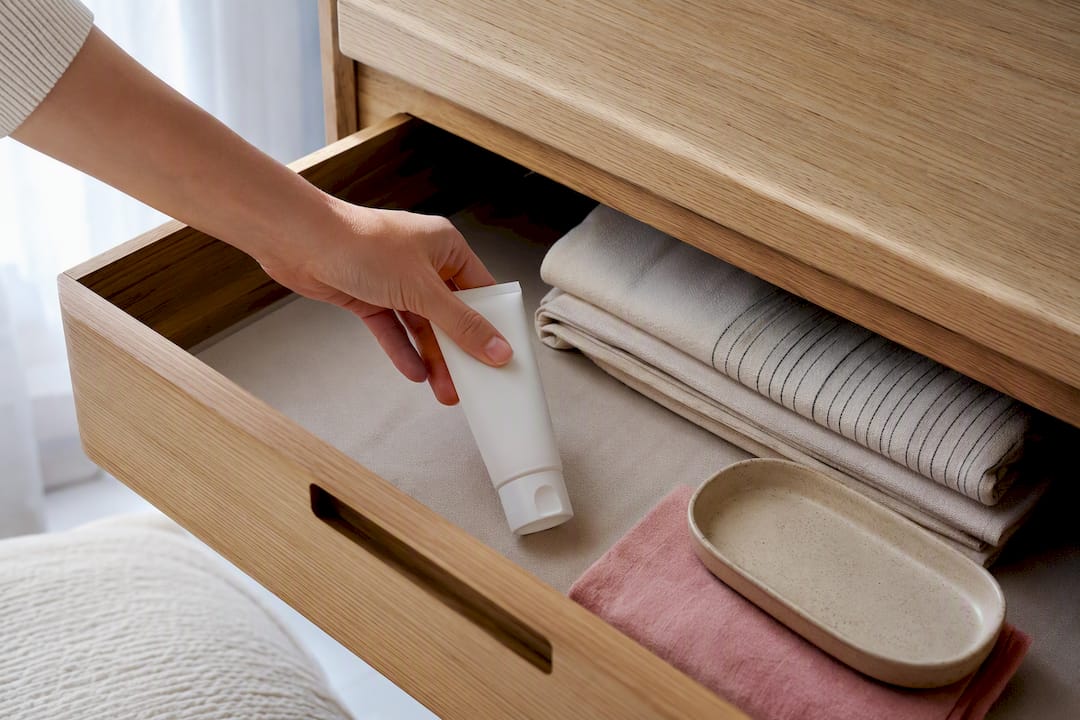
The logic is simple: heat and humidity speed up the chemical breakdown of the compounds that absorb or reflect UV light. A closet at room temperature keeps that process slow. A windowsill that bakes in afternoon sun does the opposite, and so does a cabinet directly above a dishwasher or oven.
Here’s a quick reference for where sunscreen belongs and where it doesn’t:
- Do: store in a bedroom drawer, interior closet, or a cabinet away from windows and appliances.
- Do: keep the cap tightly closed between uses to limit air and moisture getting in.
- Don’t: leave it on a sunny windowsill or bathroom shelf that gets steamy.
- Don’t: store it in a hot attic, garage, or anywhere temperatures swing widely.
- Don’t: toss it in a junk drawer near a heating vent.
None of this requires special equipment. It just means treating sunscreen more like medication and less like a beach towel you can leave anywhere.
Sunscreen Storage Tips for Travel, the Beach, and Your Car
Short trips outdoors don’t ruin sunscreen. Hours baking in a hot car or an uncovered beach bag will. The FDA specifically advises protecting containers from excessive heat and direct sun, suggesting you wrap the bottle or keep it shaded or in a cooler whenever you’re outside for a while.
For a beach day or road trip, a few habits make a real difference:
- Pack sunscreen in an insulated cooler bag alongside your drinks and snacks, not loose in a tote sitting in direct sun.
- Wrap the bottle in a towel if you don’t have a cooler. It buys insulation and blocks direct light.
- In the car, keep sunscreen in a bag you carry with you rather than leaving it in the trunk or on the dashboard, where temperatures can climb fast even on mild days.
Pro Tip: A sunscreen bottle riding on your passenger seat for a two-hour drive is not the same as one baking in a closed car all afternoon at the beach. Brief exposure to warmth is forgivable; hours of repeated heat is what actually degrades the formula.
What the Research Says About Heat and Sunscreen Effectiveness
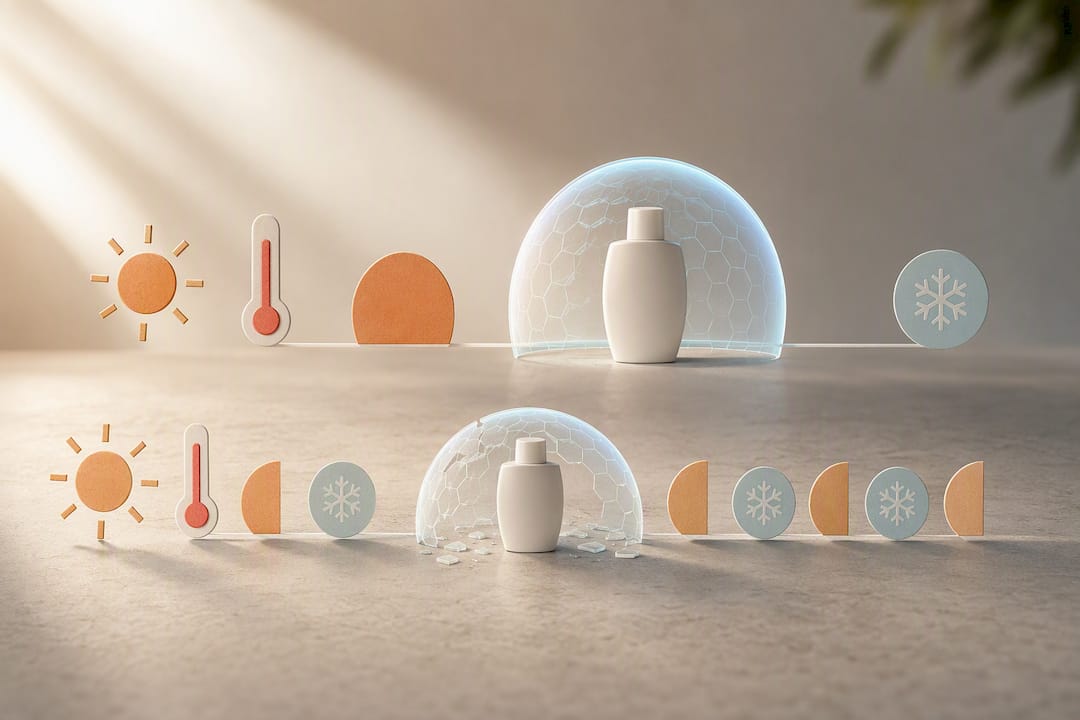
A 2026 study published in the Journal of Emerging Investigators tested 22 sunscreens after storing them at different temperatures for 18 to 24 hours. A study found sunscreens stored at higher temperatures blocked less UV light compared to those stored in cold conditions, showing that heat exposure can reduce UV blocking effectiveness by a notable margin.
Sunscreens stored at high heat consistently showed reduced UV blocking capacity compared to those kept cold, with the gap wide enough to meaningfully change how much protection a person actually gets on their skin.
Dermatologists cited by the Skin Cancer Foundation point to a related problem: heat doesn’t just weaken the chemical filters, it can also change the texture, making the product harder to spread evenly. That means even a bottle that hasn’t fully degraded may leave patchy coverage.
The practical takeaway isn’t panic. One warm afternoon in a beach bag probably won’t tank your protection. Repeated heat cycles, like weeks of leaving a bottle in a hot car, will. When you’re unsure how a bottle has been treated, replacing it is cheaper than a sunburn.
How Long Sunscreen Lasts and When to Throw It Out
Most sunscreens stay effective for about three years from the date of purchase when stored properly, and the FDA requires manufacturers to prove their formulas hold up for at least that long under normal conditions. If your bottle doesn’t have a printed expiration date, grab a marker and write the purchase month and year right on the label. It takes five seconds and saves you from guessing later.
Don’t rely on the date alone, though. Your senses are a better fail-safe than a stamped number, especially if the bottle has ever sat somewhere hot. Watch for these signs that mean it’s time to toss the bottle, according to Cleveland Clinic:
- The texture has separated into visible layers or looks watery and lumpy.
- The smell has turned sour, rancid, or just different from when you bought it.
- The color has shifted, yellowed, or looks off compared to a fresh bottle.
- The product feels gritty or drags instead of spreading smoothly.
If you use sunscreen daily, plan to replace your bottle each season rather than stretching it across multiple summers. Heavy users tend to finish a bottle before shelf life becomes an issue anyway. Occasional users are the ones who should check dates and texture before reapplying at the start of every sunny season.
Everyday Habits and Packaging That Extend Sunscreen Life
How you handle an open bottle matters almost as much as where you store it. Wash your hands before applying, avoid double dipping fingers into a jar of sunscreen you’ve already touched, and close the lid tightly right after use. Every bit of air and contamination that gets in speeds up oxidation, which is the same process that turns cut fruit brown.
Packaging design plays a bigger role than most people realize: for helpful tips on product packaging and travel storage, see our guide to Skin eFX tubs.
- Airless pumps and squeeze tubes limit how much oxygen reaches the product, which slows breakdown.
- Open jars and tins expose the whole surface to air every time you open the lid, which is why they tend to degrade faster.
- Travel-sized bottles get used up before long-term storage becomes a factor at all.
Refrigeration is rarely necessary for standard sunscreen formulas. Some people like the cooling feel of a chilled bottle on a hot day, but it’s a comfort choice, not a preservation requirement. Always check the label first. A handful of specialty formulations list specific storage temperatures that override general advice, so when a brand says something different, follow the brand.
Pro Tip: If your sunscreen is pilling or balling up under makeup, that’s not always a storage issue. It can be a product-layering problem, and it’s worth ruling out separately before you assume the bottle has gone bad.
Why Packaging Choices Shape How Well Sunscreen Holds Up
Storage advice only goes so far if the bottle itself works against you. Many Japanese and Asian sunscreen brands package their products with well-sealed pumps or tubes, which help protect the formula between applications. Smaller, better-designed containers also get used up faster, which matters more than people expect since a bottle that’s gone before the season ends never gets the chance to degrade in the first place. Good storage habits and good packaging aren’t competing ideas. They work together, and following both is a straightforward way to protect your skin and get your money’s worth out of every bottle.
— Anni
Where to Find Travel-Friendly, Well-Packaged Sunscreen
If you’re shopping for a new bottle, look for three things: an airless pump or squeeze tube instead of a jar, a clearly printed expiration or manufacture date, and a size that actually fits in a beach bag or carry-on without taking up half the space.
Spyra Verified’s skincare collection is built around exactly that kind of product: authentic Japanese and Asian sunscreens sourced directly from their manufacturers, with packaging designed to hold up to real travel and daily use rather than sitting untouched on a shelf. Even the best-designed bottle still needs the basics covered on your end. Keep it out of the sun, out of hot cars, and check the texture before you apply it after a few months in storage. Browse the collection to find a sunscreen that’s easier to pack right and easier to store properly from the day it arrives.
This article is general information, not a substitute for advice from a qualified doctor. Consult a qualified healthcare professional about your own circumstances before acting on anything here.
Sources
- Improper storage of sunscreen might decrease effectiveness | Journal of Emerging Investigators
- Sunscreen: How to help protect your skin from the sun - FDA
- Does sunscreen ever expire? - Cleveland Clinic
