


Benefits of Double Cleansing Method: 2026 Skin Guide
The double cleansing method is defined as a two-step skincare technique that uses an oil-based cleanser first, followed by a water-based cleanser, to remove both oil-soluble and water-soluble impurities from the skin. This approach delivers far superior results than a single cleanse alone. The benefits of double cleansing method go well beyond removing makeup. They include stronger skin barrier function, better product absorption, and noticeably clearer skin over time. Western dermatology is increasingly endorsing double cleansing as an intelligent, gentle approach to nightly skincare.
1. Benefits of double cleansing: superior sunscreen and makeup removal
Single cleansing simply does not remove sunscreen effectively. A water-based cleanser alone removes only 31% of SPF 50 sunscreen residue. That means nearly 70% of sunscreen stays on your skin after a standard wash. That leftover residue clogs pores and dulls skin over time.
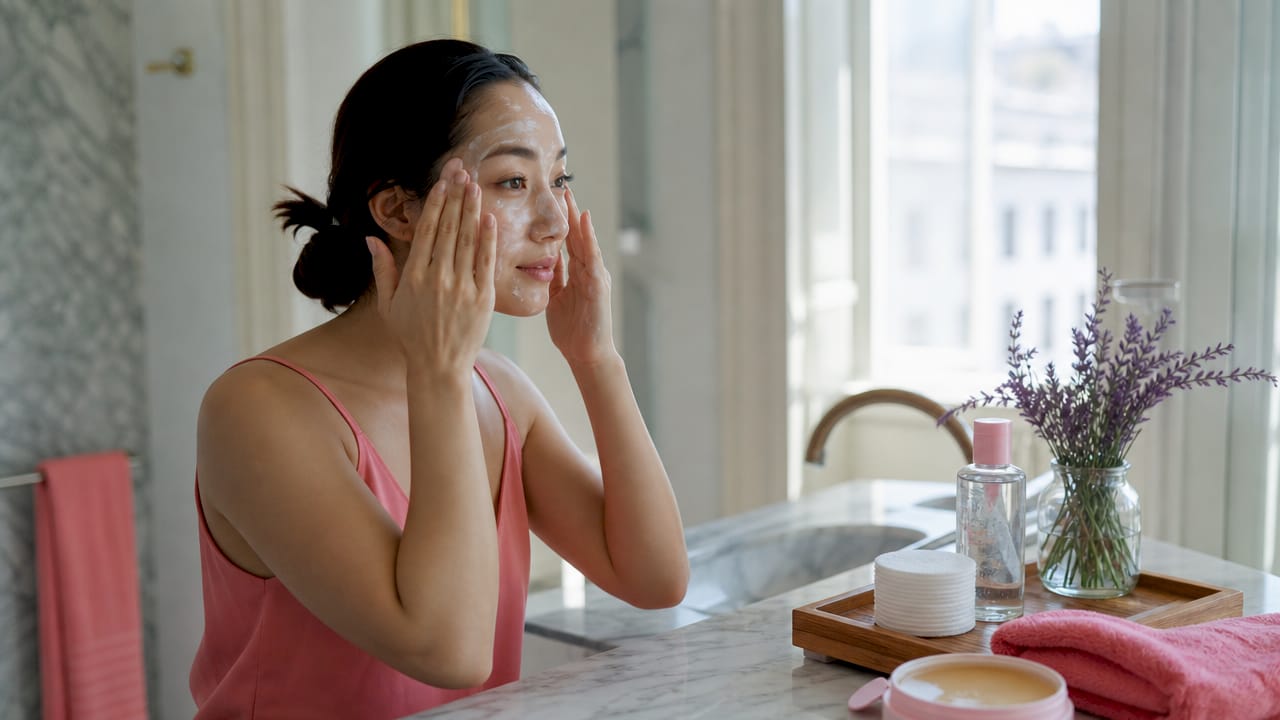
An oil-based first step changes everything. Oil cleansers increase sunscreen removal to 98%. The reason is chemistry. Dermatologist Dr. Ranella Hirsch explains the principle clearly: oil dissolves oil. Oil cleansers bind directly to lipophilic impurities like sebum, water-resistant SPF, and long-wear makeup, lifting them away before the second cleanse removes any remaining residue.
The technique for the first step matters as much as the product itself. Apply the oil cleanser to completely dry skin and dry hands. Wet skin dilutes the oil and reduces its ability to bind to impurities. Massage gently for about 60 seconds, then emulsify with a small amount of water before rinsing.
- Apply oil cleanser to dry face and dry hands only
- Massage for a full 60 seconds before adding water
- Emulsify by adding a few drops of water to create a milky texture
- Rinse thoroughly before moving to the second cleanse
Pro Tip: Focus extra massage time on the sides of your nose, your hairline, and your jawline. These areas trap the most sunscreen and foundation residue, and they are easy to rush through.
2. Why timing and frequency matter for double cleansing
Double cleansing belongs in your evening routine only. Dermatological consensus is clear: double cleanse once daily at night, never in the morning. Your skin does not accumulate oil-based impurities like SPF or makeup overnight, so a second oil cleanse in the morning adds no benefit.
Over-cleansing is a real risk. Cleansing too frequently can increase transepidermal water loss, or TEWL, by up to 25%. TEWL measures how much moisture evaporates from your skin. Higher TEWL means a weaker skin barrier, more dryness, and greater sensitivity to irritants. That is the opposite of what a good cleansing routine should achieve.
Morning cleansing is a different situation. A gentle rinse with water or a mild micellar water is enough for most skin types in the morning. Your skin produces natural oils overnight that actually support barrier repair. Stripping them with a full double cleanse disrupts that process.
Here is a simple framework for timing:
- Evening: Full double cleanse, oil step followed by water step
- Morning: Water rinse or a single mild, low-pH cleanser only
- After workouts: A single gentle water-based cleanse is sufficient if no SPF or makeup is present
- Duration: Aim for 60 seconds with the oil cleanser and 30–45 seconds with the water-based cleanser
3. How double cleansing improves skin texture and clarity
Consistent double cleansing leads to smoother, clearer skin and fewer clogged pores. Blackheads form when oxidized sebum and dead skin cells block a pore. A single water-based cleanse cannot dissolve that sebum plug. The oil cleanse step breaks it down before the water cleanser flushes it away.
Skin texture improves because the surface is genuinely clean. Residual sunscreen, silicones from makeup primers, and excess sebum all create a film on the skin that makes it look dull and feel rough. Removing that film consistently reveals the skin underneath.
Clarity follows texture. Skin that is free of buildup reflects light more evenly. Pores appear smaller because they are not stretched by trapped debris. This is not a cosmetic illusion. It is the direct result of thorough, repeated cleansing over weeks.
4. Enhanced absorption of serums and treatments
Clean skin allows better penetration of serums and moisturizers. Residue left on the skin after a single cleanse acts as a physical barrier between your active ingredients and your skin cells. Vitamin C serums, retinol, and hyaluronic acid all work harder when the skin surface is fully clear.
This is one of the most practical advantages of double cleansing for anyone who invests in treatment products. Spending money on a high-quality serum and then applying it over a layer of sunscreen residue wastes most of its benefit. The double cleanse removes that barrier first.
The sequence matters here too. Apply your oil cleanser, rinse, follow with your water-based cleanser, and then apply your treatments while the skin is still slightly damp. That slight dampness helps water-based actives absorb faster and more evenly.
5. Supporting skin barrier health with the right cleansers
Double cleansing supports skin barrier function when done with gentle, pH-balanced products. The skin’s natural pH sits between 4.5 and 5.5. Cleansers with a pH that is too high disrupt the acid mantle, which is the thin protective film that keeps moisture in and bacteria out.
Choosing the right products for each step protects that barrier. For the first step, cleansing balms, cleansing oils, and micellar oils all work well. You can read more about Asian cleansing balm options to find formats suited to different skin types. For the second step, a gel, foam, or cream cleanser with a pH between 4.5 and 6.5 keeps the barrier intact.
Avoiding harsh surfactants in the second step is equally important. Sodium lauryl sulfate at high concentrations strips the skin aggressively. A cleanser that leaves your skin feeling tight or squeaky after rinsing is too harsh. Soft, supple skin after cleansing is the correct result.
6. Common mistakes that reduce double cleansing effectiveness
The most common mistake is applying the oil cleanser to wet skin. Oil cleanser applied to wet skin loses its ability to bind to oil-soluble impurities. Water creates a barrier between the oil and the skin surface, reducing effectiveness significantly. Always start with completely dry skin and dry hands.
Rushing the massage is the second most frequent error. Sixty seconds feels long when you are standing at the sink, but it is the minimum time needed for the oil to dissolve sunscreen and makeup fully. Set a timer until the habit is established.
Choosing the wrong second cleanser is the third mistake. Tight or squeaky skin after cleansing signals that the cleanser is too harsh or the pH is too high. Switch to a gentler formula and check the ingredient list for high concentrations of stripping surfactants.
- Mistake 1: Applying oil cleanser to wet skin. Fix: always start dry.
- Mistake 2: Rushing the first cleanse under 60 seconds. Fix: use a timer.
- Mistake 3: Using a high-pH second cleanser. Fix: look for pH 4.5–6.5 on the label.
- Mistake 4: Skipping the emulsification step. Fix: add water to the oil cleanser before rinsing to lift residue fully.
Pro Tip: For the double cleanse step by step, spend extra time massaging the sides of your nose and your hairline. These zones hold the most stubborn residue and are the first places blackheads reappear when cleansing is rushed.
7. Choosing the right cleanser for your skin type
Skin type determines which oil cleanser format works best. Dry and sensitive skin types do well with cleansing balms and cleansing milks, which are richer and less likely to strip. Oily and combination skin types often prefer lightweight cleansing oils or micellar oils that rinse cleanly without leaving a heavy residue.
The second cleanser should match your skin’s needs just as carefully. Gel cleansers work well for oily skin because they remove excess sebum without over-drying. Cream cleansers suit dry and sensitive skin because they add a small amount of moisture back during the rinse. Foam cleansers sit in the middle and work for most normal to combination skin types.
Sensitive skin benefits from fragrance-free formulas in both steps. Fragrance is one of the most common causes of contact dermatitis, and the cleansing step is where the skin is most vulnerable because the barrier is temporarily disrupted. Fragrance-free, low-pH options in both steps reduce that risk significantly. The Korean double cleansing approach has long prioritized gentle, skin-respecting formulas for exactly this reason.
Key takeaways
The double cleansing method works because oil dissolves oil-based impurities first, then a water-based cleanser removes what remains, leaving skin genuinely clean and ready to absorb treatments.
| Point | Details |
|---|---|
| Oil step removes 98% of SPF | A water-only cleanse removes just 31% of SPF 50 residue; the oil step closes that gap. |
| Evening only, once per day | Over-cleansing raises TEWL by up to 25%, weakening the skin barrier. |
| Dry skin for the oil step | Applying oil cleanser to wet skin reduces its ability to bind to impurities. |
| pH-balanced second cleanser | Tight or squeaky skin after cleansing signals a cleanser that is too harsh or too alkaline. |
| Better product absorption | Fully clean skin allows serums and actives to penetrate without residue blocking them. |
What I’ve learned from making double cleansing a non-negotiable
I resisted double cleansing for longer than I should have. The idea of adding a second step felt like unnecessary effort, especially on nights when I just wanted to be done. Then I paid attention to what my skin actually looked like after each approach. The difference was not subtle.
After switching to a consistent evening double cleanse, my skin stopped feeling congested around my nose and chin within about three weeks. Blackheads that had been a fixture for years started clearing. My vitamin C serum, which I had been using for months with minimal results, suddenly started working. The only variable I had changed was the cleanse.
The part most articles skip is this: the oil cleanser you choose matters more than most people realize. A low-quality cleansing oil that does not emulsify properly leaves a greasy film and clogs pores. That is not a failure of the method. It is a product problem. Spend more on the oil step than the water step. That is where the real work happens.
Consistency is the other factor that separates people who see results from those who give up. Three weeks of nightly double cleansing is the minimum before you notice a real change in texture and clarity. Most people quit before that window closes.
— Anni
Spyraverified’s picks for your double cleansing routine
Building a double cleansing routine is easier when the products are already curated for you. Spyraverified specializes in bringing authentic Japanese and Asian beauty brands to consumers worldwide, including oil-based and water-based cleansers that are gentle, effective, and pH-balanced for daily use.

The Spyraverified skincare collection includes cleansers selected specifically for their compatibility with the double cleansing method. Each product is sourced directly from manufacturers, so you get the real formula, not a reformulated export version. If you want to build a routine that actually delivers cleaner skin and better results from your treatments, that collection is the right place to start.
FAQ
What is the double cleansing method?
The double cleansing method is a two-step cleansing technique that uses an oil-based cleanser first to dissolve oil-soluble impurities, followed by a water-based cleanser to remove water-soluble residue. It originates from Korean skincare practice and is now widely used globally.
How often should you double cleanse?
Double cleanse once daily in the evening only. Cleansing more frequently than that risks increasing transepidermal water loss by up to 25%, which weakens the skin barrier.
Why apply the oil cleanser to dry skin?
Applying oil cleanser to dry skin allows it to bind directly to oil-soluble impurities like sunscreen and makeup. Wet skin dilutes the oil and reduces its effectiveness significantly.
Does double cleansing help with blackheads?
Consistent double cleansing reduces blackheads by dissolving the sebum plugs that cause them. A single water-based cleanse cannot break down oil-based buildup inside pores the way an oil cleanser can.
Is double cleansing suitable for sensitive skin?
Double cleansing works for sensitive skin when both steps use fragrance-free, low-pH formulas. The key is avoiding harsh surfactants in the second cleanser, which can strip the skin barrier and cause irritation.
