


Japan's Beauty Gifting Culture: A Practical Guide
Beauty gifting culture in Japan is the practice of offering beauty products as carefully chosen, aesthetically presented expressions of giri (social obligation) and kansha (gratitude). It is not casual gift-giving. The selection, the wrapping, and the moment of presentation each carry meaning that communicates the depth of a relationship.
A few things to know before you read further:
- When to give: The two main seasonal windows are ochūgen (midsummer, roughly July) and oseibo (year-end, roughly December), plus omiyage when returning from travel and temiyage when visiting someone’s home.
- Why presentation matters: The wrapping, the box, and the bow are not decoration. They signal respect. A poorly wrapped gift can undercut even a generous item.
- Reciprocity is expected: In many contexts, receiving a gift creates an obligation to return one (okaeshi), typically valued at roughly half the original gift.
Sources cited throughout include the Metropolitan Museum of Art, Nippon, and Spyraverified’s curated guides on Japanese beauty.
Key Takeaways
Beauty gifting culture in Japan is a structured social practice where the choice of product, the quality of presentation, and the timing of the gift each communicate the depth and nature of a relationship.
| Point | Details |
|---|---|
| Giri and kansha drive gifting | Every beauty gift is an expression of social obligation or active gratitude, not just a nice gesture. |
| Occasions have specific windows | Ochūgen falls in July, oseibo in December; omiyage and temiyage follow travel and visits. |
| Presentation outweighs novelty | Furoshiki, noshi, and department-store wrapping signal respect; poor wrapping undercuts even a generous gift. |
| Avoid implying critique | Never choose a beauty product that could suggest the recipient needs to change their appearance. |
| Plan for okaeshi | Receiving a gift creates an obligation to return one, typically at roughly half the original value within a month. |
Table of Contents
- What is beauty gifting culture in Japan, really?
- When do you give beauty gifts in Japan?
- Which beauty products actually work as gifts in Japan?
- How does presentation work: furoshiki, noshi, and mizuhiki
- Etiquette for giving and receiving beauty gifts in Japan
- What should you avoid when giving beauty gifts in Japan?
- How to choose the right beauty gift by relationship type
- The historical roots of beauty gifting in Japan
- Practical tips for U.S. gifters buying and sending Japanese beauty gifts
- A note on learning this the right way
- Ready to find the right gift?
- Sources
What is beauty gifting culture in Japan, really?
The short answer: gifting in Japan is a social language, and beauty products are one of its most fluent dialects. Understanding it means understanding two concepts that run through nearly every exchange.
Giri translates roughly as social obligation. It is the sense that certain relationships, roles, and occasions require a gift. A boss who has supported you through a difficult project, a colleague who covered your shift, a host who opened their home — each of these creates a giri. Ignoring it is not neutral; it registers as a slight.
Kansha is gratitude, but the active kind. Not just feeling thankful, but demonstrating it through a tangible gesture. Beauty gifts work particularly well here because they combine utility with aesthetics. A well-chosen lotion or a boxed skincare set says: I thought about you specifically, not just about checking a box.
The relationship type shapes everything. A gift for a boss should be slightly more formal and more expensive than one for a peer. A gift for a close friend allows more personality. The art of getting it right is really the art of communicating the relationship itself, not just handing over an item.
Business gifting follows stricter hierarchy rules. In a professional context, the price point and packaging should reflect the recipient’s seniority. A mid-range gift in beautiful department-store wrapping often reads better than an expensive item in plain packaging. Personal gifting allows more warmth and creativity, but the same core logic applies: quality and presentation over novelty.
Pro Tip: When in doubt, choose a trusted brand with understated, elegant packaging over a flashy or gimmicky item. In Japanese gifting logic, restraint signals sophistication. A MUJI gift set, for example, reads as considered and tasteful precisely because it is not trying too hard.
When do you give beauty gifts in Japan?
Japan’s gifting calendar is structured, and each occasion carries its own norms around timing, budget, and appropriate recipients.
| Occasion | Timing | Typical Budget Range | Common Recipients |
|---|---|---|---|
| Ochūgen | Early–mid July | a moderate budget appropriate to the relationship | Boss, mentor, host family |
| Oseibo | Early–mid December | a moderate budget appropriate to the relationship | Same as ochūgen; business contacts |
| Omiyage | Upon returning from travel | a modest budget suitable for group sharing | Colleagues, classmates, neighbors |
| Temiyage | When visiting someone’s home | a modest budget reflecting hospitality | Host, close friends, family |
| Wedding (shūgi) | Wedding day | primarily monetary gifts, beauty items as add-ons | Couple; beauty gifts as add-ons |
| Birth / graduation | As events occur | a moderate budget according to social norms | New parent, graduate |
Ochūgen and oseibo are the two anchors of the gifting year. Each is a seasonal expression of gratitude rooted in the idea of acknowledging people who have supported you. Beauty products, particularly boxed skincare sets or high-quality hand creams, are a popular choice for both because they are useful, gender-neutral enough to work across most relationships, and easy to present elegantly.
Omiyage deserves its own note. These are souvenirs brought back from a trip, and the expectation is shareable, portioned items sized for an office or group. Individually wrapped sheet masks or small sample-sized skincare sets work well here. A single luxury item does not, because omiyage is about inclusion, not exclusivity.
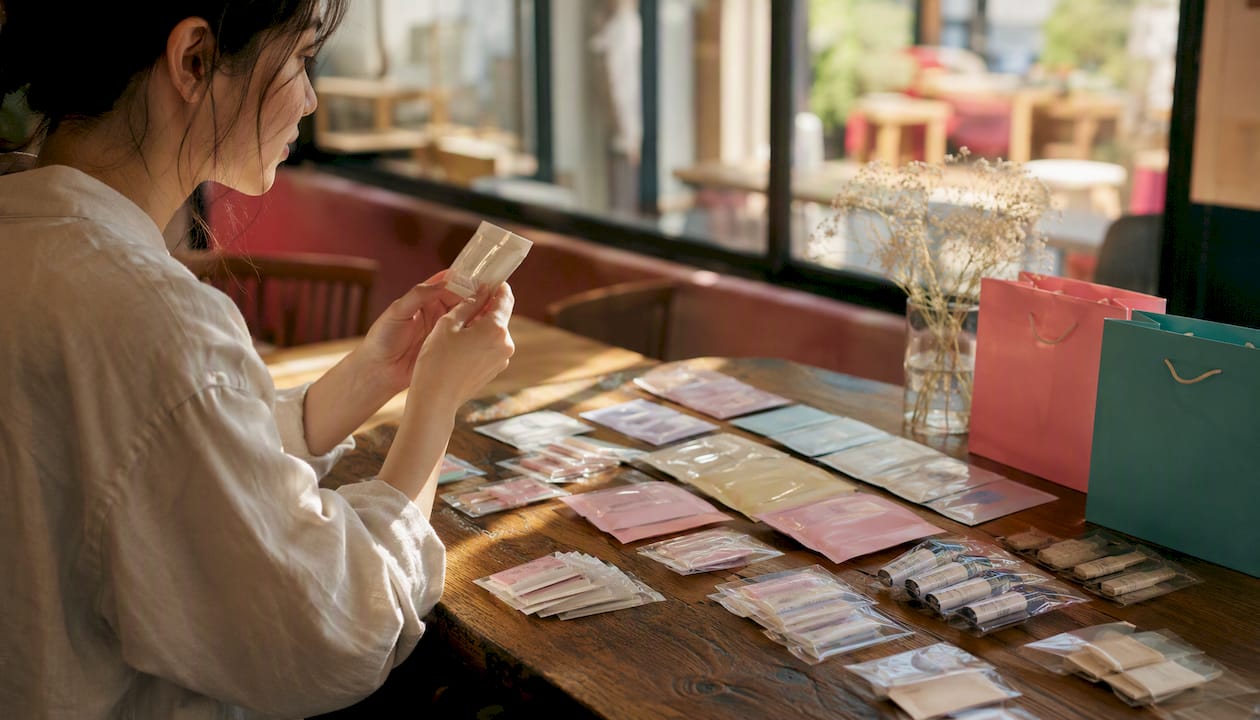
Temiyage, the visiting gift, is less formal than ochūgen or oseibo but still expected. A small, beautifully wrapped beauty item, a fragrant hand cream, or a set of face masks is appropriate and appreciated.
For weddings and major life milestones, monetary gifts (shūgi) are the primary form, with specialized envelopes and okaeshi return gifts built into the ritual. Beauty items may accompany a monetary gift or serve as a thoughtful add-on, but they rarely replace the cash envelope at a wedding.
Which beauty products actually work as gifts in Japan?
The items that land well share a few traits: they are useful, they do not make assumptions about the recipient’s skin concerns, and they come in packaging that looks considered.
- Boxed skincare sets (cleanser + lotion, or serum + moisturizer): the set format signals generosity and effort; the box makes wrapping easy.
- High-quality hand cream (especially fragrance-free or lightly scented): universally practical, safe for most skin types, and available from respected brands.
- Sheet masks in multi-packs: shareable, consumable, and low-risk for omiyage or colleague gifts.
- Fragrance-free body lotion: avoids the assumption that the recipient wants a particular scent; works across genders and age groups.
- Elegant cosmetic cases or tebako-inspired lacquer boxes: the container itself becomes a keepsake, which aligns with Japan’s long tradition of valuing the vessel as much as the contents.
- Cleansing oils: widely regarded in Japanese skincare as a foundational step, practical, and available from brands with strong reputations.
Brand reputation matters more than ingredient novelty. A product from a well-known Japanese brand, even a mid-range one, carries more social weight than an unfamiliar import with impressive claims. This is partly about trust and partly about the signal it sends: choosing a recognized brand shows you did your research.
Pro Tip: Price point communicates relationship depth. For a boss or senior colleague, $40–$70 is a reasonable range for ochūgen or oseibo. For a peer or colleague, $20–$40 is appropriate. Going significantly above or below these ranges can feel awkward in either direction. Check out exclusive Japanese beauty brands to find respected labels that fit these tiers.
How does presentation work: furoshiki, noshi, and mizuhiki
In Japanese gifting, the wrapping is not an afterthought. It is part of the message. Three elements appear most often in traditional and semi-formal presentations.
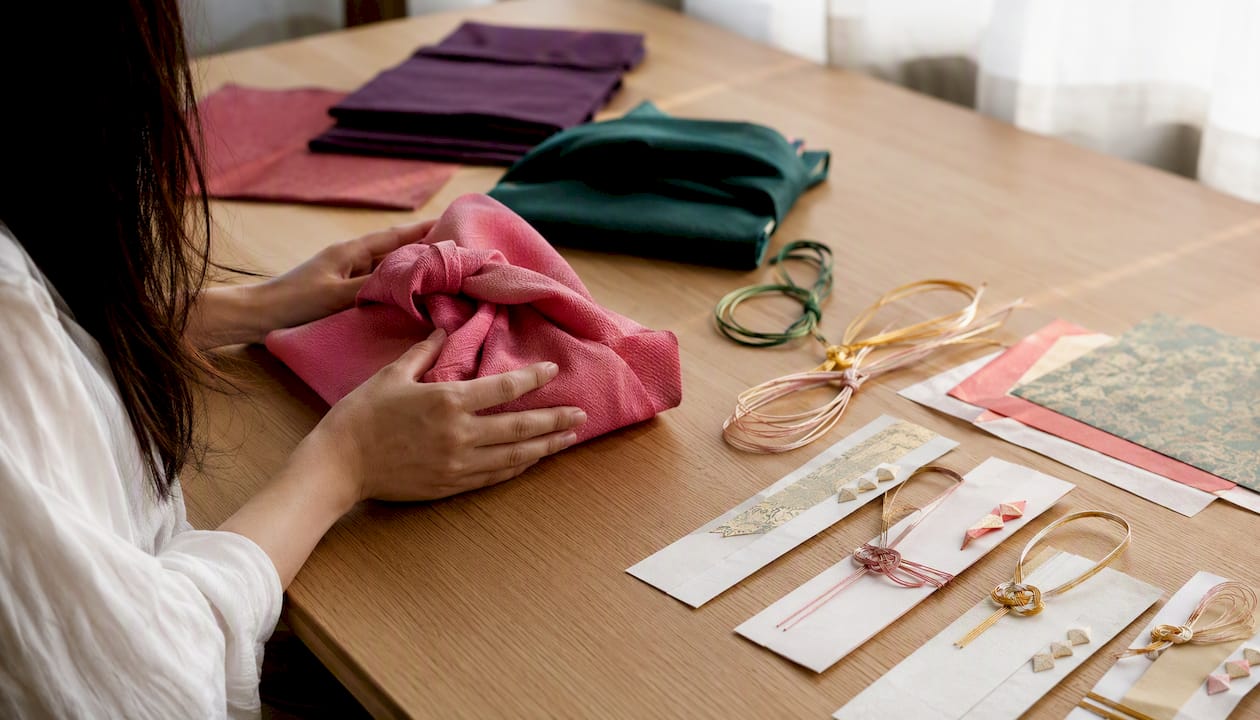
Furoshiki
Furoshiki is a square cloth used to wrap gifts. It is reusable, which aligns with Japanese values around waste, and the fold itself communicates care. For a boxed beauty item, the basic hon-tsutsumi (book wrap) fold works well: place the box diagonally at the center of the cloth, fold the nearest corner up and over the box, then fold the two side corners in and over, and bring the far corner up and tie the two ends in a flat knot at the top. The result is clean, elegant, and immediately recognizable as intentional.
Noshi
Noshi is a decorative strip, historically made from dried abalone, now typically a stylized paper ornament attached to the outside of a gift. It signals that the gift is a celebratory or congratulatory offering. You will see it on gifts for weddings, graduations, and seasonal occasions. For a beauty gift, a noshi strip attached to the outer wrapping or box elevates the presentation without requiring any additional skill.
Mizuhiki
Mizuhiki are decorative cords made from twisted paper, tied in specific knots that carry meaning. A bow knot (musubi-kiri) is used for one-time events like weddings; a looped bow (cho-musubi) is used for occasions you hope will repeat, like birthdays. Getting the knot right matters. Using a wedding knot on a birthday gift, for instance, sends the wrong signal.
Department stores in Japan offer dedicated gift-wrapping services that handle noshi, mizuhiki, and store-branded paper as a package. This wrapping service is not just convenient; it is a recognized mark of care. A gift wrapped by Isetan or Takashimaya carries implicit quality assurance.
Pro Tip: If you are buying from a Japanese retailer or a curated online store, ask for gift wrapping at checkout. If you are wrapping yourself, a clean furoshiki in a neutral color (white, navy, or sage) is always appropriate. Avoid busy patterns for formal occasions.
Etiquette for giving and receiving beauty gifts in Japan
The physical ritual of giving and receiving matters as much as the gift itself. Getting it right shows cultural awareness; getting it wrong can create genuine awkwardness.
- Present with both hands. Hold the gift at chest height, with a slight bow. This applies whether you are giving or receiving.
- Use modest language. The standard phrase is “Tsumaranai mono desu ga” (“This is a trivial thing, but please accept it”) or the softer “Hon no kimochi desu” (“Just a small token of my feelings”). Both phrases signal sincerity by downplaying the gift’s value, which is the opposite of Western gift-giving logic.
- Do not open the gift immediately. In most Japanese contexts, gifts are set aside and opened later, in private. Opening a gift in front of the giver can feel performative and puts both parties in an awkward position.
- Decline once before accepting. A polite initial refusal (“Oh, you shouldn’t have”) followed by gracious acceptance is the expected sequence. Accepting immediately can read as eager; refusing repeatedly is also rude.
- Timing for seasonal gifts: Send ochūgen between early and mid-July; oseibo between early and mid-December. Sending outside these windows signals unfamiliarity with the custom.
- Reciprocity: If you receive a gift, plan for okaeshi. Return gifts are typically given within a month and valued at roughly half the original.
- Avoid ostentation. A gift that is obviously very expensive can embarrass the recipient, especially in a professional context where they may feel obligated to match it.
The convention of not opening gifts immediately is worth understanding on its own terms. It protects both parties: the giver is not put on the spot waiting for a reaction, and the recipient can appreciate the gift privately without performing gratitude. It also reflects a broader Japanese social value around not creating public emotional scenes.
What should you avoid when giving beauty gifts in Japan?
Some taboos are historical; others are very much alive.
Numbers to avoid: Four (shi) and nine (ku) are unlucky because they sound like the words for death and suffering, respectively. Avoid gift sets with four or nine items, and be careful with pricing that lands on these numbers.
Combs: The word for comb (kushi) sounds like a combination of the words for suffering and death. This taboo has softened considerably in modern Japan, particularly among younger recipients, but it is still worth avoiding for formal or older recipients.
Sharp objects: Scissors, knives, and nail clippers can imply cutting the relationship. For beauty gifting, this means skipping nail care sets with scissors as the centerpiece.
White flowers or chrysanthemums: These are associated with funerals. For beauty products, this matters if you are choosing a fragrance or a product with floral imagery on the packaging.
The bigger modern mistake, though, is subtler. Choosing a product that implies the recipient needs it — an anti-aging serum for a colleague you’ve never discussed skincare with, a brightening cream that could read as a comment on their complexion — is a social misstep that no amount of elegant wrapping can fix. The guiding principle from Nippon.com’s etiquette guide is clear: avoid anything that could be construed as a critique of the recipient’s appearance or status.
Western gifters also tend to over-explain. A long note about why you chose a particular product, its ingredients, and its benefits can come across as lecturing. A short, warm card is enough.
How to choose the right beauty gift by relationship type
A quick decision framework, because the right gift depends almost entirely on who you are giving it to and why.
- Confirm the relationship and occasion. Boss for oseibo? Colleague for omiyage? Close friend for a birthday? Each combination has a different budget ceiling and formality level.
- Set a culturally appropriate price range. For a boss or senior contact: $40–$70. For a peer or colleague: $20–$40. For a close friend or family member: $25–$60, with more room for personality.
- Choose brand and packaging. Prioritize recognized Japanese brands with clean, elegant packaging. A MUJI gift set, a Shiseido travel kit, or a well-packaged item from a curated Japanese skincare collection all read as considered choices.
- Add presentation. Furoshiki, a noshi strip, or department-store wrapping. Include a short, modest card.
- Plan for okaeshi if necessary. If you are the recipient, budget for a return gift at roughly half the value within a month.
Mapping the framework to real choices:
- Boss (oseibo): A premium boxed lotion from a respected brand, wrapped in department-store paper with a noshi strip. Card reads: “Thank you for your guidance this year.”
- Colleague (omiyage): A multi-pack of sheet masks or a small sample set, individually wrapped if possible. Card reads: “Brought these back from my trip — thought you might enjoy them.”
- Close friend (birthday or temiyage): A signature serum or a boxed fragrance from a brand they’ve mentioned, or a Japanese hair oil treatment if they’re into haircare. Card reads: “Saw this and thought of you immediately.”
The card wording matters. Keep it short, warm, and specific to the occasion. Avoid superlatives.
The historical roots of beauty gifting in Japan
The connection between beauty objects and ritual in Japan goes back centuries. At the imperial court, cosmetic boxes called tebako were crafted by master lacquer artisans and used as ceremonial offerings. These were not storage containers. They were status objects, given and received as expressions of rank, refinement, and social alignment.
The Metropolitan Museum of Art holds a tebako decorated with chrysanthemum flowers, a design associated with the imperial family. The object illustrates how beauty items were embedded in ritual long before modern gift-giving customs took shape.
Curatorial notes from the Metropolitan Museum’s publications link these courtly cosmetic objects to a broader tradition of treating beauty items as ritualized expressions of social meaning. That history is not just academic. It explains why modern Japanese gifting still places such weight on lacquer-finished packaging, elegant boxes, and the visual quality of the object being given. The tebako’s legacy lives in every carefully wrapped skincare set.
Practical tips for U.S. gifters buying and sending Japanese beauty gifts
Buying from the U.S. adds a few layers of complexity, but none of them are insurmountable.
Where to buy: Prioritize curated retailers that source directly from Japanese manufacturers and verify authenticity. Spyraverified works directly with brand partners to provide authentic products with proper labeling, which matters when you are gifting something the recipient will actually use on their skin. Check expiry dates and labeling conventions before purchasing, since Japanese products use a different date format and some have shorter shelf lives than Western equivalents.
Packaging for shipping: If the retailer offers gift wrapping, use it. If not, a clean furoshiki wrap protects the item during shipping and doubles as the presentation layer. Avoid fragile single-item novelty products for office omiyage — they rarely survive transit intact, and a damaged gift creates more awkwardness than no gift at all.
The card: Write in plain English, but consider including one short Japanese phrase. “Hon no kimochi desu” (“Just a small token”) on a card shows genuine effort without being performative. Keep the rest of the note brief and specific to the occasion.
Dos and don’ts for U.S.-to-Japan gifting:
- Do choose shareable, consumable items for office contexts (sheet masks, sample sets).
- Do include a modest explanatory note: “A small token of thanks — I thought of you while traveling.”
- Do check that the product does not contain ingredients restricted in Japan (some U.S. skincare actives are regulated differently there).
- Don’t choose a product that could read as a comment on the recipient’s appearance.
- Don’t over-explain the gift in the card. Subtlety is the point.
- Don’t skip the wrapping. A beautiful product in a plain shipping bag is a missed opportunity.
Pro Tip: When sending a beauty gift from the U.S. to Japan, include a brief handwritten card that names the occasion explicitly (“For oseibo — with gratitude for your support this year”). Japanese recipients appreciate the acknowledgment that you understand the custom, even if your execution is not perfect.
A note on learning this the right way
Japanese gifting customs are living practices, not museum exhibits. They shift with generations, vary by region, and bend for close relationships. The point of learning them is not to perform them flawlessly on the first try. It is to show the people you care about that you took the time to understand what matters to them.
Getting a detail wrong, using the wrong knot on a mizuhiki cord, or choosing a product that is slightly outside the expected price range, is rarely catastrophic. What registers is the effort: that you chose something thoughtfully, wrapped it with care, and presented it with both hands and a modest word.
If you are building a practice of gifting Japanese beauty products, start with the occasions you already have: a colleague returning from a trip, a friend’s birthday, a year-end thank-you. Each one is a chance to get a little more fluent. Spyraverified’s guides on why Japanese beauty products are so popular are a good place to deepen your product knowledge alongside the cultural context.
Treat mistakes as data, not failures. The customs described here are meant to serve relationships, not police them.
Ready to find the right gift?
Spyraverified curates authentic Japanese skincare, haircare, and body care products sourced directly from brand partners, with global shipping and packaging suited to gifting. Whether you are choosing an oseibo gift for a colleague or a temiyage for a host, the Spyraverified skincare collection is a practical starting point for finding well-packaged, reputable options that fit Japanese gifting expectations.
Sources
- Cosmetic Box (Tebako) with Chrysanthemum Flowers — Metropolitan Museum of Art
- Nippon
- Japanese gift-giving & omiyage culture guide 2026–2027 — Osaka Language Solutions
