

What Adenosine Does for Your Skin: Benefits Explained
Adenosine is one of the most clinically supported anti-aging ingredients in skincare, and it works by stimulating collagen production, improving hydration, and calming inflammation at the cellular level. A PMC review confirms that A2A receptor activation in the dermis drives protein synthesis in fibroblasts, which translates directly to firmer, smoother skin over weeks of consistent use.
The headline benefits, backed by peer-reviewed evidence:
- Wrinkle smoothing: Reduces the appearance of fine lines and expression wrinkles, including crow’s feet and glabellar lines
- Improved elasticity and firmness: Supports collagen and structural protein synthesis in the dermis
- Hydration and plumping: Strengthens the skin barrier and improves moisture retention
- Soothing and calming: Modulates immune-cell activity to reduce inflammatory signaling
Key Takeaways
Adenosine is a clinically supported anti-aging ingredient that stimulates collagen synthesis via the cAMP pathway, reduces wrinkle appearance within weeks of consistent use, and is well tolerated by sensitive skin.
| Point | Details |
|---|---|
| Core mechanism | Adenosine binds A2A receptors in the dermis, triggering cAMP signaling that drives fibroblast collagen production. |
| Primary benefits | Wrinkle smoothing, improved elasticity, hydration support, and soothing effects are all documented in clinical trials. |
| Expected timeline | Early visible smoothing in some trials at 3 weeks; clearer improvement at 6–8 weeks; structural gains build over 3+ months. |
| Safety profile | Low-irritant at 0.04%–1% concentrations; suitable for sensitive skin; patch-test before full-face use. |
| Shopping action | Choose serums or ampoules listing adenosine in the first half of the ingredient list, with hyaluronic acid or peptides as complements, in stable packaging. |
Table of Contents
- What adenosine actually is — the biology and the bottle
- How adenosine works on skin at the cellular level
- Proven benefits adenosine delivers for skin
- What the clinical evidence actually shows
- How to use adenosine in your skincare routine
- Adenosine vs. retinol: when to pick each and when to use both
- Safety, side effects, and when to consult a professional
- How long until you see results with adenosine
- How to choose an effective adenosine product
- What we still don’t know about adenosine
- Spyraverified’s perspective on adenosine in modern skincare
- Sources
What adenosine actually is — the biology and the bottle
Adenosine is a purine nucleoside, meaning it’s a naturally occurring molecule built from adenine (a nitrogen-rich base) and ribose (a sugar). Every living cell produces it. In the body, it functions as a signaling molecule involved in energy transfer, immune regulation, and tissue repair. You can verify its chemical structure on PubChem, where it’s catalogued as Compound 60961.
In cosmetics, adenosine is typically derived from yeast fermentation, which yields a water-soluble form that blends well into water-based formulas. That solubility is a genuine formulation advantage: it stays stable in serums and creams without the oxidation problems that plague ingredients like pure vitamin C or unencapsulated retinol.
You’ll find it most often in:
- Face serums (especially anti-aging and brightening formulas)
- Eye creams (targeting crow’s feet and under-eye lines)
- Ampoules (concentrated single-use treatments popular in Japanese and Korean skincare)
- Moisturizing creams (where it pairs with humectants and emollients)
How adenosine works on skin at the cellular level
The mechanism starts at the receptor. Adenosine binds to specific G-protein-coupled receptors on skin cells, and two subtypes matter most for anti-aging: A2A receptors in the dermis and A1 receptors in the hypodermis. Each triggers a different but complementary effect.
A2A receptor activation raises intracellular cyclic AMP (cAMP), a second messenger that signals dermal fibroblasts to ramp up collagen and structural protein production. This is the cAMP-mediated pathway that makes adenosine a cell-communicating ingredient rather than a surface-level moisturizer. A1 receptor activity in the hypodermis, meanwhile, supports lipogenesis and adipogenesis, which helps maintain facial volume over time.
Specific cellular effects the research documents:
- Fibroblast stimulation: Adenosine signals fibroblasts to increase collagen synthesis and other structural proteins
- Enzyme suppression: It inhibits collagen-degrading enzymes (matrix metalloproteinases), slowing the breakdown side of the equation
- Immune-cell modulation: Adenosine inhibits neutrophil and macrophage activity, reducing inflammatory signaling that accelerates skin aging
- Endothelial and epithelial repair: Published wound-healing studies show increased cell proliferation and faster tissue repair with topical adenosine application
The PubMed review on adenosine’s role in countering skin aging describes these receptor subtypes and their layer-specific roles in detail, making the biological case for why topical adenosine can produce measurable structural changes rather than just surface hydration.
Proven benefits adenosine delivers for skin
Wrinkle smoothing (evidence strength: strong) Controlled trials report visible reductions in fine lines and expression wrinkles with repeated topical use. Crow’s feet and glabellar lines are the most studied endpoints, and improvement has been documented within weeks in some formulations.

Improved elasticity and firmness (evidence strength: strong) By stimulating fibroblast activity and suppressing collagen-degrading enzymes, adenosine supports the structural integrity of the dermis. The PMC mechanistic review links A2A receptor activation directly to increased collagen and protein production in dermal cells.
Hydration and barrier support (evidence strength: moderate) Adenosine contributes to skin barrier health, which improves moisture retention and gives skin a plumper appearance. It’s not a standalone humectant like hyaluronic acid, but it complements barrier-focused ingredients well.
Soothing and wound-healing support (evidence strength: moderate) Adenosine’s immune-modulating properties make it genuinely calming, not just marketing-calming. The PubMed review documents inhibition of neutrophils and macrophages alongside accelerated endothelial repair, which is why it appears in post-procedure and sensitive-skin formulas.
Volume support (evidence strength: limited) A1 receptor activity in the hypodermis may support adipogenesis and help maintain facial volume over time. The mechanism is plausible and documented, but long-term clinical evidence in this specific area is thinner than the wrinkle data.
Pro Tip: Pair adenosine with ingredients that support collagen from a different angle. Amino acids and peptides work upstream in the same fibroblast pathway, so combining them with adenosine can reinforce the signal. See how amino acids support fibroblast activity for the complementary picture.
What the clinical evidence actually shows
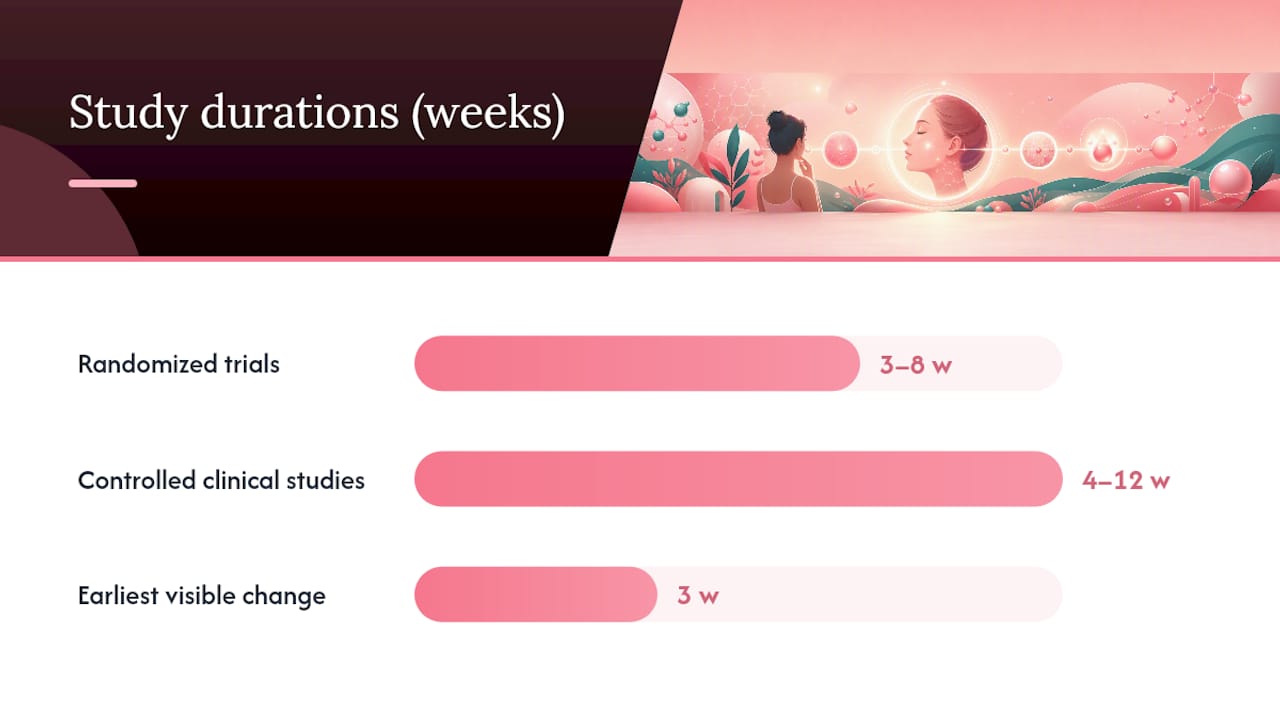
The overall picture from controlled trials and peer-reviewed reviews is encouraging, particularly for wrinkle reduction and hydration. The PubMed review synthesizes multiple clinical studies and reports measurable reductions in expression and static wrinkles with topical adenosine formulations, with some trials showing visible changes in as few as three weeks.
Key findings from the clinical literature:
| Study type | Duration | Main outcome |
|---|---|---|
| Randomized, placebo-controlled trials | 3–8 weeks | Visible reduction in crow’s feet and glabellar lines |
| Controlled clinical studies | 4–12 weeks | Improved skin elasticity and firmness measures |
| Mechanistic/receptor studies | In vitro and ex vivo | Confirmed fibroblast collagen stimulation via cAMP pathway |
| Review synthesis (PubMed) | Multiple trials | Consistent wrinkle improvement signal across formulations |
The honest caveat: most trials use proprietary formulations, which makes it hard to isolate adenosine’s contribution from other actives in the formula. Sample sizes in individual trials tend to be modest. The evidence is real and consistent, but it’s not the same depth as a decade of large-scale pharmaceutical trials. What it does show is a coherent, biologically plausible mechanism backed by repeated clinical confirmation, which puts adenosine well ahead of many ingredients that rely on marketing alone.
For readers interested in how adenosine fits alongside other collagen-targeting approaches, the collagen skincare products guide covers complementary options.
How to use adenosine in your skincare routine
The most effective placement for adenosine is in a serum or lightweight cream applied twice daily, morning and evening. That’s the frequency used in most published trials, and it gives the ingredient consistent receptor exposure rather than the intermittent signaling you’d get from once-a-day use.
Practical checklist for using adenosine:
- Concentration: Look for 0.04%–1% in the formula. Products in this range align with concentrations studied in clinical trials and recognized in regulatory reviews
- Application order: Apply a water-based adenosine serum before heavier creams or oils. Thin-to-thick sequencing keeps the molecule in contact with the skin rather than sitting on top of an occlusive layer
- Compatible actives: Hyaluronic acid, niacinamide, and peptides all layer well with adenosine without competition or irritation
- Caution with aggressive actives: When combining with retinol or chemical exfoliants (AHAs/BHAs), apply adenosine separately, ideally at a different time of day, to avoid potential interaction and to let each ingredient work at its optimal pH
- Packaging matters: Choose airless pumps or dark glass bottles. Adenosine is more stable than retinol, but unnecessary light and air exposure degrades any active over time
Pro Tip: After applying your adenosine serum, wait 60–90 seconds before layering the next product. That brief absorption window lets the molecule reach the receptor sites in the upper dermis rather than being diluted immediately by the next formula. It’s a small habit that costs nothing.
For guidance on sequencing actives without creating conflicts, the skincare layering mistakes guide is worth a read before you overhaul your routine.
Adenosine vs. retinol: when to pick each and when to use both
Adenosine is restorative: it works with your skin’s biology to support collagen production and reduce inflammation. Retinol is corrective: it accelerates cell turnover, which resurfaces skin faster but comes with a real irritation cost, especially in the first weeks of use.
Comparing the two across the dimensions that matter:
- Mechanism: Adenosine signals fibroblasts via receptor binding and cAMP; retinol binds nuclear receptors and drives gene expression changes that speed cell turnover
- Primary benefits: Adenosine targets collagen synthesis, hydration, and soothing; retinol targets surface texture, pigmentation, and deeper wrinkle correction
- Speed of visible results: Retinol often shows surface changes faster (4–6 weeks for texture); adenosine’s structural benefits build over 6–12 weeks
- Irritation risk: Adenosine is low-irritant and suitable for sensitive skin; retinol commonly causes dryness, peeling, and sensitivity, especially at higher concentrations
- Routine fit: Adenosine works morning and evening without restriction; retinol is typically reserved for evenings and requires sun protection during the day
Who should favor adenosine: Sensitive skin, rosacea-prone skin, anyone new to anti-aging actives, post-procedure recovery, or anyone who has tried retinol and found it too harsh.
Who should prioritize retinol: Those targeting deeper wrinkles, significant sun damage, or uneven pigmentation, and who can tolerate the adjustment period.
When to use both: Many dermatologists recommend using adenosine in the morning (or as a buffer layer) and retinol at night. The soothing, collagen-supportive action of adenosine can help offset some of retinol’s inflammatory side effects, which is why the two appear together in post-procedure protocols.
Safety, side effects, and when to consult a professional
Adenosine is generally well tolerated. The CIR safety assessment reports it as low-irritant at typical topical concentrations, and it’s one of the few anti-aging actives that sensitive skin types can use without a lengthy adjustment period.
That said, a few cautions apply:
- Allergic reactions: Rare but possible. If you notice redness, itching, or swelling after first use, discontinue and patch-test before reintroducing
- Patch testing: Apply a small amount to the inner arm or behind the ear for 24–48 hours before full-face use, especially if you have reactive skin
- Pregnancy and breastfeeding: Topical adenosine has not been specifically studied in pregnant or breastfeeding individuals. Consult a healthcare provider before adding any new active during these periods
- Prescription topical interactions: If you’re using prescription retinoids, hydroquinone, or other prescription actives, check with a dermatologist before layering adenosine to avoid unintended interactions
- Concentration sensitivity: At concentrations above 1%, some formulas may cause mild tingling. Most consumer products stay well below this threshold
If you’re pregnant, breastfeeding, or managing a skin condition with prescription treatments, a dermatologist’s input before starting adenosine is the right call.
How long until you see results with adenosine
Some clinical trials report early visible smoothing within a few weeks of twice-daily use. That’s the optimistic end. A more realistic expectation for most people is several weeks of consistent use before clear, measurable improvement in wrinkle appearance and skin texture, with structural benefits like improved elasticity continuing to develop over three months or more.
Timeline breakdown:
- Weeks 1–3: Skin may feel more hydrated and look slightly calmer; early smoothing visible in some trial participants
- Weeks 4–8: Clearer clinical confirmation of wrinkle reduction and improved firmness in published studies; most people notice a visible difference by this point
- Months 3+: Structural collagen remodeling continues with consistent use; cumulative improvement in elasticity and volume support
Variables that affect your personal timeline:
- Concentration: Higher concentrations within the studied range tend to produce faster signals
- Delivery system: Serums and ampoules are generally thought to penetrate more efficiently than thick creams, potentially delivering adenosine closer to the receptor sites in the dermis
- Skin age and baseline collagen loss: Younger skin with more intact collagen infrastructure responds faster; more depleted skin takes longer to show structural change
- Consistency: Skipping days resets the receptor signaling cycle; twice-daily use as tested in trials is the benchmark
How to choose an effective adenosine product
The ingredient list is your most reliable guide.
Shopping checklist:
- Concentration range: Look for 0.04%–1%. Products at the lower end can still be effective if the formulation is well-designed, but avoid products where adenosine appears near the very bottom of a long ingredient list with no supporting actives
- Product type: Eye serums and face serums are the most efficient delivery formats. Creams work well for maintenance and combination with other moisturizing actives. Ampoules offer concentrated delivery and are particularly common in Japanese and Korean anti-aging lines
- Complementary ingredients: Hyaluronic acid adds hydration; peptides reinforce collagen signaling; niacinamide supports barrier function. These combinations amplify adenosine’s effects without competing with it
- Packaging: Airless pumps and opaque or dark glass bottles protect the formula. Jar packaging with wide openings exposes the product to air and light with every use
- Brand transparency: Prefer brands that cite clinical data or reference specific concentrations. Vague claims like “youth-activating” with no ingredient detail are a warning sign
One shopping reality worth knowing: adenosine sometimes appears low on an ingredient list because effective concentrations can be small. That’s not automatically a red flag, but it does mean you should look for supporting evidence, whether that’s a cited study, a transparent concentration disclosure, or a brand with a track record of formulation quality. Patch-test any new product and give it at least six weeks before judging results.
What we still don’t know about adenosine
The evidence supports wrinkle improvement and the underlying mechanisms are well-documented, but the research has real gaps.
- Long-term safety data: Most trials run weeks to a few months. Multi-year safety data for daily topical use doesn’t exist yet
- Formulation comparisons: Studies use proprietary formulas, making it nearly impossible to compare concentrations, delivery systems, or base formulations head-to-head
- Dose-response curves: The optimal concentration for specific outcomes (wrinkle depth vs. hydration vs. elasticity) hasn’t been mapped in large trials
- Population diversity: Most published trials have limited demographic diversity, so results may not generalize equally across all skin types, tones, and ages
- Real-world effectiveness: Controlled trial conditions differ from everyday use. Compliance, product switching, and environmental factors all affect outcomes that trials don’t capture
The PubMed review acknowledges these limitations while still concluding that the overall signal for wrinkle improvement is consistent and biologically plausible. The gaps are reasons for measured expectations, not reasons to dismiss the ingredient.
Spyraverified’s perspective on adenosine in modern skincare
Adenosine sits in a category of skincare ingredients that earns its place through biology rather than hype. At Spyraverified, we view it as one of the more honest anti-aging actives available, precisely because it works with the skin’s own signaling systems rather than forcing rapid surface change. That distinction matters when you’re building a routine that has to work for years, not just weeks.
Japanese and Korean formulators have long recognized adenosine’s value, which is why it appears consistently in high-quality serums and ampoules from the Asian beauty market. The brands Spyraverified partners with tend to use adenosine in well-designed formulas where it’s supported by complementary actives and packaged to maintain stability. That’s not an accident of trend-chasing; it reflects a formulation philosophy that prioritizes clinical plausibility over marketing claims.

If you’re ready to try adenosine-containing products sourced directly from verified Japanese and Asian brands, the Spyraverified skincare collection is a good starting point. Every product goes through authenticity verification before it reaches you.
Sources
- Adenosine-related mechanisms in skin (PMC9804842)
- The possible role of the nucleoside adenosine in countering skin aging: A review
- CIR safety assessment: Adenosine
This article is general information, not a substitute for advice from a qualified doctor. Consult a qualified healthcare professional about your own circumstances before acting on anything here.
