

Sheet Mask Frequency by Skin Type: How Often to Use One
Most people should use a sheet mask a few times per week. Gentle, hydrating formulas might be used frequently if your skin tolerates them, but daily use is rarely necessary to get results. What sheet masks deliver is temporary hydration, a plump, dewy look that fades in a day or two rather than any lasting change to skin structure. That means the frequency question is really about maintenance, not correction.
A few rules apply no matter your skin type:
- Wear time: a limited period, typically around a quarter of an hour, never longer.
- Never let the sheet dry out on your face.
- One mask, one use. Do not save it for tomorrow or pass it to a friend.
Key Takeaways
Sheet mask frequency depends on skin type, but the 15 to 20 minute wear-time limit and single-use rule apply to everyone regardless of how often they mask.
| Point | Details |
|---|---|
| Default frequency | Most skin types do best at one to three sheet masks per week, not daily. |
| Wear time is non-negotiable | Keep sessions to 15 to 20 minutes; hydration declines past 25 minutes and drying sheets can pull moisture back out. |
| Moisturizer locks it in | Always follow a sheet mask with moisturizer to prevent the hydration spike from evaporating within the hour. |
| Sensitive and acne-prone skin need caution | Start at once a week, patch test new formulas, and avoid stacking masks with strong actives. |
| Curated sourcing reduces guesswork | Spyraverified verifies ingredient lists and sourcing so shoppers can match masks to their skin type without trial and error. |
Table of Contents
- How Often to Sheet Mask Based on Your Skin Type
- Why Wear Time Matters More Than People Think
- Where a Sheet Mask Actually Fits in Your Routine
- What Actually Separates a Good Mask From a Bad One
- Skin-Type Sheet Mask Frequency: My Take
- Find Sheet Masks Built for a Sustainable Routine
- Sources
How Often to Sheet Mask Based on Your Skin Type
Frequency isn’t one-size-fits-all, and the “3 times a week” advice you see everywhere ignores how differently skin types respond to repeated occlusion. Here’s what actually makes sense by category.
Dry or dehydrated skin can handle masking a few times per week. Look for humectants like sodium hyaluronate paired with an occlusive ingredient, and always follow with a moisturizer since the mask alone won’t seal in what it just gave you.
Oily or acne-prone skin does better with occasional sessions per week. The goal is lightweight, non-comedogenic hydration, not a delivery system for strong actives. Piling exfoliating acids onto a mask routine multiple times a week is a fast way to trigger breakouts instead of preventing them. If you’re managing frequent congestion, pairing a cautious masking schedule with a broader acne-focused skincare routine tends to work better than masking alone.
Sensitive or reactive skin should start with infrequent use, around once per week. Patch testing any new mask on your inner arm 24 hours before it touches your face isn’t optional here. Stick to fragrance-free formulas with a short, boring ingredient list.
Combination skin benefits from treating zones differently. If your T-zone runs oily, a full-face hydrating mask a few times per week is fine as long as you’re not adding it on top of heavy actives elsewhere in your routine.
Mature or aging skin generally does well with several sessions per week, focusing on hydration, peptides, and antioxidants rather than high-strength actives under occlusion.
Across every skin type, the same warning signs mean it’s time to pull back: persistent redness, stinging that doesn’t fade fast, new breakouts showing up where you didn’t have them, or a tight feeling that shows up hours after you’d normally feel hydrated.
Pro Tip: If you’re not sure where you fall, start at the low end of the range for two weeks. It’s easier to add a session than to calm down an irritated barrier.
Why Wear Time Matters More Than People Think
Fifteen to twenty minutes isn’t an arbitrary number printed on packaging to move you along. A study measuring skin hydration during sheet mask wear found hydration levels peak in that window and start declining once wear extends past roughly 25 minutes.
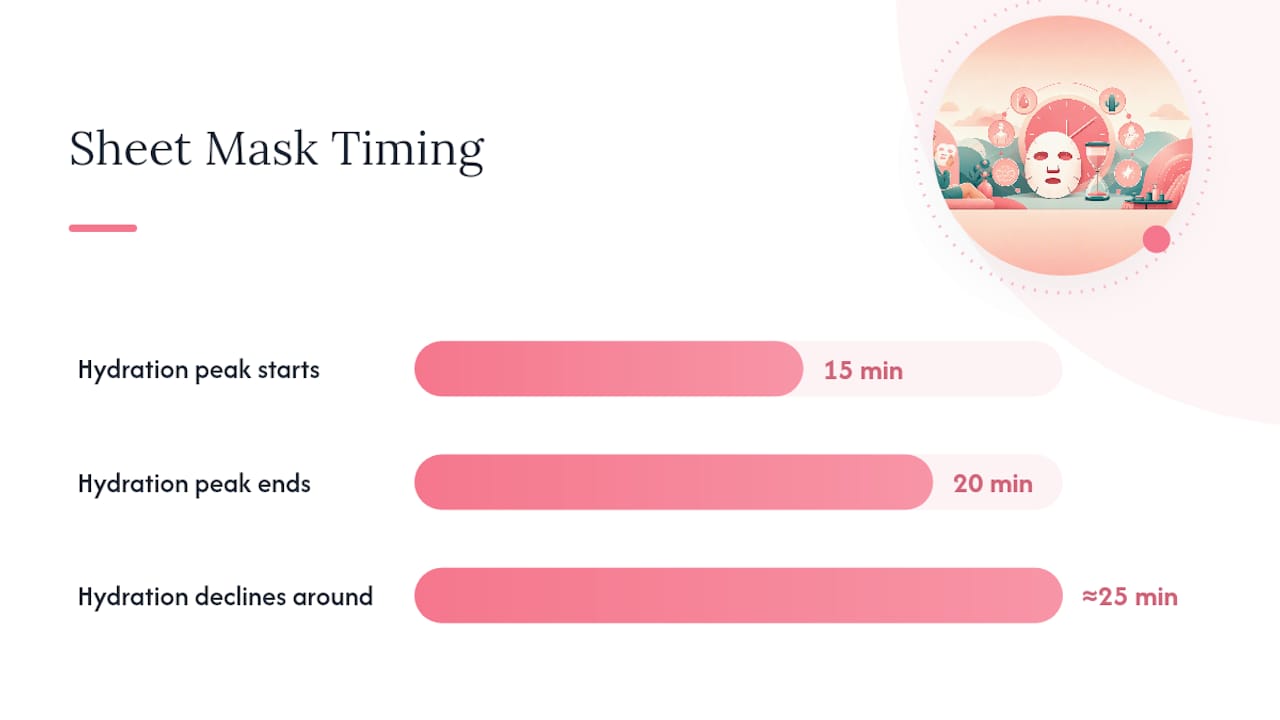
The mechanism is straightforward once you think about it: a sheet mask is essentially a wet compress. Once the serum evaporates and the sheet begins drying, it can start pulling moisture back out of your skin instead of feeding it in, a reversal of the transepidermal water loss (TEWL) effect you were trying to prevent in the first place. That’s why falling asleep in a sheet mask is one of the more common masking mistakes.
A few non-negotiables follow from this:
- Set a timer to track wear time precisely.
- Toss the mask the moment it starts feeling tacky or dry at the edges, even before 20 minutes.
- Never reuse a mask on a second day. Sitting wet and warm against skin overnight is a good way to breed bacteria, and there’s no realistic way to sanitize a single-use sheet.
- If you notice ongoing stinging or redness that outlasts the masking session itself, stop and see a dermatologist rather than pushing through it.
Where a Sheet Mask Actually Fits in Your Routine
Sequencing matters as much as frequency. Sheet masks work as a hydration boost sandwiched between the lightweight steps of your routine and the heavier ones that seal everything in.
- Cleanse first so the mask isn’t trying to hydrate through a layer of oil or makeup residue.
- Tone, and apply a water-based serum if you’re using one that day.
- Apply the sheet mask for 15 to 20 minutes.
- Pat in the leftover essence pooled in the packet; don’t waste it.
- Moisturizer, immediately. This is the step people skip, and it’s the one that actually locks the hydration spike in place rather than letting it evaporate over the next hour.
- Sunscreen, but only if it’s morning.
Morning masking works well before an event or a big meeting since it gives makeup a smoother base to sit on. Evening masking suits repair days, especially ones where you’re skipping retinoids or acids. Don’t stack a mask on top of a heavy actives night. Combining strong exfoliants with occlusive masking in the same routine is a common way people accidentally over-treat their skin without realizing it.
Three Routines You Can Copy Tonight
- Daily gentle hydration: mild cleanser, lightweight toner, hydrating sheet mask for 15 minutes, moisturizer, sunscreen if it’s morning. Reserve this for calm, non-reactive skin only.
- Weekly intensive session: double cleanse at night, hydrating serum, sheet mask for 20 minutes, then a richer moisturizer or a few drops of face oil to trap the hydration underneath.
- Acne-prone or sensitive plan: one mask a week, hydration-focused and fragrance-free. Spot-treat active breakouts with a targeted serum on the days you’re not masking, and patch test anything new before it touches your whole face. If you’re building this out further, a simple acne-focused routine or a sensitive skin routine gives you the full structure around the mask itself.
Sheet masks also earn their place outside a weekly rotation. Dermatologists point to pre-event prep, travel-related dehydration, and post-procedure comfort, only when a clinician has cleared it, as legitimate one-off reasons to reach for a mask regardless of your usual schedule.
What Actually Separates a Good Mask From a Bad One
A dermatologist’s take on this is refreshingly unglamorous: sheet masks are an occlusive delivery system for water and humectants, not a treatment that rewrites your skin’s structure. The glow you see afterward comes from short-term stratum corneum hydration, not collagen synthesis or pigment change.
A sheet mask works the way a good glass of water works after a long flight: fast relief, no permanent fix, and it only helps if you don’t overdo it.
That’s the standard we apply when curating which masks make it into the Spyraverified skincare collection. We look for fragrance-free formulas with humectants listed near the top of the ingredient panel, and we steer away from masks that pack in high-concentration acids or retinoids meant for frequent occlusive use. Curated sourcing doesn’t replace patch testing, but it does cut down on guesswork before a mask reaches your bathroom shelf.
Skin-Type Sheet Mask Frequency: My Take
The advice you’ll find on most beauty blogs treats sheet masks like a wellness ritual you can’t overdo, three times a week, no questions asked. That framing misses the point. Frequency should follow your skin’s tolerance, not a calendar rule pulled from a marketing page.
What gets underrated is how much the wear-time mistake matters more than the frequency mistake. Someone masking twice a week but falling asleep in it is doing more damage than someone masking daily with a timer set and a moisturizer ready. If I had to prioritize one habit, it wouldn’t be counting sessions per week. It would be respecting the 20-minute window and never skipping the moisturizer step afterward.
The other overlooked piece: sheet masks are a maintenance tool, not a fix. If you’re masking three times a week hoping to solve texture or dark spots, you’re going to be disappointed. Use them for what they’re good at, quick hydration, a pre-event glow, comfort during dry weather, and build your actual skin concerns around a routine that has ingredients with staying power.
— Anni
Find Sheet Masks Built for a Sustainable Routine
Buying random sheet masks off a crowded shelf makes it hard to know what you’re actually putting on your face twice a week. Spyraverified sources directly from Japanese and Asian skincare manufacturers and verifies products through community testing, so you’re not guessing whether a mask is fragrance-free, humectant-first, or loaded with actives better suited to a spot treatment than a full-face soak.

When you browse, look for the ingredient callouts on each product page: sodium hyaluronate near the top of the list, minimal fragrance, and no high-strength acids buried in a “hydrating” mask. If you want something closer to a deep-treatment option for an occasional intensive night, a bio-collagen overnight mask is worth adding to your rotation alongside lighter weekly options. Start by checking the Spyraverified skincare collection for masks that match the frequency your skin type actually calls for, and build a rotation you can stick with instead of one you have to second-guess every week.
