


How to Mix Western and Eastern Skincare Routines
A safe, effective hybrid routine blends Eastern-style layering and barrier-first hydration with Western targeted actives, ordered by texture and tolerance. Here is the core structure you can start tonight:
- Cleanse with a gentle, low-pH cleanser (either origin)
- Hydrate with a watery toner or essence before any active
- Treat with one Western active serum (vitamin C in the AM, retinol or an AHA on alternating PM nights)
- Seal with a barrier-support moisturizer, then SPF every single morning
Three rules to keep close: always layer thinnest to thickest; check ingredient compatibility before stacking anything new; and never skip sunscreen on mornings when you have used a brightening or exfoliating active the night before. Start with one active, low frequency, two or three nights a week. Add Eastern hydrating steps around it to cushion the skin.
Table of Contents
- How do Eastern and Western skincare philosophies actually differ?
- What layering rules and ingredient pairings actually work?
- How do you build a hybrid AM and PM routine by skin type?
- What are the most common pitfalls when mixing routines?
- How long does it take to see results from a hybrid routine?
- How do you source authentic Eastern skincare in the U.S.?
- Key Takeaways
- Why the hybrid approach beats choosing a side
- Curated Eastern skincare, verified for U.S. shoppers
- Useful sources
How do Eastern and Western skincare philosophies actually differ?
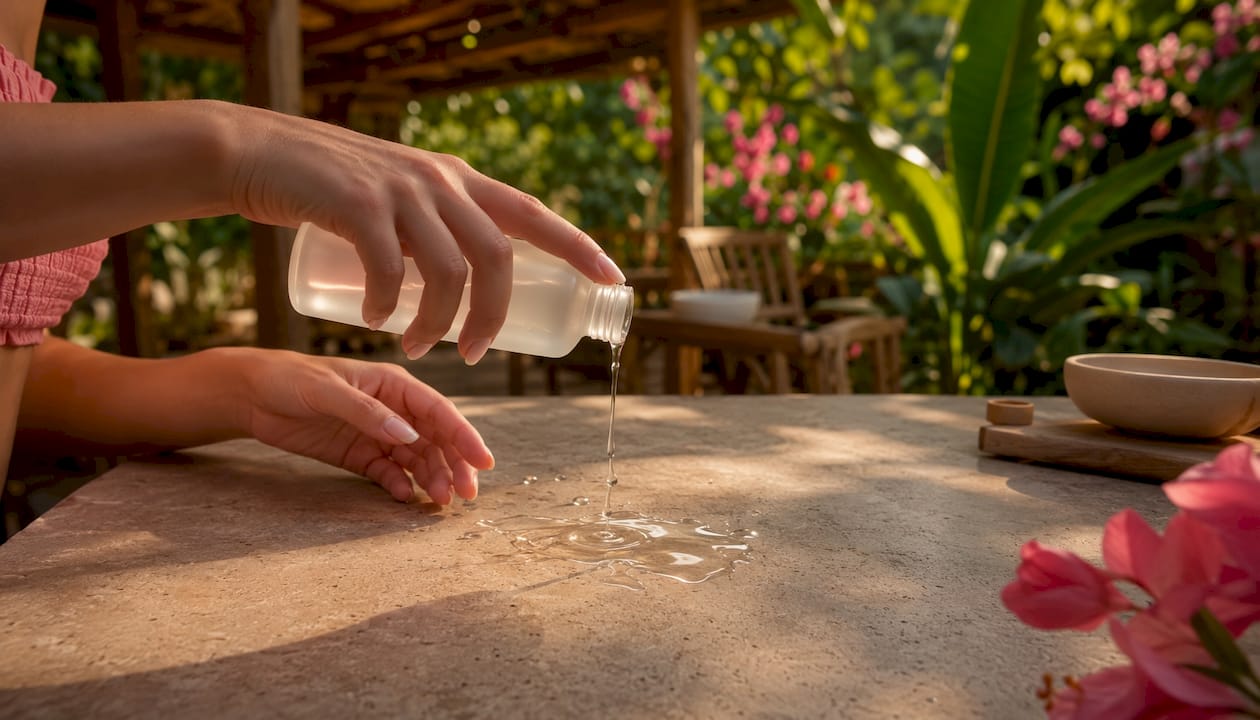
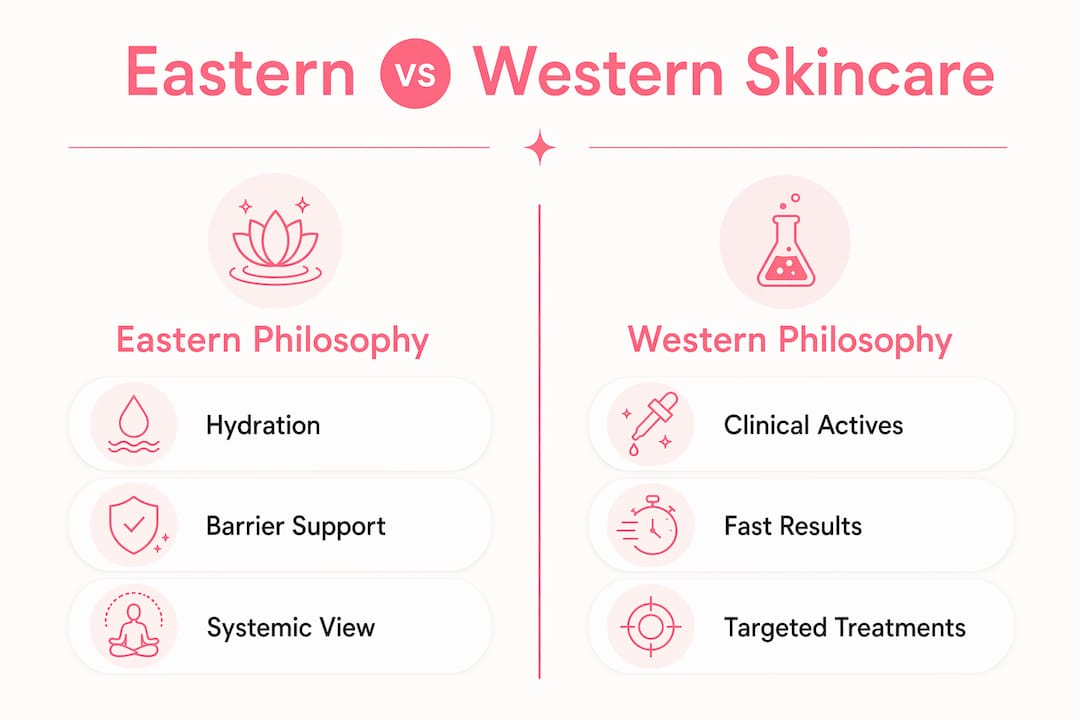
Eastern skincare, whether rooted in K-beauty, Japanese tradition, or Traditional Chinese Medicine, treats the skin as something to protect before it needs fixing. The goal is prevention: keep the barrier intact, hydrate consistently, and use gentle botanicals that work slowly over years. A practical K-beauty routine runs four to six steps, each product lightweight enough to absorb before the next goes on. The philosophy is patience-first.
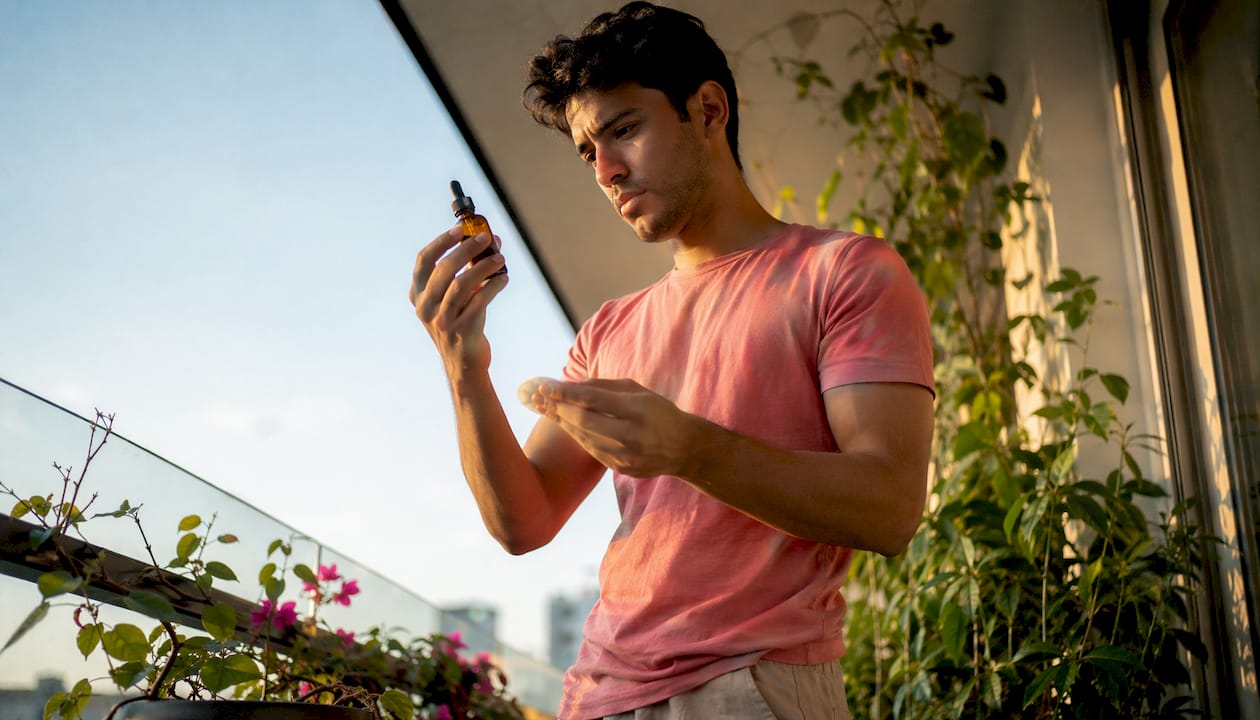
Western skincare flips that priority. It reaches for clinical-strength actives: retinoids, AHAs, BHAs, and high-concentration vitamin C serums. The goal is correction, and it tends to be faster and more visible. Brands in the U.S. and Europe have decades of dermatological research behind formulations like strong L-ascorbic acid serums and prescription tretinoin. The tradeoff is that strong actives can compromise the skin barrier if used without adequate hydration support.
Neither philosophy is complete on its own. Eastern routines excel at hydration and barrier support, but may deliver slower results for someone dealing with significant hyperpigmentation or acne scarring. Western routines get results faster but can trigger irritation, dryness, and what practitioners call the “repair-and-destroy” cycle, where you strip the barrier with actives and then scramble to rebuild it. Combining both approaches, with the Eastern foundation supporting the Western correction, is where the real gains are.
Eastern medicine also views skin as a reflection of systemic health, connecting skin outcomes to sleep quality, digestion, and inflammation control. That perspective adds a layer of lifestyle awareness that purely topical Western routines often miss.
What layering rules and ingredient pairings actually work?
Ingredient compatibility is chemistry, not geography. Whether a product comes from Seoul or San Francisco, what matters is its pH, solvent system, and active concentration. The layering order follows one consistent rule: thinnest texture to thickest, water-based before oil-based.
What to pair safely
- Centella asiatica, green tea (EGCG), and licorice root layer safely with most Western actives and have clinical evidence supporting anti-inflammatory and brightening benefits. Use them as buffers around stronger treatments.
- Niacinamide pairs well with retinol and most hydrating essences; it helps reduce irritation from actives.
- Hyaluronic acid and ceramide-based moisturizers work after any active to lock in hydration and reinforce the barrier.
- Vitamin C (morning) + SPF: a reliable pairing that maximizes antioxidant protection during the day.
What to avoid combining
- Retinol + AHA/BHA on the same night: both accelerate cell turnover and stacking them dramatically raises irritation risk. Alternate nights instead.
- Low-pH vitamin C + AHAs without buffering: both are acidic; layering them can over-exfoliate and destabilize formulations.
- Benzoyl peroxide + retinoids: benzoyl peroxide can oxidize and deactivate retinol. Use them on separate nights or in separate AM/PM slots.
- Alcohol-heavy toners directly before or after actives: they compromise the barrier at exactly the moment you need it intact.
| Combination | Risk level | Safer approach |
|---|---|---|
| Retinol + AHA/BHA same night | High | Alternate nights |
| Vitamin C + AHA same step | Moderate | Apply vitamin C AM only; AHA PM |
| Benzoyl peroxide + retinol | High | Separate AM/PM or alternate nights |
| Centella + retinol | Low | Apply centella essence after retinol to buffer |
| Niacinamide + vitamin C | Low | Layer freely; niacinamide goes after vitamin C |
Pro Tip: Apply a hydrating essence before your active serum if your skin is dry or reactive; apply it after if your active is water-based and needs direct skin contact. Patch-test every new product on your inner arm for 24–48 hours before adding it to your face routine. Introduce one active at a time, waiting at least two weeks before adding another.
Common layering mistakes often come down to applying products in the wrong order or skipping the hydrating step that makes actives tolerable.
How do you build a hybrid AM and PM routine by skin type?
Baseline hybrid AM routine
- Gentle low-pH cleanser
- Hydrating toner or essence (Korean or Japanese style, watery texture)
- Vitamin C serum, 10–20% L-ascorbic acid or a gentler derivative like ascorbyl glucoside (optional for beginners; start at 5–10%)
- Moisturizer suited to your skin type
- Broad-spectrum SPF 30+ (non-negotiable)
Baseline hybrid PM routine
- Oil cleanser or cleansing balm (first cleanse, removes SPF and makeup)
- Gentle water-based cleanser (second cleanse)
- Hydrating toner or essence
- Targeted active serum on treatment nights (retinol, AHA, or BHA — not all three)
- Barrier-support moisturizer with ceramides or squalane
The 4-2-4 cleansing method — four minutes with an oil cleanser, two minutes with a water-based cleanser, four minutes rinsing — is a thorough double-cleanse ritual, though people with very dry skin should shorten the water-exposure time to avoid stripping.
Per-skin-type adjustments
Oily skin: Swap rich moisturizers for gel or water-gel formulas. Use water-based essences rather than oil-heavy ones. Salicylic acid (BHA) two to three nights a week suits oily and acne-prone skin well.
Dry skin: Add an extra hydrating layer, a second essence or a hydrating serum with hyaluronic acid, before your active. Choose a richer occlusive moisturizer (shea butter, squalane, or a ceramide cream) and consider skipping exfoliating actives more than once a week.
Sensitive skin: Prioritize centella asiatica and ceramide-heavy products. Start retinol at the lowest available concentration and use it once a week before increasing. Avoid fragrance in herbal blends; even natural botanicals can trigger reactions on reactive skin.
Combination skin: Treat zones separately if needed. A lighter gel moisturizer on the T-zone, a slightly richer formula on dry cheeks. Introduce actives on the oilier areas first to gauge tolerance.
Active frequency guide
| Active | Beginner | Intermediate |
|---|---|---|
| Retinol (OTC) | 1–2 nights/week | 3–4 nights/week |
| AHA (glycolic, lactic) | 1–2 nights/week | 2–3 nights/week |
| BHA (salicylic acid) | 2–3 nights/week | Daily if tolerated |
| Prescription tretinoin | Per AAD guidance: start low, build slowly | Clinician-directed |
What are the most common pitfalls when mixing routines?
The single biggest mistake is stacking too many high-strength actives at once. Dermatologists call the result the “repair-and-destroy” cycle: you use a retinoid, an AHA, and a vitamin C serum in the same week without adequate hydration, the barrier breaks down, you pile on soothing products to recover, and then you restart the actives before the skin has actually healed. The cycle repeats and the skin never stabilizes.
Other common pitfalls:
- Ignoring pH interactions: applying a low-pH vitamin C serum immediately after a high-pH cleanser reduces its efficacy; give skin a few minutes to normalize or choose a pH-appropriate cleanser.
- Skipping SPF: using brightening or exfoliating actives without daily sunscreen accelerates the very damage you are trying to correct.
- Fragrance in herbal blends: traditional botanical products sometimes contain fragrant plant extracts that irritate reactive skin, even when marketed as “natural.”
- Unverified Eastern products: some traditional ingredients, like pearl powder, have limited clinical support. Stick to botanicals with evidence behind them, centella, licorice, and green tea are the best-supported.
Three-step recovery plan if irritation hits
- Stop all actives immediately. No retinol, no acids, no vitamin C for at least one to two weeks.
- Simplify to three products: a gentle, fragrance-free cleanser, a ceramide or centella-based moisturizer, and SPF in the morning.
- Reintroduce one product at a time, starting with the mildest active at the lowest frequency, only after the skin feels calm and the barrier feels intact.
If you experience persistent redness, swelling, peeling that does not resolve within two weeks, or a worsening skin condition, see a board-certified dermatologist. Some reactions require prescription intervention, not just a simplified routine.
How long does it take to see results from a hybrid routine?
Results depend on what you are targeting, and setting realistic timelines prevents the over-tweaking that derails most routines.
Hydration and barrier feel: Most people notice measurable improvement within one to two weeks of consistently adding humectants (hyaluronic acid, glycerin) and emollients (ceramides, squalane). Skin feels less tight, looks less dull.
Acne control: Expect six to twelve weeks for visible reduction when using salicylic acid, benzoyl peroxide, or prescription retinoids. Hormonal acne may take longer and often benefits from the systemic approach Eastern medicine emphasizes, including diet and stress management.
Hyperpigmentation and brightening: Eight to twelve weeks is a realistic minimum with consistent vitamin C, licorice extract, or niacinamide use. Professional treatments accelerate this, but topical-only results take time. For more on the distinction between brightening and whitening ingredients, the brightening vs. whitening breakdown is worth reading before you build this part of your routine.
Anti-aging and texture: Retinoid-driven collagen remodeling takes three to six months to show in fine-line texture and skin density. Sunscreen’s protective effect is immediate but cumulative; the damage it prevents compounds over years.
The temptation to switch products at the four-week mark is almost always premature. Pick your actives, build your hydration foundation, and give the routine at least eight weeks before evaluating.
How do you source authentic Eastern skincare in the U.S.?
Finding genuine Eastern skincare in the U.S. requires more than a quick Amazon search. The market has counterfeit and improperly stored imports, and a product that has been sitting in an unregulated warehouse loses both safety and efficacy.
Buying checklist before you purchase:
- Ingredient list printed in English (required for U.S. import compliance)
- Visible manufacturing date, batch code, and expiry information
- Importer or U.S. distributor contact information on the packaging
- Clear shelf-life labeling and a verifiable return or customer service policy
- Third-party testing or regulatory labeling consistent with the product’s country of origin
Authentication signs to look for:
- Consistent batch codes that match the brand’s official verification system
- Legitimate importer contact details (not just a generic email)
- Localized customer service that can answer questions in English
- Pricing that reflects the product’s actual market value; suspiciously low prices on unfamiliar platforms are a red flag
Not all traditional ingredients carry clinical backing. Pearl powder and some exotic botanicals have limited modern evidence. Prioritize products built around evidence-supported botanicals like centella asiatica, green tea extract, and licorice root, where the science is solid. Curated retailers who partner directly with manufacturers and provide localized translations of ingredient claims reduce the risk of both counterfeits and misuse.
Combining Eastern and Western actives works best when the formulation quality on both sides is high. A poorly stored or counterfeit Eastern product will not buffer your Western actives; it will just add variables you cannot control. For a closer look at why Japanese beauty products hold such a strong reputation for formulation quality, the answer usually comes down to manufacturing standards and ingredient sourcing.
Key Takeaways
A hybrid routine works best when Eastern hydration and barrier support scaffold the Western actives, not the other way around.
| Point | Details |
|---|---|
| Layer thinnest to thickest | Apply watery toners and essences before serums; serums before moisturizer. |
| Alternate strong actives | Never use retinol and AHAs on the same night; rotate to cut irritation risk. |
| Buffer with Eastern botanicals | Centella, green tea, and licorice layer safely around Western actives and reduce side effects. |
| SPF every morning | Sunscreen is non-negotiable when using any brightening or exfoliating active. |
| Spyraverified for sourcing | Spyraverified curates verified Japanese and Asian skincare brands with English labeling and U.S. distribution support. |
Why the hybrid approach beats choosing a side
The conversation around Eastern versus Western skincare often gets framed as a competition, and that framing misses the point entirely. Prevention and correction are not opposing strategies. They are sequential ones. You build the barrier first, then you treat. Eastern routines have always understood the first half; Western dermatology has refined the second.
What gets underestimated is how much the Eastern hydration foundation changes the tolerance ceiling for Western actives. Skin that is consistently well-hydrated and barrier-intact can handle a higher-concentration retinoid or a stronger AHA than skin that is perpetually stripped and reactive. The Eastern steps are not just cosmetic extras; they are what make the Western actives sustainable long-term.
The practical action: choose one active to trial for four to eight weeks, either vitamin C in the morning or a low-dose retinol two nights a week in the evening. Pair it with a consistent hydrating toner or essence and daily SPF. Do not change anything else. That single experiment will tell you more about your skin’s tolerance than any ten-step routine you try all at once.
Curated Eastern skincare, verified for U.S. shoppers
Finding the right Eastern products is half the battle when you are building a hybrid routine. Spyraverified brings authenticated Japanese and Asian skincare brands directly to U.S. consumers, with English ingredient labeling, verified sourcing, and localized support built in. Every product in the collection is curated for quality and authenticity, so you are not guessing about what is actually in the bottle.
The editorial guidance in this article is independent of any commercial offering. If you want to put it into practice with products you can trust, browse the curated skincare collection at Spyraverified and find the Eastern staples, essences, toners, and barrier moisturizers, that make the hybrid approach work.
Useful sources
- American Academy of Dermatology: Retinoid and retinol guidance — clinical recommendations on starting concentrations, frequency, and safety for topical retinoid use.
- PubMed: Systemic health and skin outcomes — peer-reviewed evidence linking internal health factors to skin condition.
- HadaBuddy: TCM ingredients in skincare — what the science says — evidence review of traditional botanicals including centella, licorice, and green tea.
- HadaBuddy: Is Korean skincare actually better than Western skincare? — ingredient-level comparison of K-beauty and Western formulations with hybrid routine examples.
- Neal’s Yard Remedies: The 4-2-4 cleansing rule — explanation of the timed double-cleanse method and when to modify it.
- The Established: Western actives and Ayurvedic ingredients — practitioner commentary on hybrid formulation rationale and synergistic effects.
