

What Mugwort Does for Your Skin: Benefits and Uses
Mugwort soothes inflammation and supports the skin barrier, making it one of the more useful botanicals in skincare for people whose skin runs red, reactive, or easily irritated. If your skin flares after trying new products, flushes in the cold, or just never quite feels calm, mugwort is worth understanding.
Here is what it does at a glance:
- Anti-inflammatory: Reduces redness and calms flare-ups by dampening inflammatory signaling in skin cells
- Antioxidant protection: Helps neutralize oxidative stress, particularly relevant after UV exposure
- Barrier support: May increase expression of structural proteins that keep skin intact and hydrated
- Mild antimicrobial: Shows some activity against common skin bacteria in lab settings, which is relevant for acne-prone skin
It is not a replacement for prescription treatments or evidence-backed actives like retinoids. Think of it as a calming layer that helps your skin tolerate everything else you put on it.
Key Takeaways
Mugwort is a well-supported calming botanical with real preclinical evidence for anti-inflammatory and barrier-strengthening effects, best used as a consistent supporting layer in a sensitive-skin routine.
| Point | Details |
|---|---|
| Core benefit | Mugwort soothes inflammation and supports barrier proteins, reducing redness and reactive sensitivity. |
| Evidence level | Most data comes from cell and animal studies; human clinical trials are limited, so treat it as supportive, not curative. |
| Antioxidant signal | Animal studies show a 20–33% increase in glutathione peroxidase activity after topical mugwort application. |
| Safe use | Always patch test first; avoid if you have Asteraceae allergies; consult a clinician if pregnant. |
| Spyraverified | Authentic mugwort products with transparent sourcing are available through the Spyraverified skincare collection. |
Table of Contents
- What mugwort actually does for your skin
- What the research says about how mugwort works
- How Koreans use mugwort and what K-beauty products look like
- How to add mugwort to your skincare routine
- Safety, side effects, and what not to mix with mugwort
- Mugwort vs. centella: which one does your skin actually need?
- How to choose a mugwort product worth buying
- A realistic take on what mugwort can and cannot do
- Authentic mugwort products, sourced and verified
- Sources
What mugwort actually does for your skin
Mugwort (botanically Artemisia princeps) delivers four distinct benefits in skincare, and each one maps to a specific skin complaint.
Soothing and anti-inflammatory action is the most consistent finding across preclinical research. Mugwort extract reduces the production of pro-inflammatory cytokines, which are the signaling molecules that drive redness, swelling, and that tight, uncomfortable feeling after a flare. For skin that reacts to weather changes, stress, or new products, this is the primary reason to reach for a mugwort formula.
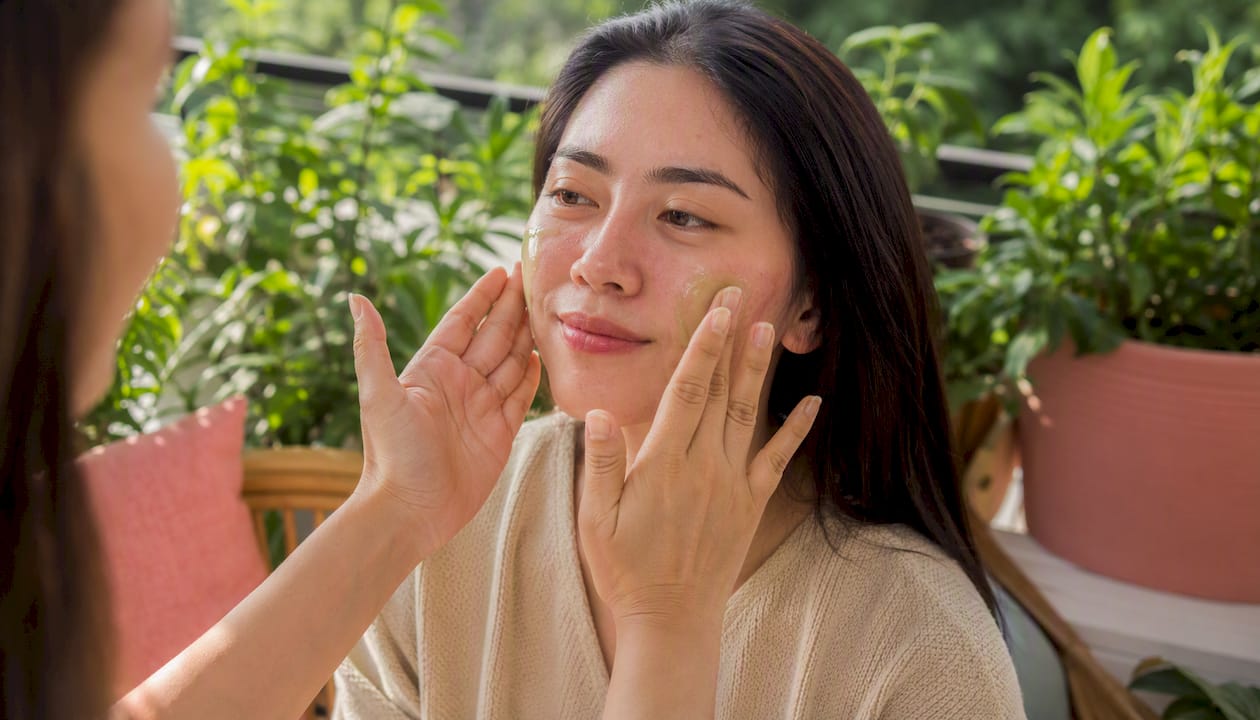
Barrier strengthening is the second major benefit, and arguably the one with the most interesting mechanism. Lab work suggests mugwort activates a receptor pathway that tells skin cells to produce more filaggrin and loricrin, two proteins that hold the outer skin layer together. When those proteins are low, skin loses water faster and becomes more reactive to irritants.
Antioxidant protection rounds out the functional picture. Oxidative stress from UV exposure and pollution degrades skin over time, and mugwort extract has shown measurable antioxidant activity in animal studies, particularly in protecting against UV-induced damage. The antioxidant role in skincare is well established as a supporting function rather than a primary treatment.
Mild antimicrobial activity appears in in vitro studies, suggesting some potential for reducing the bacterial load that contributes to inflammatory acne. This is not strong enough to treat active breakouts on its own, but it adds value in formulas targeting congestion or post-acne redness.
| Skin concern | How mugwort helps | Realistic expectation |
|---|---|---|
| Persistent redness or flushing | Anti-inflammatory signaling reduction | Noticeable calming over 4–6 weeks |
| Post-irritation sensitivity | Barrier protein support | Improved tolerance to actives |
| Mild inflammatory acne | Antimicrobial and anti-inflammatory | Reduced redness around breakouts |
| Dry, reactive patches | Barrier strengthening, hydration retention | Less tightness and flaking |
| UV-related oxidative stress | Antioxidant enzyme activity | Supportive, not sun-protective |
Pro Tip: Mugwort will reliably calm and buffer. What it will not do is replace a retinoid for cell turnover, a vitamin C serum for brightening, or a prescription for chronic eczema. Use it as the steady foundation that lets those actives do their job without triggering a reaction.
What the research says about how mugwort works
Mugwort reduces inflammatory signaling and appears to upregulate barrier proteins in preclinical studies, but the human clinical evidence is still thin.
The anti-inflammatory mechanism is the best-documented. Preclinical studies show that Artemisia extracts inhibit TNF-α and IL-6 production and suppress NF-κB, a master regulator of inflammatory gene expression. In animal and skin-cell models, this translated to reduced epidermal swelling and less immune-cell infiltration at the site of irritation. That is a meaningful signal, even if it comes from a petri dish or a mouse model rather than a clinical trial.
The barrier mechanism is equally interesting. Laboratory work on AHR activation shows that Artemisia extracts can switch on the aryl hydrocarbon receptor pathway, which in turn increases expression of filaggrin and loricrin in skin models. Those proteins are the structural glue of the stratum corneum. People with eczema-prone skin often have lower filaggrin expression, so a topical ingredient that nudges that pathway upward has a plausible mechanism for improving barrier function.
Antioxidant finding: In UVB-irradiated hairless mice, topical mugwort extract increased glutathione peroxidase activity by roughly 20–33%, an enzyme central to the skin’s antioxidant defense system. This is an animal model result, not a human trial, but the direction of effect is consistent with the ingredient’s broader profile.
The limits of the evidence matter here:
- Most studies are in vitro (cell cultures) or in vivo animal models, not randomized controlled trials in humans
- Human studies that do exist tend to be small, short, or observational rather than placebo-controlled
- Concentration and extract type vary widely across studies, making direct comparisons difficult
- Formulation variables (solvent, fermentation, preservative system) affect bioavailability in ways the published literature rarely controls for
A PubMed review of indexed studies confirms that most supportive evidence for topical Artemisia remains preclinical, with limited human clinical trials available. Dermatology-focused outlets echo this: the signals are promising, but the evidence does not yet support treating mugwort as a clinically proven therapy for chronic inflammatory skin diseases.
How Koreans use mugwort and what K-beauty products look like
Mugwort has been part of Korean traditional practice for centuries. Known as ssuk in Korean, it was used in steam baths, compresses, and topical preparations for cooling and calming irritated skin long before it appeared on ingredient lists. Modern K-beauty took that tradition and built a full product category around it.
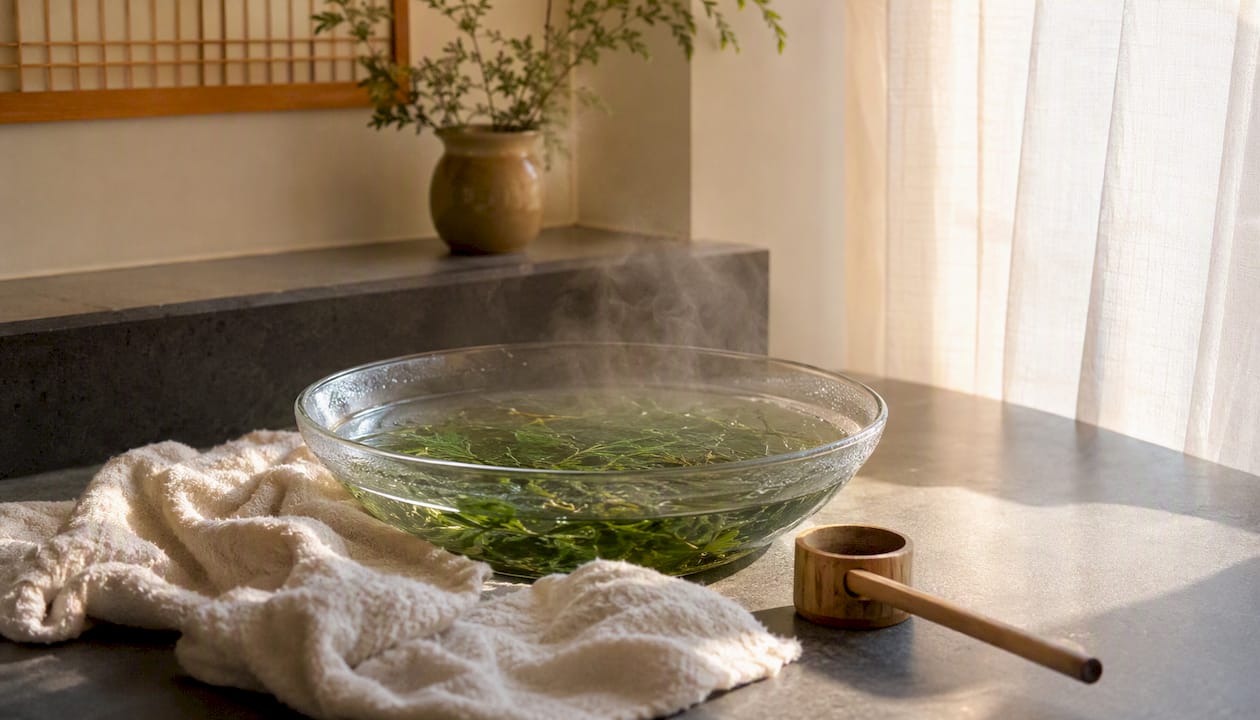
The differences between K-beauty and J-beauty traditions are worth understanding if you are new to either, but within K-beauty specifically, mugwort sits in the calming and barrier-repair category alongside centella (cica). Formulators often pair the two because they work through slightly different pathways and their combined effect covers more ground than either alone.
Common product forms and what each delivers:
- Essences and toners: Leave-on, water-based formats that deliver mugwort extract at a lighter concentration; ideal as a first hydrating step after cleansing, where the skin is most receptive
- Sheet masks: Saturated leave-on treatments that hold extract against skin for 15–20 minutes; good for acute flare-ups or pre-event calming
- Creams and moisturizers: Richer emollient bases that combine mugwort with humectants and occlusives; the best format for barrier repair and overnight use
- Cleansers: Wash-off formats where contact time is short; the calming benefit is real but milder than leave-on options. A Korean face wash with mugwort can still reduce post-cleanse tightness
- Concentrates and ampoules: High-potency leave-on formats; useful for targeted treatment but require a patch test given the higher extract load
A formulation note worth knowing: fermented mugwort extract (listed as fermented Artemisia princeps filtrate) tends to have smaller molecular fragments that penetrate more readily. Airless pump packaging matters too, because botanical extracts oxidize when repeatedly exposed to air. Airless packaging preserves potency in a way that open jars simply cannot.
How to add mugwort to your skincare routine
Start with a patch test and low frequency. That is the single most important instruction for any new botanical, and mugwort is no exception.
-
Patch test first. Apply a small amount of the product to the inside of your forearm or behind your ear. Wait 24–48 hours. If you see redness, itching, or swelling, skip the product. Why patch testing matters is explained in detail, but the short version is that botanical allergens are real and mugwort belongs to the Asteraceae family, which has a documented cross-reactivity profile.
-
Introduce it once every other day. Use the mugwort product on alternating evenings for the first two weeks. This gives your skin time to adjust and makes it easier to identify the cause if anything reacts.
-
Layer it correctly. Apply mugwort essences or toners after cleansing, while skin is still slightly damp, before heavier creams or oils. The Japanese lotion layering method applies here: thinnest to thickest, water-based before oil-based.
-
Pair it with humectants. Hyaluronic acid, glycerin, and panthenol all work well alongside mugwort. They pull water into the skin while mugwort works on the barrier and inflammation. Niacinamide is another strong pairing, especially for redness-prone skin.
-
Use it as a buffer when introducing retinoids or acids. Apply mugwort before your retinoid or BHA on the nights you use them. It does not neutralize the active, but it reduces the baseline irritation that makes those ingredients harder to tolerate. Some people use mugwort on the off-nights entirely, alternating rather than layering.
-
Increase frequency gradually. After two weeks without reaction, move to daily use if your skin is comfortable. Most people with reactive skin do best using mugwort products morning and evening as a consistent calming layer.
Visible results timeline: Redness reduction and improved comfort typically show within 2–4 weeks of consistent use. Barrier improvement, measured by less sensitivity to other products, takes 4–8 weeks. If you see no change after eight weeks, the concentration in your product may be too low or the formulation may not suit your skin type.
Safety, side effects, and what not to mix with mugwort
Mugwort is well-tolerated by most people, but it is not risk-free. The core safety message is simple: patch test, watch for botanical allergies, and stop if irritation develops.
Who should be cautious:
- People with known allergies to Asteraceae (daisy family) plants, including ragweed, chrysanthemum, chamomile, and echinacea. Cross-reactivity is documented, and mugwort pollen is a recognized allergen in its own right.
- Anyone who is pregnant or breastfeeding. Topical use at cosmetic concentrations is generally considered low-risk, but the evidence base for safety in pregnancy is limited. Consulting a clinician before adding new botanicals during pregnancy is the straightforward call.
- People with very compromised skin barriers (open wounds, active eczema flares with broken skin) should wait until the skin has partially healed before introducing new products.
What not to mix or when to separate:
- Strong exfoliating acids (AHAs at high concentrations, low-pH BHAs) used at the same time as mugwort can increase skin sensitivity. Use them at different times of day or on alternating nights.
- High-strength vitamin C (L-ascorbic acid at 15–20%) can be irritating on its own; layering it with a new botanical in the same routine adds variables. Introduce them separately.
- If you are in the first four weeks of starting a retinoid, hold off on adding mugwort at the same time. Once your skin has adjusted to the retinoid, mugwort makes an excellent pairing to reduce ongoing irritation.
On phototoxicity: No strong evidence currently links topical mugwort extract to phototoxic reactions at cosmetic concentrations, but some Artemisia species contain compounds that can be sensitizing under UV exposure. Using mugwort products in the morning is fine, but following with SPF (as you should regardless) removes any theoretical concern.
Pro Tip: If you are allergic to ragweed and notice seasonal hay fever symptoms, mugwort pollen is a likely contributor. That same allergenic profile can show up on skin. A patch test is not optional for you — it is mandatory.
Mugwort vs. centella: which one does your skin actually need?
Both mugwort and centella (cica, Centella asiatica) calm irritated skin, but they differ in how they do it and how much human evidence backs them up.
| Mugwort (Artemisia princeps) | Centella (Centella asiatica) | |
|---|---|---|
| Best for | Reactive, red, or inflamed skin; barrier-compromised skin; acne-adjacent redness | Wound healing, post-procedure skin, eczema-prone skin, general barrier repair |
| Strength of clinical evidence | Mostly preclinical (cell and animal studies); limited human trials | Stronger human clinical data, particularly for wound healing and scar reduction |
| Primary mechanism | NF-κB suppression, TNF-α/IL-6 reduction, AHR-mediated barrier protein upregulation | Madecassoside and asiaticoside stimulate collagen synthesis and reduce inflammation |
| Typical formulations | Essences, toners, sheet masks, creams; often fermented | Creams, gels, serums, sleeping masks; often combined with other calming actives |
Which to choose:
- Reactive or easily flushed skin: Mugwort is the stronger choice for immediate calming and redness reduction.
- Eczema-prone or post-procedure skin: Centella has more human evidence for wound healing and barrier restoration; it is the safer primary choice here.
- Acne-prone skin with redness: Either works; mugwort adds mild antimicrobial activity, centella adds collagen support for post-acne marks.
- Aging skin with sensitivity: Centella’s collagen-stimulating mechanism gives it an edge, but mugwort as a supporting layer reduces the irritation that anti-aging actives cause.
The two are not interchangeable, but they are genuinely complementary. Many K-beauty formulas include both for exactly that reason.
How to choose a mugwort product worth buying
The ingredient name to look for on a label is Artemisia princeps leaf extract or Artemisia princeps extract. Some products use other Artemisia species, which have overlapping but not identical profiles. Fermented versions are listed as fermented Artemisia princeps filtrate.
Label checklist:
- Artemisia princeps (or fermented variant) appears in the first half of the ingredient list, not buried near the bottom where concentrations are typically below 1%
- Humectants (hyaluronic acid, glycerin, panthenol) are present to support hydration alongside the botanical
- No high-fragrance load: fragrance is a common irritant and works against the calming purpose of a mugwort product
- A clear preservative system is listed (phenoxyethanol, ethylhexylglycerin, or similar): botanical extracts without preservatives degrade and can harbor bacteria
- Packaging is airless pump or sealed tube rather than an open jar, which exposes the formula to air repeatedly. The case for airless packaging is especially strong for oxidation-sensitive botanicals
Red flags:
- Claims of “clinically proven” results without a cited study or specific outcome measure
- “Mugwort-infused” language with the extract listed at the very bottom of the INCI list
- No preservative system in a water-based formula
- Overpowering fragrance in a product marketed for sensitive or reactive skin
- Unclear sourcing or no country of origin for the extract
For essences and toners, prioritize a short, clean ingredient list with the extract high up and a humectant alongside it. For creams, look for emollients (ceramides, squalane, shea) in addition to the mugwort. For sheet masks, the soaking liquid’s ingredient list matters more than the mask material itself.
A realistic take on what mugwort can and cannot do
The K-beauty market has done a remarkable job of surfacing mugwort as a mainstream calming ingredient, and the underlying science is genuinely interesting. But the gap between “promising preclinical signals” and “proven skincare treatment” is wider than most product marketing suggests.
What you can reasonably expect from consistent mugwort use: calmer baseline skin, reduced reactivity to other products, and a better tolerance for actives you might otherwise struggle with. Those are real, useful outcomes. What you should not expect: a cure for chronic eczema, a replacement for prescription topicals, or dramatic visible changes in two weeks.
The four-to-eight-week timeline for barrier improvement is not a marketing hedge. Skin cell turnover takes roughly 28 days in younger adults and longer as you age. Structural changes to the barrier take time to show up as measurable differences in how your skin feels and behaves.
If your skin condition is chronic, painful, or significantly affecting your quality of life, a dermatologist visit is the right move before or alongside any over-the-counter botanical routine. Mugwort can be part of a dermatologist-recommended regimen, but it is not a substitute for one.
Authentic mugwort products, sourced and verified
Spyraverified brings authenticated Japanese and Asian skincare directly to you, sourced from partnered manufacturers and verified through community testing. For mugwort specifically, that sourcing matters: the extract quality, fermentation process, and formulation integrity vary enormously between brands, and counterfeit or diluted products are a real problem when buying through unverified channels.
The Spyraverified skincare collection includes K-beauty and J-beauty products with transparent ingredient sourcing, so you can check the INCI list, read community reviews, and confirm the extract type before you buy. When you are browsing, filter for essences and toners first if you are new to mugwort — they are the lowest-commitment entry point. If you have questions about a specific formulation or whether a product suits your skin type, the customer support team can help. And before your first use, run a patch test regardless of how gentle the formula looks.
Sources
The studies and explainers below back the claims in this article and are worth reading if you want to go deeper on the evidence.
