

Japanese Hot Spring Water Skincare: Benefits and Rituals
Japanese hot spring water skincare is defined as the therapeutic and cosmetic use of mineral-rich onsen water to hydrate, repair, and strengthen the skin’s barrier function. This practice draws from centuries of Japanese bathing culture and is now backed by dermatological research confirming measurable skin benefits. Soaking in Tamatsukuri onsen water boosts skin moisture by 165% compared to regular tap water. That single figure captures why onsen water has moved from wellness ritual to a recognized ingredient category in modern J-Beauty. Beppu and Tamatsukuri are the two most studied sources, each delivering distinct mineral profiles that produce specific, measurable effects on skin physiology.
What role does Japanese hot spring water play in skincare?
Onsen water delivers a complex blend of dissolved minerals directly to the skin during bathing, producing effects that plain water cannot replicate. The minerals penetrate the outermost skin layers, soften keratin, and form a protective film that slows moisture loss after you leave the bath. This is not passive hydration. The mineral chemistry actively interacts with skin cells, modulating inflammation and supporting barrier repair.
The three minerals that matter most are sulfate, chloride, and bicarbonate. Each one targets a different skin function:
- Sulfate ions soften and gently loosen dead skin cells, producing a mild chemical peeling effect without abrasion.
- Chloride ions trap heat and moisture within the skin, improving water retention for hours after bathing.
- Bicarbonate ions dilate surface capillaries, improving circulation and giving skin a temporary brightening effect.
Tamatsukuri onsen water carries a pH of 8.4 with a sodium sulfate-chloride composition. That mild alkalinity softens keratin proteins at the skin surface, which explains the smooth, almost silky texture people report after soaking. Beppu’s springs are classified into four functional categories: Beauty Repair, Barrier Oasis, Loosening Booster, and Melting Purification. Each category targets a specific skin concern, from barrier restoration to deep cleansing.
Understanding what researchers call ion “marriage” is the key to selecting the right water type for your skin. Bicarbonate, sulfate, and chloride work synergistically, not in isolation. A water high in bicarbonate cleanses and brightens, while one rich in chloride locks in warmth and moisture. Choosing based on your skin’s current needs produces far better results than treating all onsen water as interchangeable.
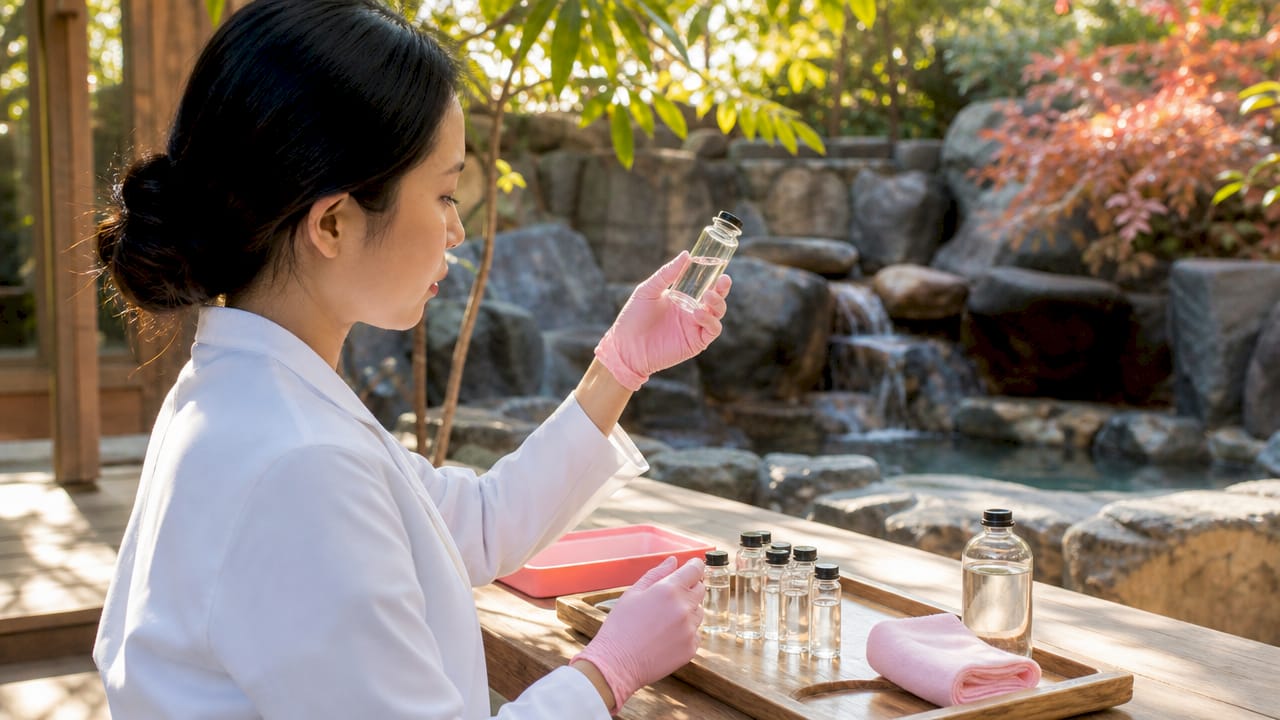
Pro Tip: When comparing onsen water sources, check the dominant ion first. Sulfate-dominant water suits oily or congested skin. Chloride-dominant water suits dry or dehydrated skin.
How does science validate the skin benefits of onsen water?
Clinical research has moved onsen water well beyond folk remedy status. Thermal spring waters now qualify as cosmeceutical ingredients, with peer-reviewed evidence supporting their use as adjunct treatments for psoriasis, eczema, and acne. The mechanisms include anti-inflammatory, antioxidant, and immunomodulatory activity at the cellular level.
“Thermal spring waters are complex mineral-microbial solutions whose therapeutic value arises from stable microbiomes that modulate skin immunity and barrier function. Their clinical application extends beyond hydration to active dermatological treatment.”
One finding that surprises most people is the role of microbial communities in onsen water. Non-pathogenic microbes in thermal waters interact with keratinocytes, the cells that form the skin’s outer barrier, through a mechanism called hydrobiome interaction. This modulates immune responses in the skin and supports barrier restoration in ways that mineral content alone cannot explain. The water is, in effect, a living solution.
The table below summarizes the key documented effects by mineral type:
| Mineral / Component | Primary Skin Effect | Documented Benefit |
|---|---|---|
| Sodium sulfate | Keratin softening | Gentle exfoliation, smoother texture |
| Sodium chloride | Moisture trapping | Sustained hydration post-bath |
| Bicarbonate | Vasodilation | Improved circulation, brightening |
| Thermal microbiome | Immunomodulation | Barrier repair, reduced inflammation |
| Alkaline pH (8.4) | Keratin loosening | Dead cell removal, softer skin surface |
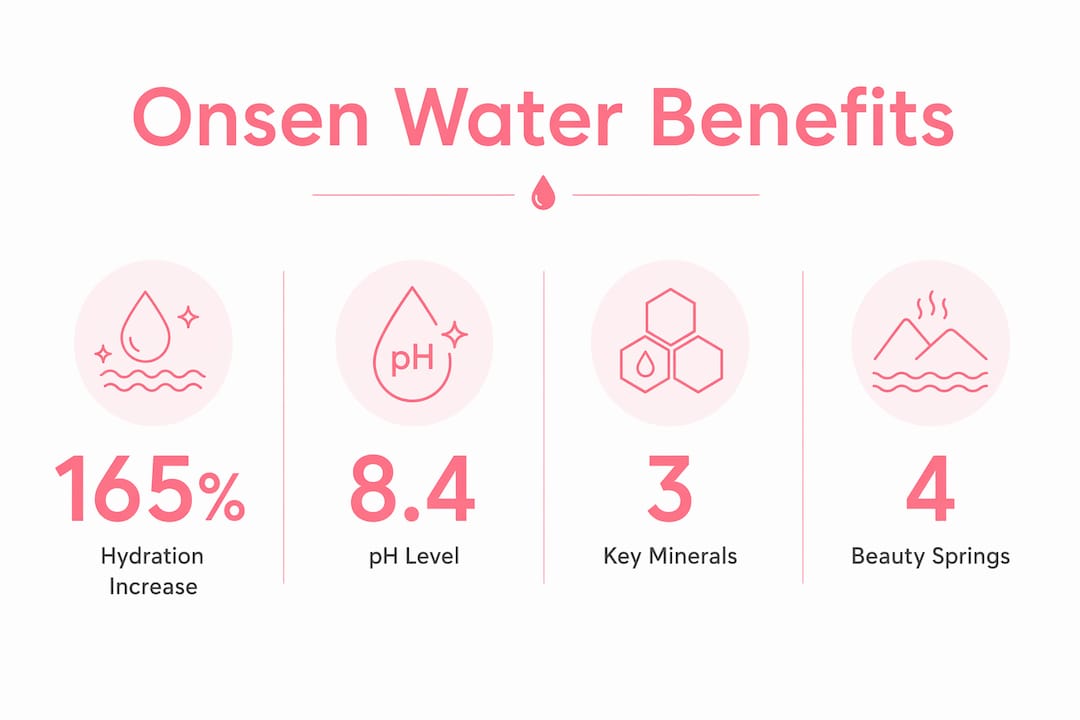
Beppu’s four beauty spring categories were developed through scientific classification, not marketing. Each category was validated for its specific effect on cell turnover and moisture retention. That level of rigor is rare in wellness, and it positions Japanese onsen research as a credible reference point for the broader skincare industry.
For those interested in Japanese anti-aging ingredients, the mineral compounds in onsen water overlap with several peer-reviewed actives already used in topical formulations.
What traditional bathing practices maximize onsen skincare benefits?
The method of bathing matters as much as the water itself. Japanese bathing culture has refined specific techniques over centuries, and modern dermatological research has confirmed why many of them work.
- Practice half-body bathing. Submerge only from the waist down. Half-body bathing limits heat exposure to the upper body, reducing the risk of post-bath moisture loss in dry skin while still delivering mineral benefits to the lower body.
- Sequence your soaks by water type. Bathing in acidic water first loosens and removes dead skin cells. Following with alkaline water soothes and seals the freshly exposed skin. This two-step sequence mirrors the logic of a chemical exfoliant followed by a barrier-repair treatment.
- Seal immediately after exiting. Apply a cream or lotion within two minutes of leaving the water. The skin’s surface is still warm and slightly swollen from mineral exposure, making it more receptive to topical ingredients. Waiting longer allows rapid evaporation to undo the hydration gained.
- Store collected onsen water carefully. Fresh onsen water contains no preservatives and is highly perishable. Use it within seven days without refrigeration, and discard it immediately if the color or smell changes.
- Limit soak duration. Extended soaking in highly alkaline water can over-soften the skin barrier. Fifteen to twenty minutes is the standard recommendation for most onsen types.
Pro Tip: If you are using bottled onsen water at home, mist it onto clean skin before applying your regular serum. The minerals prime the skin surface and improve absorption of the next layer.
How is onsen water integrated into modern Japanese skincare products?
The skincare industry recognized that most people cannot visit Tamatsukuri or Beppu regularly. The response was a category now called Onsen Cosmetics, which extracts or replicates key minerals from hot spring water for use in serums, lotions, and mists. These products bring the mineral-bath effect into a daily routine without requiring a trip to a spring.
J-Beauty’s broader philosophy aligns naturally with onsen water’s properties. Japanese skincare prioritizes water-based hydration, barrier repair, and minimal ingredient lists over aggressive actives. Onsen water fits that framework precisely because it works through gentle, cumulative mineral exposure rather than high-concentration chemical intervention.
Modern formulations inspired by onsen water commonly include:
- Mineral mists that deliver sulfate and bicarbonate ions topically, replicating the surface-softening effect of a soak.
- Fermented botanical extracts that complement mineral hydration by feeding the skin’s microbiome, mirroring the hydrobiome effects of natural thermal water.
- Ceramide-rich moisturizers applied immediately post-mist to seal the mineral layer and prevent transepidermal water loss.
- Essence-first layering where a water-based mineral essence is applied before heavier serums, following the traditional onsen logic of mineral priming before barrier sealing.
The most effective onsen-inspired routines keep the product count low. Two to four steps, each targeting hydration or barrier function, outperform complex multi-step routines that dilute the mineral benefit with competing actives. If you want to build this kind of routine from scratch, the guide on transitioning to Japanese skincare covers the practical steps without overwhelming you with product options.
Key Takeaways
Japanese hot spring water skincare delivers measurable skin benefits through specific mineral compositions, validated bathing techniques, and modern formulations that replicate onsen water’s effects in daily routines.
| Point | Details |
|---|---|
| Mineral composition drives results | Sulfate, chloride, and bicarbonate each target distinct skin functions: exfoliation, moisture retention, and circulation. |
| Science backs the benefits | Thermal spring waters are classified as cosmeceutical ingredients with clinical evidence for barrier repair and anti-inflammation. |
| Technique amplifies the effect | Half-body bathing and immediate post-bath moisturization significantly increase hydration gains from onsen soaking. |
| Onsen Cosmetics extend access | Mineral-extract serums and mists replicate spring water benefits for daily use outside of actual onsen visits. |
| Storage and safety matter | Collected onsen water is preservative-free and must be used within seven days to remain safe and effective. |
Why I think most people underestimate what onsen water actually does
Most skincare conversations treat water as a neutral carrier for actives. Onsen water disproves that assumption completely. The water itself is the active. After spending years studying Japanese beauty rituals and testing products that draw from this tradition, I keep coming back to one observation: the people who get the most from onsen water are the ones who respect the sequencing and the timing, not just the ingredient list.
The half-body bathing technique is a perfect example. It sounds almost too simple to matter. But the science behind it, limiting heat stress to preserve barrier integrity while still absorbing minerals, reflects a level of physiological thinking that most modern skincare brands do not apply. Japanese bathing culture arrived at this conclusion through centuries of observation before the research confirmed it.
The barrier-first philosophy that runs through J-Beauty is not a trend. It is a response to a genuine understanding that a compromised barrier makes every other skincare step less effective. Onsen water, whether experienced at a spring or through a well-formulated mineral mist, addresses the barrier directly. That is a more durable investment than chasing the next high-potency active.
One caution I always share: if you collect onsen water directly, treat it like fresh produce. It spoils. The mineral and microbial content that makes it valuable also makes it unstable. Use it quickly, store it properly, and do not assume that bottled versions labeled “onsen water” carry the same live microbiome. They often do not.
— Anni
Spyraverified’s skincare collection for mineral-inspired hydration
Spyraverified curates skincare products that reflect the same principles driving Japanese hot spring water’s effectiveness: barrier repair, sustained hydration, and minimal formulations that let active ingredients do their work.
The Spyraverified skincare collection brings together Japanese and Asian beauty brands that prioritize water-based hydration and skin barrier support, the same outcomes that onsen water delivers through mineral immersion. Each product in the collection is sourced directly from manufacturers, so you get authentic formulations rather than watered-down adaptations. If the science behind onsen water resonates with you, these products translate that philosophy into a daily routine you can actually sustain.
FAQ
What minerals in onsen water benefit skin the most?
Sulfate, chloride, and bicarbonate are the three primary minerals. Sulfate softens keratin for gentle exfoliation, chloride traps moisture, and bicarbonate improves circulation and brightening.
How much does onsen water increase skin hydration?
Soaking in Tamatsukuri onsen water increases skin moisture by approximately 165% compared to bathing in regular tap water, based on documented measurements from that spring.
Can I use onsen water in my skincare routine at home?
Yes. Collected onsen water can be misted onto clean skin before serums, but it must be used within seven days and discarded if the color or smell changes, as it contains no preservatives.
What are Onsen Cosmetics?
Onsen Cosmetics are skincare products that extract or replicate the mineral composition of hot spring water for use in serums, mists, and lotions, making the benefits of onsen bathing accessible in a daily routine.
Is onsen water suitable for sensitive or condition-prone skin?
Clinical research classifies thermal spring waters as adjunct treatments for psoriasis, eczema, and acne, with anti-inflammatory and immunomodulatory properties that support sensitive and condition-prone skin.
