

What Centella Asiatica Really Does for Your Skin
Centella asiatica, better known as cica, calms inflammation, strengthens the skin barrier, and speeds wound and scar recovery through triterpenoid compounds that act on collagen and inflammatory pathways. The clinical evidence is genuinely promising, though most trials remain small and formulation-dependent. For sensitive skin, post-procedure recovery, and everyday barrier support, it’s one of the more reliably tolerated actives in skincare.
TL;DR:
- Formulation technology, such as liposomes or nanoemulsions, significantly influences how much centella actually penetrates skin and delivers its benefits.
- The strongest clinical evidence supports centella’s rapid calming and anti-inflammatory effects, which show visible improvements within days.
- Its wound healing and scar support benefits are well-documented but occur slowly over weeks to months, depending on scar age and severity.
- Products should specify active triterpenoids like asiaticoside or madecassoside and use standardized extracts for proven efficacy.
- Patch testing remains essential to avoid irritation, especially for sensitive skin, as reactions are uncommon but possible.
Table of Contents
- What Are the Key Skin Benefits of Centella?
- What Compounds in Centella Actually Work on Skin?
- What Does Clinical Research Say About Centella for Skin?
- Why Does Formulation Matter More Than Concentration?
- How Should You Use Centella in Your Routine?
- Is Centella Safe? What Side Effects Should You Watch For?
- How Do You Choose a Good Centella Product?
- Who Verified This Information?
- Why Centella Deserves More Credit Than It Gets
- Where to Find Verified Centella Products Online
- Sources
What Are the Key Skin Benefits of Centella?
Cica earned its reputation the slow way, through decades of use in wound care before skincare brands ever put it in a serum. Its actual skin benefits break down into five distinct categories, each with a different mechanism and a different level of proof behind it.
Calming and reducing inflammation. This is where centella asiatica skincare has the clearest track record. The plant’s active compounds attenuate NF-κB signaling, a pathway that drives the release of inflammatory cytokines when skin is irritated, sunburned, or reactive. That’s a mechanistic way of saying it turns down the chemical alarm bells your skin sets off when something upsets it. Practically, this shows up as reduced redness and less stinging when skin is already compromised, which is why so many “sensitive skin” formulas lean on it.
Barrier repair and hydration. Centella supports the skin barrier by helping reduce transepidermal water loss, or TEWL, the rate at which moisture escapes through the outer skin layer. It also appears to encourage hyaluronic acid activity in the dermis, which plumps skin and improves how it holds water over time. The combined effect is skin that feels less tight and looks less dull within days of consistent use, not weeks.
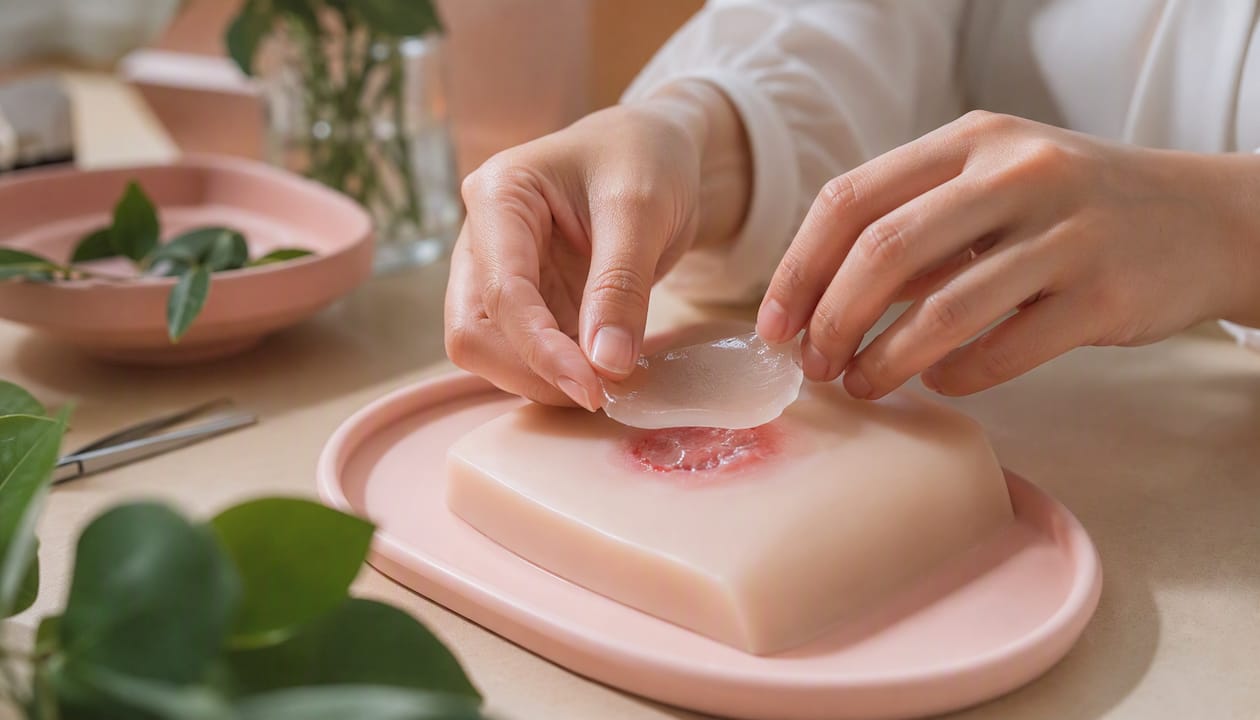
Wound healing and scar support. This is centella’s oldest and best-documented use. Its triterpenoids stimulate fibroblasts, the cells responsible for laying down new collagen, and studies on wound-healing formulations show faster re-epithelialization and increased collagen deposition in treated wounds. Realistic timelines matter here: visible scar improvement typically takes many weeks of consistent application, not days, and results vary by scar age and depth.
Anti-aging effects. Because collagen support and barrier hydration both feed into how skin looks over time, centella asiatica benefits extend into fine lines and elasticity. Human studies report improved elasticity and reduced wrinkle appearance with regular use, though the effect is gradual and modest compared to retinoids. Think of it as a support player, not a replacement, for stronger anti-aging actives.
Acne-related effects. Centella isn’t an acne treatment in the way benzoyl peroxide or salicylic acid are. Its role is calming the inflammation and redness that acne leaves behind, and some formulations show mild antimicrobial signaling that may help reactive, breakout-prone skin feel less angry. It works best layered alongside, not instead of, dedicated acne actives.
Here’s how the five benefits stack up against each other in terms of evidence and speed:
- Calming/anti-inflammatory: strongest and fastest-acting benefit, visible within days.
- Barrier hydration: strong evidence, noticeable within one to two weeks.
- Wound and scar support: well-documented but slow, typically weeks to months.
- Anti-aging: modest, gradual, best paired with other actives.
- Acne-related calming: supportive role only, not a standalone treatment.
What Compounds in Centella Actually Work on Skin?
The benefits above trace back to four specific molecules, and knowing them helps you read a product label with real understanding instead of guessing.
Asiaticoside and madecassoside are the two dominant triterpenoid saponins, glycoside-bound compounds that make up most of centella’s bioactivity. Asiatic acid and madecassic acid are their aglycone counterparts, meaning the same molecular skeleton without the sugar group attached, which changes how they behave once inside skin tissue. Alongside these, centella also contains polyphenols that contribute antioxidant activity.
These compounds don’t all do the same job. Each works through a distinct, well-characterized mechanism:
- NF-κB attenuation: asiaticoside and madecassoside dial down this inflammatory signaling pathway, which is the molecular basis for centella’s calming effect.
- TGF-β/Smad activation: this pathway stimulates fibroblasts to produce more collagen and elastin, the mechanism behind wound repair and firmness gains.
- Antioxidant and mitochondrial protection: the compounds help offset oxidative stress at the cellular level, which is tied to premature aging.
- Hyaluronic acid synthesis support: contributes to the hydration and plumping effects noticeable in clinical studies.
A pharmacological review of centella’s effects on skin maps these pathways in detail, showing that the ECM-building and anti-inflammatory actions run in parallel rather than one causing the other.
Here’s the catch that most product marketing skips: asiaticoside and madecassoside are relatively large molecules. Passive penetration through the outer skin layer is limited by molecular weight, meaning a chunk of what’s in a basic water-based extract may never reach the living tissue where it needs to act. This is precisely why formulation technology, not just ingredient concentration, determines how much of a real-world effect you actually get. It’s also why two products listing “Centella Asiatica Extract” at the top of the ingredient list can perform very differently.
What Does Clinical Research Say About Centella for Skin?
Human trials on centella consistently point in the same direction: measurable gains in hydration, barrier function, and scar appearance, with a solid safety margin. The honest caveat is that most of these trials are small, and study designs vary enough that pooling results into one clean number isn’t really possible.
Reported outcomes across studies include:
- Increased skin hydration, often measured via corneometry.
- Reduced TEWL, indicating better barrier retention of moisture.
- Improved skin elasticity on instrumental testing.
- Measurable improvements in scar parameters, including thickness and pigmentation, in wound and scar studies.
- Generally good tolerability with low rates of irritation across trial populations.
A comprehensive review of centella’s clinical evidence and delivery systems compiles these findings across multiple human studies, noting the same pattern repeats even when formulations differ.
That consistency is worth sitting with:
Repeated, independent trials using different centella formulations still land on the same cluster of outcomes: better hydration, lower water loss, improved elasticity, and favorable scar metrics. That kind of convergence across heterogeneous studies is a stronger signal than any single large trial could offer, even though no individual study is definitive on its own.
The limitations are real and worth naming plainly. Sample sizes in many trials run small, sometimes a few dozen participants. Formulations vary from water extracts to advanced delivery systems, making direct comparison difficult. Follow-up periods are often short, frequently a few weeks, which tells you little about long-term outcomes. And publication bias, where positive results get published more often than null ones, is a standing concern in botanical skincare research generally.
Where does that leave you? The evidence is strongest for hydration, barrier support, and general calming, benefits that show up quickly and across nearly every study design. It’s more preliminary for long-term anti-aging claims and for scar remodeling in older, more established scars, where the biology is harder to shift regardless of the active ingredient. Treat centella as a well-supported daily ingredient rather than a guaranteed fix for stubborn concerns.
Why Does Formulation Matter More Than Concentration?
Because asiaticoside and madecassoside are large molecules, the vehicle carrying them into skin often matters as much as how much of the compound is in the jar. A 2% centella serum in a poorly designed base can underperform a 0.5% version delivered through a smarter carrier system.
Several delivery technologies address this directly:
- Liposomes encapsulate the active compound in a lipid shell that mimics cell membranes, helping it slip past the skin’s outer barrier more efficiently.
- Phytosomes bind the plant compound to phosphatidylcholine, improving stability and absorption compared to a raw extract.
- Nanoemulsions break the active down into extremely fine droplets, increasing the surface area available for skin contact and uptake.
- Transfersomes are ultra-flexible lipid vesicles designed to squeeze through the skin’s tight junctions, often used when deeper delivery is the goal.
- Microneedling-assisted delivery physically creates micro-channels in the skin, used mainly in clinical and in-office settings rather than home routines.
A review of centella’s cosmeceutical applications confirms these advanced carriers materially improve dermal bioavailability compared with basic extracts, particularly for scar and wound applications where deeper penetration matters most.
For daily routine use, lightweight serums and gels formulated with these carriers handle calming and hydration well. Clinical-grade formats, like hydrogels and impregnated dressings, show up in the wound and scar studies specifically because they hold the active against skin for longer and at higher concentrations than a leave-on serum typically allows.
Pro Tip: If a product lists “liposomal,” “phytosome,” or “nano-encapsulated” centella rather than a plain extract, that’s usually a genuine signal of investment in delivery technology, not just marketing language. It’s one of the few claims on a label that actually predicts real-world performance.
How Should You Use Centella in Your Routine?
Centella slots in easily because it plays well with almost everything else in a routine, which is part of why dermatologists reach for it so often as a buffer ingredient.
Morning or night, it works either way. Apply it after cleansing and any water-based treatments, but before heavier creams or oils that could block absorption. A centella serum or essence goes on early in the routine; a centella balm or cream, which often contains barrier lipids like ceramides, works better as a later step or as your actual moisturizer.
Pairing with stronger actives is where centella earns its keep. Retinoids and AHA or BHA acids are effective but often irritating, especially early in use. Centella’s anti-inflammatory action makes it a natural buffer: apply it before a retinoid to build tolerance, or after acids to calm any resulting sensitivity. Layering considerations to keep in mind:
- With retinoids: apply centella first as a buffer layer, or mix a centella moisturizer directly with your retinol if irritation is a concern.
- With AHAs/BHAs: use centella afterward to soothe any tingling or redness from the acid.
- With vitamin C: the two combine without conflict, since centella’s calming action can offset vitamin C’s occasional stinging on sensitive skin.
Post-procedure use is where the evidence gets most practical. After microneedling, laser treatments, or chemical peels, dermatology sources recommend centella specifically because of its wound-healing and anti-inflammatory profile. Start once skin has stopped weeping or actively broken open, generally within the window your provider specifies, and always follow their timeline over a generic rule. If redness or swelling persists beyond what your provider described as normal, that’s a reason to call them, not to keep applying more product and waiting it out.
Is Centella Safe? What Side Effects Should You Watch For?
Centella has a strong safety record. Studies point to low systemic absorption through skin, meaning the compounds largely stay local rather than circulating through the body in meaningful amounts. Reported adverse effects are uncommon and mostly limited to occasional contact dermatitis in sensitive individuals.
Signs of a genuine reaction include persistent redness that doesn’t fade within an hour, itching, burning, small bumps, or swelling at the application site. Anyone with a known allergy to plants in the same family, or with broken, actively infected skin, should check with a dermatologist before applying any new botanical extract, centella included.
Here’s a simple patch-test method before adding a new centella product to your routine:
- Apply a small amount to your inner forearm or behind your ear.
- Leave it undisturbed for 24 to 48 hours without washing the area.
- Check for redness, itching, or bumps at multiple points during that window, not just once.
- If skin stays clear, introduce it to your face gradually, starting every other day.
- If irritation appears at any point, wash the area, stop use, and consult a dermatologist if symptoms persist or worsen.
Learning why patch testing matters before trying any new active, not just centella, is one habit that prevents most avoidable skin reactions.
How Do You Choose a Good Centella Product?
Reading the ingredient list is the single most useful skill here, more useful than any marketing claim on the front of the packaging.
Look for standardized extracts or the specific triterpenoids named directly, asiaticoside, madecassoside, asiatic acid, or madecassic acid, rather than a vague “Centella Asiatica Extract” sitting low on the ingredient list with no supporting data. Products that pair centella with hyaluronic acid for hydration or ceramides for barrier lipids tend to deliver more complete results than centella alone, since these ingredients work through complementary mechanisms rather than duplicating the same effect.
Match the format to your actual goal:
- Balm or cream: best for barrier repair and dry, compromised skin that needs occlusion.
- Hydrogel or impregnated dressing: the format used in wound and scar studies, ideal for active healing needs.
- Serum: best for daily calming and lightweight hydration layered under other products.
Be skeptical of products that lean entirely on the word “extract” without any standardization percentage or named active compound. A short, transparent ingredient list with clear centella positioning near the top tells you more than a long list burying it in the middle. Third-party testing or clear sourcing information adds another layer of confidence that what’s on the label matches what’s in the bottle. If you’re building out a broader routine, barrier-first serum picks offer a useful next stop for comparing formats side by side.
Who Verified This Information?
This article was written by Anni, drawing on peer-reviewed pharmacological reviews, clinical trial data, and regulatory assessments cited throughout.
Spyraverified sources its skincare catalog directly from partnered Japanese and Asian manufacturers, with products verified through community testing before they reach the storefront. That direct-sourcing model matters for an ingredient like centella, where formulation quality, not just the presence of the extract, determines whether a product actually delivers the benefits described in clinical literature. Rather than relying on secondhand distributors, Spyraverified works to confirm authenticity and formulation integrity at the source, which gives shoppers a more reliable read on what they’re actually applying to their skin. For an ingredient this dependent on delivery technology, sourcing transparency isn’t a small detail.
Why Centella Deserves More Credit Than It Gets
Centella suffers from an image problem in skincare circles: it’s often filed under “gentle” or “beginner-friendly,” as if that means unremarkable. The mechanistic research tells a different story. Few botanical ingredients have this much overlapping evidence across inflammation, collagen synthesis, and barrier function at once.
What conventional advice gets wrong is treating centella as interchangeable with panthenol or other soothing agents. They’re not the same thing. Centella vs panthenol isn’t really a competition, since panthenol hydrates and softens while centella’s triterpenoids actively modulate inflammatory and collagen pathways, a meaningfully different mechanism. Comparing centella vs madecassoside is also a category error; madecassoside is one of centella’s own active compounds, not a separate rival ingredient.
If I had to prioritize one thing for readers, it’s this: stop judging centella products by scent or texture and start reading for named triterpenoids and delivery technology. That’s where the real difference between a mediocre product and an effective one lives, and it’s the detail most shoppers skip entirely.
— Anni
Where to Find Verified Centella Products Online
Reading the science is one thing. Finding a centella product where the formulation actually matches the label is another problem entirely, and it’s the exact gap Spyraverified was built to close. Rather than guessing whether an imported serum uses standardized extract or an advanced delivery system, Spyraverified sources directly from partnered Asian and Japanese manufacturers and verifies products through community testing before they ever reach a customer’s cart.

That direct-sourcing model matters most for ingredients like centella, where formulation quality determines whether you get real barrier repair or just a soothing scent. If you’re ready to build a routine around centella and complementary actives like ceramides or hyaluronic acid, the skincare collection is a solid place to start comparing formats, from lightweight serums to richer barrier creams, with sourcing transparency built into every listing.
Sources
For readers who want to go deeper than a single blog post allows, these sources cover the science and regulatory history behind centella in more detail:
- Centella asiatica (L.) Urb. in skin health and cosmeceuticals: mechanisms, clinical evidence, and advanced delivery systems
- Pharmacological Effects of Centella asiatica on Skin Diseases: Evidence and Possible Mechanisms
- Skin Care Benefits of Centella Asiatica
