

What Does Niacinamide Do for Your Skin?
Niacinamide is defined as a water-soluble form of vitamin B3 that works directly at the cellular level to improve skin health. Understanding what niacinamide does for skin means recognizing it as one of the few ingredients with multi-action clinical evidence across barrier repair, pigmentation, oil control, and aging. Inside skin cells, it converts to NAD+ and NADP+ coenzymes, which fuel DNA repair and cellular energy production. That cellular activity explains why niacinamide addresses so many different skin concerns at once, rather than targeting just one problem. No other single ingredient in mainstream skincare matches that breadth of function at such a low irritation risk.
How does niacinamide improve skin barrier and hydration?
Niacinamide strengthens the skin barrier by stimulating ceramide production and reducing transepidermal water loss. Ceramides are the lipid molecules that hold skin cells together, and when their levels drop, skin becomes dry, reactive, and prone to irritation. Niacinamide increases ceramide levels and visibly improves hydration, which is why dermatologists recommend it for people with eczema, rosacea, and sensitive skin.
The barrier benefits create a compounding effect. When your skin holds moisture better, it tolerates other active ingredients like retinol and exfoliating acids more easily. People who previously found retinol too irritating often report better tolerance after adding niacinamide to their routine. That is not coincidence. A stronger barrier simply handles chemical stress better.
Here is what a repaired barrier looks like in practice:
- Skin feels less tight after cleansing
- Redness and blotchiness calm down within two to four weeks
- Moisturizers absorb more evenly instead of sitting on the surface
- Sensitivity to wind, cold, and pollution decreases noticeably
Pro Tip: Apply niacinamide serum immediately after cleansing on damp skin. The slight moisture helps it absorb faster and boosts its barrier-repairing effect before you layer anything else.
In what ways does niacinamide minimize pores and regulate oil?
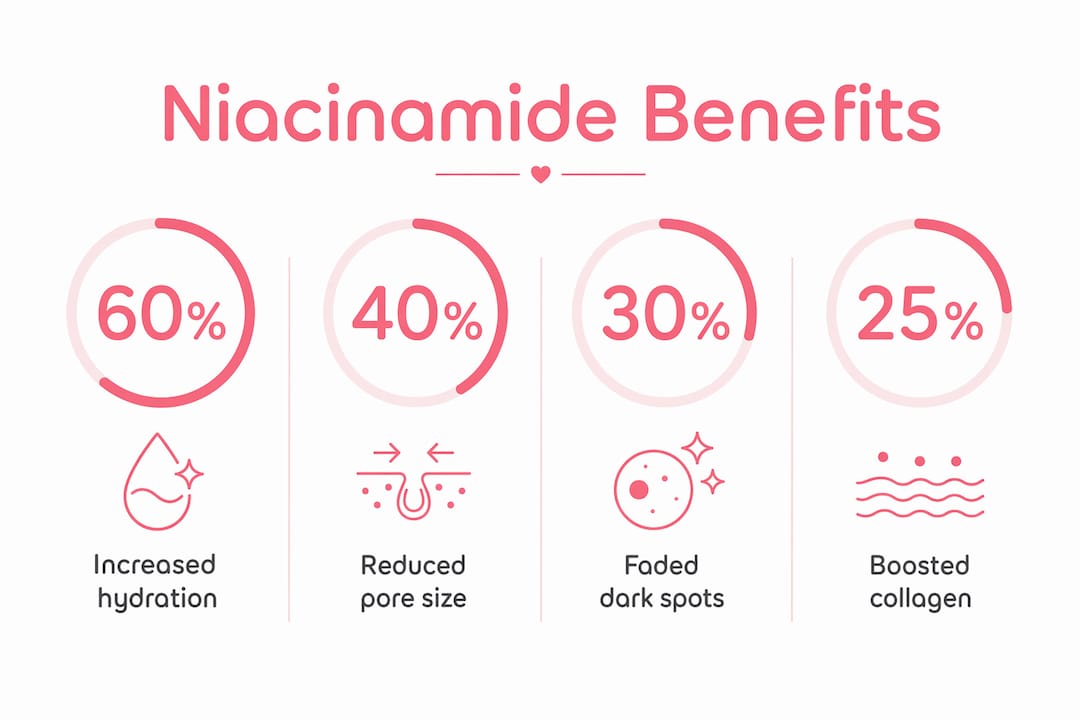
Niacinamide reduces the visible size of pores through two distinct mechanisms: it speeds up cell turnover to keep pores clear of debris, and it improves skin elasticity so pores appear tighter. Enlarged pores are often a sign of stretched, weakened skin around the opening. Firmer skin physically compresses that opening, making pores look smaller even when their actual diameter has not changed.
Oil regulation is the second major mechanism. Niacinamide regulates sebaceous gland activity and reduces the excess sebum that clogs pores and triggers breakouts. This makes it particularly effective for people with combination or oily skin types who struggle with midday shine and congestion.
The acne connection goes deeper than oil alone. Niacinamide’s anti-inflammatory properties reduce the redness and swelling around active breakouts, which shortens their visible lifespan. For people managing acne-prone skin, this combination of oil control and inflammation reduction is genuinely useful. A well-structured acne-prone skincare routine that includes niacinamide addresses both the cause and the visible symptoms.
Key pore and oil benefits at a glance:
- Reduces excess sebum without stripping the skin dry
- Keeps pores clear by accelerating surface cell renewal
- Improves skin elasticity around pore openings
- Calms inflammation around active breakouts
- Suitable for daily use without building tolerance issues
What evidence supports niacinamide for fading dark spots?
Niacinamide fades dark spots by blocking the transfer of melanin from pigment-producing cells to surface skin cells. Specifically, it suppresses melanosome transfer by 35–68%, which is a clinically significant range. Melanosomes are the tiny packets that carry pigment from melanocytes to keratinocytes. When that transfer is interrupted, new dark spots do not form and existing ones gradually fade as skin renews itself.
A 2005 dermatological study in 50 women using 5% niacinamide over 12 weeks showed measurable improvements in hyperpigmentation, skin tone, texture, fine lines, and wrinkles. That single study is frequently cited because it tested multiple outcomes simultaneously, confirming that niacinamide works across several concerns at the same concentration.
| Concern | Niacinamide’s mechanism | Typical timeline |
|---|---|---|
| Post-inflammatory hyperpigmentation | Blocks melanosome transfer | 8–12 weeks |
| Melasma | Reduces melanin synthesis and transfer | 12–16 weeks |
| Sun spots | Inhibits pigment delivery to surface cells | 8–12 weeks |
| Uneven skin tone | Accelerates cell turnover | 4–8 weeks |
Niacinamide is also one of the few brightening ingredients considered safe during pregnancy, which makes it a practical alternative to hydroquinone for people who cannot use stronger depigmenting agents. It works more gradually than hydroquinone, but its safety profile and lack of irritation make it the better long-term choice for most people.
Pro Tip: Pair niacinamide with a broad-spectrum SPF 30 or higher every morning. Sun exposure actively reverses pigmentation progress, so sunscreen is not optional when you are treating dark spots.
How does niacinamide reduce fine lines and wrinkles?
Niacinamide reduces fine lines by boosting collagen production and protecting existing collagen from oxidative damage. Collagen is the structural protein that keeps skin firm and plump, and its production declines steadily after age 25. Niacinamide supports collagen synthesis directly while also acting as an antioxidant that neutralizes free radicals from UV exposure and pollution.
The same 12-week study that documented pigmentation improvements also recorded visible reductions in fine lines and wrinkles at 5% concentration. That consistency across multiple outcomes matters. It means you do not need a separate anti-aging product if niacinamide is already in your routine.
Anti-aging benefits worth knowing:
- Stimulates collagen and elastin production for firmer skin
- Neutralizes free radicals that break down skin structure
- Improves skin elasticity, which softens the appearance of lines
- Works synergistically with retinol without increasing irritation
Consistent use is the key variable here. Niacinamide does not produce dramatic overnight results. People who see the most improvement use it daily for at least eight weeks before evaluating results. Combining it with retinol in a well-layered skincare routine amplifies both ingredients’ anti-aging effects without the irritation that retinol alone can cause.
What are common misconceptions about niacinamide safety?
The most persistent myth in skincare is that niacinamide and vitamin C cannot be used together. This claim originated from older lab studies conducted at extreme pH levels that do not reflect real-world formulations. Modern formulations buffer this safely at pH 4.5–6, and the two ingredients actually complement each other well. Vitamin C brightens through antioxidant activity while niacinamide blocks pigment transfer. Using both gives you two different brightening mechanisms working simultaneously. For a fuller picture of how vitamin C fits into a routine, the role of vitamin C in skin health is worth reading alongside this.
Concentration matters more than most people realize. At 2–5%, niacinamide is well tolerated by virtually all skin types, including sensitive skin. Higher concentrations of 10% or more cause temporary irritation in 5–10% of people, typically resolving with continued use. Starting at a lower concentration and building up is the sensible approach for anyone new to the ingredient.
One more fact worth knowing: niacinamide does not cause skin flushing the way oral niacin does. The flushing response is a vascular reaction specific to niacin, not niacinamide. People who avoid niacinamide because of this concern are missing out unnecessarily.
| Myth | Reality |
|---|---|
| Cannot mix with vitamin C | Safe at pH 4.5–6 in modern formulas |
| Causes skin flushing | No flushing; that is a niacin-specific reaction |
| Only for oily skin | Effective across all skin types |
| Works immediately | Requires 8–12 weeks of consistent use |
Pro Tip: If you experience mild tingling when starting niacinamide, apply it over a light moisturizer instead of directly on bare skin. This slows absorption slightly and reduces the chance of irritation without reducing effectiveness.
Key Takeaways
Niacinamide is the most versatile single ingredient in skincare because it repairs the barrier, fades pigmentation, controls oil, and reduces fine lines at the same concentration and without significant irritation risk.
| Point | Details |
|---|---|
| Barrier and hydration | Niacinamide increases ceramide production and reduces water loss for stronger, calmer skin. |
| Pore and oil control | It regulates sebaceous glands and improves elasticity, making pores appear smaller and skin less oily. |
| Dark spot fading | It suppresses melanosome transfer by 35–68%, gradually evening skin tone over 8–16 weeks. |
| Anti-aging support | It boosts collagen production and neutralizes free radicals to reduce fine lines with consistent use. |
| Safety and compatibility | At 2–5%, it suits all skin types and pairs safely with vitamin C and retinol in modern formulas. |
Niacinamide in practice: what I actually think
I have watched niacinamide go from a niche ingredient in Japanese skincare to a staple in nearly every serious routine, and I think the hype is mostly justified. What I find genuinely impressive is not any single benefit but the fact that it delivers results across multiple concerns without forcing you to choose between them.
What I tell people who are new to it: do not start with a 10% concentration just because it is available. A 5% formula used consistently for 12 weeks will outperform a 10% formula used erratically. Skin does not respond to intensity. It responds to consistency.
The combination I keep coming back to is niacinamide in the morning paired with retinol at night. Niacinamide calms the inflammation that retinol can trigger, and retinol accelerates the cell turnover that makes niacinamide’s brightening effects more visible. They are genuinely complementary, not competing. A structured Japanese skincare routine often builds this kind of layered logic in naturally, which is part of why those routines tend to produce visible results.
One thing I push back on: treating niacinamide as a standalone solution. It is not. Niacinamide works best as part of a multi-ingredient regimen where each product supports the others. If your routine is otherwise neglected, niacinamide will underperform. Think of it as the reliable foundation that makes everything else work better, not the single ingredient that fixes everything on its own.
— Anni
Niacinamide products worth adding to your routine
Knowing the science behind niacinamide is only half the equation. The other half is finding formulations that actually deliver the right concentration in a stable, well-formulated base.

Spyraverified curates skincare from Japanese and Asian brands that have been using niacinamide in clinically informed formulations long before it became a Western trend. These brands often combine niacinamide with complementary actives like ceramides, fermented extracts, and peptides for results that go beyond what a single-ingredient serum can achieve. Browse the full skincare collection at Spyraverified to find niacinamide-forward products suited to your specific skin concerns, whether that is brightening, barrier repair, or oil control.
FAQ
What does niacinamide do for skin?
Niacinamide strengthens the skin barrier, fades dark spots, reduces pore appearance, regulates oil production, and diminishes fine lines. It works by converting to NAD+ coenzymes that support cellular repair and energy production.
Is niacinamide good for acne-prone skin?
Yes. Niacinamide regulates sebaceous gland activity and reduces inflammation, which controls excess oil and calms active breakouts without drying the skin.
Can niacinamide be used with vitamin C?
Yes. The concern about mixing them is outdated. Modern formulations at pH 4.5–6 allow both ingredients to work safely and effectively together.
How long does niacinamide take to show results?
Most people see improvements in hydration and redness within two to four weeks. Pigmentation and fine line improvements typically require 8–12 weeks of daily use.
What concentration of niacinamide is best?
A concentration of 2–5% is well tolerated by all skin types and delivers the full range of benefits. Concentrations above 10% may cause temporary irritation in a small percentage of people.
