

Silicones in Haircare: 4 Step Routine to Avoid Buildup
Silicones are not inherently good or bad. They’re a tool, and like any tool, the results depend on which one you pick and how you use it. Coarse, dry, or frizz-prone hair tends to see the biggest payoff in shine and manageability, while fine, low-porosity, or scalp-sensitive hair is more likely to feel weighed down or irritated. What matters most is the specific silicone’s solubility and how often you’re applying and washing it out.
TL;DR:
- Water-soluble silicones with PEG or PPG in their name tend to rinse out more easily, but some still deposit more than expected depending on formulation.
- Non-water-soluble silicones layer over time, causing buildup that can weigh down fine or low-porosity hair and lead to dullness or scalp issues if not regularly clarified.
- Applying silicones mainly to mid-lengths and ends, along with regular sulfate-based clarifying shampoos, helps manage buildup without sacrificing the benefits of shine and frizz control.
- Coarse, damaged, or chemically treated hair gains the most benefit from silicones, while fine or sensitive scalps are more prone to adverse effects like heaviness and irritation.
- The real concern is not silicones themselves but their accumulation, which makes choosing the right type and clarifying routine essential for healthy, manageable hair.
Table of Contents
- What Is Silicone in Haircare, and What Types Show Up in Products?
- The Real Benefits: Shine, Frizz Control, and Heat Protection
- When Silicones Backfire: Buildup, Weight, and Scalp Issues
- How to Spot Water-Soluble Silicones on an Ingredient Label
- Using Silicones Without Overdoing It
- What to Use Instead of Silicone
- Spyra Verified’s Take on Choosing the Right Formula
- Find Formulas Built Around Your Hair’s Actual Needs
- The Perspective Nobody Talks About: Silicone Guilt Is Wasted Energy
- Sources
What Is Silicone in Haircare, and What Types Show Up in Products?
Silicones are siloxane-based polymers, meaning their backbone is built from silicon and oxygen instead of the carbon chains found in most conditioning agents. Chemists use them as film-formers and emollients because they coat the hair shaft evenly without soaking into it. That surface behavior is what separates silicones from oils, which tend to penetrate or sit more unevenly.
Haircare formulators generally sort silicones into three functional groups:
- Volatile or evaporative silicones like cyclomethicone, which spread easily during application and then evaporate, leaving behind minimal residue.
- Water-soluble silicones, usually recognizable by a PEG or PPG prefix or suffix, which rinse away more readily than their non-soluble cousins.
- Non-water-soluble silicones, including dimethicone and dimethiconol, which build a more durable film that resists washing out.
Amodimethicone deserves its own mention. It’s engineered to bind selectively to damaged sections of the hair shaft rather than coating hair uniformly, which is why you’ll see it marketed in repair-focused formulas. Healthline’s breakdown of silicone chemistry notes this targeted behavior as one reason amodimethicone shows up in treatments for chemically processed or heat-damaged hair.
The Real Benefits: Shine, Frizz Control, and Heat Protection
The film silicones form over each strand does something simple but effective: it smooths the cuticle and cuts down on friction between hair fibers. Less friction means less frizz, more light reflection, and hair that feels slicker to the touch almost immediately after application.
That mechanism translates into a handful of concrete wins:
- Reduced frizz and flyaways, especially in humid conditions.
- Visible shine from a smoother, more light-reflective surface.
- A protective barrier during blow-drying or flat-ironing that limits direct heat exposure.
- Easier detangling, since the film reduces the snagging that causes breakage during brushing.
Reviewers at Wirecutter have gone as far as calling silicone one of their favorite haircare ingredients, arguing that going silicone-free by default only makes sense if you have a specific reason to avoid it. Coarse, dry, and chemically treated hair tends to see the most dramatic improvement, since these textures usually lack the natural lipid layer that fine or virgin hair retains.
When Silicones Backfire: Buildup, Weight, and Scalp Issues
Non-water-soluble silicones don’t disappear after one wash. They layer with each application, and if your shampoo isn’t strong enough to break that film down, the coating thickens over time. The PMC review on silicones in hair care points out that this accumulation is exactly why water-insoluble variants sometimes need stronger surfactants for full removal.
Buildup shows up in recognizable ways:
- Hair that feels limp or weighed down despite using lightweight products.
- A dull, flat appearance instead of the shine silicones are supposed to deliver.
- Product that seems to “sit” on strands rather than absorb.
- Occasional scalp symptoms like itching, flaking, or clogged follicles if silicone-heavy products migrate to the scalp.
Dermatologists and cosmetic chemists interviewed by Allure generally agree silicones are safe for everyday use, but they flag buildup as the real complaint, not toxicity. Fine or low-porosity hair is more sensitive to this weight problem, since it has less natural volume to spare. Coarse or thick hair, by contrast, can usually tolerate heavier, non-soluble silicones without looking overloaded.
Pro Tip: If your hair looks great on wash day but progressively duller by day three or four, that’s a buildup pattern, not a product failure. Try alternating with a clarifying shampoo before switching formulas entirely.
How to Spot Water-Soluble Silicones on an Ingredient Label
Reading an ingredient list doesn’t require a chemistry degree, just a pattern to watch for. Water-soluble silicones almost always carry a PEG or PPG marker somewhere in the name, like PEG-8 dimethicone or dimethicone PEG-8 phosphate.
If you’re trying to minimize buildup, these are the non-water-soluble names worth watching for on the label:
- Dimethicone
- Dimethiconol
- Phenyl trimethicone
- Cyclopentasiloxane
- Cetearyl methicone
Here’s the catch that most ingredient guides skip: “water-soluble” describes the raw ingredient in isolation, not necessarily how it behaves once it’s blended into a finished formula and deposited on hair. Some PEG-modified silicones still bind to the hair fiber more than their solubility rating suggests, a formulation quirk sometimes called substantivity. Treat the PEG/PPG rule as a strong starting filter, not an absolute guarantee of easy rinsing.
Using Silicones Without Overdoing It
Placement matters as much as product choice. Apply silicone-based conditioners, serums, and stylers to the mid-lengths and ends, and keep them off the scalp unless the label specifically states it’s scalp-safe. This alone prevents most of the follicle-clogging complaints tied to silicone use.
A simple removal routine keeps benefits intact without letting residue take over:
- Use a sulfate-based clarifying shampoo every two to four weeks if you use silicone products daily; stretch to monthly if you use them a few times a week.
- Follow immediately with a hydrating conditioner, since clarifying shampoos strip moisture along with buildup.
- Return to your regular sulfate-free shampoo for the days in between.
- Watch for the dullness or limpness signs mentioned earlier as your cue to clarify sooner.
Fine hair typically does best sticking to volatile or water-soluble silicones and clarifying more often. Coarse or curly hair can usually stretch clarifying sessions further since it tolerates heavier buildup before looking weighed down.
Pro Tip: Sulfate-free shampoos feel gentler day to day, but they’re not built to fully remove non-soluble silicones. Keep one sulfate-based clarifying shampoo in rotation even if your everyday routine is sulfate-free.
What to Use Instead of Silicone
Plant oils like argan and jojoba deliver real slip and shine without the buildup risk, but they fall short on heat protection compared to a dedicated silicone-based formula. If you’re flat-ironing or blow-drying regularly, an oil alone usually isn’t enough of a barrier.
Silicone-free synthetic film-formers and newer lightweight polymers split the difference, offering some of the smoothing effect without the same accumulation pattern. Women’s Health’s rundown of silicone alternatives notes that these substitutes work reasonably well for frizz and shine but still lag behind silicones on heat defense.
A silicone-free approach makes the most sense when:
- Your hair is fine or low-porosity and prone to feeling weighed down.
- You rarely use heat styling tools.
- You’re managing a sensitive or acne-prone scalp.
Compensate with a dedicated leave-in conditioner and a heat protectant formulated around alternative polymers rather than assuming any silicone-free product covers all three jobs at once.
Spyra Verified’s Take on Choosing the Right Formula
Ingredient transparency is the whole point of curation. Some retailers focus on sourcing formulations where solubility and hair-type fit are documented, helping you avoid guessing whether a “silicone-free” claim on a label holds up under a real ingredient list.
That filtering does the tedious work for you: matching lightweight or water-soluble silicones to the hair types that benefit most, and flagging which products play nicely with a regular clarifying routine. Explore the Korean haircare treatments roundup for more on how these formulation choices show up across the region’s product innovations.
Find Formulas Built Around Your Hair’s Actual Needs
Guessing your way through ingredient lists gets old fast, especially when half the silicone names on a label look identical at first glance. Spyra Verified’s Hair Care collection is built for exactly this problem: products with clear labeling on solubility, hair-type fit, and whether a formula plays well with a clarifying routine.
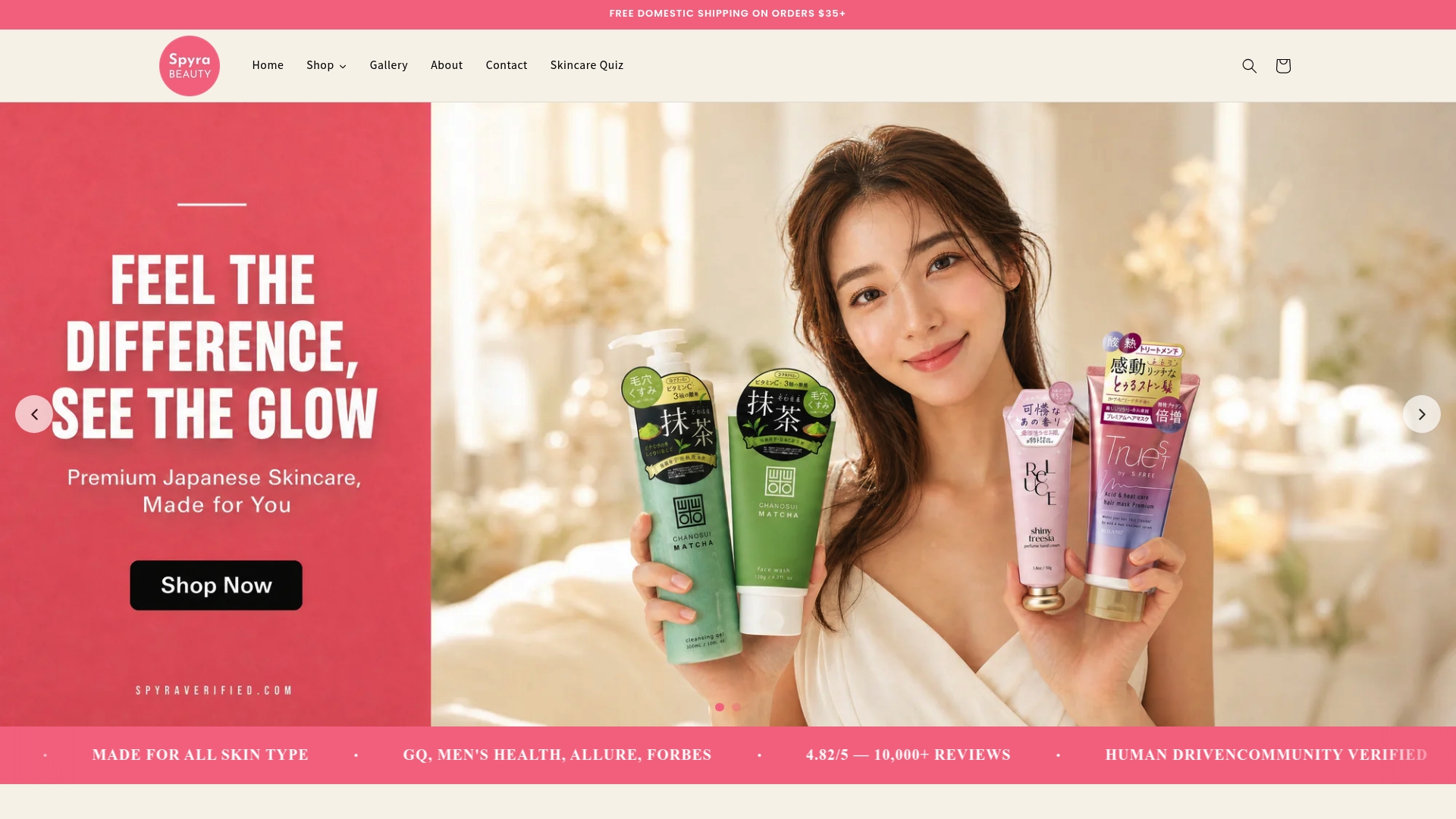
You’ll find options ranging from lightweight, water-soluble formulas suited to fine or low-porosity hair to heavier, protective silicones for coarse or chemically treated strands. If heat protection and detangling are the priority, the Acid & Heat Repair Conditioner pairs targeted silicones with repair-focused ingredients rather than a generic coating agent. Browse the collection, match a formula to your hair’s texture and porosity, and check out when you’re ready to stop guessing at ingredient labels.
The Perspective Nobody Talks About: Silicone Guilt Is Wasted Energy
Most of the anxiety around silicones has nothing to do with the ingredient and everything to do with marketing that turned “silicone-free” into a virtue signal rather than a hair-type decision. That framing did real damage. People with coarse, damaged, or chemically treated hair started avoiding the exact ingredient category built to help them, chasing a purity standard that made more sense for fine, low-porosity hair than for their own.
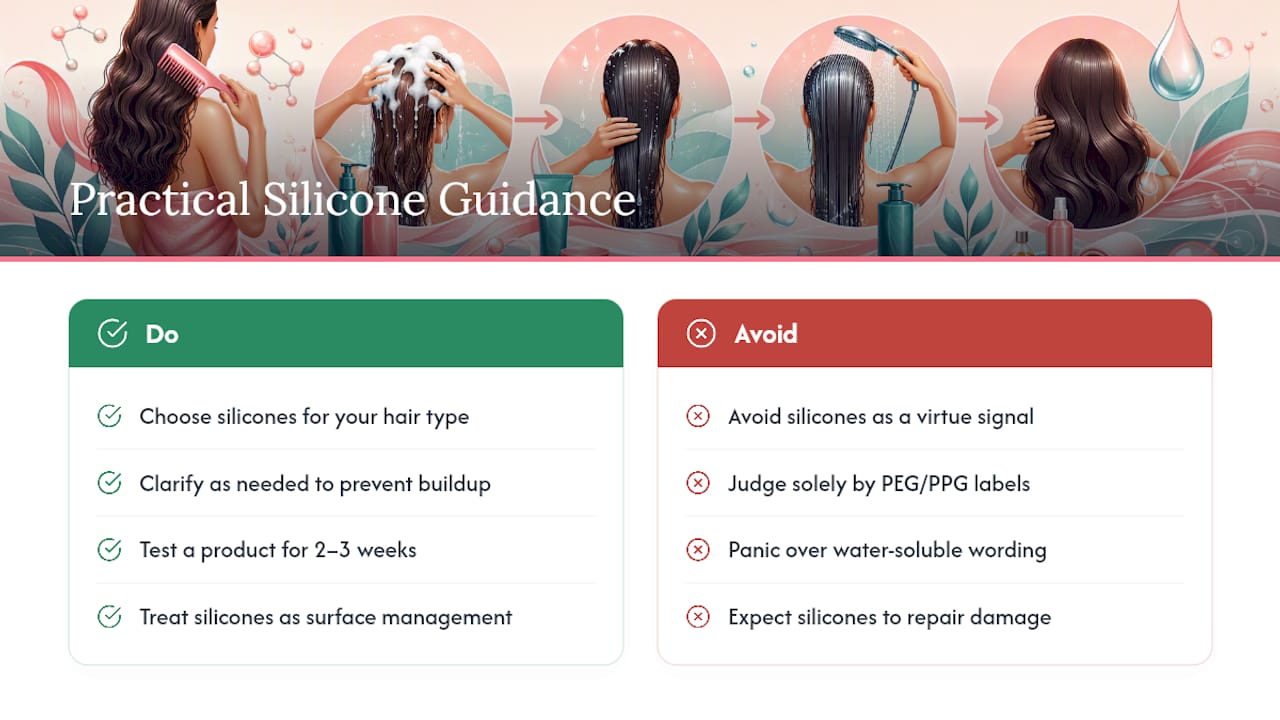
The more useful question was never “silicone or no silicone.” It’s “which silicone, and how often am I clarifying.” A dermatologist quoted in coverage of the topic once compared silicones to a raincoat: protective, not suffocating, and not something that undoes damage that’s already happened. Once a hair fiber is compromised, nothing rinses it back to its original state. Silicones just manage the surface you’re stuck with, which is a legitimate job, not a consolation prize.
The bigger blind spot is substantivity. People memorize the PEG/PPG rule, feel confident they’ve solved the buildup problem, and never learn that some water-soluble silicones still deposit more than their name implies. That’s not a reason to panic over every label. It’s a reason to judge a product by how your hair actually behaves over two or three weeks, not by a single ingredient classification.
— Anni
Sources
- Why Is Silicone Bad for Hair? | Healthline
- PMC article on silicones in hair care (review)
- Are Silicones Really That Bad for Your Hair? | Allure
- Silicone May Be One of Our Favorite Hair-Care Ingredients | Wirecutter
- Are Silicones Bad for Your Hair? Experts Explain the Truth | Women’s Health
