


How to Identify Skin Type Using Asian Methods
Skin type identification is the process of classifying your skin’s natural behavior, oil production, and moisture balance without any products interfering. The most reliable way to identify skin type using Asian methods is the Bare Face Test, a gold-standard technique used across Korean and Japanese skincare communities. Alongside it, the Blotting Sheet Test offers a faster alternative for busy routines. Both methods draw from Asian skincare philosophy, which treats skin type not as a fixed label but as a starting point for building a personalized skincare routine. Starting with clean, product-free skin is non-negotiable for accurate results.
What are the Asian skin type classification systems?
Asian skincare recognizes five primary skin types: normal, oily, dry, combination, and sensitive. These categories form the foundation of most Korean and Japanese beauty routines. Each type responds differently to humidity, temperature, and product ingredients, which is why classification matters before you buy anything.
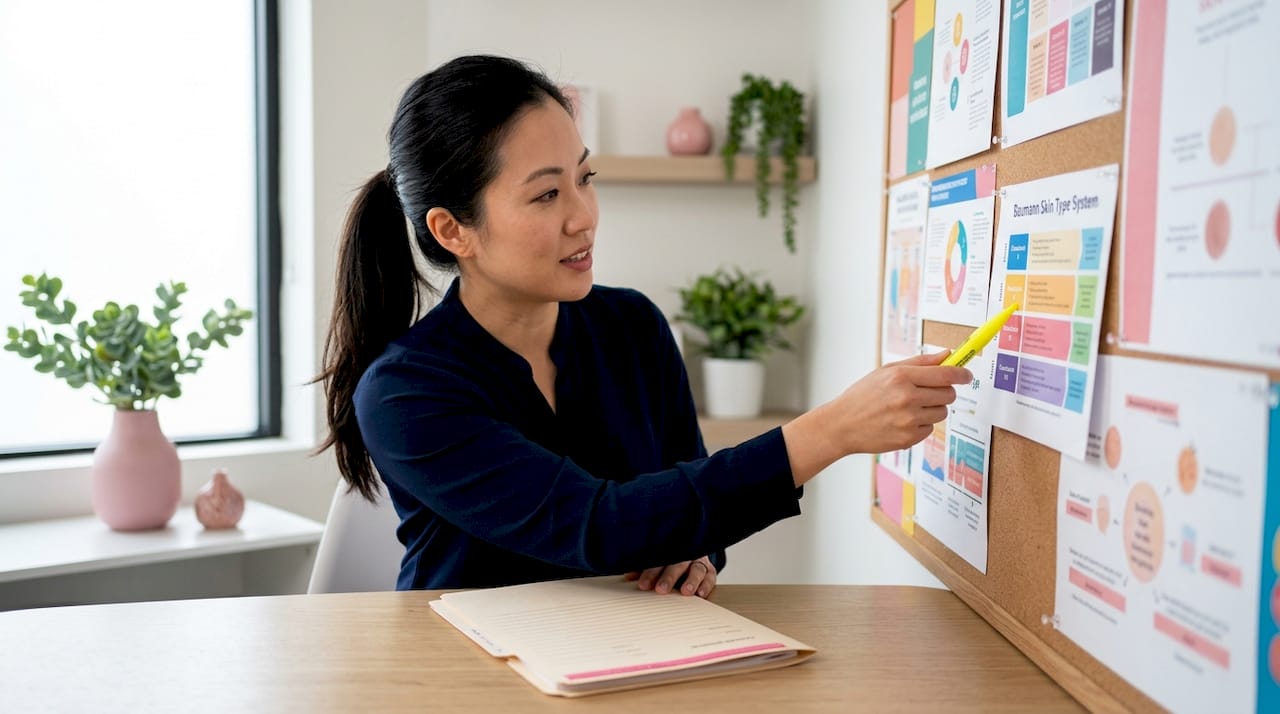
The more advanced approach comes from the Baumann Skin Type System, widely used in Korean clinical dermatology. It classifies skin into 16 distinct profiles based on four parameters: Oily or Dry, Sensitive or Resistant, Pigmented or Non-Pigmented, and Wrinkled or Tight. That level of detail means two people with “oily skin” can have completely different needs depending on their sensitivity and pigmentation tendencies.
Asian skin also falls along the Fitzpatrick phototype scale. Asian skin typically ranges from Fitzpatrick types III to VI depending on ethnicity, with Chinese skin commonly at III to IV, Japanese skin at V, and South Asian skin at VI. This matters because higher Fitzpatrick types are more prone to post-inflammatory hyperpigmentation, which affects how you treat breakouts and sun damage.
Traditional vs. Baumann classification
| Classification | Approach | Best for |
|---|---|---|
| Traditional 5-type system | Oily, dry, normal, combination, sensitive | Quick daily assessment |
| Baumann Skin Type System | 16 profiles across 4 parameters | Clinical or detailed routine building |
| Fitzpatrick phototype scale | Skin tone and UV response | Sun protection and pigmentation care |
The traditional system works well for choosing everyday products. The Baumann system is better when you are troubleshooting persistent skin issues or building a multi-step routine from scratch.
How to perform the Bare Face Test
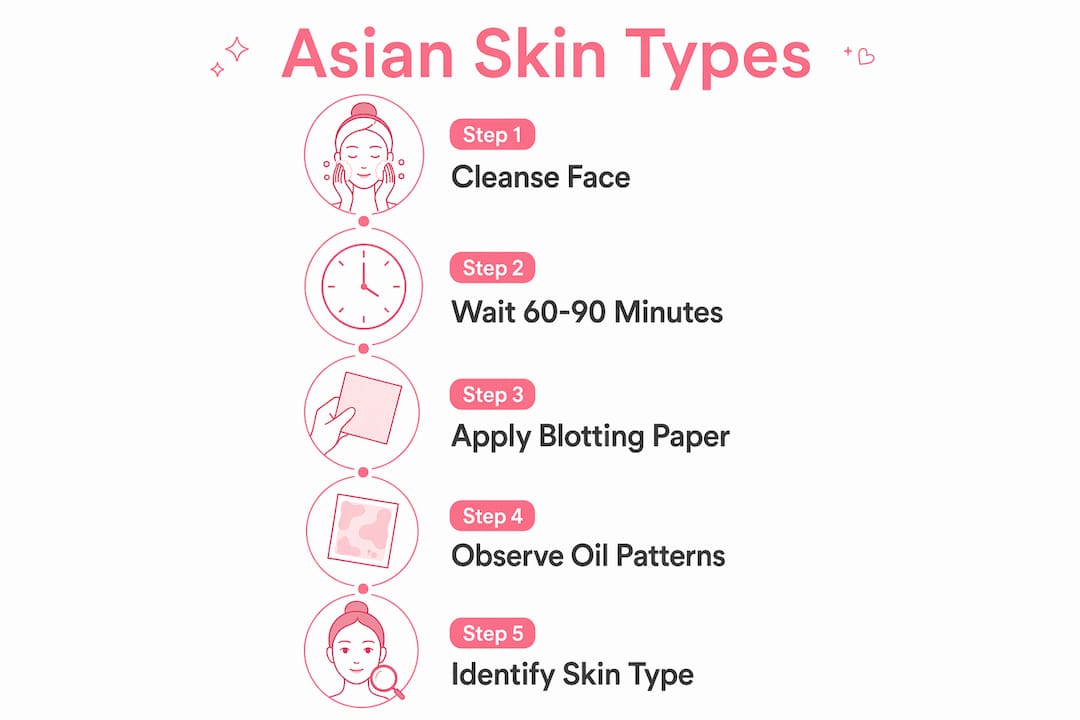
The Bare Face Test is the gold standard for at-home skin type identification in Asian skincare. It requires a 60–90 minute wait after cleansing with no product use to deliver reliable results. The waiting period is what makes it accurate. Your skin returns to its natural state only after that window.
Follow these steps for the most accurate reading:
- Wash your face with a gentle, pH-balanced cleanser. Avoid anything with active ingredients like salicylic acid or glycolic acid, which can temporarily alter oil production.
- Pat dry with a clean towel. Do not apply toner, serum, moisturizer, or any other product.
- Wait 60–90 minutes. Sit in a room with normal temperature. Avoid exercise, steam, or anything that raises body heat.
- Examine your skin in natural light. Check your forehead, nose, chin (the T-zone), and both cheeks separately.
- Assess what you see and feel. Shiny skin across all zones signals oily type. Tightness or flaking points to dry. Shine only on the T-zone with normal or dry cheeks means combination. Redness, itching, or blotchiness suggests sensitive skin.
Pro Tip: Use a clean mirror near a window for the assessment. Artificial lighting hides shine and masks redness, which throws off your reading.
The most common mistake people make is rushing the wait time. Thirty minutes is not enough. Your skin needs the full 60–90 minutes to normalize after cleansing. Touching your face during the wait also skews results by transferring oil from your hands.
For the cleansing step, choosing the right product matters. A gentle Asian cleansing balm removes residue without stripping the skin barrier, which keeps your baseline reading clean.
What is the Blotting Sheet Test and how does it compare?
The Blotting Sheet Test is a faster skin type identification method that takes about 30 minutes. It works by pressing blotting paper against five facial zones and reading the oil residue left behind. The method is especially useful when you want a quick check without committing to the full Bare Face protocol.
Here is what you need and how to read the results:
- Materials: Blotting paper sheets and natural light. Any standard oil-blotting paper works.
- Method: Press each sheet firmly against your forehead, nose, chin, left cheek, and right cheek for five seconds each.
- Oily skin: Translucent oil marks appear on all five zones.
- Combination skin: Oil shows only on the T-zone (forehead, nose, chin) while cheeks remain dry or normal.
- Dry skin: Little to no oil transfers to any sheet.
- Normal skin: Minimal, even oil across zones with no tightness or shine.
- Sensitive skin: Redness or irritation appears during or after the test, sometimes with minimal oil.
The blotting sheet method identifies these five skin types by oil residue patterns on facial zones after cleansing. The result is visible and immediate, which makes it easier for beginners to interpret.
Pro Tip: Do the Blotting Sheet Test in the morning before washing your face for a true overnight oil reading. This gives you a second data point to compare against your Bare Face Test results.
The main limitation of the blotting method is that it only measures oil. It cannot detect dehydration, sensitivity, or pigmentation tendencies. Use it as a quick confirmation tool, not a replacement for the Bare Face Test.
How to interpret your results and avoid common mistakes
Skin type and skin condition are not the same thing. Skin type is your baseline. Skin condition is temporary and changes with stress, weather, hormones, and products. Confusing the two leads to the wrong routine.
The most common mix-up is dehydrated skin versus dry skin. Dehydrated skin feels oily and tight at the same time because it lacks water, not oil. The skin overproduces oil to compensate for missing moisture. Treating dehydrated skin with heavy creams designed for dry skin makes the problem worse. The correct fix is layering multiple light hydrating products, a method K-beauty calls the “7 skin method.”
Skin type is a guide, not a permanent label. Experts recommend reassessing seasonally to prevent over-treating or under-treating your skin barrier.
Skin type is dynamic and can shift with the seasons, hormonal cycles, and environmental changes. A skin type that reads as combination in summer may behave more like dry in winter. Testing once and never revisiting is one of the most common errors in self-diagnosis.
Practical rules for accurate interpretation:
- Test on a normal day, not after a flight, illness, or major diet change.
- Repeat the Bare Face Test on three separate days before drawing conclusions.
- Note whether your skin changes between morning and evening.
- Track how your skin responds to new products over two to four weeks.
- Reassess your skin type at the start of each new season.
Avoiding harsh treatments is especially relevant for Asian skin characteristics, which include a thinner epidermis and thicker dermis. Aggressive exfoliants and stripping cleansers disrupt the barrier faster than they would on other skin types.
How does Asian skincare philosophy support ongoing skin assessment?
Asian skincare treats skin type identification as a starting point, not a destination. The goal is long-term skin health through consistent hydration, gentle cleansing, and sun protection rather than rigid multi-step routines. That mindset makes it easier to adapt as your skin changes.
The 10-step Korean skincare routine is a flexible framework, not a fixed prescription. The core principle is layering products from lightest to heaviest, starting with toners and essences and finishing with creams or oils. Beginners should add one product at a time and monitor how their skin responds before adding the next. Piling on ten products at once is the fastest way to damage your skin barrier and misread your skin type.
Key principles from Asian skincare that support accurate, ongoing skin assessment:
- Hydration comes first. Even oily skin needs water-based hydration. Skipping it triggers more oil production.
- Gentle cleansing preserves your baseline. Harsh cleansers alter oil production and make testing unreliable. Korean double cleansing removes makeup and sunscreen without stripping the skin.
- Sun protection is non-negotiable. UV damage changes pigmentation and accelerates skin aging, which complicates accurate type assessment over time.
- Layering mistakes are common. Applying products in the wrong order reduces their effectiveness and can cause breakouts that mimic oily skin. Avoiding common layering errors keeps your skin’s behavior readable.
Lightweight, water-based layering controls excess oil better than heavy creams or harsh astringents. This is a core insight from Asian beauty that most Western routines miss.
Key Takeaways
Accurate skin type identification using Asian methods requires clean skin, proper wait times, and repeated testing across multiple days and seasons.
| Point | Details |
|---|---|
| Bare Face Test accuracy | Wait 60–90 minutes after cleansing with no products for a reliable baseline reading. |
| Blotting Sheet Test speed | Press sheets on five zones for 5 seconds each to get a quick oil-pattern reading. |
| Baumann system depth | Use the 16-profile Baumann system for detailed routine building beyond basic type labels. |
| Dehydration vs. dry skin | Oily and tight skin signals dehydration, not dry type. Treat with light hydrating layers. |
| Skin type is dynamic | Retest seasonally and after major lifestyle changes to keep your routine accurate. |
What I’ve learned from testing Asian skin methods firsthand
Most people approach skin type testing once and treat the result as permanent. That is the single biggest mistake I see. Skin shifts with the seasons, with stress, and with every new product you introduce. The Bare Face Test gave me a completely different reading in january than it did in july, and both readings were correct for that time of year.
The Baumann Skin Type System changed how I think about oily skin. I used to assume oily meant one thing. The Baumann framework showed me that oily and sensitive is a completely different profile from oily and resistant, and treating them the same way causes real damage. If you have persistent breakouts or redness despite a “correct” routine, the Baumann classification is worth exploring.
The dehydration versus dry skin distinction is the most underrated insight in Asian skincare. I spent months using rich creams on what I thought was dry skin. My skin got worse. Switching to the layered hydration approach from K-beauty cleared the problem within two weeks. The 7 skin method is not a gimmick. It works because it addresses the actual cause.
My honest advice: run the Bare Face Test three times before you trust the result. Do it on a regular weekday, not after travel or a stressful event. Pair it with the Blotting Sheet Test for a second data point. Then give your new routine four weeks before you judge it. Patience is not optional in Asian skincare. It is the method.
— Anni
Skincare products matched to your skin type at Spyraverified
Once you know your skin type, choosing the right products becomes straightforward. Spyraverified curates authentic Japanese and Asian beauty products organized by skin concern, so you are not guessing which formula fits your profile.
For oily or combination skin, lightweight water-based formulas from the Spyraverified skincare collection deliver hydration without clogging pores. If you prefer body care with a Japanese sensibility, the Japanese Peppermint Cool Body Soap offers a refreshing cleanse that respects the skin barrier. Spyraverified sources directly from manufacturers, so every product you receive is authentic and formulated for real results.
FAQ
What is the most accurate at-home skin type test?
The Bare Face Test is the most accurate at-home method. It requires cleansing with a gentle, pH-balanced cleanser and waiting 60–90 minutes before assessing your skin in natural light.
How is the Baumann Skin Type System different from basic skin types?
The Baumann system classifies skin into 16 profiles using four parameters: Oily or Dry, Sensitive or Resistant, Pigmented or Non-Pigmented, and Wrinkled or Tight. This gives a more detailed picture than the standard five-type system.
Can oily skin also be dehydrated?
Yes. Dehydrated skin produces excess oil because it lacks water, not because it is naturally oily. The correct treatment is layered, lightweight hydration rather than oil-controlling products.
How often should I retest my skin type?
Experts recommend retesting at the start of each new season. Skin type shifts with temperature, humidity, hormonal cycles, and changes in your product routine.
Does Asian skin behave differently from other skin types?
Asian skin typically has a thinner epidermis and thicker dermis compared to other skin types, and it ranges from Fitzpatrick types III to VI. This makes it more prone to post-inflammatory hyperpigmentation and more sensitive to harsh active ingredients.
