

Refined Horse Oil Skincare: O/W Formulations, Fatty Acids, and Safety
Horse oil hydrates skin and helps repair the moisture barrier because its fatty-acid makeup closely resembles human sebum, which is why it absorbs faster than most plant oils. Lab research links it to lower oxidative stress and calmer, less irritated skin, and a small human trial found tested samples hypoallergenic at the concentration used. It works best on dry, sensitive, or barrier-compromised skin. If you’re prone to acne or clogged pores, treat it with more caution and start slow.
TL;DR:
- Horse oil has antioxidant properties that may protect skin cells from UV damage and support collagen preservation, but evidence is limited to cell studies, not large human trials.
- Formulation choices, such as emulsions with a target HLB value near 12, significantly influence the texture and absorption rate of horse oil products.
- Sensitive, dry, or barrier-compromised skin can benefit most, but oily or acne-prone skin should patch test first due to the risk of clogging pores.
- Safety has been confirmed in small irritation tests, but larger-scale studies are needed to fully establish its hypoallergenic profile.
- Perfect for layering, water-based creams offer a lighter option suitable for daily use, while pure oils provide deeper hydration with a heavier feel.
Table of Contents
- What Horse Oil Skincare Is and How It’s Made
- What the Research Shows: Lab and Small Human Studies
- Why Horse Oil Absorbs So Well: Fatty Acids and Formulation
- How to Use Horse Oil Skincare the Right Way
- Who Should Use Caution With Horse Oil
- Spyra Verified’s Take on Horse Oil in a Modern Routine
- Where to Find Refined Horse Oil Formulations
- Sources
- FAQ
What Horse Oil Skincare Is and How It’s Made
Horse oil comes from rendering the fat found around a horse’s body, most often near the mane and legs, where the fat stays liquid at lower temperatures than beef or pork fat. That property alone explains a lot of its appeal: it melts into skin instead of sitting on top of it. Raw rendered fat gets refined through filtering and deodorizing steps that strip out impurities and the strong smell associated with unprocessed animal fat, leaving a pale, nearly odorless oil.
The ingredient has a real history behind it. Traditional healers in Japan, Korea, and China used horse fat for centuries to treat burns, wounds, and eczema flare-ups long before “horse oil skincare” became a marketing term. Modern cosmetic chemists picked up that legacy and reworked it into formats that fit a bathroom shelf better than a jar of raw fat ever could:
- Pure horse oil, sold as a single-ingredient product for intense moisturization
- Horse oil face cream, blended with emulsifiers for a lighter daily-use texture
- Soap bars formulated with horse oil for cleansing that skips harsh stripping
- Balms for targeted use on rough patches, cuticles, or heels
- Fermented horse oil variants, a newer category built around boosted bioactivity
What the Research Shows: Lab and Small Human Studies
The strongest data on horse oil comes from cell and lab work, not large clinical trials, and that distinction matters when you’re weighing the claims on a product label. A laboratory study on human keratinocytes found that horse oil helped protect skin cells from UVB-induced oxidative stress and reduced expression of matrix metalloproteinases, the enzymes that break down collagen and accelerate visible aging. Lower MMP activity in a cell model is a meaningful signal, though it’s a long way from proof that a cream on your face will produce the same result.
Key finding: Cell-based testing showed decreased reactive oxygen species and reduced MMP expression after horse oil exposure, pointing to antioxidant and collagen-protective activity at the cellular level.
Separate research tackled a more practical problem: raw horse oil can feel heavy and greasy, which turns a lot of people off before they see any benefit. Formulation scientists showed that horse oil can be built into stable oil-in-water emulsions using specific surfactant blends, which keeps the moisturizing fatty acids intact while giving the product a texture that spreads and absorbs like a normal lotion.
On the safety side, a 2024 study on fermented horse oil ran a human skin primary irritation test on 31 volunteers and classified the samples as hypoallergenic at the tested concentration. That’s reassuring, but 31 people is a small sample, and it doesn’t substitute for the kind of large, controlled trials dermatology relies on for broader safety claims. Coverage of horse oil’s popularity in East Asia echoes the same caveat: strong cultural track record, thinner clinical record.
- UVB protection and reduced MMP activity: shown in cell models, not human skin trials
- Emulsion stability: confirmed through formulation testing, improving usability
- Irritation risk: low in a 31-person trial, but not yet studied at scale
Why Horse Oil Absorbs So Well: Fatty Acids and Formulation
Horse oil sits high in oleic and linoleic acid, the same fatty acids that dominate human sebum’s composition. Skin doesn’t treat it as a foreign substance the way it might treat a heavier, waxier plant butter. That similarity is likely why people report it sinking in fast instead of leaving a film, and why it can double as both a standalone moisturizer and a carrier that helps other active ingredients penetrate. Pairing it with barrier-focused ingredients like ceramides can reinforce that repair effect further.
Not every horse oil product delivers the same experience, and the differences come down to formulation choices, not marketing:
- Pure oil: richest hydration, best for very dry or cracked skin, but heavier and slower to absorb
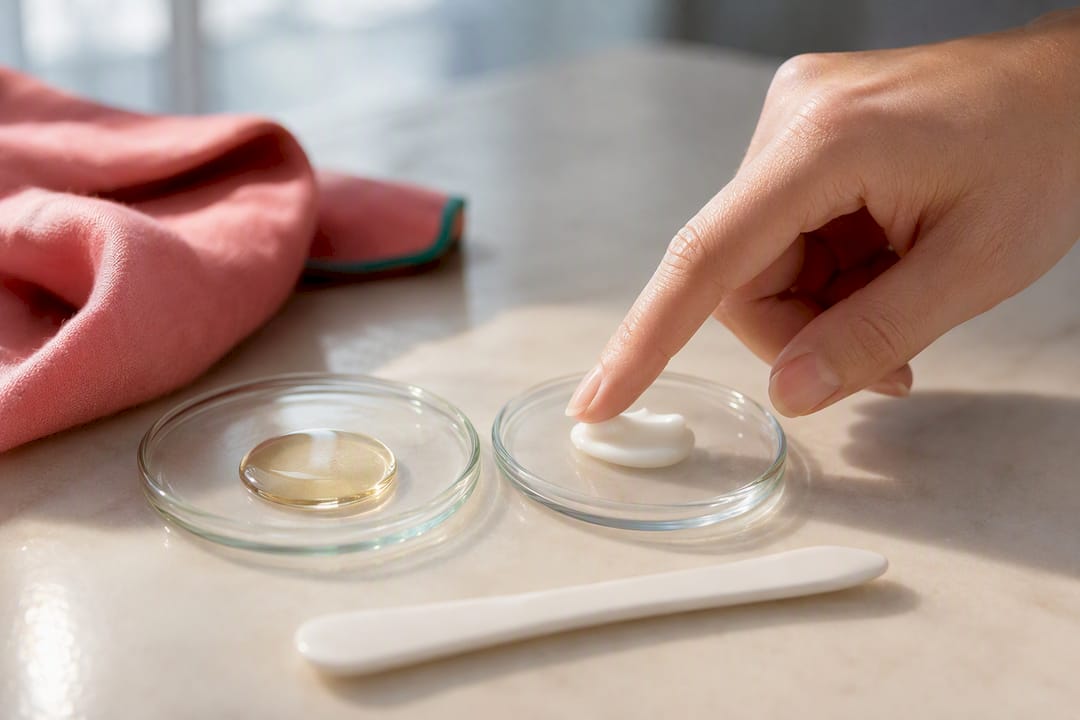
- O/W emulsions: lighter, faster absorbing, closer to a standard face cream in feel
- Fermented variants: processed with cultures like barley nuruk, showing early signs of boosted bioactivity in lab testing
- Soaps and balms: lower oil concentration, aimed at cleansing or spot treatment rather than deep moisturizing
Formulation chemists talk about HLB (hydrophilic-lipophilic balance) when building these emulsions. Stable horse oil creams often target an HLB value near 12 with a 15 to 20% surfactant blend, which keeps the oil evenly suspended in water instead of separating on the shelf.
Pro Tip: If a horse oil product feels greasy or takes forever to absorb, it’s probably a low-refinement pure oil rather than an emulsion. Switching to an O/W cream version often solves the texture complaint without losing the moisturizing effect.
How to Use Horse Oil Skincare the Right Way
Getting results from horse oil comes down to matching the format to your skin and not skipping the basics.
- Patch test first. Apply a small amount to your inner forearm or behind your ear, then wait 24 to 48 hours. Redness, itching, or bumps mean you should stop and try a different product.
- Apply to damp skin. Horse oil locks in moisture best when skin is still slightly wet from cleansing or a toner, which helps it seal water in rather than just sitting on the surface.
- Time it right. Nighttime application works well for richer pure oils since you don’t need to layer makeup over them; O/W creams are flexible enough for morning use.
- Adjust the amount. Dry skin can handle a pea-sized amount daily; combination or normal skin often does better with a few times a week instead of every day.
- Store it cool. Horse oil’s melting point is low, so heat exposure can change its texture. Keep it away from direct sunlight or hot bathroom shelves.
If you want something lighter for layering under other products, an O/W-based cream tends to fit better into a multi-step routine than pure oil does, and it pairs naturally with a hydrating serum underneath.
Pro Tip: Introduce horse oil slowly. Use it every third night for the first two weeks before moving to nightly use, especially if you have reactive or combination skin.
Who Should Use Caution With Horse Oil
Oily and acne-prone skin is where horse oil earns the most legitimate skepticism. Rich lipids can sit in already-congested pores and contribute to breakouts, so anyone in that category should patch test on a small area and watch for a few days before applying it more broadly.
Watch for a few warning signs beyond the initial patch test:
- New breakouts appearing in areas where you applied the product
- Persistent redness, burning, or itching that doesn’t fade within a day
- Any swelling, which warrants stopping use and contacting a dermatologist
There’s also an ethical dimension worth naming directly: horse oil is an animal-derived ingredient, and some readers will prefer to avoid it on principle regardless of how it performs. Plant-based alternatives like jojoba oil and squalane offer a comparable fatty-acid profile and similar absorption behavior without the animal-sourcing question.
Spyra Verified’s Take on Horse Oil in a Modern Routine
We pay close attention to horse oil products due to the gap between science and marketing in this category. As someone who’s spent time covering Japanese hair oil and skincare formulations, I’ve noticed that refinement quality separates a genuinely effective product from a novelty one. The lab and formulation research here is promising, not conclusive. That’s why our recommendations lean toward well-refined, tested formulations, and why patch testing and a dermatologist visit for any persistent skin condition still come first, no matter how good the ingredient story sounds.
— Anni
Where to Find Refined Horse Oil Formulations
We offer a selection of products sourced from partnered manufacturers, with efforts to verify authenticity before they reach customers.

Our skincare collection includes refined horse oil formulations and complementary hydration products, from lighter O/W creams built for daily layering to richer balms for targeted dry patches. If you’re new to the ingredient, look for an emulsion-based cream first since it’s easier to control the amount you apply and less likely to overwhelm sensitive skin. Browse the collection now and filter by texture to find a formulation that fits how your skin actually behaves, not just what the label promises.
Sources
- Protective effects of horse oil against UVB-induced oxidative stress (PMC article)
- Fermented horse oil bioactivity and human irritation testing (Fermentation, 2024)
- What is horse oil and why is it a popular skin treatment in East Asia? (South China Morning Post)
FAQ
What are the main uses of horse oil?
Horse oil is used mainly as a moisturizer for dry or sensitive skin, in soaps for gentle cleansing, and in balms for rough patches like heels and elbows. It’s also used in some hair products to soften strands and calm a dry scalp.
What are the benefits of horse oil soap for skin?
Horse oil soap cleanses without stripping the skin’s natural oils as harshly as many detergent-based soaps do, since the fatty acids help offset moisture loss during washing. It suits people who find standard bar soap leaves their skin feeling tight or dry.
Why is it called horse oil?
It’s called horse oil because it’s rendered directly from horse fat, most commonly the fat deposits around the mane and legs, which stay softer and more liquid than fat from other animals.
Which horse oil product is best for beginners?
An O/W emulsion cream is usually the easiest starting point because it absorbs faster and feels lighter than pure oil, which reduces the odds of greasiness turning you off before you see results. Look for refined, well-formulated versions in a curated skincare collection rather than unrefined imports of uncertain origin.
