

How to Follow the Korean 10 Step Routine Without Burning Out
No, you don’t need to do all 10 steps every day. What actually moves the needle is consistency with a small set of core steps, not the total number of products on your bathroom shelf. Dermatologist Jane Yoo MD notes that a 4-step routine done every day outperforms a 10-step routine done inconsistently, and that single fact should reshape how you think about the whole 10-step Korean skincare routine.
Here’s the minimal version to start today. In the morning, cleanse (a gentle water-based cleanser is enough if you slept with clean skin and no product on), apply moisturizer, then finish with sunscreen. That’s it. At night, if you wore makeup or sunscreen during the day, double cleanse with an oil cleanser followed by a water-based one. If you didn’t, a single water cleanse works fine. Follow with moisturizer, and layer in a treatment step once your skin is used to the basics.
Pro Tip: If you only remember one rule from this entire guide, make it this one: sunscreen is the single non-negotiable daytime step. Everything else is negotiable based on your time, skin, and budget.
- AM must-haves: cleanse, moisturizer, SPF 30+ (daily, rain or shine).
- PM must-haves: cleanse (double cleanse if you wore makeup/SPF), moisturizer.
- Add gradually: toner, essence, serum, eye cream, exfoliant, and sheet masks once the basics feel automatic.
- Frequency caution: exfoliants and retinoids need limited use, typically 2 to 3 times a week depending on the product strength, not daily.
Key Takeaways
A daily 4-step routine with consistent SPF use delivers better skin outcomes than an inconsistent 10-step routine, because compliance matters more than complexity.
| Point | Details |
|---|---|
| Skip steps without guilt | Cleanse, moisturizer, and sunscreen are the only truly daily non-negotiables. |
| Layer thin to thick | Apply watery toners and essences before serums, and creams or oils last. |
| Introduce actives slowly | Start retinoids once a week, patch test first, and increase frequency over weeks. |
| Limit exfoliation | Keep chemical or enzyme exfoliants to 2 to 3 times a week to protect your skin barrier. |
| Shop by product type | Spyra Verified’s skincare collection groups authentic oil cleansers, essences, and SPF by function so you can build the routine gradually. |
Table of Contents
- Follow the Korean 10 Step Routine: A Step-by-Step Breakdown
- How to Build a Realistic 4- or 5-Step Version
- Why the Order of Your Products Actually Matters
- What Dermatologists and Editors Actually Recommend
- The Real Lesson Behind the 10-Step Obsession
- Where to Find Authentic Products for Each Step
- Frequently Asked Questions
- Sources
Follow the Korean 10 Step Routine: A Step-by-Step Breakdown
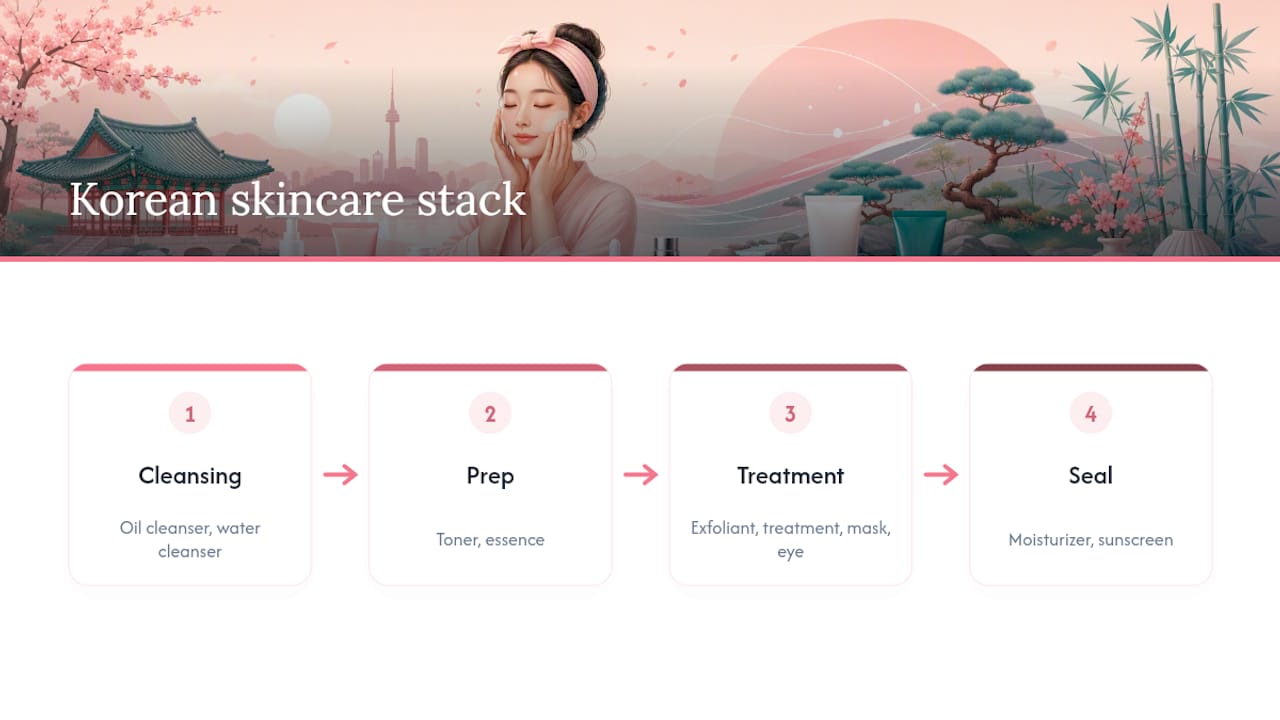
The traditional 10-step Korean skincare routine is best understood as a stack, not a checklist. Cleansing removes, prep hydrates, treatment addresses specific concerns, and sealing locks everything in with moisturizer and SPF. The canonical steps most commonly cited run: oil cleanser, water cleanser, exfoliant, toner, essence, treatment, sheet mask, eye cream, moisturizer, and sunscreen. Here’s how to actually execute each one.
1. Oil-based cleanser. This step exists to dissolve oil-soluble buildup: sunscreen, makeup, sebum, and the sticky residue those leave behind. Water alone can’t break down oil, which is why this comes first. Warm a coin-sized amount between dry palms, massage it over dry skin in circular motions for 30 to 60 seconds, add a splash of water to emulsify it into a milky texture, then rinse. Use this step in the evening only, unless you’re wearing heavy sunscreen or makeup during the day and need a midday reset.
2. Water-based cleanser. This is your actual cleanse, the one that lifts away water-soluble debris, sweat, and whatever the oil cleanser left behind. Look for a low-pH formula, generally in the 4.5 to 5.5 range, since that range protects your skin’s acid mantle better than traditional high-pH bar soaps or foaming cleansers. Gel and cream textures tend to be gentler than heavy foams. Use this both morning and night; it’s the one cleansing step you never skip.
3. Exfoliant. This step sloughs off dead skin cells so the rest of your routine can absorb better. You’ve got three types to choose from: chemical (AHAs like glycolic or lactic acid, BHAs like salicylic acid), enzyme exfoliants (gentler, derived from fruit enzymes), and physical scrubs (least recommended for daily use due to abrasion risk). Frequency matters more here than product choice. Dermatologists generally recommend exfoliating 2 to 3 times a week, not daily, and never on the same night you’re using a retinoid. Apply after cleansing, before toner.
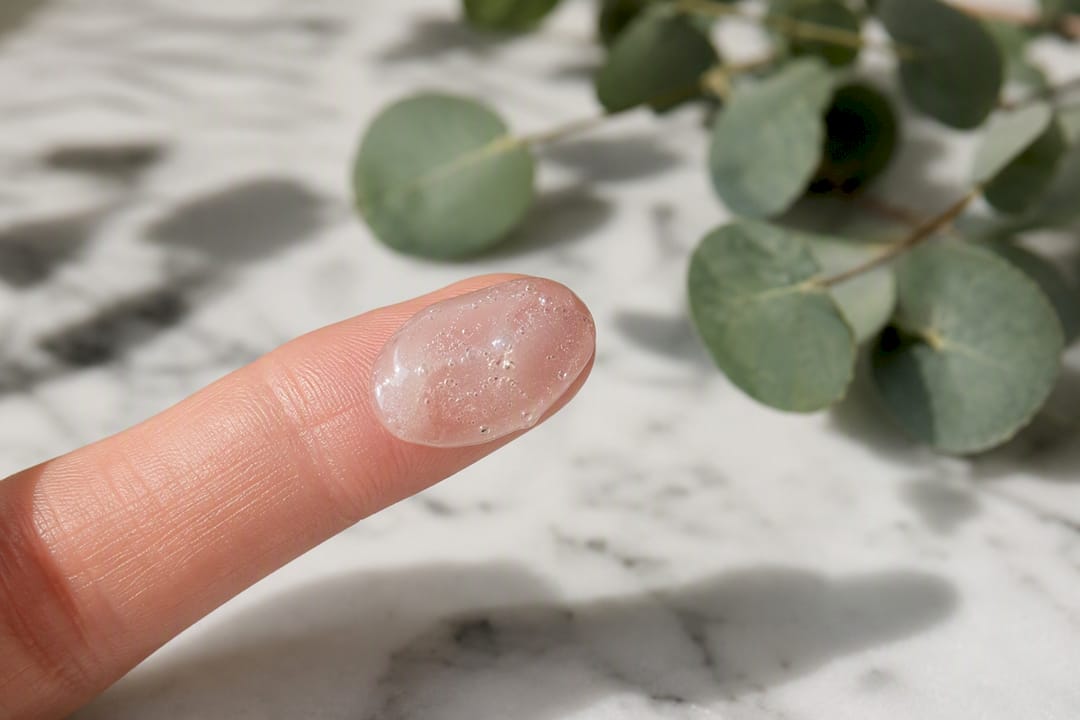
4. Toner. Korean toners function differently than the astringent, alcohol-heavy toners many people grew up with. Their job is to rebalance your skin’s pH after cleansing and deliver a first layer of hydration. Some act as a light prep step before treatment products; others are hydrating enough to double as a mini-essence. Pat it in with your hands rather than a cotton pad, which wastes product and can drag on skin.
5. Essence. This is the step that confuses newcomers most because it sits in a gray zone between toner and serum. Essences are typically watery, packed with hydrating and slightly active ingredients like fermented extracts or hyaluronic acid, and they exist to prep skin for whatever treatment comes next. Think of it as a hydration primer. Pat, don’t rub, and let it sink in for a few seconds before moving on.
6. Treatment (serum or ampoule). This is where your actual active ingredients live: vitamin C, niacinamide, peptides, retinoids. The rule for ordering multiple treatments is texture based, thinnest first. Vitamin C generally works best in the morning under sunscreen for its antioxidant boost against UV-related damage, while retinoids belong at night since they can increase photosensitivity. Never stack vitamin C with certain exfoliating acids in the same session; alternate them by day or by AM/PM instead.
7. Sheet mask or wash-off mask. Masks are a supplemental boost, not a core daily step. Harper’s Bazaar notes that sheet masks are best used weekly or as-needed for targeted hydration rather than as an everyday requirement. If you’re using one, apply it right after toner or essence, before your heavier serum, so the concentrated essence in the mask can penetrate skin that’s still slightly damp and receptive.
8. Eye cream. The skin around your eyes is thinner and has fewer oil glands than the rest of your face, which is why it shows dryness and fine lines first. Use a rice-grain amount, dab it with your ring finger (the weakest finger, which applies the least pressure), and pat along the orbital bone rather than directly on the lid. Apply it after treatment serums but before your main moisturizer.
9. Moisturizer. This step seals in every layer you just applied. Texture should match your skin type: gel or lotion for oily and combination skin, cream for dry or mature skin, balm for very dry or compromised barriers. Apply it while skin is still slightly damp from previous steps; this helps trap moisture rather than sealing over dry skin.
10. Sunscreen. This is the final AM step, and it is the one dermatologists treat as genuinely non-negotiable. Vogue’s experts single out sunscreen as the final, essential daytime step that shouldn’t be skipped regardless of how many other steps you cut. Korean sunscreen formulas tend to be lightweight and cosmetically elegant, which helps explain why they layer so well under makeup and why people actually stick with using them daily. Apply a full fingertip’s worth (roughly a quarter-sized amount for your face), let it set for a couple of minutes before makeup, and reapply every two hours if you’re outdoors.
How to Build a Realistic 4- or 5-Step Version
You don’t have to run the full sequence to get real results. Most people, including many in Korea itself, don’t perform all 10 steps daily; they treat it as a flexible menu and pull from it based on time and skin needs. Here’s how to build a version that actually fits your life.
Your 4-step AM routine: cleanse, hydrating toner or essence, moisturizer, sunscreen. Your 4-step PM routine: double cleanse if you wore makeup or SPF that day, treatment or serum, moisturizer, and optional eye cream. On nights when your skin needs more, expand to a 5-step evening routine by adding an active treatment or a sheet mask between your cleanse and moisturizer.
| Routine | Steps included | Best for |
|---|---|---|
| 4-step AM | Cleanse, toner/essence, moisturizer, SPF | Daily use, busy mornings |
| 4-step PM | Double cleanse, treatment, moisturizer, eye cream | Standard evening maintenance |
| 5-step evening | Adds one active or mask to the 4-step PM | Weekly deeper treatment, targeted concerns |
If you’re starting from scratch, your shopping list only needs six product types: an oil cleanser, a low-pH water cleanser, a hydrating toner or essence, a lightweight moisturizer suited to your skin type, a broad-spectrum SPF, and one treatment serum aimed at your main concern. Our guide on how to start an Asian skincare routine without overdoing it walks through picking those first six products without overspending.
Adding actives safely takes patience most people skip. Patch test any new product on your inner arm or behind your ear for 24 to 48 hours before applying it to your face. Introduce one new product at a time, never two actives in the same week. Start a retinoid once a week, track how your skin responds for two to four weeks, then increase frequency gradually to twice, then three times a week. Avoid pairing vitamin C with strong exfoliating acids in the same session; they can destabilize each other and irritate skin.
Why the Order of Your Products Actually Matters
The rule that governs everything here is simple: apply thinnest to thickest. Watery toners and essences go first, lightweight serums come next, and creams or oils go last. Getting this order backward can block your actives from penetrating properly, since a heavy cream applied too early creates a barrier that a serum applied after it simply can’t get through. Oil cleansers are the one exception to the thin-to-thick logic: they go first specifically because they need to emulsify and rinse off before anything water-based touches your skin.
pH matters just as much as texture. Low-pH water cleansers, generally in the 4.5 to 5.5 range, protect your skin’s acid mantle, the thin protective layer that keeps moisture in and irritants out. High-pH cleansers strip that layer and leave skin more reactive to everything applied afterward.
Four mistakes show up more than any others. Over-exfoliating shows up as tightness, redness, or a stinging sensation with normal products; cut back to once a week and let your barrier recover. Stacking too many actives at once (retinoid plus strong acid plus vitamin C in the same routine) overwhelms skin that hasn’t built tolerance; space them across different days instead. Skipping SPF because a moisturizer claims SPF coverage rarely provides enough protection; wear a dedicated sunscreen daily. Applying heavy creams before serums blocks absorption entirely; always check your product order against the thin-to-thick rule before you start layering.
Pro Tip: If your skin starts feeling tight, itchy, or unusually red after adding a new product, strip back to just cleanser, moisturizer, and SPF for a few days. Let your barrier reset before reintroducing anything active. Our breakdown of common layering mistakes worth fixing covers more troubleshooting scenarios if irritation persists.
What Dermatologists and Editors Actually Recommend
That framing, echoed by Harper’s Bazaar’s roundup of expert opinion, lines up with what Jane Yoo MD tells patients directly: consistency with core steps beats chasing a higher step count. Her guidance also covers the double-cleanse rationale and safe retinoid introduction that shaped the frequency advice throughout this guide.
- Dermatologists converge on one point: more steps do not automatically mean better skin.
- Vogue’s expert sources highlight K-beauty’s lightweight sunscreen formats as a real driver of daily SPF compliance.
- If you develop a severe reaction (swelling, blistering, intense burning) or you’re using prescription-strength retinoids, talk to a dermatologist rather than troubleshooting solo.
Spyra Verified sources authentic Japanese and Asian beauty products directly from partnered manufacturers, and this guide draws on that same sourcing standard, plus dermatologist-reviewed guidance, to steer you toward product types rather than any single brand.
The Real Lesson Behind the 10-Step Obsession
The 10-step routine got famous for the wrong reason. People latched onto the number, not the logic behind it, and that’s why so many beginners burn out in month two. The actual insight worth keeping is the stack: remove, hydrate, treat, seal. Once you understand that structure, you can build a 4-step version on a Tuesday morning and a 7-step version on a Sunday night, and both are “doing it right.”
Where conventional advice fails people is treating every step as equally urgent. It isn’t. Sunscreen and a barrier-friendly cleanser matter every single day; a sheet mask does not. If you take one thing from this guide, prioritize getting your cleanse, moisturizer, and SPF locked in before you spend another dollar on a trendy ampoule. Everything else is genuinely optional until those three are automatic.
Where to Find Authentic Products for Each Step
Building this routine only works if the products behind it are what they claim to be, and that’s the exact problem Spyraverified was built to solve. Rather than guessing whether an oil cleanser or essence sold through a random reseller is genuine, Spyraverified sources directly from partnered manufacturers and verifies products through community testing before they reach your cart.
If you’re assembling your starter kit from this guide, the skincare collection is organized by product type, so you can find a low-pH cleanser, a lightweight moisturizer, or a treatment serum without wading through unverified listings. For readers whose skin needs more targeted attention than a serum alone can fix, a partner resource on professional treatment for skin texture concerns is worth a look before adding another product to the mix. And if you’re still narrowing down which formulas actually suit your skin type, our guide on choosing Korean skincare that fits is a useful next stop. Start with the collection page, pick the three or four product types you’re missing, and build from there.
Frequently Asked Questions
Do I really need to follow all 10 steps of the Korean skincare routine? No. The 10 steps work as a flexible menu rather than a mandatory checklist. A consistent 4-step routine with cleanser, moisturizer, and sunscreen outperforms a 10-step routine you can’t maintain.
What’s the difference between a Korean toner and an essence? Toner rebalances your skin’s pH and delivers a first layer of hydration after cleansing. Essence sits between toner and serum, offering slightly more concentrated hydration and light treatment benefits to prep skin for your active products.
How often should I exfoliate in a Korean skincare regimen? Most dermatologists recommend 2 to 3 times a week for chemical or enzyme exfoliants, never on the same night as a retinoid, and never daily regardless of the product’s strength.
Can I skip the oil cleanser step if I don’t wear makeup? Yes. Oil cleansers exist to dissolve oil-based buildup like makeup and heavy sunscreen. If you didn’t wear either that day, a single water-based cleanse is enough.
What order should I apply my Korean skincare products in? Apply from thinnest to thickest: cleanser first, then toner, essence, serum or treatment, eye cream, moisturizer, and sunscreen last in the morning. Oil cleanser is the exception, applied first since it needs to emulsify and rinse before anything else.
How do I introduce a new active ingredient without irritating my skin? Patch test on your inner arm for 24 to 48 hours, then introduce one product at a time. Start a retinoid once a week, watch your skin’s response for two to four weeks, then gradually increase frequency.
Sources
- Best Korean Skincare Routine 2026 - Jane Yoo MD
- How to Build a 10-Step Korean Skincare Routine, According to Experts — Harper’s Bazaar
- Korean skincare routine: The 10 steps — Healthline
- What Experts Really Think of the 10-Step Korean Skin-Care Routine — Vogue
