

How to Apply Asian Facial Mist Correctly for Hydration
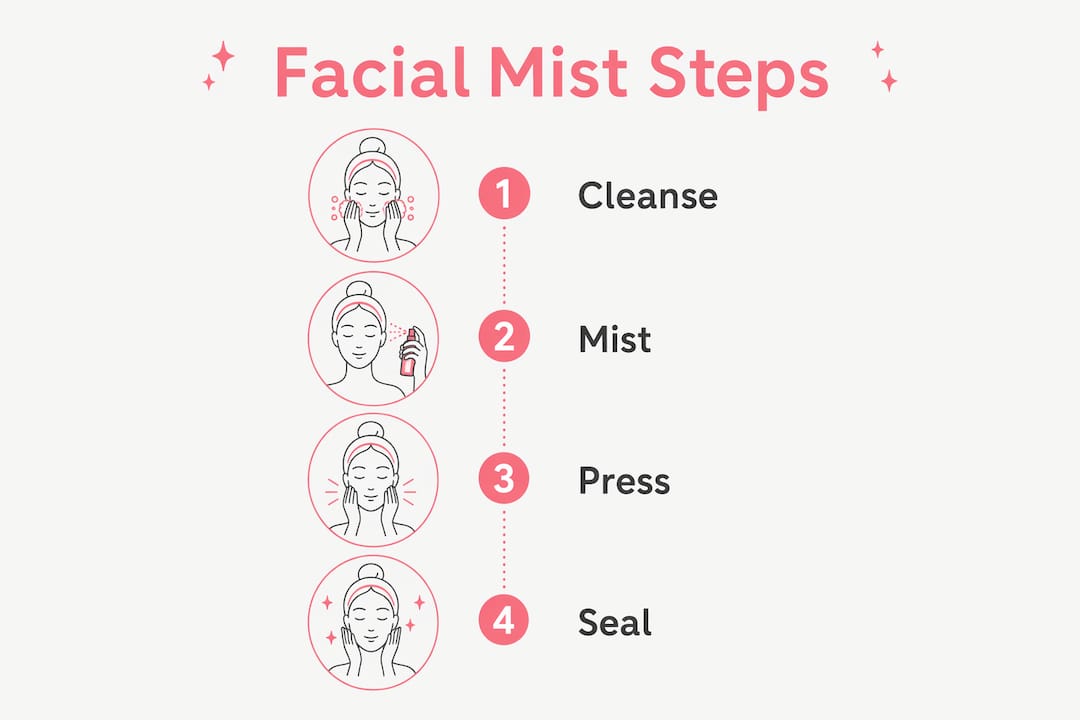
Spray from a short distance away, use a few short pumps on slightly damp skin, then press the mist in with clean hands and seal immediately with moisturizer. That’s the whole method. Everything else in this article explains why each step matters and how to fit it into a real routine.
Quick-start steps:
- Cleanse your face and leave skin slightly damp, not bone dry.
- Hold the bottle 8–12 inches from your face, close your eyes, and spritz 2–4 times.
- Press your palms gently against your cheeks, forehead, and chin for 10–15 seconds.
- Follow with your serum or moisturizer within 60 seconds to lock in the moisture.
Pro Tip: Skipping the moisturizer after misting is the single most common mistake. Without an occlusive layer, the misted water evaporates and pulls moisture from your skin surface, leaving you drier than before.
Table of Contents
- When should you reach for a facial mist?
- How do you apply an Asian facial mist step by step?
- Where does face mist fit in a K-beauty layering routine?
- Can you use facial mist over makeup without ruining it?
- What ingredients should you look for in an Asian facial mist?
- How often should you use a mist, and how do you store it?
- What are the most common misting mistakes and how do you fix them?
- Why pressing and sealing the mist actually matters
- Key Takeaways
- The part most guides get wrong about facial mists
- Spyraverified brings authentic Asian mists directly to you
When should you reach for a facial mist?
Timing matters more than most people realize. A mist used at the right moment amplifies every product that follows it. Used at the wrong moment, it’s just a wet face.
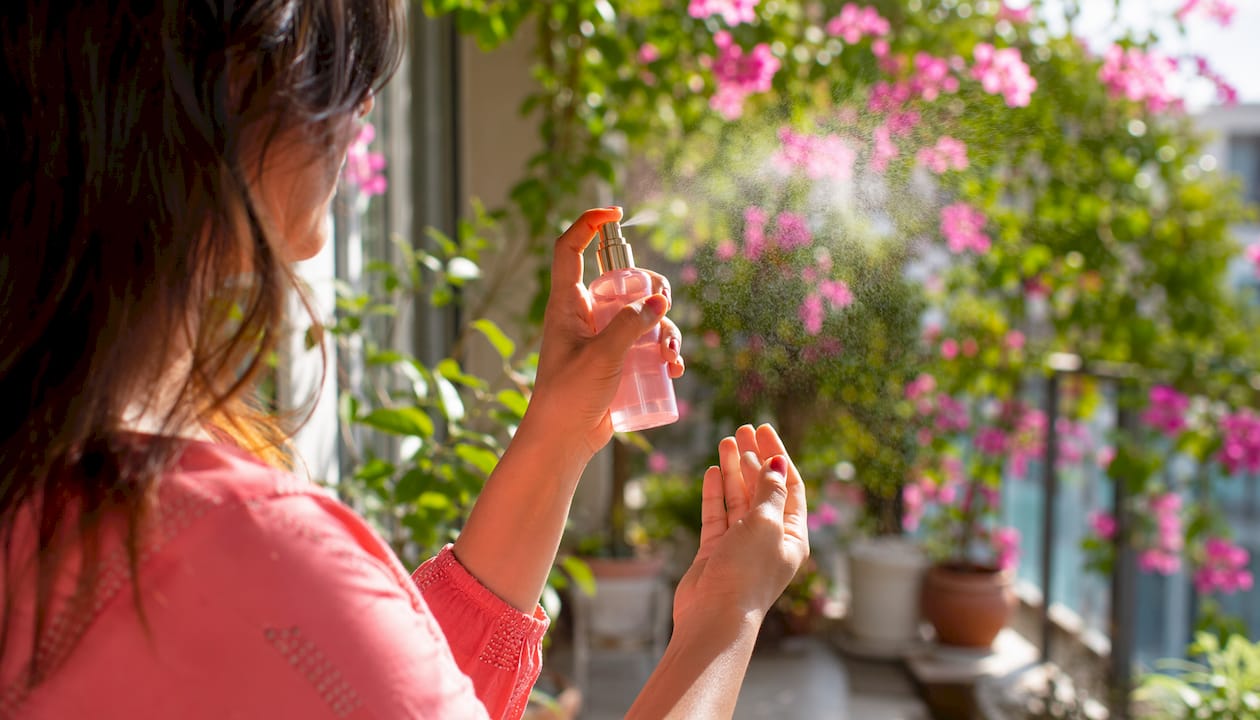
The best time is immediately after cleansing, while your skin is still slightly damp. That residual moisture helps humectants in the mist bind to water already present in the skin. Between skincare layers, a quick spritz keeps skin receptive so the next product absorbs more evenly rather than sitting on top.
Midday refreshes are where mists genuinely earn their keep. Air conditioning, airplane cabins, and heated offices strip humidity fast. A midday hydration refresh over or under light makeup brings back that just-moisturized feel without adding weight. Post-exercise is another underrated moment: skin is warm and slightly flushed, which makes it more receptive to hydrating ingredients.
A few situations call for caution. If your mist contains exfoliating acids or retinoids, save it for your evening routine and never layer it directly over freshly applied actives. When skin is actively irritated, broken out, or sunburned, even a gentle mist can sting. Read the formula first.
How do you apply an Asian facial mist step by step?
The pressing technique is what separates a genuinely hydrating step from a refreshing but forgettable spritz. Here’s the full sequence:
- Start with clean, slightly damp skin. Pat your face after cleansing but leave a thin layer of moisture. Completely dry skin absorbs mist less effectively.
- Shake the bottle if it contains oils or actives. Oil-based or serum mists separate in the bottle; skipping this step means you spray mostly water and miss the active ingredients.
- Hold the bottle 8–12 inches (20–30 cm) from your face. Closer than that and you get a concentrated wet patch. Farther and the mist disperses before it reaches your skin.
- Close your eyes and spritz 2–4 times in a sweeping motion across your face. Two pumps for a light refresh, four for a full hydration step. Avoid inhaling directly.
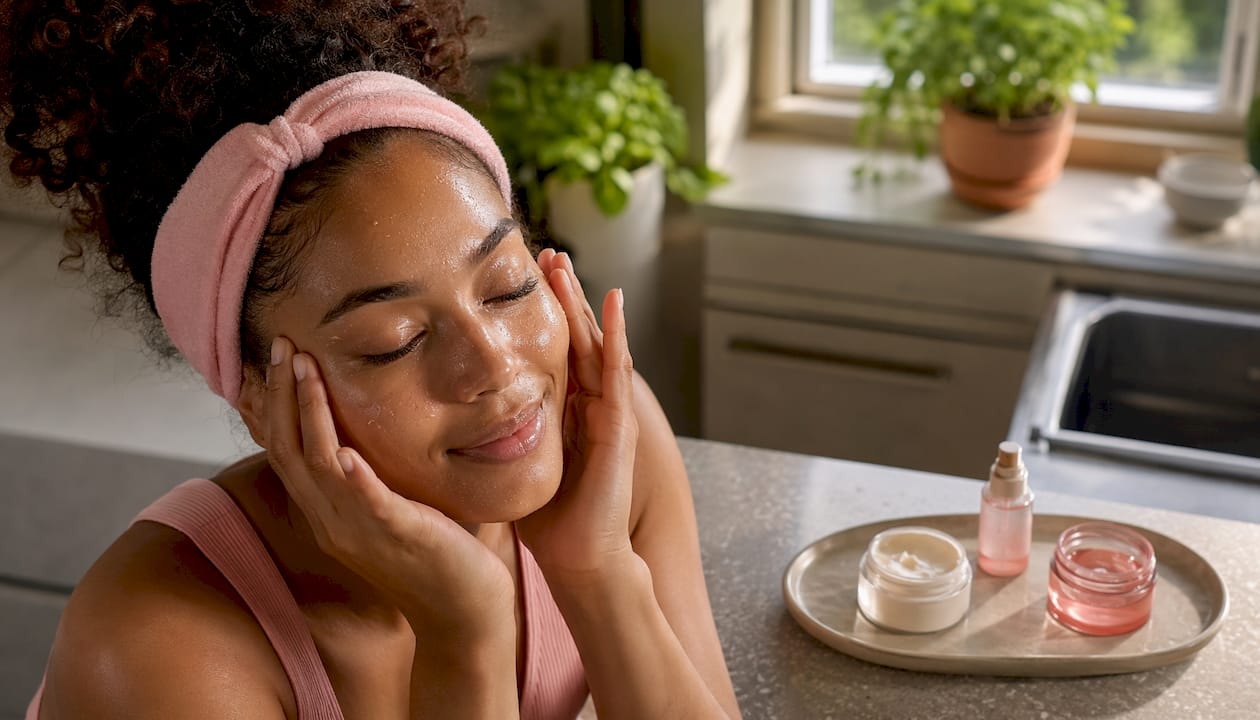
- Wait 3–5 seconds, then press your palms or fingertips gently into your skin for 10–15 seconds. Don’t rub or wipe. The pressing motion pushes the mist into the upper layers of skin rather than letting it sit on the surface.
- Apply your next product within 60 seconds. That window keeps skin damp enough for the following layer to absorb properly.
Pro Tip: If your mist contains oil components, give the bottle a firm shake before every use. Formulas with oils or actives separate between uses, so you may only spray the watery phase and miss the benefits entirely.
Where does face mist fit in a K-beauty layering routine?
The general rule in K-beauty and Japanese skincare is thinnest to thickest. A water-based mist is almost always the lightest product in your lineup, so it goes early. A milk mist or serum mist with heavier actives goes later, after your essence but before your cream.
Here’s how a typical morning and evening routine looks with mist placed correctly:
Morning: Cleanser → toner → mist (water-based) → essence → serum → moisturizer → SPF
Evening: Cleanser → toner → mist (water-based or milk mist) → essence → treatment serum → moisturizer
The Japanese lotion layering method follows the same logic: thin, watery layers first, each one pressed in before the next is applied.
Multimisting takes this a step further. Instead of one heavy spray, you apply two or three targeted mists in thin layers, each pressed in before the next. K-beauty practitioners favor this approach because it builds hydration gradually without dripping or over-saturating the skin. A calming centella mist first, then a hyaluronic acid mist, then a light milk mist for barrier support.
| Step | Do | Don’t |
|---|---|---|
| After cleansing | Mist on slightly damp skin | Mist on completely dry skin |
| Layering order | Apply water-based mist before serum | Apply mist after heavy cream |
| After misting | Seal with moisturizer within 60 seconds | Leave mist to air-dry on skin |
| Oil-containing mists | Shake before spraying; use after essence | Skip shaking; use as first step |
| Multimisting | Press each layer in before the next | Stack multiple mists without pressing |
Can you use facial mist over makeup without ruining it?
Yes, with the right technique. The key difference is distance and restraint.
Over makeup, hold the bottle farther back: 12–18 inches rather than 8–12. That extra distance means the mist lands as a fine, barely-there veil rather than a concentrated spray that can shift foundation or dissolve powder. Close your eyes, let the mist settle for 10–15 seconds, and don’t touch your face. No rubbing, no pressing. The pressing technique that works beautifully on bare skin will smear makeup.
Use a mist over makeup for two specific purposes: softening a powdery finish midday, or giving a dewy refresh when skin looks flat under foundation. A light, water-based mist works best here. Avoid anything oil-heavy or packed with actives over makeup since those formulas can break down coverage.
When to skip it entirely: freshly applied foundation that hasn’t set, uncured sunscreen, or any heavy cream base. These products need time to bind to skin before moisture is introduced. Give them at least 10 minutes.
A quick compatibility test before committing: spritz once on the back of your hand over a small patch of your foundation. If it beads or separates, that mist isn’t compatible with your base.
What ingredients should you look for in an Asian facial mist?
The formula matters as much as the technique. A mist built around the right ingredients for your skin type will feel noticeably different from a generic one.
Ingredients worth seeking out:
- Hyaluronic acid and glycerin: Both are humectants that draw water toward the skin. They’re the backbone of most hydrating mists and work well for nearly every skin type.
- Aloe vera and centella asiatica: Soothing botanicals that calm redness and support the skin barrier. Centella is especially popular in K-beauty for acne-prone and sensitive skin.
- Mineral water and thermal spring water: Naturally rich in minerals that can help balance skin’s pH and reduce reactivity. Common in Japanese and French-influenced Asian mists.
- Panthenol (vitamin B5): Supports barrier repair and adds a soft, plump feel. Often found in barrier-focused mists.
- Ceramides: Usually found in milk mists rather than water mists. Good for dry or compromised skin that needs barrier reinforcement alongside hydration.
Ingredients to approach carefully:
- Denatured alcohol (listed as “alcohol denat.”): Drying and potentially irritating, especially for sensitive or dry skin. A small amount in a complex formula may be fine; a high-ranking position on the ingredient list is a red flag.
- High fragrance concentrations: Synthetic fragrance is one of the most common sensitizers in skincare. If you have reactive skin, look for “fragrance-free” or formulas that list fragrance near the bottom.
- Acids and retinoids in mist form: Some mists double as exfoliating treatments. These are legitimate products, but they belong in your evening routine only, and never layered directly over or under other actives. A retinol mist follows different placement rules than a plain hydrating mist.
Matching mist to skin type:
Dry skin does best with hyaluronic acid and ceramide-rich formulas, ideally paired with a richer cream to seal everything in. Oily and acne-prone skin benefits from lightweight, antioxidant-forward mists with niacinamide or green tea. Sensitive skin should stick to fragrance-free, centella-based formulas with minimal ingredient lists.
How often should you use a mist, and how do you store it?
Daily use is fine for most people. Dry skin can comfortably mist two or three times a day: morning routine, midday refresh, and evening routine. Oily or combination skin usually does well with once or twice daily, adjusting based on how the skin feels rather than a fixed schedule.
Storage is straightforward. Keep your mist in a cool, dark place away from direct sunlight. Refrigerating it is optional but genuinely pleasant, especially in summer: a cold mist on warm skin feels immediately refreshing and can help reduce puffiness. If your mist contains oils or actives, refrigeration also slows oxidation.
Signs that a mist has turned: a change in color, a cloudy appearance in a formula that was previously clear, an off or rancid smell, or a spray mechanism that clogs repeatedly. Check the manufacturer’s PAO (period after opening) symbol, usually a small jar icon with a number like “12M” (use within 12 months of opening). When in doubt, discard it. A compromised formula can irritate skin or introduce bacteria.
What are the most common misting mistakes and how do you fix them?
Most mist problems trace back to one of three errors: too much product, no follow-up, or the wrong formula.
- Over-spraying causes tackiness or dripping. Fix: reduce to 2–3 pumps and press the excess in rather than wiping it away. If skin still feels wet after pressing, you’re using too much.
- Treating mist as a moisturizer. This is the most consequential mistake. Dermatologists consistently flag that misting without a follow-up emollient can pull moisture from the skin as the water evaporates. Always seal with a moisturizer or cream.
- Using an alcohol-heavy mist on dry or sensitive skin. If your skin feels tight, stings, or looks more irritated after misting, check the ingredient list for “alcohol denat.” near the top. Switch to a humectant-based formula without denatured alcohol.
- Makeup separation after misting. Usually caused by spraying too close or using an oil-heavy mist over a water-based foundation. Increase your distance and switch to a water-based mist for over-makeup use.
- Letting the mist air-dry instead of pressing it in. As the water evaporates, it can take some of your skin’s own moisture with it. Press it in, then follow up immediately.
Testing a new mist safely: Apply 1–2 sprays to the inside of your wrist or behind your ear. Wait 24–48 hours before using it on your full face. If you see redness, itching, or small bumps, that formula isn’t right for your skin.
Why pressing and sealing the mist actually matters
Humectants like hyaluronic acid and glycerin work by attracting water molecules. On damp skin, they pull that moisture toward the surface layers of the skin. The problem: they don’t hold it there on their own. Without an occlusive or emollient layer on top, that water evaporates into the air, and transepidermal water loss can actually increase. The mist becomes a net negative for hydration.
The pressing step addresses the first part of this equation. Cupping your hands and pressing gently for 10–15 seconds after spraying creates light pressure that helps the mist penetrate the upper skin layers rather than sitting on the surface. Skincare experts describe this as treating misting as an active step rather than a passive one. The difference in how your skin feels afterward is real.
The sealing step handles the second part. A moisturizer, cream, or even a facial oil applied within 60 seconds of misting traps the humectants and the moisture they’ve attracted. That’s the barrier the mist needs to do its job.
For multimisting, the same logic applies at each layer. Apply the lightest water-based mist first, press it in, then layer a mist with heavier actives or oils. Each layer gets pressed before the next is applied. The final layer always gets sealed with a cream or moisturizer.
Key Takeaways
Applying an Asian facial mist correctly means spraying at the right distance, pressing the mist into skin, and always sealing with moisturizer to prevent evaporation and dryness.
| Point | Details |
|---|---|
| Spray distance and count | Hold 8–12 inches away and use 2–4 pumps; more than that causes over-saturation. |
| Press, don’t let it dry | Cup hands and press mist into skin for 10–15 seconds to improve absorption. |
| Always seal afterward | Apply moisturizer within 60 seconds; mist alone increases water loss without an occlusive layer. |
| Match ingredients to skin type | Use hyaluronic acid and ceramides for dry skin; centella and niacinamide for oily or sensitive. |
| Spyraverified for curated options | Spyraverified carries authenticated Japanese and Asian mists matched to skin type and routine step. |
The part most guides get wrong about facial mists
The conventional advice is “spritz and go.” Most tutorials show someone holding a bottle at arm’s length, closing their eyes, and walking away refreshed. That image is everywhere, and it’s mostly wrong.
A mist used that way is a cosmetic experience, not a skincare step. The water lands on your skin, sits there for 30 seconds, and evaporates. If you’re in a dry environment, it may leave your skin slightly drier than before. The pressing step and the moisturizer seal are not optional extras for skincare enthusiasts. They’re what make the mist functional.
The other thing guides underplay is ingredient specificity. Not all mists are interchangeable. A thermal water mist and a hyaluronic acid mist and a centella milk mist are doing genuinely different things. Treating them as the same product and using them the same way is like using a toner and a serum interchangeably because both come in bottles. The layering order for different mist textures matters, and so does knowing which formula your skin actually needs.
The K-beauty multimisting approach gets this right. It treats each mist as a targeted layer with a specific job, applied in a specific order, each one pressed in before the next. That’s a more demanding routine than a single spritz, but it’s also the approach that actually delivers the hydration people are chasing when they reach for a mist in the first place.
Spyraverified brings authentic Asian mists directly to you
Finding the right Asian facial mist in the US usually means sifting through third-party resellers with no guarantee of authenticity or freshness. Spyraverified sources directly from Japanese and Asian brand owners, so what arrives is the real formula, not a gray-market version that’s been sitting in a warehouse.

The curated skincare collection covers the full range of mist types covered in this article: water-based hydrating mists, milk mists for barrier support, and active-infused formulas for targeted concerns. Each product listing includes routine placement guidance so you know exactly where it fits in your layering order. For readers who want to start with the best hydrating mist for their skin type, that guide is a practical next step before buying. Browse the full skincare range at Spyraverified and find the mist your routine is actually missing.
