

What Does Pore Care Mean in Japan: A Full Guide
Pore care in Japan is defined as a holistic, prevention-focused skincare philosophy that manages pore appearance through gentle cleansing, layered hydration, and skin barrier protection rather than quick cosmetic fixes. Understanding what does pore care mean in Japan requires recognizing that Japanese beauty culture treats pores as a long-term health concern, not a surface-level problem to mask. Hiro Clinic, a leading Japanese dermatology group, confirms that Japanese routines emphasize daily double cleansing and separate at-home maintenance from clinical treatment for severe cases. This approach is grounded in cause-specific diagnosis, consistent daily habits, and respect for the skin’s natural balance.
What are the common types of pore concerns in Japan and their causes?
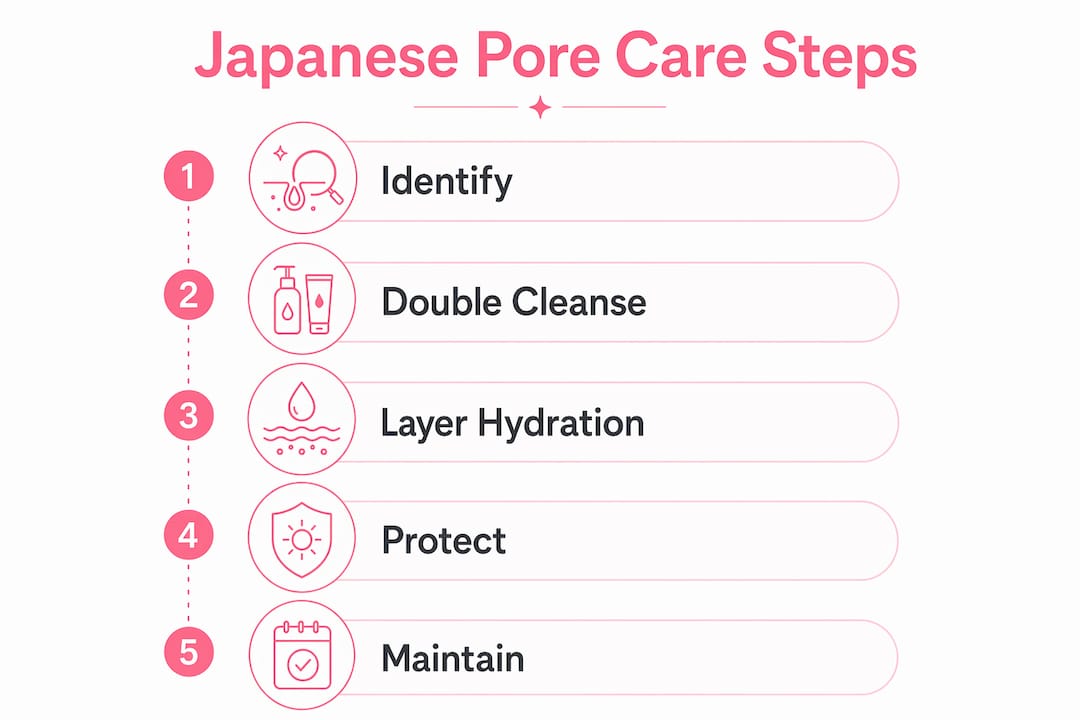
Japanese skincare treats pore problems as a diagnostic process, not a cosmetic one. Identifying the correct cause is the first step. Treating the wrong type of pore issue not only wastes time but can actively worsen your skin.
Tokyo clinics, including BIANCA Clinic, identify three primary pore problems: excess sebum clogging, dryness-induced texture changes, and sagging caused by collagen loss. Each type looks different and requires a completely different response.
The three main pore types are:
- Excess sebum pores. These appear as enlarged, open pores, mostly in the T-zone. Sebum mixes with dead skin cells and stretches the pore walls over time. Oily skin types and humid climates make this more common.
- Dryness-induced pores. When the skin lacks moisture, the surface texture becomes uneven and pores appear more visible. This type is often misread as an oiliness problem, which leads people to over-cleanse and make things worse.
- Sagging pores. These form when collagen and elastin break down with age. The pore loses structural support and elongates, often appearing as teardrop-shaped openings on the cheeks. Aggressive scrubbing has no effect here and can cause further irritation.
Hiro Clinic notes that misidentifying sagging pores as clogged leads to ineffective treatments and worsened skin conditions. This is one of the most common mistakes in self-directed skincare.
Pro Tip: Take a close-up photo of your pores in natural light. Pores that look round and open are likely sebum-related. Pores that look elongated or drooping are likely structural. This simple check guides your entire product selection.
How does Japanese pore care incorporate cleansing and hydration steps?
The Japanese skincare routine is built on two non-negotiable foundations: thorough but gentle cleansing, and layered hydration. Both steps directly affect pore health.
Double cleansing: the starting point
Double cleansing means using an oil-based cleanser first, followed by a water-based cleanser. The oil step dissolves sunscreen, makeup, and excess sebum without stripping the skin. The water-based step removes any remaining impurities. This two-step process keeps pores clear without disrupting the skin’s protective barrier.
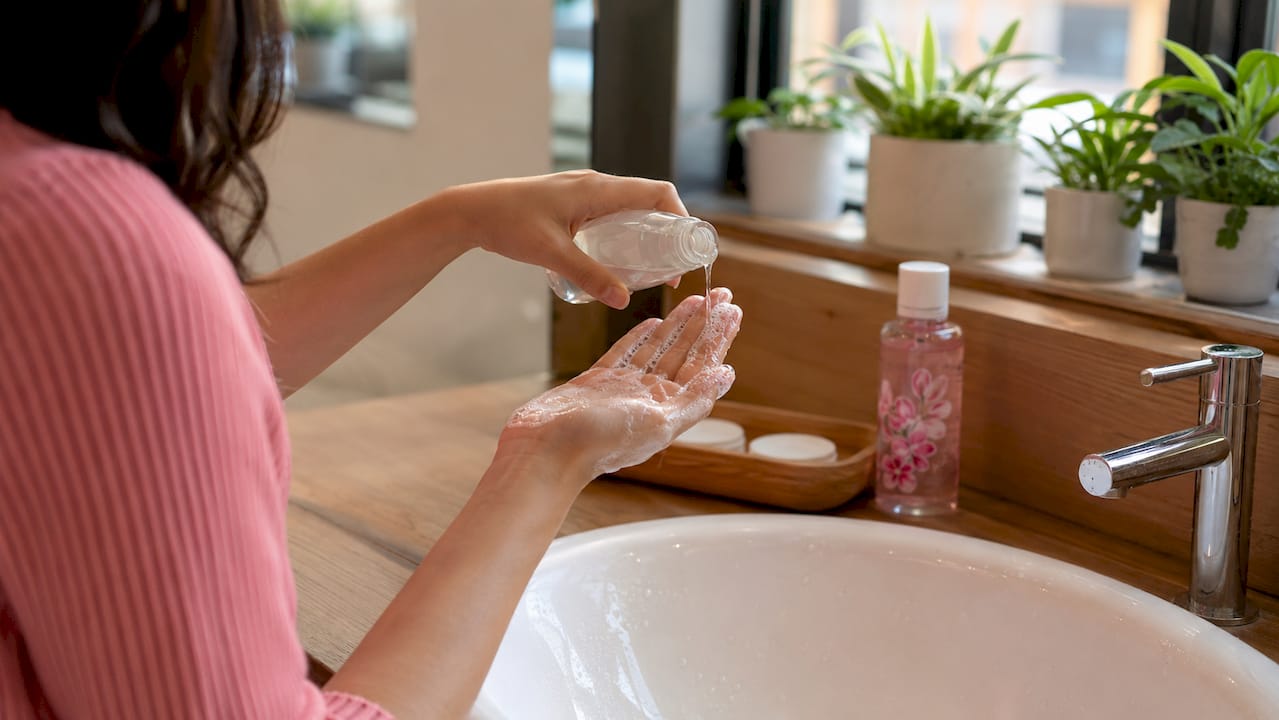
Over-cleansing damages the skin barrier and triggers compensatory sebum production, which enlarges pores further. This is a critical point that many people miss. Washing your face three or four times a day does not reduce oiliness. It creates more of it.
Layered hydration: the Japanese difference
After cleansing, Japanese routines apply what is called a “lotion,” which is not a Western-style lotion at all. In Japanese skincare, lotion is a watery, hydrating liquid patted gently into the skin to layer moisture before heavier products. Dr. Jane Yoo emphasizes that this layering approach prevents the skin from overproducing oil to compensate for dryness.
The sequence typically looks like this:
- Oil cleanser to dissolve impurities
- Foam or gel cleanser to remove residue
- Lotion (hydrating toner) to restore moisture balance
- Serum to target specific concerns like sebum control or firmness
- Moisturizer to seal everything in
Japanese skincare uses traditional botanical oils and lightweight product layering to maintain skin balance without heaviness. This is why Japanese formulas rarely feel greasy, even on oily skin types.
Pro Tip: When applying your hydrating lotion, use your palms to press it into the skin rather than wiping. This patting technique, common in Japanese routines, improves absorption and avoids pulling at the skin.
A good gentle cleanser for pores supports this process by removing impurities without stripping natural oils.
What professional and clinical treatments complement home pore care in Japan?
Home care handles daily maintenance. Clinical treatment addresses what topical products cannot reach.
Japanese dermatology clinics offer a range of procedures for moderate to severe pore conditions. Technology-driven procedures alongside routine home care address deep-seated pore issues that no serum or moisturizer can fix on its own.
Common clinical options include:
- Laser therapy. Fractional lasers stimulate collagen production and tighten the skin around sagging pores. Results build gradually over multiple sessions.
- Radiofrequency treatments. These deliver heat energy below the skin surface to firm tissue and reduce pore size caused by elastin loss.
- Chemical peels. Controlled exfoliation removes the buildup of dead skin cells that enlarges sebum-related pores.
- Extraction and deep cleansing procedures. Performed by trained aestheticians, these clear clogged pores safely without causing scarring.
| Pore concern | Home care approach | Clinical treatment |
|---|---|---|
| Excess sebum | Double cleansing, BHA serums | Chemical peels, extraction |
| Dryness-induced | Layered hydration, barrier repair | Hydrating facials |
| Sagging pores | Collagen-supporting serums, SPF | Laser therapy, radiofrequency |
Clinics design customized plans based on skin condition and individual goals, with safety and efficacy as the primary criteria. If your pores have not responded to six months of consistent home care, a consultation with a Japanese dermatologist or licensed aesthetician is the logical next step.
How do lifestyle habits and sun protection support pore care in Japan?
Japanese pore care extends well beyond the products on your shelf. Daily habits determine whether your routine actually works.
Sun protection is the most critical anti-aging step in Japanese skincare. UV exposure breaks down collagen and elastin, which are the structural proteins that keep pores tight and defined. Esthetician Emma Jinn identifies prevention, consistency, and SPF as the three pillars of the Japanese approach to skin health. Skipping sunscreen while using expensive serums is like patching a leak while leaving the faucet running.
Key lifestyle habits that support pore health:
- Daily SPF application. Use a broad-spectrum sunscreen every morning, even on cloudy days. Japanese sunscreens are widely recognized for their lightweight, non-comedogenic formulas. Spyraverified has a guide on choosing Japanese sunscreen for your skin type if you are unsure where to start.
- Consistent sleep. Skin repairs itself during sleep. Chronic sleep deprivation raises cortisol levels, which increases sebum production and weakens the skin barrier.
- Hydration from within. Drinking adequate water supports skin elasticity and reduces the appearance of dryness-induced pores.
- Diet quality. High-glycemic foods spike insulin, which stimulates sebum production. Japanese dietary patterns, which are lower in processed sugar and higher in antioxidants, support clearer skin over time.
- Avoiding harsh products. Alcohol-heavy toners, abrasive scrubs, and over-exfoliation all damage the barrier and make pores more visible.
The cultural emphasis in Japan is on respectful, gentle care practiced consistently over years. Results are not expected overnight. This patience is itself part of the philosophy.
Key takeaways
Japanese pore care is a cause-specific, prevention-first philosophy that requires identifying your pore type before choosing any product or treatment.
| Point | Details |
|---|---|
| Identify your pore type first | Sebum, dryness, and sagging pores each require a different treatment approach. |
| Double cleanse without over-cleansing | Oil cleanser followed by a gentle foam cleanser clears pores without damaging the barrier. |
| Layer hydration, do not skip it | Applying a watery lotion before serum and moisturizer prevents compensatory oil production. |
| Sun protection preserves pore structure | Daily SPF prevents collagen breakdown that causes sagging pores over time. |
| Clinical care fills the gap | Laser and radiofrequency treatments address structural pore issues that home care cannot resolve. |
Why Japanese pore care changed how I think about skincare
I used to believe that visible pores were a cleansing problem. Use a stronger cleanser, exfoliate more, and the pores would shrink. That logic is exactly backwards, and Japanese dermatology makes this clear in a way that Western beauty culture rarely does.
What struck me most when studying Japanese skincare routines is the diagnostic mindset. Before you buy a single product, the question is: what is actually causing your pores to look the way they do? That question alone eliminates most of the pore-minimizing products on the market, because most of them are designed for sebum-related pores and do nothing for sagging or dryness-induced texture.
The hydration philosophy also surprised me. Western routines often jump straight to a heavy moisturizer. Japanese routines build hydration in thin, absorbable layers, starting with a watery lotion and working up. The skin accepts moisture more effectively this way, and the result is a balanced complexion rather than a greasy one.
The part that I think gets overlooked most in Western adaptations of Japanese skincare is the role of SPF. It is not just a sun safety step. It is the single most important pore care step you can take, because it protects the collagen that keeps pores structurally tight. No serum compensates for daily UV damage.
If you take one thing from the Japanese approach, make it this: consistency with gentle methods outperforms intensity with aggressive ones, every time.
— Anni
Discover authentic Japanese pore care at Spyraverified
Spyraverified curates pore care products built around the Japanese philosophy of gentle cleansing, layered hydration, and barrier protection. The Uji Matcha Pore Cleansing Gel is a standout option, formulated to clear pores without stripping the skin’s natural moisture. For a complete routine, the Hinoki Cypress Aroma Mist supports the hydration layering step that Japanese routines depend on.

Spyraverified sources directly from Japanese and Asian manufacturers to bring you authentic formulas that are hard to find outside their home markets. Browse the full Japanese skincare collection to build a routine grounded in real Japanese pore care principles.
FAQ
What does pore care mean in Japanese skincare?
Pore care in Japan is a holistic approach that focuses on gentle cleansing, layered hydration, and skin barrier protection to manage pore appearance over time. It prioritizes identifying the cause of pore issues rather than applying a single fix to all skin types.
What are the three types of pore problems in Japanese dermatology?
Japanese clinics identify excess sebum clogging, dryness-induced texture changes, and sagging caused by collagen loss as the three primary pore concerns. Each type requires a different treatment strategy.
Is double cleansing necessary for pore care?
Double cleansing is the foundation of Japanese pore care because it removes oil-based impurities and water-based residue without over-stripping the skin. Skipping the oil cleanse step often leaves sebum and sunscreen residue inside pores.
Can Japanese pore care products work for non-Japanese skin types?
Yes. The principles of gentle cleansing, layered hydration, and daily SPF apply to all skin types regardless of ethnicity. Product formulas may need adjustment based on individual skin concerns, but the core philosophy is universally effective.
When should you see a dermatologist for pore concerns?
If consistent home care over several months produces no visible improvement, especially for sagging or deeply clogged pores, a dermatologist consultation is recommended. Clinical treatments like laser therapy and radiofrequency address structural issues that topical products cannot reach.
