

What Amino Acids Do for Your Skin: 2026 Guide
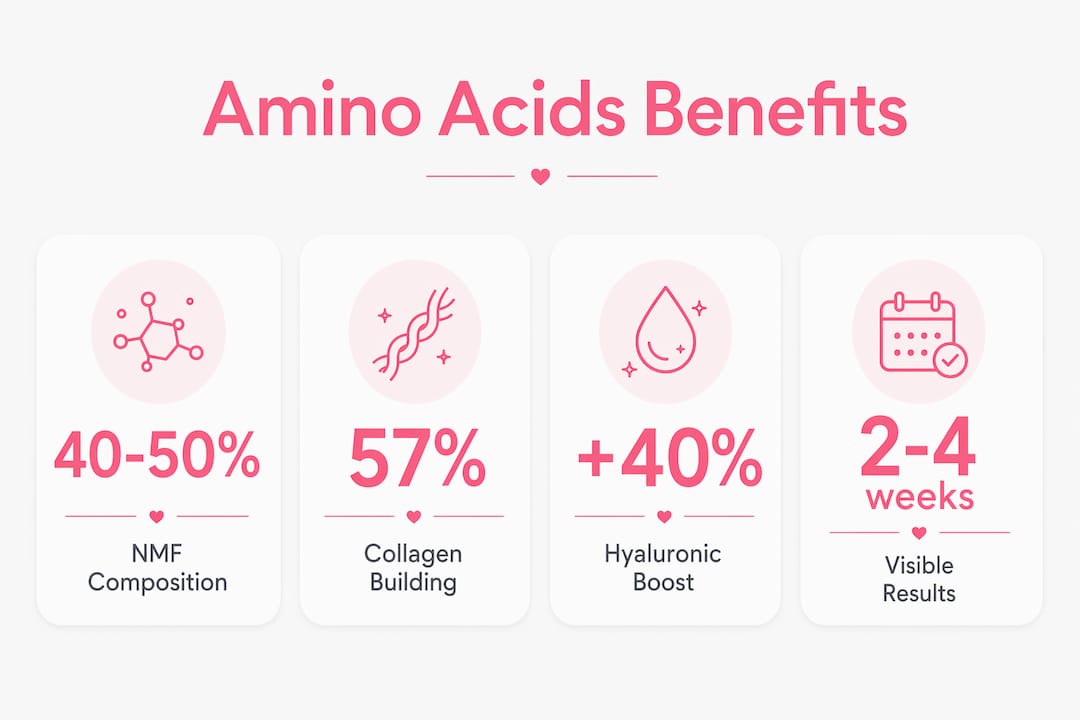
Amino acids are the molecular building blocks that keep your skin hydrated, structurally sound, and capable of repairing itself daily. Understanding what amino acids do for skin means recognizing their role in two critical systems: the skin’s Natural Moisturizing Factor (NMF) and its collagen network. Amino acids make up 40–50% of the NMF, the complex mixture in your stratum corneum that controls water retention and pH balance. Key players include glycine, proline, serine, lysine, and alanine. Without a consistent supply of these compounds, your skin loses its ability to hold moisture, produce collagen, and recover from daily stress.
How do amino acids support skin hydration?
Skin hydration is not just about drinking water. It depends on the NMF, a collection of water-soluble compounds that live inside your skin cells and pull moisture from the environment. Serine, glycine, and alanine are released when filaggrin, a key structural protein, breaks down in the outer skin layer. These amino acids then act as natural humectants, binding water molecules and keeping the stratum corneum soft and flexible.
When amino acid levels drop, transepidermal water loss (TEWL) increases. TEWL is the rate at which water evaporates through your skin. Higher TEWL means drier, more reactive skin that is slower to recover from irritation. Amino acids reduce TEWL by reinforcing the barrier and maintaining the skin’s natural pH, which sits around 4.5–5.5.
Here is what amino acids specifically contribute to hydration and barrier health:
- Serine binds water directly and supports ceramide synthesis, a fat that seals the skin barrier.
- Glycine regulates osmotic balance in skin cells and contributes to collagen structure.
- Alanine acts as a hygroscopic agent, drawing moisture from the air into the skin.
- Pyrrolidone carboxylic acid (PCA), derived from glutamine, is one of the most powerful natural humectants in the NMF.
- Lysine supports the cross-linking of collagen fibers, which gives skin its firmness.
Pro Tip: When reading a skincare label, look for “sodium PCA,” “hydrolyzed silk,” or individual amino acids like serine and glycine listed in the first half of the ingredient list. Their position signals meaningful concentration, not just a marketing claim.
The effectiveness of any amino acid product also depends on its formulation pH. Topical amino acid products work best when formulated near the skin’s natural pH range. Products that are too alkaline disrupt the acid mantle and reduce amino acid absorption before they can do their job.
What role do amino acids play in collagen production?
Collagen is the protein that gives skin its volume, firmness, and elasticity. Glycine and proline together comprise 57% of collagen’s amino acid content. That number tells you something direct: without adequate glycine and proline, your body cannot build or maintain collagen at the rate your skin needs.

Fibroblasts are the cells responsible for producing collagen, elastin, and hyaluronic acid in the dermis. Amino acids fuel fibroblast activity in two ways. First, they provide the raw material for protein synthesis. Second, amino acids like glutamine serve as precursors to proline and glutathione. Glutamine supports fibroblast proliferation and acts as a precursor to glutathione, the skin’s primary antioxidant defense against oxidative damage.
Clinical research published in 2026 shows that specific amino acids and peptides increase hyaluronic acid synthesis by 43% and stimulate early fibroblast migration by 44.7%. Those are not small numbers. They represent measurable structural changes in the dermis, not just surface-level improvements.
| Amino Acid | Primary Skin Function | Key Benefit |
|---|---|---|
| Glycine | Collagen structure | Provides 33% of collagen’s total composition |
| Proline | Collagen stability | Supports triple helix formation in collagen fibers |
| Glutamine | Fibroblast fuel | Precursor to proline and antioxidant glutathione |
| Lysine | Collagen cross-linking | Strengthens collagen fiber bonds for firmer skin |
| Serine | NMF and barrier | Drives ceramide production and water retention |
Amino acid-enriched hyaluronic acid fillers used in aesthetic medicine show a dual action: immediate volumization from the hyaluronic acid base and long-term remodeling from stimulated fibroblast activity. This is relevant even if you never plan to get a filler. It confirms that amino acids actively trigger the skin’s own repair machinery, not just coat the surface.
Pro Tip: If anti-aging is your goal, pair an amino acid serum with a vitamin C product. Vitamin C is a required cofactor for the enzyme that converts proline into hydroxyproline, the stabilized form used in collagen. Amino acids provide the material; vitamin C helps lock it in place.
For a broader look at how skin rejuvenation treatments work alongside nutritional support, the science consistently points back to amino acid availability as a rate-limiting factor.
Topical skincare vs. systemic nutrition: what actually reaches your dermis?
This is where most skincare marketing oversimplifies things. Topical amino acids and dietary amino acids do not do the same job. Understanding the difference helps you build a smarter routine.
Your skin is auxotrophic for certain amino acids. That means it cannot synthesize enough internally and depends on external supply, whether from food, supplements, or skincare products. When that supply runs short, skin turnover slows, repair stalls, and visible thinning can occur.
The challenge with topical application is penetration. The stratum corneum is a lipid-rich barrier designed to keep things out. Polar amino acids, which are water-soluble, struggle to cross it without help. Here is how the two approaches compare:
- Topical amino acids improve surface hydration, reinforce the NMF, and support barrier function. They work well for dryness, sensitivity, and maintaining daily moisture balance.
- Dietary amino acids from protein-rich foods like eggs, fish, legumes, and bone broth reach the dermis through the bloodstream. They provide the raw material for deep structural repair and collagen synthesis.
- Advanced delivery systems in skincare, such as liposomes, peptide complexes, and hydrolyzed protein fragments, improve penetration depth. Hydrolyzed amino acids have smaller molecular weights and cross the barrier more effectively than intact proteins.
- Medical-grade treatments like amino acid-enriched fillers or professional peels deliver amino acids directly to the dermis, bypassing the barrier entirely.
- Systemic stress and illness can deplete amino acid availability at the cellular level. In those cases, topical skincare cannot fully reverse the structural damage without nutritional or medical support.
The practical takeaway: use topical amino acid products for daily hydration and barrier support. Eat enough complete protein for deep repair. If you have significant skin laxity or volume loss, professional treatments that deliver amino acids below the barrier are worth discussing with a dermatologist.
How to build a skincare routine around amino acids
Integrating amino acids into your daily routine does not require an overhaul. It requires consistency and smart product pairing. Daily amino acid application outperforms sporadic use because skin repair is a continuous process, not a one-time event.
Follow this sequence for maximum benefit:
- Cleanse with an amino acid-based cleanser. Look for products that use amino acid surfactants like sodium lauroyl glutamate or sodium cocoyl glycinate. These clean without stripping the NMF.
- Apply a hydrating toner or essence. Choose one that lists serine, glycine, or sodium PCA in the first five ingredients. This preps the skin to absorb what comes next.
- Layer an amino acid serum. Serums with hydrolyzed proteins or peptide complexes penetrate more effectively than standard creams. Apply to damp skin for better absorption.
- Follow with hyaluronic acid. Amino acids and hyaluronic acid work together. Amino acids support the fibroblasts that produce HA naturally; topical HA locks in the surface moisture amino acids attract.
- Seal with a moisturizer containing ceramides. Ceramides and amino acids both reinforce the barrier. Using them together reduces TEWL more effectively than either alone.
- Support from the inside. Eat 20–30 grams of complete protein per meal from sources like salmon, Greek yogurt, lentils, or chicken. These supply glycine, proline, lysine, and glutamine directly to your skin cells via circulation.
Expect visible hydration improvements within two to four weeks of consistent use. Structural changes like improved firmness or reduced fine lines take three to six months, because collagen remodeling operates on a slower biological timeline.
Key takeaways
Amino acids are the most underrated active ingredient in skincare because they work at every level of skin function, from surface hydration to deep collagen repair.
| Point | Details |
|---|---|
| NMF composition | Amino acids make up 40–50% of the NMF, directly controlling skin hydration and pH. |
| Collagen building blocks | Glycine and proline comprise 57% of collagen, making them non-negotiable for skin firmness. |
| Fibroblast activation | Specific amino acids increase hyaluronic acid synthesis by 43% and fibroblast migration by 44.7%. |
| Topical vs. systemic limits | Topical amino acids improve surface hydration; deep repair requires diet, advanced delivery, or medical treatment. |
| Consistency over concentration | Daily use of amino acid products outperforms occasional high-dose application for lasting skin health. |
Why i think most people are using amino acids wrong
I have spent years reviewing skincare formulations and reading the clinical literature, and the most common mistake I see is treating amino acids like a trend ingredient rather than a foundational one. People layer expensive retinols and acids on top of a barrier that is already depleted, then wonder why their skin is reactive.
Amino acids should come first in your thinking, not last. A skin that is well-supplied with serine, glycine, and PCA holds moisture better, tolerates actives more easily, and repairs faster after any kind of stress. That is not a soft claim. The fibroblast migration data and the NMF composition research back it up directly.
The other misconception I see constantly: people assume that because a product lists amino acids on the label, it delivers meaningful amounts to the dermis. Formulation matters enormously. A poorly buffered product at the wrong pH will not deliver results regardless of what the ingredient list says. Look for hydrolyzed forms, peptide complexes, and products formulated at pH 4.5–5.5.
My honest recommendation is to think of amino acids the way you think of protein in your diet. You would not skip protein for a week and expect to feel strong. Your skin operates on the same logic. Feed it consistently, choose well-formulated products, and the results will follow.
— Anni
Discover amino acid skincare at Spyraverified
Spyraverified curates Japanese and Asian beauty products that take formulation science seriously. The brands in the collection use amino acid-based surfactants, hydrolyzed proteins, and barrier-supporting actives that align with everything the clinical research recommends.
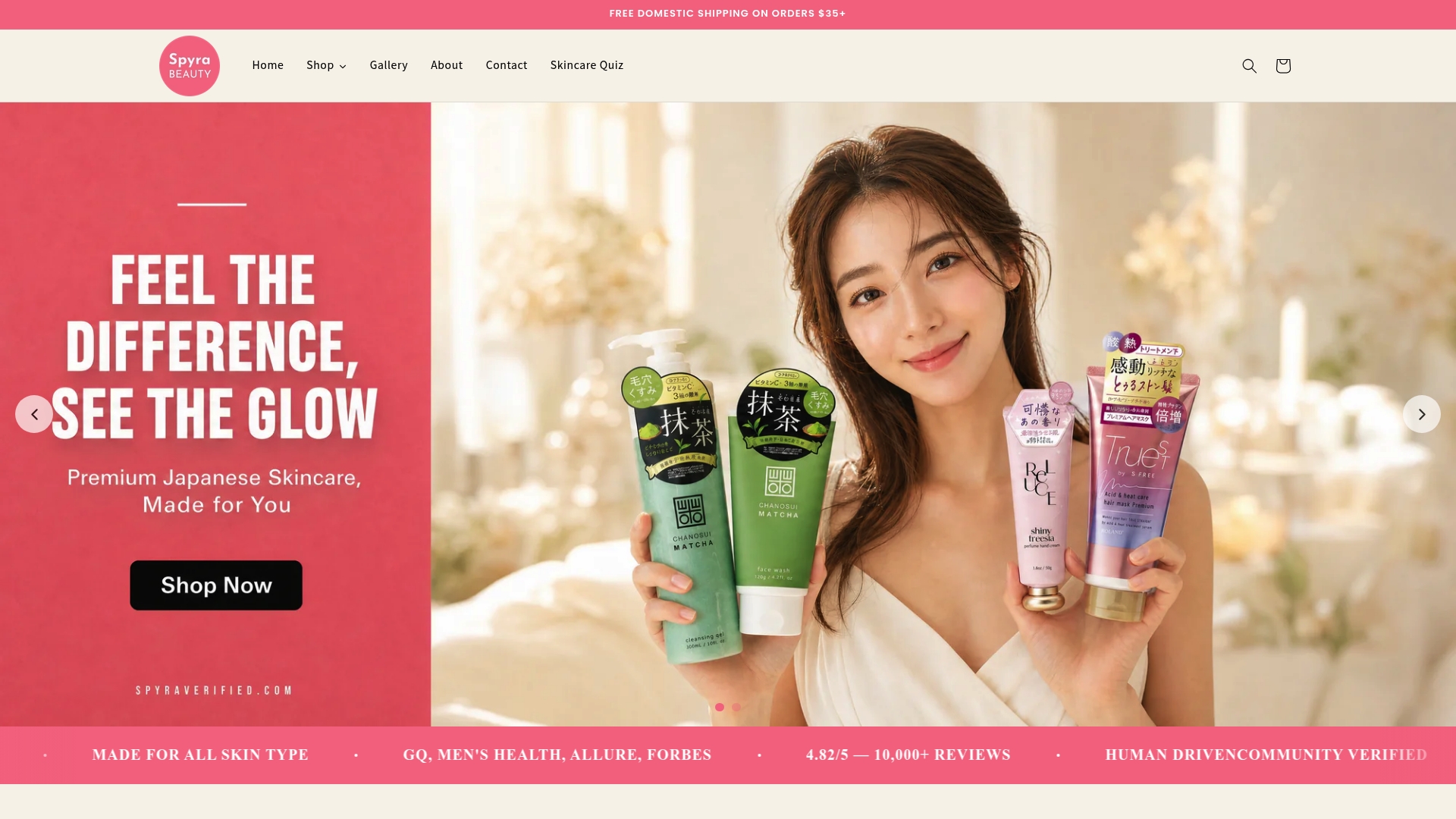
If you want to start with a gentle, amino acid-friendly cleanser, the Uji Matcha Foaming Face Wash uses a soft lather system that cleans without disrupting the NMF. For a broader look at what is available, the full skincare collection includes products designed for hydration, barrier repair, and daily skin maintenance. Not sure where to start? Take the skin quiz to find the right products for your skin type.
FAQ
What does amino acid do for skin exactly?
Amino acids maintain skin hydration by forming part of the Natural Moisturizing Factor, support collagen production as structural building blocks, and fuel fibroblast activity for ongoing repair. They work at both the surface barrier level and the deeper dermal layer.
Are amino acids in skincare actually effective?
Yes, particularly for hydration and barrier support. Clinical research shows specific amino acids increase hyaluronic acid synthesis by 43% and fibroblast migration by 44.7%, confirming measurable skin benefits beyond surface moisturization.
Which amino acids are best for skin hydration?
Serine, glycine, alanine, and sodium PCA are the most effective for hydration. These are the primary amino acids released from filaggrin breakdown that constitute the largest fraction of the skin’s NMF.
Can i get enough amino acids for skin health from diet alone?
Diet provides amino acids that reach the dermis through the bloodstream and support deep collagen synthesis. However, the skin is auxotrophic for certain amino acids, meaning topical application adds a direct local supply that diet alone cannot fully replicate at the skin surface.
How long does it take to see results from amino acid skincare?
Surface hydration improvements typically appear within two to four weeks of consistent daily use. Structural changes like improved firmness or reduced fine lines require three to six months, reflecting the slower pace of collagen remodeling in the dermis.
