

Start with 3 Steps: Korean Inspired Body Care for U.S. Skin
A simple K-beauty body routine runs in this order: soak and exfoliate once or twice a week, cleanse with something gentle, layer on a lightweight treatment if your skin needs it, seal in moisture while your skin is still damp, and finish with daily SPF. The payoff is smoother texture, a stronger moisture barrier, and skin that feels calmer within a couple of weeks. Short on time? Focus on cleansing, moisturizing, and daily SPF as the essential steps. Additional products and techniques can be added as needed.
TL;DR:
- Exfoliate once or twice a week after a 10 to 15-minute soak using gentle tools like an Italy towel or exfoliating mitt, avoiding harsh scrubs.
- Use low-pH gel or cream cleansers and incorporate oil cleansers or balms after heavy sunscreen or sweat-heavy days to support your skin barrier.
- Apply hydrating serums or essences with niacinamide, centella, or hyaluronic acid before sealing in moisture with a ceramide-rich lotion or balm.
- Always moisturize within a few minutes of showering on damp skin to trap water and prevent dryness, choosing textures suited to your seasonal needs.
- Protect all exposed skin daily with SPF 30 or higher, reapplying every two hours outdoors and covering areas like hands and feet that are often overlooked.
Table of Contents
- What Does a Korean Body Care Routine Actually Involve?
- How Often Should You Exfoliate Your Body?
- Which Body Cleansers Actually Support Your Skin Barrier?
- What Body Treatments and Serums Are Worth Adding?
- How Do You Lock In Moisture Without Feeling Greasy?
- Do You Really Need Sunscreen on Your Body Every Day?
- What Products Should You Actually Look For?
- Why Sourcing and Authenticity Matter in Asian Body Care
- Starting Small Beats Starting Perfectly
- Where to Find Authentic Korean and Japanese Body Care Products
- Sources
What Does a Korean Body Care Routine Actually Involve?
Korean body care isn’t a rigid ten-step ritual bolted onto your shower routine. It’s closer to a menu: you pick what your skin needs that week and skip what it doesn’t. Harper’s Bazaar makes this point about the face routine, and it holds even more true for the body, where skin varies wildly from your shins to your shoulders. The consistent thread across Korean beauty routines is a bias toward barrier health over harsh intervention. NewBeauty notes that Korean body care leans on ceramides, probiotics, and fermented botanicals instead of aggressive actives, paired with textures light enough that you’ll actually keep using them.
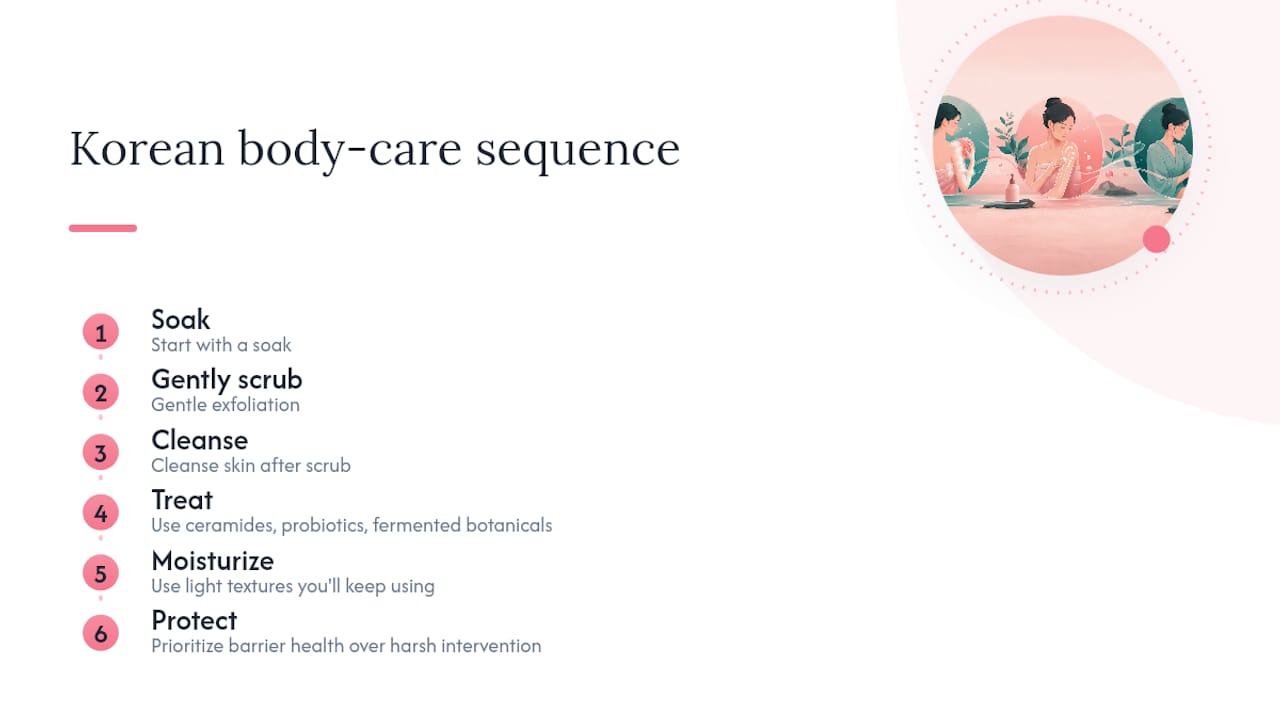
That’s the real difference from a lot of American body care, which tends to treat the body as an afterthought to face routines. K-beauty treats the body with the same layered attention: soak, scrub gently, cleanse, treat, moisturize, protect. A commonly cited routine order follows exactly that sequence, and it’s the backbone for everything below.
How Often Should You Exfoliate Your Body?
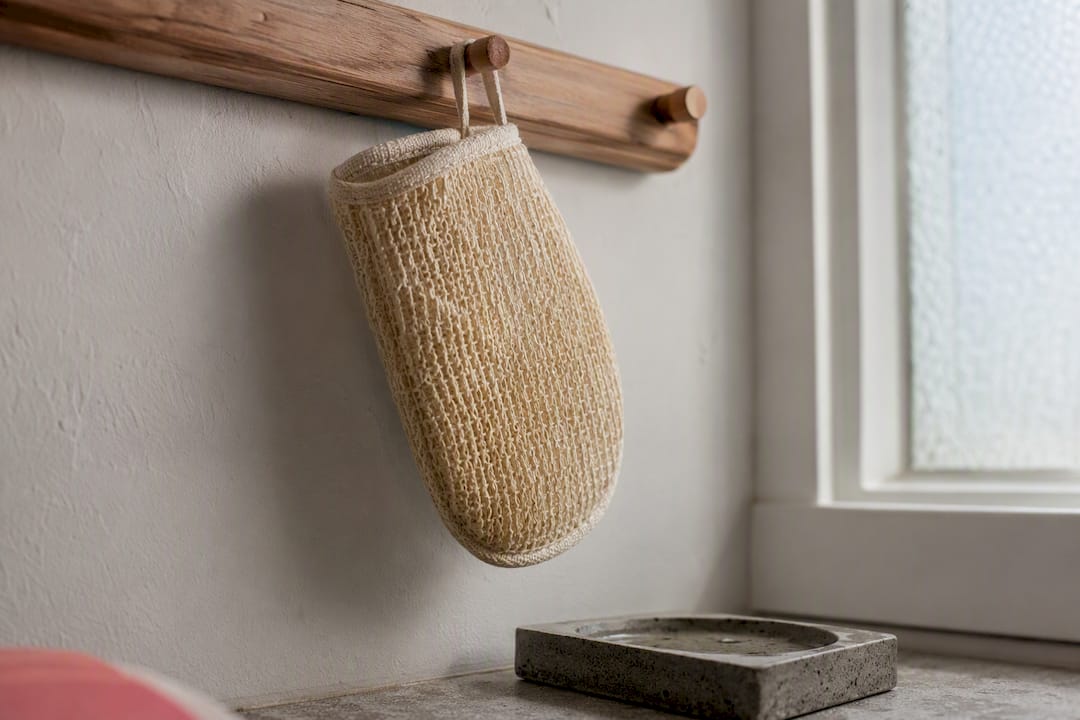
Exfoliation is where Korean and Japanese bathing culture diverges most from a quick loofah scrub. Traditional seshin scrubbing happens after a long soak, using directional strokes toward the heart to support circulation, and it typically requires a trained hand and a proper soak first, not a five-minute rinse. You don’t need a professional session to borrow the principle. The soak matters because it softens skin and swells dead cells, which makes exfoliation far less abrasive than scrubbing dry or barely damp skin.
For most people, exfoliating once or twice per week is generally recommended, increasing cautiously if skin shows no signs of irritation. Sensitive or already-inflamed skin should exfoliate less frequently.
- Soak for 10 to 15 minutes in warm (not hot) water before scrubbing.
- Use an Italy towel or a soft exfoliating mitt instead of a stiff loofah or dry brush.
- Choose enzyme-based exfoliants (papaya, pumpkin) if your skin flushes easily or feels tight often.
- Choose a low-percentage AHA or PHA body wash if you deal with keratosis pilaris or rough patches and your skin tolerates chemical exfoliants well.
- Rinse thoroughly, pat (don’t rub) dry, and moisturize immediately while skin is still damp.
Watch for tightness that doesn’t ease up, visible redness lasting more than an hour, or a stinging sensation when you apply moisturizer afterward. All three are signs you’ve gone too far, too often.
Pro Tip: Keep your exfoliating tool separate from your regular wash cloth, and let it air dry fully between uses. A damp mitt sitting in a humid shower is a breeding ground for bacteria, which defeats the purpose of gentler skin care.
Which Body Cleansers Actually Support Your Skin Barrier?
Bar soap gets a bad reputation in Korean skincare circles for good reason. Most bar soaps run highly alkaline, and your skin’s natural acid mantle sits around pH 4.5 to 5.5. Every wash with a high-pH bar soap pushes your barrier further from where it wants to be, which is part of why routine-focused guides point to gentler, low-pH cleansers as the better daily default.
Gel and cream body washes formulated closer to skin’s natural pH clean effectively without stripping. Look for hydrating washes built around mild surfactants and humectants rather than sulfates, especially if your skin already feels compromised, flaky, or tight after showering.
Oil cleansers and cleansing balms aren’t just a face-routine trick. They earn their place on the body when you’re removing heavy sunscreen, long-wear body makeup, or dealing with oily back acne where a standard wash isn’t cutting through buildup. The technique matters: massage the oil or balm onto dry skin first, let it emulsify with a little water, then rinse fully before your regular wash. Skipping that emulsification step leaves residue that can clog pores rather than clear them.
- Favor low-pH gel or cream washes for daily use.
- Reach for an oil cleanser or cleansing balm after heavy sunscreen or sweat-heavy days.
- Skip sulfate-heavy formulas if your skin barrier already feels compromised.
- Keep showers to five or ten minutes in warm, not scalding, water to limit moisture loss.
If you already double-cleanse your face, the same logic extends downward. A full double-cleansing breakdown walks through the technique in more depth if you want to adapt it for the body.
What Body Treatments and Serums Are Worth Adding?
A body essence or serum is just a lightweight, humectant-rich liquid meant to sit under a heavier moisturizer, and its job is to deliver hydration or a specific active before you seal everything in with cream. Skipping this step isn’t a mistake. Adding it is how you go from adequate to genuinely improved texture, particularly on drier or more reactive patches like elbows, shins, and the backs of arms.
Certain actives translate well to body skin without the risk that comes with strong retinoids or high-percentage acids spread across a much larger surface area than your face:
- Niacinamide helps even tone and calm redness, and it layers well under almost anything.
- Centella asiatica shows up constantly in Korean formulas for its calming reputation on irritated or reactive skin.
- Low-percentage AHAs or PHAs (think 2% to 5%) smooth rough texture on arms and legs without the burn risk of a 10% face-strength formula.
- Hyaluronic acid pulls in moisture before your moisturizer locks it down.
- Ceramides rebuild the lipid layer that soap and exfoliation temporarily disrupt.
Hard-to-reach spots like the middle of your back respond better to a mist or a long-handled applicator than to twisting your arm into an uncomfortable angle. For keratosis pilaris or backne specifically, a thin layer of a targeted acid treatment applied two to three times a week, not daily, tends to outperform aggressive daily use that just irritates the area further.
Pro Tip: Patch-test any new body active on your inner forearm for three nights before applying it broadly. Body skin reacts more slowly than facial skin, so a reaction that would show up in a day on your face might take three or four days to appear on your thigh.
How Do You Lock In Moisture Without Feeling Greasy?
Applying moisturizer to bone-dry skin is one of the most common mistakes in a body care routine, and it’s also the easiest one to fix. Damp skin holds more water at the surface, and a moisturizer applied within a couple of minutes of stepping out of the shower traps that water rather than letting it evaporate. This is the entire logic behind “seal while damp,” and it works whether you’re using a $12 drugstore lotion or a $60 ceramide cream.
Texture should shift with your skin type and the season. Oily or combination skin generally does better with gel creams or lighter lotions year-round. Dry or sensitive skin often needs a true cream, and in winter, a balm or facial-style oil layered underneath a lotion for extra staying power. Ceramide-rich creams are a recurring pick in Korean body care roundups precisely because ceramides rebuild the barrier lipids that daily washing and exfoliation chip away at.
For stubborn dry patches, apply a thicker balm or oil directly to that spot before your all-over lotion, then massage in small circular motions for about thirty seconds. That light massage isn’t cosmetic. It helps distribute product more evenly and improves how well it sinks in rather than sitting on the surface.
| Skin type | Best texture | Season note |
|---|---|---|
| Oily or combination | Gel cream or light lotion | Stays light in summer, layer thin balm on dry spots in winter |
| Dry | Cream or balm | Add a facial oil underneath in winter for extra sealing |
| Sensitive | Fragrance-free cream | Patch test seasonal switches before full application |
| Normal | Lotion | Switch to a richer cream once humidity drops |
If dryness persists no matter what you layer on, the issue might be deeper than product choice. A closer look at body care built specifically for dry skin covers targeted fixes worth trying.
Do You Really Need Sunscreen on Your Body Every Day?
Yes, and this is the step people skip most and regret most. Anywhere skin sees regular sun exposure, meaning your neck, hands, forearms, and legs on any day you’re not fully covered, needs SPF, not just your face. An SPF 30 minimum is the standard baseline for daily body protection, and higher isn’t wasted if you’re outdoors for extended stretches.
Format matters for whether you’ll actually keep it up. Lotions cover the most surface area evenly but take a minute to rub in. Sprays are fast but easy to under-apply, especially on the backs of arms and legs, so spray twice from different angles and rub in to be sure you got full coverage. Sticks work well for quick spot application on hands and the tops of feet but aren’t efficient for large areas like legs.
- Choose a water-resistant formula for swimming, workouts, or heavy sweating.
- Reapply every two hours outdoors, or immediately after swimming or toweling off.
- Don’t skip hands and feet. They’re two of the most sun-exposed, least-protected areas on most people.
What Products Should You Actually Look For?
Translating a routine into a shopping list is where most people get stuck, so here’s the breakdown by category and what to check on the label before you buy.
- Cleansing balms or oil cleansers: look for squalane, plant oils, or ceramide complexes; skip anything with heavy fragrance if you’re prone to irritation.
- Gentle exfoliating washes: enzyme-based (papaya, pumpkin) for reactive skin, low-percentage AHA/PHA for tolerant skin dealing with rough texture.
- Body essences or serums: check for niacinamide, centella asiatica, or hyaluronic acid near the top of the ingredient list, not buried at the bottom.
- Ceramide-rich lotions: look for phrases like “ceramide complex” or a listed ceramide type (NP, AP, EOP) rather than a vague “moisturizing” claim.
- Soothing aloe gels: best for post-sun or post-exfoliation calming; fewer ingredients is usually better here.
- Sleeping body masks: thicker, occlusive formulas meant to sit overnight; save these for particularly dry weeks, not nightly use.
Always patch test a new product for a few days before applying it body-wide, and lean fragrance-free if you have any history of sensitivity. Concentration matters more than a flashy ingredient list.
Why Sourcing and Authenticity Matter in Asian Body Care
Formulas marketed as “Korean” or “Japanese” don’t all meet the same standard once they leave their home market. Regional reformulation, gray-market imports, and mislabeling are common enough that what you buy isn’t always what the original brand actually sells at home. Spyraverified partners directly with manufacturers and brand owners rather than sourcing through resellers, which closes the gap between what’s on the label and what’s actually in the bottle.
That direct-partner model matters most for the categories this routine leans on hardest:
- Ceramide-blend creams, where the specific ceramide type and concentration determine whether a product actually rebuilds barrier function, are available from Clinical Skincare Supplies | NexGen Clinic Cambridge.
- Fermented and probiotic-based treatments, where authenticity affects both efficacy and shelf stability.
- Lightweight sunscreens, where formulation differences between markets can change both texture and UV filter composition.
If you’re building this routine from scratch, a foundational guide to Korean skincare covers the layering logic in more depth, particularly if you’re extending face habits down to the body for the first time.
Starting Small Beats Starting Perfectly
Don’t try to run the full routine on day one. Start with three steps: cleanse, moisturize on damp skin, and SPF. Add exfoliation in week two, then a treatment serum in week three once the basics feel automatic. This staged approach also lines up with how dermatologist-backed guidance frames good skin habits, building a consistent baseline before layering in anything more advanced.
If you only try one thing from this entire routine, make it the pairing of gentle exfoliation once a week followed by moisturizer sealed onto damp skin. It’s the smallest change with the most noticeable payoff, and it’s the one habit that makes everything else you add later actually work better.
— Anni
Where to Find Authentic Korean and Japanese Body Care Products
Building this routine only works if the products behind it are what they claim to be. Spyraverified curates cleansing balms, low-percentage exfoliating washes, ceramide lotions, and lightweight sunscreens sourced directly from the manufacturers making them, not through resellers guessing at formulas.
That direct sourcing means the ceramide cream you add to cart is the same formula sold in its home market, not a reformulated version adjusted for a different regulatory environment. If you’re ready to build out the routine covered here, the skincare collection is organized by category, from cleansing balms to body essences to daily SPF, so you can shop by step rather than hunting through unrelated listings. Start with whichever step you’re missing and build from there.
Sources
- The 10-step Korean skincare routine explained — Harper’s Bazaar
- The Best Korean Body-Care Products, According to K-Beauty Enthusiasts — Allure
- It’s Time to Try a K-Beauty Body Care Routine — NewBeauty
- Korean Body Care Routine: How to Extend K-Beauty Beyond Your Face — Mirai Skin
