

Best asiabnc.co.kr Alternatives for Korean Beauty Sourcing
Top alternatives to asiabnc.co.kr for Korean beauty distribution in the US
If you’re sourcing Korean beauty products for the US market and need companies similar to asiabnc.co.kr, several reputable distributors and exporters are worth your attention. The strongest alternatives operating in the Korean beauty supply chain include:
- C&C Ltd. — a Korean beauty distributor with established export operations across multiple international markets
- AXIS-Y — known for its skincare focus and growing presence in North American retail channels
- JIN Corporation — a trading and distribution company active in K-beauty export
- Mark&Teams — a distributor specializing in Korean cosmetics for overseas buyers
- Cosmelogics — focused on cosmetics distribution with cross-border logistics capabilities
- DECANT Corp. — a K-beauty exporter with experience in international wholesale
These companies offer distribution and export services comparable to what asiabnc.co.kr provides, covering product sourcing, wholesale pricing, and international logistics. Their product focus and regional strengths vary, so the right fit depends on your specific category needs and target markets. For a broader view of how Asian beauty exporters position themselves globally, the Japanese beauty market offers useful context on what drives export success in this region.
How to tell Korean beauty distributors apart from manufacturers

The single most common sourcing mistake US buyers make is treating distributors and manufacturers as interchangeable. They are not, and confusing the two leads to failed partnerships, missed timelines, and products that do not match specifications.
Distributors handle logistics, brand representation, and wholesale. They buy finished products from manufacturers and move them across borders. They can often arrange private labeling or simple logo printing, but they do not formulate products or run production lines.
Manufacturers (including ODM and OEM operations) control the full production process. ODM manufacturers develop products to their own existing formulas and allow buyers to brand them. OEM manufacturers produce to the buyer’s specifications from scratch. Both require more lead time, higher minimum order quantities, and detailed technical documentation compared to working with a distributor.
Key distinctions to check before signing any agreement:
- Does the company own a factory, or does it source from third-party producers?
- Can it provide a factory audit report or GMP certification?
- What customization level does it actually support: logo only, packaging, or full formulation?
- Are samples produced from existing stock, or from drawings and technical briefs?
Pro Tip: Always ask a potential partner to clarify whether their customization is sample-based or drawing-based. Sample-based means they adapt an existing product; drawing-based means they build to your spec. The difference in scope affects timelines, costs, and how unique your final product will be.
What to look for when choosing a reliable K-beauty sourcing partner
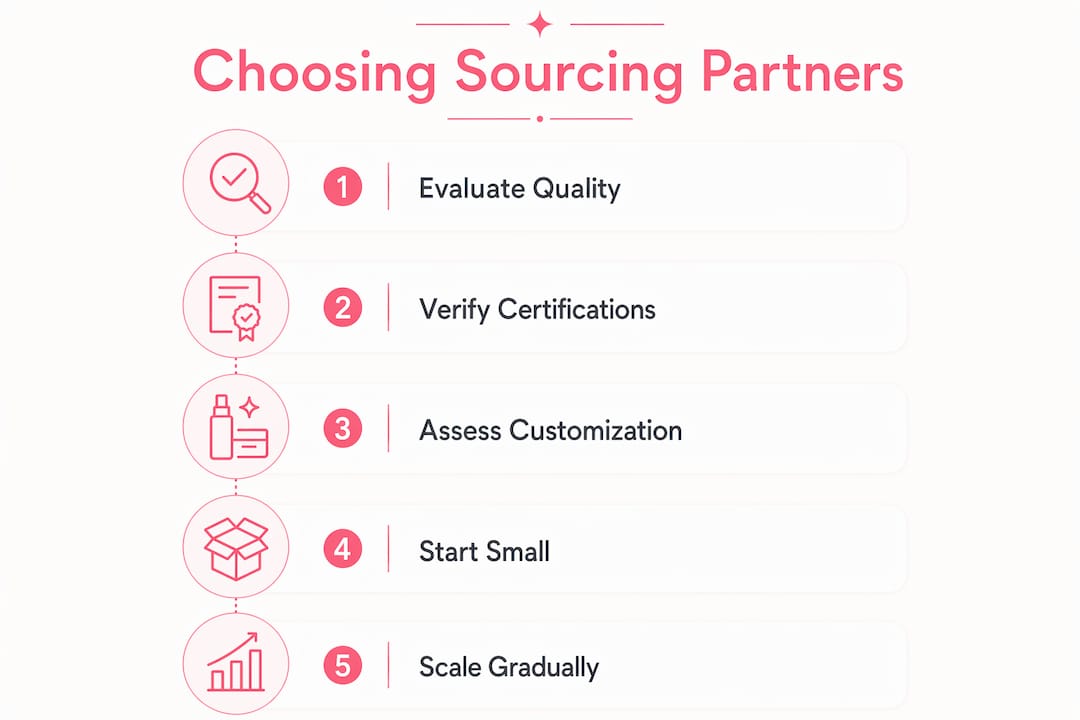
Picking the wrong distributor costs more than just money. Regulatory rejections at US customs, inconsistent product quality, and poor communication all compound quickly. The criteria below separate dependable partners from risky ones.
Certifications and quality assurance are the baseline. Look for GMP (Good Manufacturing Practice) certification, ISO 22716 for cosmetics, and AEO (Authorized Economic Operator) status for customs efficiency. Partners with transparent QA operations, including documented inspection staffing and rejection rate data, carry measurably lower risk over the long term. This detail gets overlooked in early evaluations far too often.
Regulatory compliance for the US market deserves its own conversation before you commit. FDA requirements for cosmetics imported into the United States are specific, and smaller distributors often lack the expertise to navigate them. Confirming compliance capabilities early prevents expensive surprises at the border.
A practical evaluation checklist:
- GMP, ISO 22716, or AEO certification (verified, not self-reported)
- Documented QA/QC process with on-site inspector count
- FDA compliance knowledge and prior US import experience
- Clear return and refund policy for defective or non-conforming goods
- Responsive customer support with a dedicated point of contact
- Product range that matches your category (skincare sets, color cosmetics, hair care)
- Willingness to start with a small pilot order before scaling
Starting small is not a sign of weakness. It is standard practice for managing risk with any new partner. Scale only after you have verified product quality, shipping timelines, and communication reliability across at least one full order cycle. For practical guidance on buying Korean beauty without common sourcing pitfalls, that resource covers the logistics and brand representation side in detail.
Understanding the Korean beauty export market as a US buyer
The K-beauty export market does not work like Western wholesale platforms. There is no single Korean equivalent of Alibaba or a consolidated marketplace where US buyers can compare vetted suppliers side by side. The market is fragmented, and that fragmentation shapes every sourcing decision you make.
Success in this environment typically requires partnering with specialized exporters, often those recognized as “Global Beauty Pioneer” firms, which have demonstrated expertise across multiple international markets including North America, the Middle East, and CIS regions. These companies understand varied regulatory environments and have the logistics infrastructure to match.
The competitive picture is also shifting. Nature Republic secured notable recent funding in funding in january 2025, a signal that brand-backed companies with capital are increasingly competing against traditional export trading firms. For US buyers, this means the pool of well-funded, export-capable partners is growing, but so is the noise. Evaluating a partner’s regional diversification and growth sustainability matters more now than it did a few years ago.
Key market dynamics affecting US buyers:
- No single dominant wholesale platform; sourcing requires direct outreach and relationship-building
- Specialized exporters with multi-market experience outperform generalist trading companies
- Brand-backed competitors with recent funding are raising the bar on logistics and compliance
- Regional focus varies widely: some partners prioritize North America, others focus on Southeast Asia or the Middle East
- Pricing is rarely standardized; negotiation and volume commitments drive final costs
For buyers exploring clinically validated products within this space, understanding how beauty supplement sourcing intersects with regulatory compliance offers a useful parallel for vetting Korean beauty partners.
Spyraverified: a curated alternative for US buyers
If working through fragmented Korean export channels feels like more friction than your sourcing timeline allows, Spyraverified offers a different route. Rather than navigating cold outreach to trading firms in Seoul, you get a curated platform built specifically to bring authentic Asian beauty products to buyers in the US, with the compliance and logistics groundwork already done.
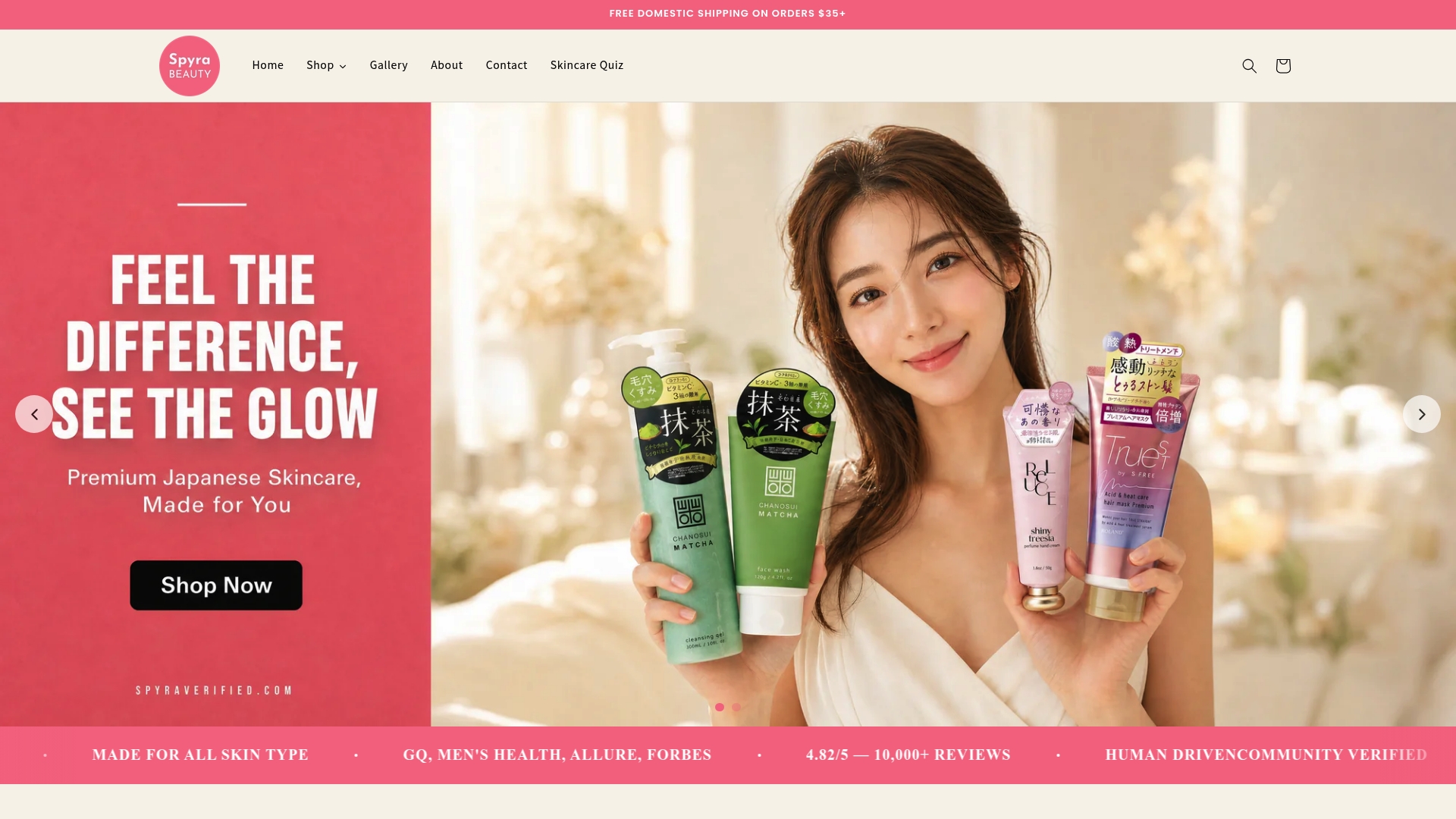
Spyraverified partners directly with manufacturers and brand owners, not middlemen, so product authenticity is traceable from the source. The platform combines e-commerce with AI-powered content and localized market support, which means brands are positioned correctly for US consumers from day one. For buyers who want to move quickly without building a sourcing operation from scratch, the skincare collection and hair care range are ready to explore now.
Key takeaways
Reliable alternatives to asiabnc.co.kr exist across the Korean beauty supply chain, but choosing the right one requires knowing whether you need a distributor or a manufacturer, and verifying compliance credentials before committing to volume.
| Point | Details |
|---|---|
| Know the role you need | Distributors handle logistics and wholesale; manufacturers control formulation and production. Confusing the two causes sourcing failures. |
| Verify certifications first | GMP, ISO 22716, and AEO status are baseline trust signals; always confirm them independently, not through self-reporting. |
| Compliance is non-optional | Partners without documented FDA compliance experience add real legal and customs risk for US import orders. |
| Start small, then scale | Pilot orders reveal quality, communication, and shipping reliability before you commit to larger volumes. |
| Spyraverified as a vetted option | Spyraverified offers curated, manufacturer-direct Asian beauty products with built-in compliance and localized US market support. |
