

Mist Spray Skincare: Benefits, Uses, and What It Does
A facial mist, also called a mist spray in skincare, is a fine water-based spray formulated to deliver quick hydration, soothe irritation, and refresh the skin throughout the day. Unlike a toner or serum, a facial mist works in seconds and fits into almost any point in your routine. Brands like Biossance and Yonka have built entire product lines around this format because the science behind it is solid. When formulated with the right ingredients, a quality facial mist can deliver an 80% improvement in skin hydration after a single application. That number tells you this is not just a feel-good product. It is a functional step that earns its place in your routine.
What is mist spray skincare and how does it work?
A facial mist is defined as a water-based product delivered through a fine-mist nozzle to deposit hydrating, soothing, or active ingredients directly onto the skin’s surface. The industry term is facial mist or hydrating mist. The informal phrase “mist spray” is widely used in search and retail, but both terms describe the same product category.
The mechanism is straightforward. The mist creates a thin layer of moisture on the skin. Humectants in the formula then draw water from the air and from deeper skin layers toward the surface. This is why ingredient quality matters so much. A mist made with plain water and no humectants does the opposite of what you want. It evaporates and pulls moisture out with it, a process called trans-epidermal water loss, or TEWL.

Functional mists contain ingredients that stay on the skin and hold water in place. That distinction separates a genuinely effective product from one that just feels refreshing for thirty seconds.
What ingredients make mist sprays effective for skin hydration?
The benefits of mist spray products come entirely from their formulation. The delivery format is simple. The ingredients do the real work.
The core humectants to look for:
- Glycerin draws moisture from the environment and binds it to the skin. It is one of the most well-researched hydrating ingredients in dermatology.
- Hyaluronic acid holds up to 1,000 times its weight in water. It plumps the skin surface and reduces the appearance of fine lines caused by dehydration.
- Sodium PCA is a naturally occurring component of the skin’s own moisture factor. Mists that include it work in harmony with your skin’s biology rather than against it.
- Aloe vera soothes redness and inflammation. It is especially useful for sensitive or post-sun skin.
- Rose water calms irritation and carries a mild anti-inflammatory effect backed by decades of use in traditional skincare.
Botanical extracts like aloe and rose water add a soothing layer on top of the hydration. They make mists particularly useful for sensitive skin types that react to heavier actives.
What to avoid: Experts consistently flag alcohol and synthetic fragrances as the two biggest offenders in low-quality mists. Alcohol and synthetic fragrances can strip the skin barrier and counteract every hydrating ingredient in the formula. A mist that smells great but contains denatured alcohol is actively working against your skin. If you are building an organic skincare routine, this is the first label check to make.
Pro Tip: Flip the bottle and read the ingredient list before you buy. If alcohol (listed as “alcohol denat.” or “ethanol”) appears in the first five ingredients, put it back.
Different mist types serve different purposes. Hydrating waters focus purely on moisture delivery. Serum-mists combine humectants with actives like niacinamide or vitamin C. Finish mists are designed to set and refresh skin after makeup. Knowing which type you are buying prevents disappointment.
How to use mist sprays effectively in a skincare routine
Correct technique makes a measurable difference. Most people either spray too close, use too little, or skip the sealing step that locks in the hydration.
The right application sequence:
- Cleanse first. Apply your mist immediately after washing your face while the skin is still slightly damp. This is when the skin is most receptive to absorbing moisture.
- Hold the bottle 8–12 inches from your face. Use 3–5 sprays for full coverage. Spraying too close creates uneven saturation and wastes product.
- Pat gently, do not rub. Let the mist settle for five to ten seconds, then lightly press it into the skin with clean fingertips.
- Apply serum immediately after. Mists containing humectants enhance serum absorption by creating a slightly damp surface that improves penetration. Professional estheticians use this technique deliberately.
- Seal with moisturizer. This step is non-negotiable. Misting without sealing can trigger TEWL, especially in dry or air-conditioned environments. The moisturizer acts as a barrier that traps the hydration you just applied.
- Reapply during the day as needed. In dry climates or air-conditioned offices, reapply every 2–3 hours and follow with a light moisturizer or facial oil to seal.
Using mist over makeup is one of the most practical applications of this product. Hydrating mists can refresh skin over makeup without disrupting it, provided you hold the bottle 8–10 inches away and do not rub. This is a key difference from setting sprays, which use film-forming agents that can smear if touched.
Pro Tip: Mist between serum and moisturizer layers if your skin feels tight mid-routine. That tightness is a signal that your skin needs more water before you lock in with an occlusive.
The Freesia Glitter Glow Serum from Spyraverified is a good example of a serum that pairs well with a hydrating mist applied just before it. The damp surface helps the serum spread evenly and absorb faster.
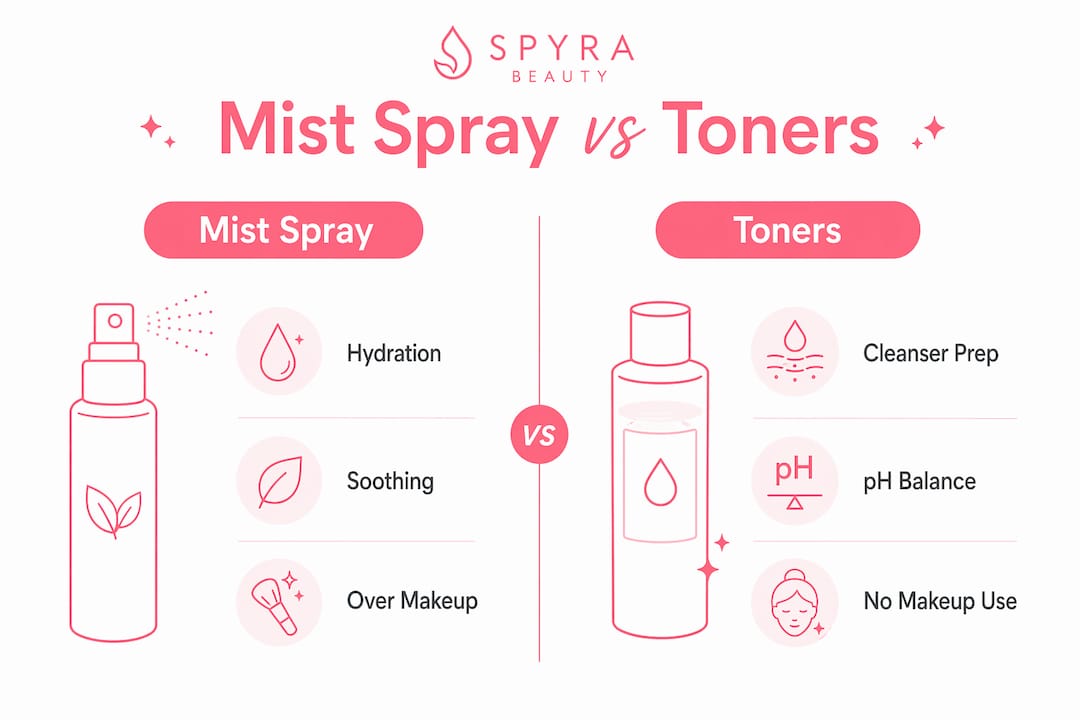
How do mist sprays compare to toners and setting sprays?
This is the most common point of confusion in skincare. All three products come in spray or liquid form, but they serve completely different functions.
| Product | Primary purpose | When to use | Key ingredients | Works over makeup? |
|---|---|---|---|---|
| Facial mist | Hydrate and refresh skin | After cleansing, between layers, midday | Humectants, botanicals, actives | Yes, if alcohol-free |
| Toner | Cleanse, balance pH, prep skin | After cleansing, before serum | AHAs, BHAs, niacinamide, witch hazel | No |
| Setting spray | Lock makeup in place | After full makeup application | Film-forming polymers, alcohol | Yes, but not for hydration |
Toners are prep products. They remove residual cleanser, balance skin pH, and deliver actives like salicylic acid or niacinamide. They are not designed for midday refreshing. Setting sprays lock makeup and extend wear time. They are not formulated to hydrate skin and often contain alcohol that dries it out.
A facial mist is the only one of the three that you can use at multiple points in your routine and over finished makeup without disrupting it. That flexibility is what makes it a genuinely useful daily tool rather than a single-step product.
Which skin types benefit most from facial mist for hydration?
Every skin type can benefit from a well-formulated mist, but the impact is most dramatic for specific conditions.
- Dry and dehydrated skin sees the most immediate benefit. A humectant-rich mist delivers fast surface hydration that a thick moisturizer alone cannot replicate in terms of speed and comfort.
- Sensitive skin responds well to mists built around aloe vera, rose water, and centella asiatica. These ingredients calm reactivity without the risk of irritation from heavier actives.
- Dull or fatigued skin benefits from mists that include vitamin C or niacinamide. The fine mist format delivers these actives evenly across the face without the concentration risk of a serum.
- Oily skin can use alcohol-free mists without adding heaviness. A lightweight glycerin-based mist actually helps regulate oil production by keeping the skin properly hydrated. Dehydrated oily skin overproduces sebum as a compensation mechanism.
- Travelers and frequent flyers benefit significantly. Airplane cabin humidity drops to as low as 20%, far below the 40–60% range skin needs to stay comfortable. A mist used every hour during a long flight, followed by a light moisturizer, prevents the tight, dull feeling most people associate with air travel.
For those managing aging skin, pairing a humectant mist with a rich moisturizer supports the best practices for glowing skin that dermatologists consistently recommend. Hydration is the foundation of every anti-aging protocol.
The Vitamin C Cream Mist Spray from Spyraverified is formulated specifically for skin that needs both brightening and hydration in one step. It is a strong option for dull or uneven skin tones.
Key Takeaways
A facial mist is only as effective as its ingredients. Humectants, botanicals, and the mist-and-seal technique determine whether you get real hydration or just temporary relief.
| Point | Details |
|---|---|
| Ingredient quality is everything | Look for glycerin, hyaluronic acid, and aloe vera. Avoid alcohol and synthetic fragrances. |
| Always seal after misting | Applying moisturizer after your mist prevents TEWL and locks in hydration. |
| Mists enhance serum absorption | Apply serum on a slightly damp, freshly misted face for better penetration. |
| Mists differ from toners and setting sprays | Each product serves a distinct function. Only mists hydrate skin at multiple routine stages. |
| Reapply in dry environments | Use every 2–3 hours in air-conditioned or low-humidity settings, followed by a light moisturizer. |
Why I think most people are using their mist wrong
I have tested dozens of facial mists over the years, and the single most common mistake I see is treating a mist as a standalone hydration step. People spray, let it air dry, and move on. That approach does not just fail to hydrate. It actively dries the skin out by pulling surface moisture into the evaporating water.
The mist-and-seal method changed how I think about this entire product category. A mist is not a replacement for moisturizer. It is a preparation layer that makes everything applied after it work better. When I started applying my serum onto a freshly misted face, the difference in how my skin felt by midday was immediate.
The other thing most articles skip is the sensory dimension. A well-formulated mist with a botanical ingredient like hinoki cypress or rose water does something that no other skincare step does. It resets your mood as much as your skin. That is not a trivial benefit. Skincare compliance goes up when the routine feels good, not just when it works.
My honest recommendation: do not buy the cheapest mist you can find. The price gap between a glycerin-based mist and a plain water mist with fragrance is small. The difference in results is not.
— Anni
Discover Spyraverified’s mist sprays and skincare collection
If this article has you rethinking your hydration routine, Spyraverified has two mist products worth your attention. The Vitamin C Cream Mist Spray combines brightening vitamin C with a creamy hydrating base, making it ideal for dull or uneven skin. The Hinoki Cypress Aroma Mist delivers calming botanical hydration with a grounding forest scent that makes midday reapplication feel like a ritual rather than a chore.

Both products are formulated without alcohol or synthetic fragrances, which means they hydrate rather than strip. Spyraverified sources directly from Japanese and Asian manufacturers, so what you get is the real formulation, not a watered-down export version. Browse the full skincare collection to find the right mist and complementary products for your skin type.
FAQ
What does mist spray do for your skin?
A facial mist delivers instant hydration, soothes irritation, and preps the skin to absorb serums and moisturizers more effectively. When formulated with humectants like glycerin or hyaluronic acid, it holds water at the skin’s surface rather than letting it evaporate.
Is mist spray effective or just a feel-good product?
A well-formulated mist is genuinely effective. Clinical data shows an 80% hydration improvement after a single application of a humectant-rich mist. Plain water sprays without active ingredients provide only temporary relief and can worsen dryness.
Can I use a facial mist over makeup?
Yes. Hydrating mists work over makeup without disrupting it when applied correctly. Hold the bottle 8–10 inches from your face and do not rub after spraying.
How often should I apply a facial mist?
Apply your mist after cleansing as part of your morning and evening routine. In dry or air-conditioned environments, reapply every 2–3 hours and follow immediately with a moisturizer to seal in the hydration.
What is the difference between a facial mist and a toner?
A toner cleanses residual impurities, balances skin pH, and delivers actives like AHAs or BHAs. A facial mist focuses on hydration and refreshing the skin. Toners are used once after cleansing. Mists can be used multiple times throughout the day, including over makeup.
