

Korean Double Cleansing Explained: Your 2026 Guide
Korean double cleansing is defined as a two-step facial cleansing method that uses an oil-based cleanser followed by a water-based cleanser to remove both oil-soluble and water-soluble impurities from the skin. This technique sits at the foundation of the K-beauty skincare routine and has been widely adopted far beyond South Korea. The method works because oil dissolves oil-based impurities like makeup, sunscreen, and sebum, while a water-based cleanser lifts sweat, dirt, and residual grime that oil cannot touch. If you have ever washed your face and still felt like something was left behind, this is the method that solves that problem.
What are the two steps of korean double cleansing and why are both necessary?
The two-step structure of Korean double cleansing is not redundant. Each step targets a chemically different category of impurities, and neither step can do the other’s job.
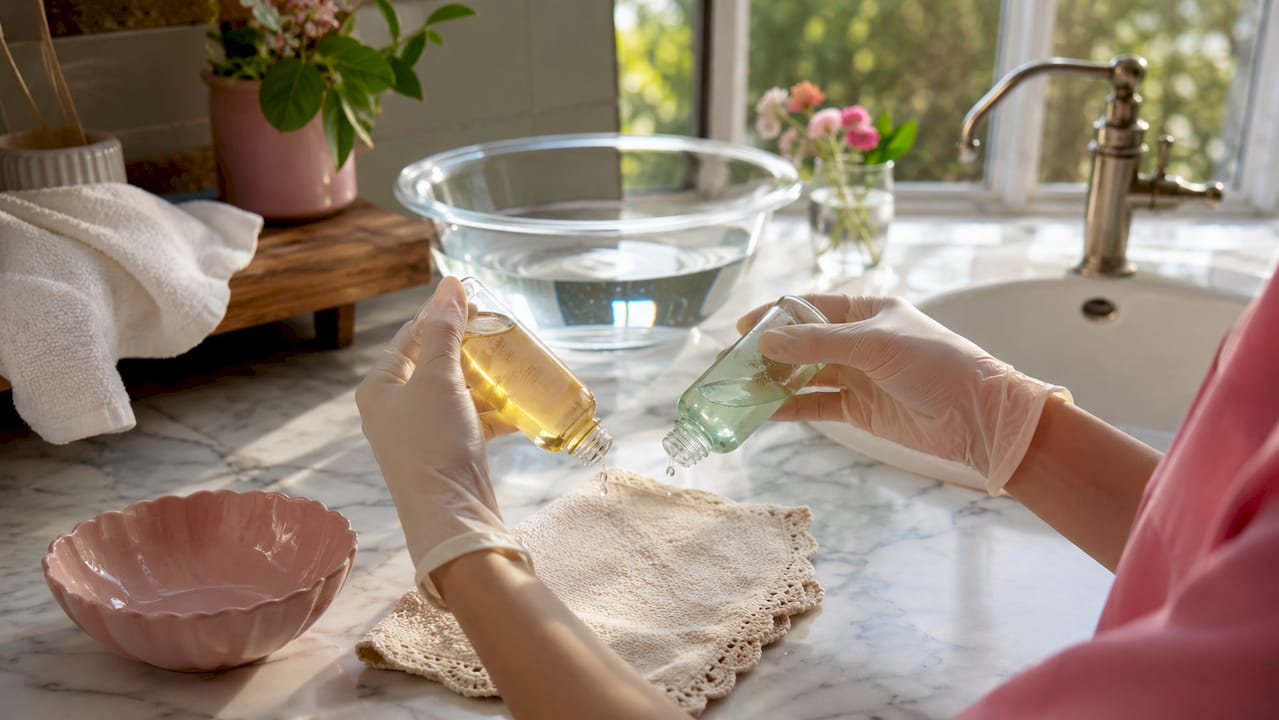
Step 1: The Oil-Based Cleanser
The first step uses an oil-based cleanser to break down oil-soluble buildup. This includes SPF products, silicone-based foundations, long-wear lipstick, and the excess sebum your skin produces throughout the day. The like dissolves like principle from basic chemistry explains why this works. Oil molecules bond with other oil molecules, pulling them away from the skin without harsh scrubbing. You apply the cleanser to completely dry skin with dry hands, which is critical. Water repels oil, so wet skin prevents the cleanser from bonding properly with the impurities.
Massage the oil cleanser in slow, circular motions for approximately 60 seconds. A 10-second cleanse does nothing meaningful. The full minute allows the formula to fully dissolve sunscreen and makeup, including the stubborn residue around your nose and chin.
Step 2: The Water-Based Cleanser
After rinsing the oil cleanser, you apply a water-based cleanser to damp skin. This step removes sweat, environmental pollution, and any water-soluble residue the first step left behind. Gel cleansers, foaming cleansers, and cream cleansers all qualify here. Massage for 30–60 seconds, then rinse thoroughly with lukewarm water.
Pro Tip: Apply your oil cleanser before you step into the shower. The steam softens skin and makes emulsification easier, and you can rinse both steps without any extra effort.
A single cleanser cannot do both jobs well. Surfactant-heavy cleansers that claim to remove everything often strip the skin barrier to accomplish it. Double cleansing uses two gentle products, which means thorough cleansing without harsh scrubbing and without the tightness that signals barrier damage.
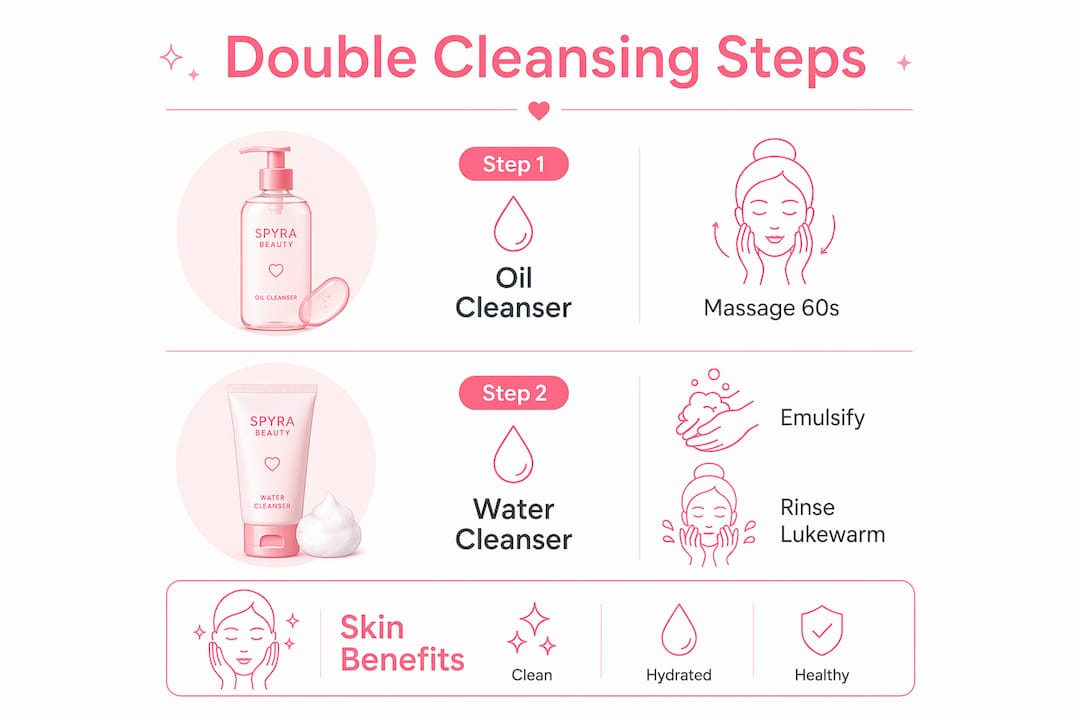
How to properly perform korean double cleansing
Technique separates a routine that transforms your skin from one that just feels like extra work. These are the double cleansing steps done correctly.
Apply the oil cleanser to dry skin
Start with a completely dry face and dry hands. Dispense about a dime-sized amount of oil cleanser and massage it across your face in upward, circular motions. Spend extra time on areas with heavy product buildup: the T-zone, around the nose, and the chin. The oil needs direct contact with oil-based impurities to work.
Emulsify before rinsing
This is the step most people skip, and it is the most important one. After massaging for 60 seconds, wet your fingertips slightly and continue massaging. The oil cleanser will turn milky white. That transformation is emulsification. It means the oil has bonded with water and can now be rinsed cleanly from your skin. Skipping emulsification leaves an oily film on the skin that accumulates over time and clogs pores overnight. The milky texture is your confirmation that the step is complete.
Rinse with lukewarm water
Water temperature matters more than most people realize. Hot water disrupts the skin barrier and strips natural oils. Cold water does not rinse oil-based residue effectively. Lukewarm water is the correct choice for both rinses. After rinsing the oil cleanser, pat your face gently with a clean towel. Do not rub. Rubbing creates friction that irritates freshly cleansed skin.
Apply the water-based cleanser
With your skin still slightly damp, apply your water-based cleanser. Work it into a lather between your palms first, then massage onto the face for 30–60 seconds. Rinse again with lukewarm water and pat dry.
Pro Tip: If your skin feels tight or dry after the second cleanse, your water-based cleanser may be too stripping. Switch to a cream or low-foam formula with a pH between 4.5 and 6.5 to stay closer to your skin’s natural acidity.
- Never use a makeup wipe as a substitute for the oil cleanser step. Wipes drag impurities across the skin rather than dissolving them.
- Avoid rubbing the towel across your face. Pat only.
- Do not use the same cleanser twice. The two steps require two different formulas.
- Skip double cleansing in the morning. Morning skin has not accumulated makeup or sunscreen, so a single gentle rinse or water-based cleanse is sufficient. Over-cleansing in the morning can harm the skin barrier.
What are the benefits of korean cleansing and who should do it?
Double cleansing delivers results that a single cleanser cannot match, and the benefits extend beyond just feeling clean.
Clearer pores and fewer breakouts. When sunscreen and sebum are not fully removed, they mix with dead skin cells and settle into pores. Consistent double cleansing prevents that buildup before it starts. Research shows double cleansing reduces sebum levels by 60% immediately after cleansing compared to 35% with single cleansing. That gap is significant for anyone dealing with congestion or blackheads.
Better absorption of serums and moisturizers. A face that still carries residue from sunscreen or foundation creates a physical barrier between your skin and your toner, serum, or moisturizer. Clean skin absorbs active ingredients more effectively, which means your entire routine performs better.
Maintained skin barrier health. Because double cleansing uses two gentle products rather than one aggressive cleanser, it removes buildup without over-stripping. The skin barrier stays intact, which reduces redness, sensitivity, and moisture loss.
| Skin Type | Is Double Cleansing Recommended? | Notes |
|---|---|---|
| Oily | Yes | Non-comedogenic oil cleansers reduce sebum without adding congestion |
| Combination | Yes | Focus oil cleanser on T-zone; use a gentle water-based cleanser overall |
| Dry | Yes, with care | Use a cleansing balm or cream oil cleanser; avoid foaming second cleansers |
| Sensitive | Yes, with care | Choose fragrance-free, minimal-ingredient formulas for both steps |
| Acne-prone | Yes | Avoid pore-clogging oils; look for jojoba oil or squalane-based cleansers |
The biggest myth about double cleansing is that oily skin should avoid it. Non-comedogenic oil cleansers actually help dissolve excess sebum and sunscreen without clogging pores. The key is choosing the right formula, not skipping the step.
How do you choose the right products for double cleansing?
Product selection determines whether your double cleansing routine works or backfires. The market offers dozens of formats, and not all of them are equal.
Oil-based cleanser options
Three formats dominate the first step: cleansing oils, cleansing balms, and cleansing creams. Cleansing oils are the most common and rinse off quickly. Cleansing balms are solid at room temperature and melt on contact with skin, making them ideal for dry or sensitive skin types. Cleansing creams are the gentlest option and work well for those who find oils too heavy.
Ingredients to look for include jojoba oil, squalane, and sunflower seed oil. These are lightweight and non-comedogenic. Avoid coconut oil as a cleanser. Despite its popularity, coconut oil has a high comedogenic rating and is likely to clog pores with regular use.
Water-based cleanser options
The second step works best with a gel, foam, or cream cleanser formulated at a skin-friendly pH. Gel cleansers suit oily and combination skin. Foam cleansers provide a thorough cleanse but can be drying if overused. Cream cleansers are best for dry or sensitive skin.
For the second step, the Uji Matcha Pore Cleansing Gel from Spyraverified is a solid water-based option that cleanses without stripping. For acne-prone skin, the Medicated Acne Foaming Face Wash from Spyraverified targets breakout-causing bacteria while keeping the skin barrier intact.
| Cleanser Type | Best For | Key Feature |
|---|---|---|
| Cleansing oil | All skin types, especially oily | Fast-emulsifying, rinses clean |
| Cleansing balm | Dry, sensitive skin | Rich texture, gentle on barrier |
| Gel cleanser | Oily, combination skin | Lightweight, thorough rinse |
| Foam cleanser | Normal, oily skin | Deep cleanse, use sparingly |
| Cream cleanser | Dry, sensitive skin | Hydrating, low-lather formula |
Skip double cleansing entirely on days when you have not worn makeup or sunscreen. On those days, a single water-based cleanse is sufficient and avoids unnecessary product use.
Key takeaways
Korean double cleansing works because two chemically distinct cleansers remove two chemically distinct categories of impurities, and no single product can do both jobs gently.
| Point | Details |
|---|---|
| Two-step chemistry | Oil cleanser removes makeup and sebum; water cleanser removes sweat and residue. |
| Emulsification is non-negotiable | Add water to the oil cleanser until it turns milky before rinsing to avoid clogged pores. |
| Evening routine only | Morning skin does not need double cleansing; a single gentle rinse is sufficient. |
| Product formula matters | Choose non-comedogenic oil cleansers and pH-balanced water-based cleansers for best results. |
| Timing drives results | Massage the oil cleanser for 60 seconds and the water cleanser for 30–60 seconds for full effectiveness. |
Why emulsification is the step that changes everything
I have tested dozens of cleansing routines over the years, and the single most common mistake I see is treating the oil cleanser like a regular face wash. People apply it, rub briefly, and rinse. The oil never fully emulsifies, and a thin invisible film stays on the skin. Over weeks, that residue compounds. Pores look larger. Skin feels dull. The routine gets blamed when the technique was the problem all along.
The emulsification step is where double cleansing separates itself from every other method. When you see that milky white transformation under your fingertips, you know the chemistry is working. That moment is not cosmetic. It is confirmation that the oil has bonded with water and will rinse away cleanly.
My other strong opinion: do not rush the massage. Sixty seconds feels long when you are standing at the sink at night. But proper massage time is what dissolves SPF 50 sunscreen fully. A rushed cleanse wastes both the product and your time. Treat those 60 seconds as the most productive minute of your skincare routine.
Double cleansing is not about doing more. It is about doing it right. Once the technique clicks, the results show up fast: smaller-looking pores, brighter skin tone, and serums that actually absorb instead of sitting on top. Consistency over two to three weeks is all it takes to see the difference.
— Anni
Build your double cleansing routine with Spyraverified
Your double cleansing routine is only as good as the products you use. Spyraverified curates authentic Japanese and Asian skincare formulas that are built for exactly this kind of intentional routine. Every product in the collection is selected for ingredient quality, skin-friendly pH, and real-world effectiveness.

Browse the full skincare collection at Spyraverified to find oil-based and water-based cleansers that work together without stripping your skin. Not sure which formulas match your skin type? Take the skin quiz for a personalized recommendation that takes the guesswork out of building your routine.
FAQ
What is korean double cleansing?
Korean double cleansing is a two-step method that uses an oil-based cleanser to remove makeup, sunscreen, and sebum, followed by a water-based cleanser to remove sweat and remaining residue. It is a core practice in the K-beauty skincare routine.
Is double cleansing necessary every day?
Double cleansing is necessary in the evening on days when you wear makeup or sunscreen. In the morning, a single gentle water-based cleanse or plain water rinse is sufficient, since over-cleansing can damage the skin barrier.
Can oily skin use an oil cleanser?
Yes. Non-comedogenic oil cleansers dissolve excess sebum and sunscreen without clogging pores. Research shows double cleansing reduces sebum levels by 60% immediately after cleansing, compared to 35% with a single cleanser.
What happens if you skip emulsification?
Skipping emulsification leaves an oily residue on the skin that accumulates over time and clogs pores. Always add a small amount of water to the oil cleanser and massage until it turns milky white before rinsing.
How long should each cleansing step take?
Massage the oil cleanser for approximately 60 seconds to fully dissolve sunscreen and makeup. Follow with the water-based cleanser for 30–60 seconds. Both steps should be rinsed with lukewarm water.
