

Japanese Anti-Aging Ingredients: 10 Proven Picks
Japanese anti-aging ingredients are bioactive and botanical compounds that protect, hydrate, and repair skin through a gentle, prevention-first approach rooted in decades of scientific refinement. The best examples of Japanese anti-aging ingredients include fermented sake yeast extract, sakura, matcha, camellia oil, konjac, yuzu, collagen, niacinamide, seaweed extract, and stable vitamin C derivatives. Each one addresses aging through hydration, antioxidant defense, barrier repair, or anti-glycation. What separates these ingredients from Western alternatives is not just their source. It is the philosophy behind them: the Japanese concept of hinou dokon, or “skin-mind, same root,” which treats skincare as a daily ritual rather than a corrective measure.
1. What are the top Japanese anti-aging ingredients?
The most effective Japanese anti-aging ingredients work across multiple aging pathways at once. That multifunctional approach is the core of J-Beauty formulation.
Fermented sake yeast extract (Pitera)
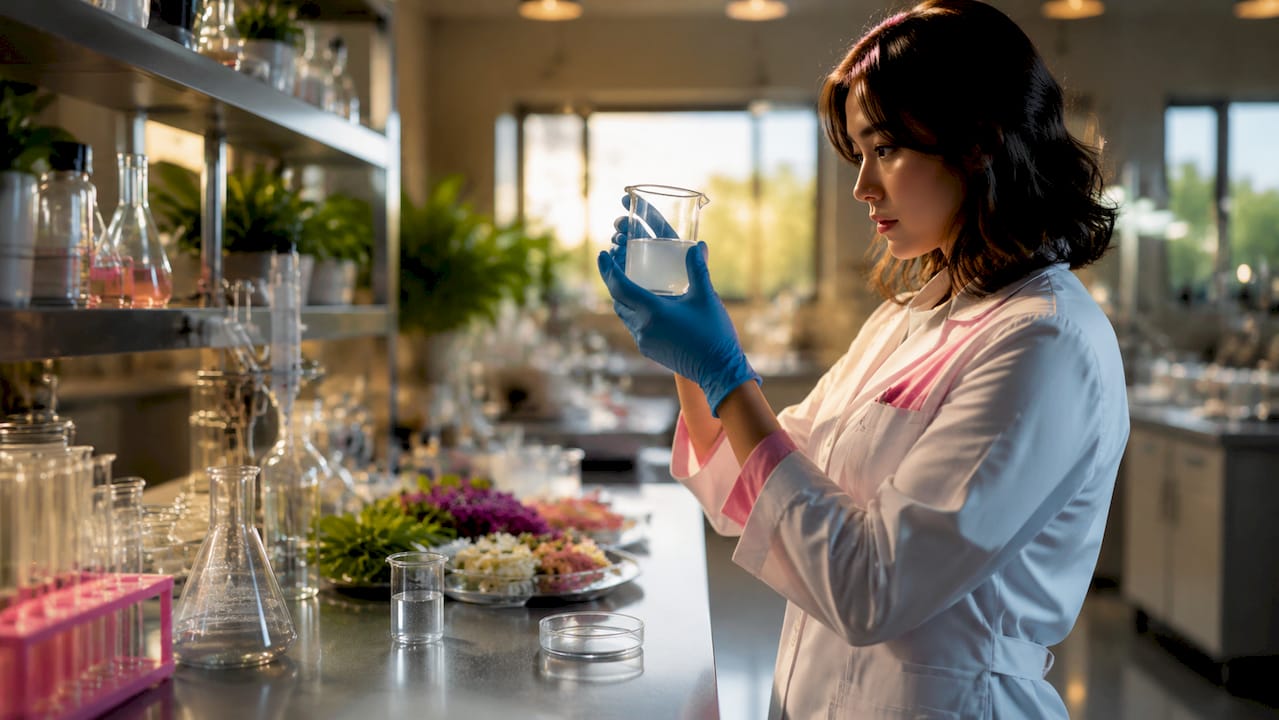
Fermented ingredients like Pitera improve skin texture and hydration by producing smaller bioactive molecules that absorb into skin more easily than unfermented compounds. SK-II built its entire brand identity around this single ingredient. The fermentation process breaks down larger molecules into forms the skin barrier can actually use, which is why fermented extracts outperform many raw botanical alternatives.
Sakura extract
Sakura extract delivers anti-glycation effects and barrier repair, reducing transepidermal water loss and calming sensitive or rosacea-prone skin. Glycation is the process where sugar molecules bind to skin proteins like collagen, making them stiff and prone to wrinkling. Most Western anti-aging lines ignore this pathway entirely. Sakura’s phytochemicals target it directly, making it one of the most underrated ingredients in the global anti-aging conversation.
Matcha (green tea extract)
Matcha is dense with epigallocatechin gallate (EGCG), a polyphenol that neutralizes free radicals and reduces UV-triggered inflammation. Applied topically, it supports collagen integrity and reduces redness. The Uji Matcha Pore Cleansing Gel from Spyraverified delivers this antioxidant benefit in a daily-use format that does not strip the skin barrier.
Pro Tip: Pair a matcha-based cleanser with a niacinamide serum in the morning. The antioxidant protection from matcha and the barrier support from niacinamide work on complementary aging pathways.
Camellia oil (Tsubaki oil)
Camellia oil is the original Japanese beauty secret, used by geishas for centuries to maintain skin suppleness and protect hair. It is rich in oleic acid, which mimics the skin’s natural lipid profile and absorbs without leaving a greasy residue. As a face oil applied after serums, it seals in hydration and strengthens the lipid barrier, which thins with age.
Konjac
Konjac root produces glucomannan, a water-soluble fiber that holds moisture and gently exfoliates dead skin cells. Konjac sponges are a staple in Japanese cleansing routines because they lift debris without disrupting the acid mantle. For aging skin, that gentle exfoliation matters. Aggressive scrubs damage the barrier and accelerate moisture loss.
Yuzu extract
Yuzu is a Japanese citrus fruit with vitamin C levels that exceed lemon. Its extract brightens uneven skin tone, supports collagen synthesis, and delivers a concentrated antioxidant hit. Unlike raw ascorbic acid, yuzu’s naturally occurring vitamin C complex is buffered by co-factors that reduce the irritation risk common with synthetic vitamin C serums.
Stable vitamin C derivatives
Japanese brands like Melano CC use stable vitamin C derivatives that are less irritating than ascorbic acid while still delivering brightening and collagen support. Stability is the key word here. Ascorbic acid oxidizes quickly on exposure to air and light, losing potency before it reaches the skin. Japanese formulations solve this with derivatives like ascorbyl glucoside that remain active longer.
Seaweed extract
Seaweed extract, particularly from species like wakame and kombu, is rich in fucoidan, a compound that stimulates hyaluronic acid production and protects skin from environmental damage. Japanese coastal communities have used seaweed in food and skincare for generations. Modern research confirms its role in supporting skin firmness and moisture retention.
Niacinamide
Niacinamide in Japanese quasi-drug products has strong clinical evidence for improving skin elasticity and reducing wrinkles. It functions as a safer alternative to retinol, with anti-inflammatory and barrier-support properties that make it suitable for sensitive skin. Japan’s quasi-drug classification means niacinamide products sold under that status must meet Ministry of Health thresholds for concentration and clinical proof.
Piceatannol
Piceatannol is a stilbenoid found in passion fruit seeds, widely used in Japanese wellness beauty supplements. Daily oral supplementation with piceatannol significantly improves skin hydration and reduces crow’s feet wrinkles over 8 weeks in a randomized, double-blind, placebo-controlled trial. That level of evidence is rare for a botanical ingredient. It signals that piceatannol belongs in the same conversation as collagen peptides and hyaluronic acid supplements.
2. How do Japanese anti-aging ingredients compare to Western alternatives?
Japanese and Western anti-aging formulations share some ingredients but differ sharply in philosophy, concentration strategy, and regulatory standards.
Japanese skincare uses lightweight, watery textures in layered systems of essences, serums, and creams to enhance absorption and minimize irritation. Western anti-aging products, by contrast, often rely on high-concentration retinol creams that deliver fast visible results but carry a higher risk of redness, peeling, and barrier disruption. Neither approach is wrong. They target different priorities.
| Feature | Japanese formulations | Western formulations |
|---|---|---|
| Primary strategy | Prevention, hydration, barrier support | Correction, exfoliation, high-potency actives |
| Key ingredients | Fermented extracts, sakura, niacinamide, camellia oil | Retinol, glycolic acid, peptides, vitamin C |
| Texture | Lightweight essences and watery serums | Richer creams and concentrated serums |
| Regulatory standard | Quasi-drug classification for proven actives | OTC cosmetic standards (lower threshold) |
| Anti-glycation focus | Yes, especially sakura and seaweed | Rarely addressed |
The regulatory gap is significant. Quasi-drug classification in Japan requires active ingredients to meet Ministry of Health thresholds with clinical validation, ensuring higher product efficacy than common cosmetics. A product labeled as a wrinkle-care quasi-drug in Japan has cleared a bar that most Western OTC skincare never faces.
“Japanese skincare is not about dramatic transformation. It is about maintaining what you have through consistent, gentle, and scientifically sound daily habits.” This philosophy, reflected in the concept of hinou dokon, explains why Japanese women consistently rank among the world’s leaders in skin longevity.
For a deeper look at how Japanese practices prevent fine lines, the 2026 guide to fine lines prevention from Body Face Scalp covers the dermatological perspective in detail.
3. How can you incorporate Japanese anti-aging ingredients into your daily routine?
The J-Beauty approach to routine building is minimalist by design and layered by function. You apply products from the thinnest to the thickest texture, allowing each layer to absorb before the next is applied.
The layering system of lightweight hydrating essences before moisturizing oils maximizes ingredient absorption and supports skin barrier health. This is not just a texture preference. It is a delivery strategy. Watery essences penetrate the stratum corneum more efficiently than thick creams applied to dry skin.
Here is a practical daily sequence built around Japanese anti-aging ingredients:
- Cleanse with a gentle, pH-balanced cleanser. The Uji Matcha Foaming Face Wash removes impurities while delivering antioxidant matcha to the skin.
- Apply a hydrating essence containing fermented extracts or hyaluronic acid. Pat it in with your palms rather than rubbing.
- Layer a niacinamide or vitamin C serum to address pigmentation and support collagen.
- Seal with camellia oil or a lightweight moisturizer to lock in hydration and reinforce the lipid barrier.
- Finish with sunscreen every morning. Japanese sunscreen technology is globally recognized for lightweight, elegant formulas that encourage consistent daily use, which is the single most important anti-aging step you can take.
Pro Tip: Do not skip the essence step. Most Western routines jump from cleanser to serum, missing the hydration foundation that makes every subsequent product work better. A fermented essence applied to damp skin sets the stage for everything that follows.
For help choosing the right sun protection, Spyraverified’s guide on picking Japanese sunscreen breaks down SPF options by skin type.
4. What scientific evidence supports Japanese anti-aging ingredients?
The clinical record behind Japanese anti-aging ingredients is stronger than most consumers realize. These are not folk remedies dressed up in modern packaging.
| Ingredient | Study type | Key outcome |
|---|---|---|
| Piceatannol | Randomized, double-blind, placebo-controlled | Improved hydration and reduced crow’s feet over 8 weeks |
| Niacinamide | Multiple clinical trials | Improved elasticity, reduced wrinkles, barrier support |
| Fermented extracts (Pitera) | Observational and formulation studies | Enhanced bioavailability, improved texture and hydration |
| Sakura extract | Phytochemical research | Anti-glycation activity, reduced transepidermal water loss |
| Stable vitamin C derivatives | Comparative stability studies | Maintained potency longer than ascorbic acid, reduced irritation |
The piceatannol trial is particularly notable because it meets the gold standard for clinical evidence. Most cosmetic ingredient studies rely on self-reported outcomes or small sample sizes. A randomized, double-blind, placebo-controlled trial showing statistically significant hydration improvement and wrinkle reduction is the same evidence bar used for pharmaceutical products.
Japanese botanical biomimicry in formulation prioritizes milder actives that maintain skin resilience through hydration and protection rather than rapid exfoliation or irritation. This approach produces slower visible results than retinol but causes far less barrier disruption over time. For anyone with sensitive or reactive skin, that tradeoff is worth understanding before choosing a routine.
Key takeaways
Japanese anti-aging ingredients work because they combine clinical validation, regulatory rigor, and a prevention-first philosophy that Western formulations rarely match.
| Point | Details |
|---|---|
| Fermentation boosts bioavailability | Pitera and fermented extracts deliver smaller molecules that absorb more effectively than raw botanicals. |
| Anti-glycation is Japan’s edge | Sakura extract targets sugar-protein damage that most Western lines ignore entirely. |
| Quasi-drug standards matter | Japanese niacinamide and vitamin C products meet Ministry thresholds that OTC cosmetics do not. |
| Layering is a delivery strategy | Applying essences before oils maximizes absorption and barrier health, not just texture preference. |
| Sunscreen is the top anti-aging step | Consistent daily SPF use, supported by Japan’s lightweight sunscreen technology, prevents photoaging better than any serum. |
Why I think the West is finally catching up to what Japan figured out decades ago
I have spent years tracking ingredient trends across Asian and Western beauty markets, and the pattern is consistent. An ingredient gains traction in Japan, gets validated by clinical research, and then shows up in Western prestige skincare three to five years later at twice the price and half the cultural context.
Sakura extract is the clearest example right now. Anti-glycation has been a pillar of Japanese anti-aging research for years. Western brands are only beginning to market it as a concept, and most consumers have never heard the term. Yet glycation is one of the primary drivers of skin stiffness and dullness after age 35. Ignoring it while spending heavily on retinol is like fixing a leaky roof while ignoring a cracked foundation.
What I find most compelling about the Japanese approach is its honesty about timelines. The best skincare routine for healthy skin is not the one with the most aggressive actives. It is the one you will actually maintain for years. Lightweight textures, gentle actives, and daily sun protection are not compromises. They are the strategy.
If you are new to J-Beauty, start with one fermented essence and a quality SPF. Give it 90 days. The results will not be dramatic. They will be durable.
— Anni
Discover Japanese skincare at Spyraverified
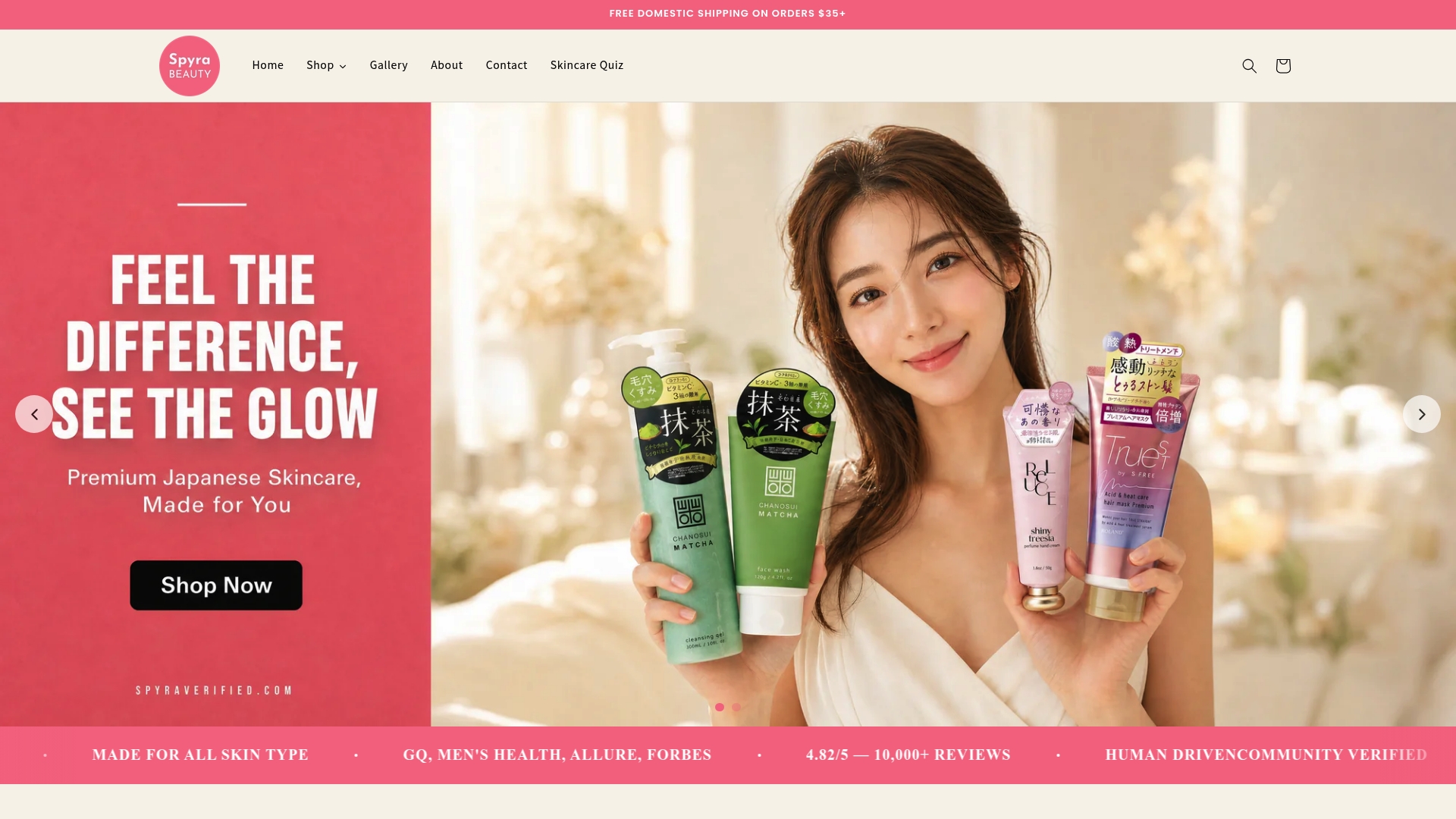
Spyraverified curates authentic Japanese skincare products that put these ingredients into practice, not just on an ingredients list. The Uji Matcha Pore Cleansing Gel delivers antioxidant-rich matcha in a daily cleanser format, while the Japanese Peppermint Cool Body Soap brings Japanese botanical care to your full body routine. Every product in the Spyraverified skincare collection is sourced directly from manufacturers, so you get the real formulation, not a watered-down export version. Browse the full range and find the ingredients your routine is missing.
FAQ
What are the most effective Japanese anti-aging ingredients?
Fermented sake yeast extract (Pitera), niacinamide, sakura extract, camellia oil, and stable vitamin C derivatives are the most clinically supported Japanese anti-aging ingredients. Each targets a different aging pathway, from barrier repair to anti-glycation.
Why do Japanese skincare products work so well for aging skin?
Japanese formulations combine lightweight textures for better absorption, quasi-drug regulatory standards for proven actives, and a prevention-first philosophy that addresses hydration and barrier health before visible damage occurs.
What is anti-glycation and why does it matter?
Anti-glycation refers to preventing sugar molecules from binding to skin proteins like collagen, which causes stiffness and wrinkling. Sakura extract is a key Japanese ingredient that targets this process, which most Western anti-aging products do not address.
Can Japanese anti-aging ingredients work for sensitive skin?
Yes. Japanese formulations prioritize mild actives and barrier support over aggressive exfoliation. Niacinamide and fermented extracts are both well-tolerated by sensitive skin and carry strong clinical evidence for wrinkle reduction and hydration.
How long does it take to see results from Japanese anti-aging ingredients?
Clinical trials on piceatannol showed statistically significant hydration improvement and wrinkle reduction after 8 weeks of consistent use. Most Japanese anti-aging ingredients require 60–90 days of daily application before visible changes appear.
