

Double Cleanse Step by Step: Your 2026 Skin Guide
Double cleansing is defined as a two-step skincare method that uses an oil-based cleanser first, followed by a water-based cleanser, to remove every layer of impurity from your skin. The double cleanse step by step process is the foundation of Korean skincare (known in the industry as the K-beauty double cleansing method), and the science behind it is hard to argue with. Research shows the two-step method removes 67% more sunscreen residue than a single water-based cleanser alone. That gap matters because leftover SPF and makeup block your serums and moisturizers from doing their job. Get the method right, and your entire skincare routine performs better.
What products do you need for double cleansing?
The right products make or break this routine. You need two distinct cleansers, and choosing the wrong type for your skin will either leave residue or strip your barrier.
Oil-based cleansers: balms vs. oils
Oil-based cleansers come in two main forms: cleansing oils and cleansing balms. Cleansing oils spread quickly and rinse faster, making them a good fit for normal to oily skin. Cleansing balms have a thicker texture that melts on contact with skin, and they tend to suit dry or sensitive skin better because they leave a slightly more nourishing feel. Both formats work on the same chemistry principle. Look for formulas with non-comedogenic oils like jojoba, rice bran, or sunflower seed oil. Avoid mineral oil if you are acne-prone, since it sits heavier on the skin.
Water-based cleansers: gels, foams, and milks
| Skin Type | Best Water-Based Cleanser | Why It Works |
|---|---|---|
| Oily or combination | Gel or foam cleanser | Removes excess sebum without heavy emollients |
| Dry or sensitive | Milk or cream cleanser | Cleans without disrupting moisture balance |
| Acne-prone | Medicated foam cleanser | Targets bacteria while completing the cleanse |
| Normal | Gel or mild foam | Balanced cleanse without over-stripping |
The Uji Matcha Foaming Face Wash from Spyraverified is a strong second-step option. Its green tea base calms skin while the foam lifts any remaining residue after your oil cleanse.
Essential tools to have on hand:
- Soft microfiber cloths or cotton flannels for gentle removal of emulsified oil
- A clean bowl or sink with lukewarm water access
- Clean, dry hands before you start (wet hands reduce oil cleanser effectiveness)
Pro Tip: Read the ingredient list on your water-based cleanser. Avoid sodium lauryl sulfate (SLS) as a top-five ingredient if you have sensitive or dry skin. It cleans effectively but strips the barrier faster than gentler surfactants like sodium laureth sulfate or cocamidopropyl betaine.
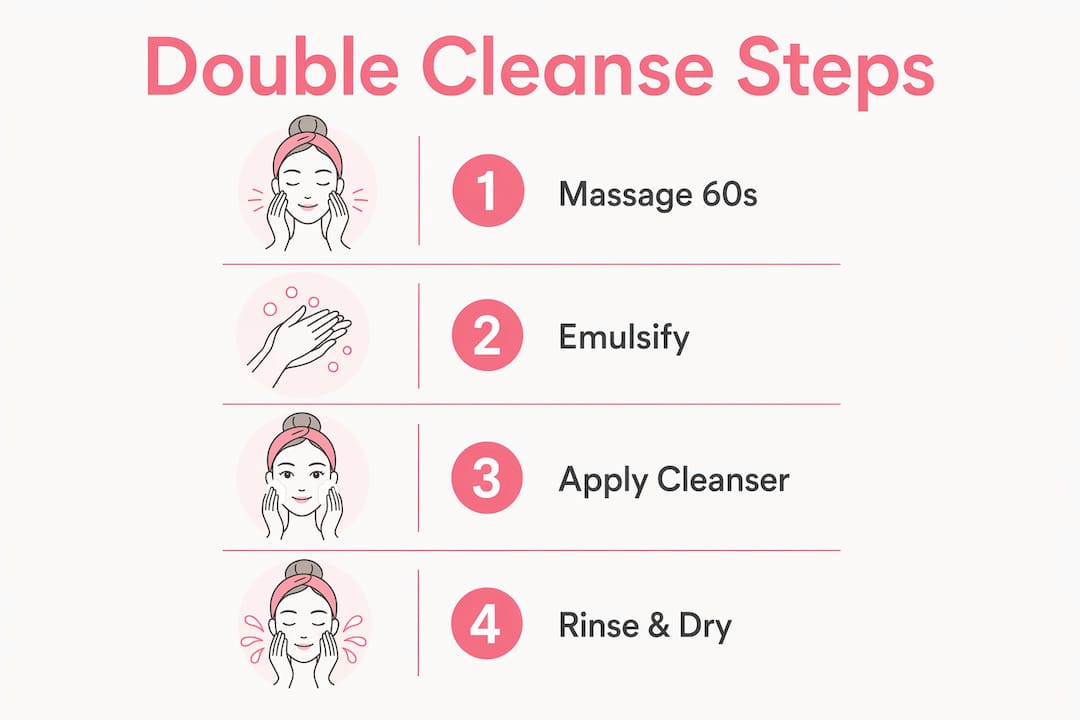
How to double cleanse step by step
This is the core of the double cleansing method. Follow each step in order and pay attention to timing. Rushing either cleanse cuts your results significantly.
Step 1: apply oil cleanser to dry skin
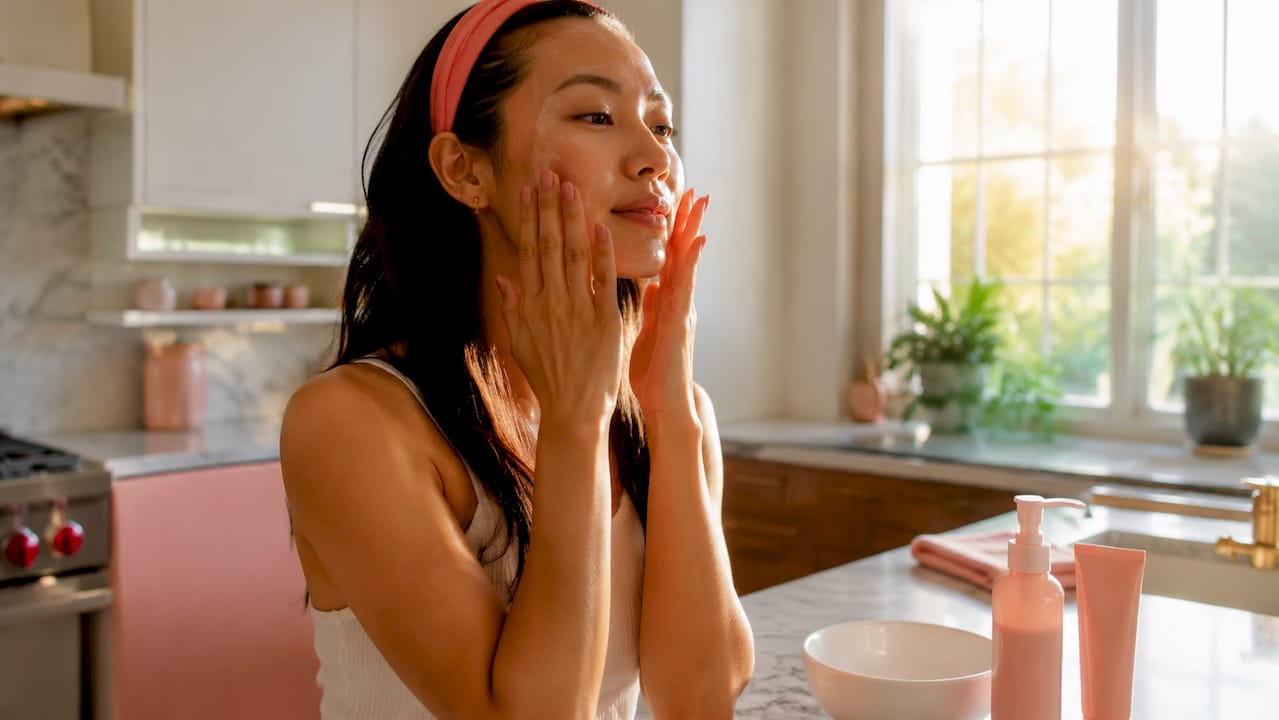
Oil cleansers must be applied to completely dry skin with dry hands. Water on your face or palms prevents the oil from binding to oil-soluble impurities like sunscreen and foundation. Pump or scoop a quarter-sized amount into your palms, rub them together, then press onto your face.
Step 2: massage for a full 60 seconds
Massaging for 60 seconds is not optional. Less time than that reduces cleansing efficiency. Work in circular motions across your forehead, nose, cheeks, and chin. Pay extra attention to areas where you wear heavy SPF or foundation. You will feel the oil binding to your makeup as it starts to break down.
Step 3: emulsify with lukewarm water
This step is where most people go wrong. Wet your fingertips slightly and work them back into the oil on your face. The formula will turn milky white. That color change is the emulsification process working. It transforms the oil into tiny droplets that rinse away cleanly with water, preventing greasy residue. Rinse thoroughly with lukewarm water at around 37°C. Hot water strips your lipid barrier. Cold water stops emulsification from completing.
Step 4: apply water-based cleanser to damp skin
Your face should be damp, not soaking wet. Apply a small amount of your water-based cleanser and work it into a lather between your palms first. Then massage it onto your face for 30–60 seconds. This step cleans the skin itself, removing sweat, water-soluble dirt, and any remaining traces the oil cleanser loosened. The Uji Matcha Pore Cleansing Gel works well here for those dealing with congested pores.
Step 5: rinse and pat dry
Rinse thoroughly with lukewarm water. Residual surfactants left on skin after insufficient rinsing can elevate skin pH for up to 6 hours, disrupting the acid mantle and weakening your barrier. That is a real cost for a step that takes 20 extra seconds. Pat your face dry with a clean towel. Never rub.
Pro Tip: Do the “squeaky clean” test in reverse. If your skin feels tight or squeaky after rinsing, you have either over-rinsed with hot water or your second cleanser is too harsh. Healthy, well-cleansed skin should feel clean but never taut.
Common mistakes to avoid
- Skipping emulsification and rinsing the oil straight off with water
- Using hot water at any stage
- Rushing the first cleanse under 30 seconds
- Applying the oil cleanser to wet skin
- Using the same cleanser twice instead of two different formulas
Why is double cleansing more effective than single cleansing?
The answer comes down to chemistry. Oil and water do not mix. Sunscreen, sebum, and most long-wear makeup are oil-based compounds. A water-based cleanser alone simply cannot dissolve them. This is the “like dissolves like” principle from basic chemical miscibility. Oil cleansers break down oil-based impurities. The water-based cleanser then removes what is water-soluble.
The data makes this concrete. A single water-based cleanser removes only 31% of SPF 50. The two-step method removes 98%. That is not a marginal improvement. It means nearly all of your sunscreen is gone before you apply your evening treatments.
“The first cleanse acts as a solvent removing makeup and SPF, improving the penetration and efficacy of subsequent serums and treatments. Skipping it leaves a dirty surface that impairs absorption.” — Caroline Hirons
Skincare experts like Caroline Hirons have made this point for years, and the research backs it up. Well-cleansed skin allows for better absorption and visible benefits from treatments like retinol and vitamin C serums.
Does oil cleansing cause breakouts?
This is the most common concern, and it is based on a misunderstanding. Double cleansing is suitable for all skin types, including oily and acne-prone skin, when performed correctly. Breakouts linked to oil cleansing almost always come from incomplete emulsification or skipping the second cleanser entirely. The oil itself is not the problem. The residue left behind is. If you are acne-prone, the Medicated Acne Foaming Face Wash from Spyraverified makes a reliable second-step option.
| Concern | Root Cause | Fix |
|---|---|---|
| Greasy residue after cleansing | Incomplete emulsification | Add more water, massage longer before rinsing |
| Breakouts after oil cleansing | Skipped second cleanser | Always follow with water-based cleanser |
| Tight or dry skin | Water too hot or cleanser too harsh | Use lukewarm water and a gentler formula |
| Makeup still visible | First cleanse too short | Massage for a full 60 seconds |
How often should you double cleanse?
Double cleansing belongs in your evening routine. It is mainly recommended for nights when you have worn makeup, sunscreen, or been exposed to pollution. Morning skin does not carry the same load of oil-based impurities, so a single gentle cleanser is enough.
Start with this frequency:
- Three to four evenings per week if you are new to the method
- Every evening if you wear SPF daily (which you should, especially if you follow a Japanese sunscreen guide for high-protection formulas)
- Scale back if your skin shows signs of irritation, like redness or flaking
Your skin will tell you when you have found the right frequency. Healthy, balanced skin after cleansing should feel clean, comfortable, and slightly dewy. Not tight. Not oily.
Pro Tip: Always follow your double cleanse with a moisturizer within 60 seconds of patting dry. Cleansing temporarily opens the skin’s surface. Applying moisturizer immediately locks in hydration and restores your barrier before it has a chance to lose water to the air.
Adjusting your routine based on season also helps. In winter, when skin runs drier, you may want to swap your gel second cleanser for a milk formula. In summer, a foaming second cleanser handles extra sweat and oil more effectively.
Key takeaways
The double cleansing method works because oil dissolves oil-based impurities that water-based cleansers cannot reach, and the second cleanser clears what remains for truly clean skin.
| Point | Details |
|---|---|
| Apply oil cleanser to dry skin | Wet skin blocks oil from binding to sunscreen and makeup effectively. |
| Emulsify before rinsing | Add water until the oil turns milky to prevent greasy residue and breakouts. |
| Use lukewarm water throughout | Hot water strips the lipid barrier; cold water stops emulsification from completing. |
| Double cleanse in the evening | Morning skin does not need two cleansers; save the method for nights with SPF or makeup. |
| Follow with moisturizer immediately | Apply within 60 seconds of drying to restore barrier and lock in hydration. |
Why i think most people are getting the first cleanse wrong
I have been testing skincare routines long enough to notice one consistent pattern. People rush the oil cleanse. They apply it, rub for 15 seconds, splash water on, and move to the second step. Then they wonder why their skin still looks dull or why their retinol is not working.
The first cleanse is not a formality. It is the whole point. Think of it like washing a greasy pan. You would not skip the degreaser and go straight to dish soap. The oil cleanser is your degreaser. Without it, the second cleanser is working against a surface that is still coated in SPF and oxidized sebum.
The emulsification step is where I see the second biggest gap. Most people add too little water and rinse too fast. The oil needs to fully turn milky before you rinse. That transformation is not cosmetic. It is the mechanism that makes the oil washable. Skip it, and you are leaving a film on your skin that will clog pores over time.
My honest recommendation: set a timer for your first cleanse. Sixty seconds feels longer than you expect. Once you start doing it properly, you will notice the difference in your skin’s texture within a week. Your serums will absorb faster. Your skin will look clearer in the morning. The method works, but only if you give it the time it needs.
— Anni
Build your double cleanse routine with Spyraverified
If you are ready to put this routine into practice, the products you choose for each step matter as much as the technique itself.

Spyraverified curates Japanese and Asian skincare formulas that are built for this exact method. The Uji Matcha Pore Cleansing Gel delivers a thorough second-step cleanse with antioxidant-rich matcha, and the Uji Matcha Foaming Face Wash pairs perfectly as your water-based follow-up. Both are gentle enough for daily use and effective enough to finish what your oil cleanser starts. Browse the full skincare collection at Spyraverified to find the right combination for your skin type and build a routine that actually delivers results.
FAQ
What is double cleansing?
Double cleansing is a two-step skincare method where you apply an oil-based cleanser first to dissolve makeup and sunscreen, then follow with a water-based cleanser to remove sweat and remaining impurities.
Does double cleansing work for oily skin?
Double cleansing works for all skin types, including oily and acne-prone skin. Breakouts linked to oil cleansing are almost always caused by incomplete emulsification, not the oil itself.
How long should each cleansing step take?
Massage your oil cleanser for a full 60 seconds before emulsifying and rinsing. Apply your water-based cleanser for 30–60 seconds. Rushing either step reduces how much it removes.
Can i double cleanse in the morning?
Morning skin does not carry oil-based impurities like sunscreen or makeup, so a single gentle cleanser is enough. Reserve the double cleansing method for your evening routine.
What water temperature should i use?
Use lukewarm water at around 37°C for both steps. Hot water damages the skin’s lipid barrier, and cold water prevents the oil cleanser from emulsifying properly.
